Results for “population”
Type a name: scientific, common, or one a species used to go by. Or narrow the catalogue with the filters.
Filters
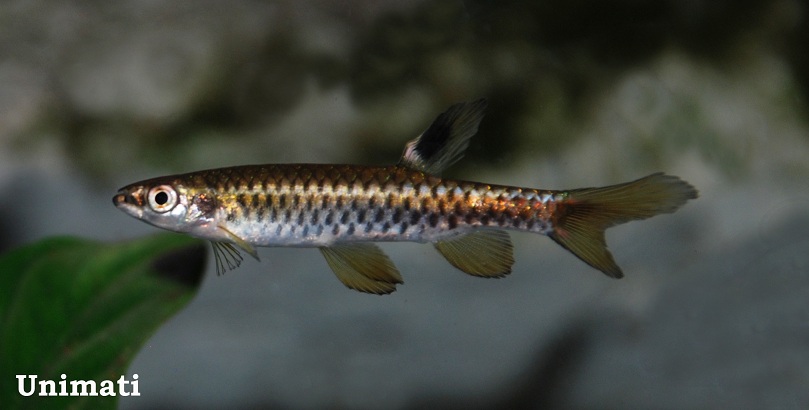
Copella eigenmanni
Regan, 1912
Max length45mm SL1.8in SLTank80 × 30cm31 × 12inTemp20–28°C68–82°FpH4.0–7.0This species does appear in the aquarium trade from time-to-time, often among shipments of other wild-caught fishes from the Orinoco basin. Populations from Colombia were formerly referred to as C. metae until Zarske (2011) synonymised the two when designating a lectoty...
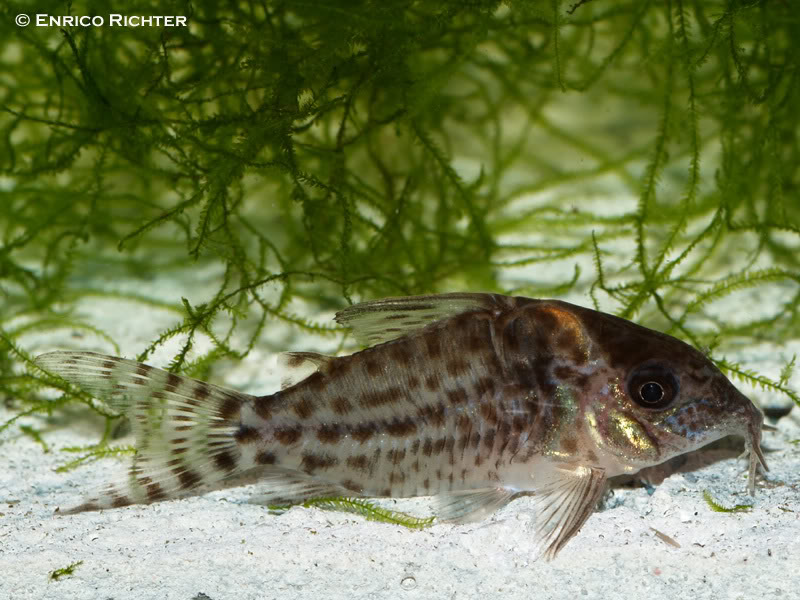
Corydoras agassiziiSpotted Cory
Steindachner, 1876
Max length70mm SL2.8in SLTanknot recordedTemp22–27°C72–81°FpH6.0–8.0This species' name is commonly misapplied to a number of similar-looking fishes and it can be difficult to identify if collection locality is unknown. In addition, colour pattern is variable and it's not clear whether this occurs between, within, or both between and within populations. In the original description, Steindachner did note that the first three dorsal-fin rays are completely black while the remainder is whi...
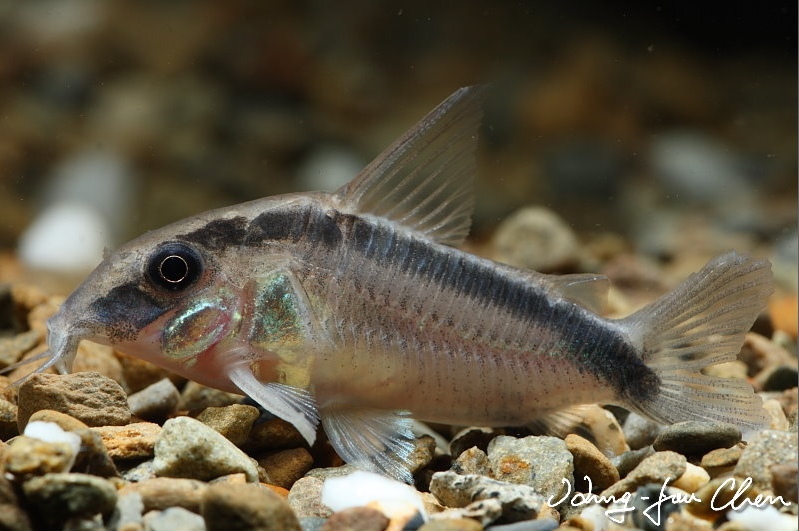
Corydoras arcuatusSkunk Cory; C020
Elwin, 1938
Max length55mm SL2.2in SLTanknot recordedTemp20–28°C68–82°FpH5.0–7.5This species is among the more popular Corydoras in the aquarium hobby and is widely available. It may also be referred to as 'arched cory'. There exist a number of similar-looking congeners, particularly C. urucu (Britto et al., 2009), described from the rio Urucu in Coari municipality, Amazonas state, Brazil, and C. narcissus from the rio Purus. The latter appears to have also been traded as C. sp. 'super arcuatus longnose' while a larg...
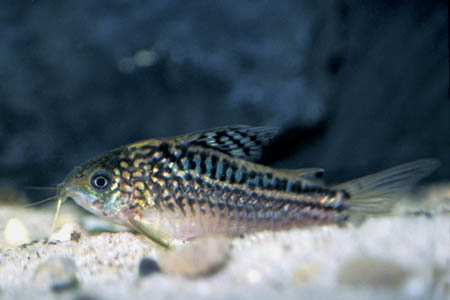
Corydoras elegansElegant Cory
Steindachner, 1876
Max length55mm SL2.2in SLTanknot recordedTemp20–26°C68–79°FpH6.0–7.5This species is popular in the aquarium hobby and unlike the majority of congeners tends to spend a fair amount of time away from the substrate, often forming groups in midwater. It has been placed in the unofficial 'C. elegans group', which contains a number of species exhibiting similarities in morphology and colour pattern, some of which remain unidentified in scientific terms.
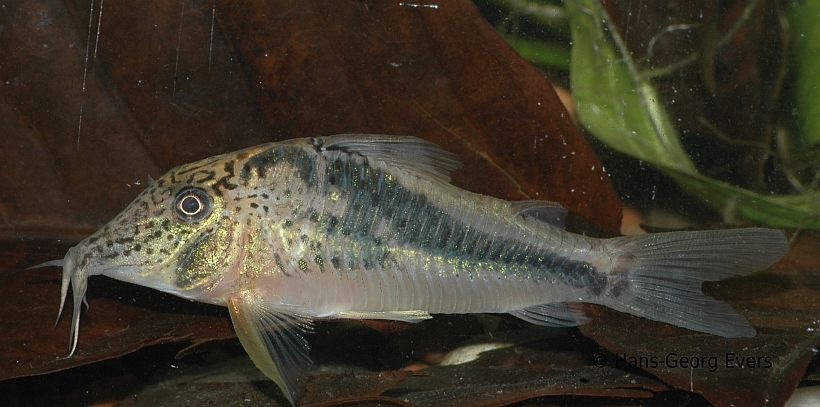
Corydoras fowleriFowler's Cory
Böhlke, 1950
Max length70mm SL2.8in SLTank120 × 45cm48 × 18inTemp20–28°C68–82°FpH5.0–7.5In addition, the colour pattern in aquarium fish traded or identified as C. fowleri is highly variable, but it is unclear whether such differences represent diversity within or between populations. Nevertheless, colour pattern is typically used to distinguish them, with fish from Peru possessing a greater extent of dark pigmentation on the body generally referred to...
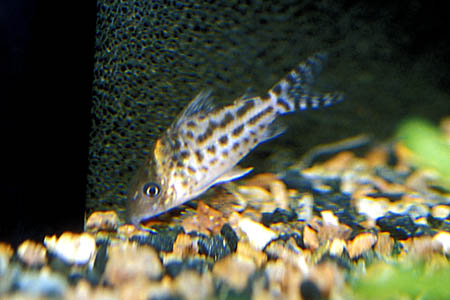
Corydoras incolicanaC001
Burgess, 1993
Max length80mm SL3.1in SLTank120 × 30cm48 × 12inTemp20–26°C68–79°FpH4.0–7.0C. incolicana was the first recipient of a 'C' number (see below) in 1993 and was described the same year. Unfortunately its description was published in an aquarium hobbyist magazine, and we have been unable to obtain a copy to date meaning its diagnosis is unavailable. It is therefore difficult to identify accurately, not least because its type locality is in a relatively remote area, and there exist a number of superficially similar Corydoras species or populations in the aquarium trade.
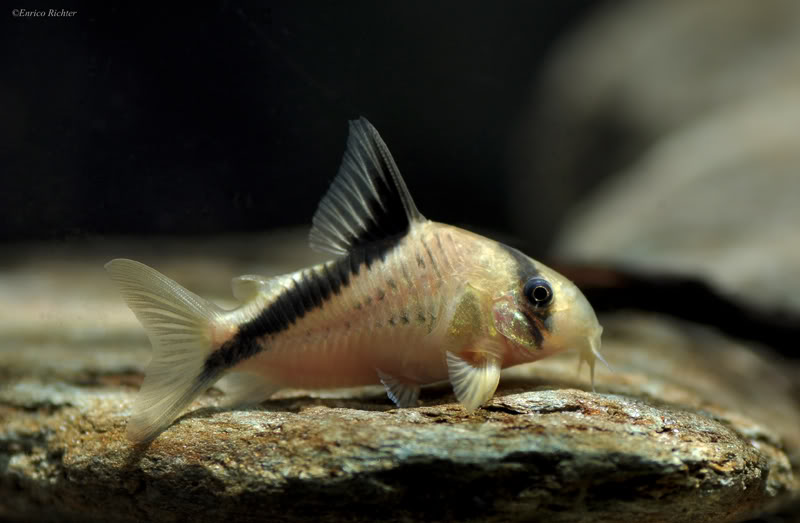
Corydoras meliniFalse Bandit Cory
Lönnberg & Rendahl, 1930
Max length50mm SL2.0in SLTank80 × 30cm31 × 12inTemp20–26°C68–79°FpH4.0–7.0In the aquarium hobby, the population from the rio Tiquié has been referred to as 'C084', while a similar, but larger, form from the Río Huallaga in Peru is known as 'C085'. Both forms have been marketed as C. sp. 'mega metae'. The existence of multiple, similarly-coloured species which coexist and sometimes form mixed schools is relatively common in the genus.
Corynopoma riiseiSwordtail Characin
authority not recorded
Max length65mm SL2.6in SLTank75 × 38cm30 × 15inTemp22–28°C72–82°FpH6.0–7.0This unusual tetra is not often seen on sale in the trade, but is never particularly expensive when available. It is currently the only member in the genus although the family Glandulocaudinae actually contains about 20 member genera. None are especially popular aquarium fish, although a couple of Mimagoniates species are occasionally seen in the hobby. Almost all members of the Glandulocaudinae are characterised by the presence of secretory caudal glands in male fish, the particular structur...
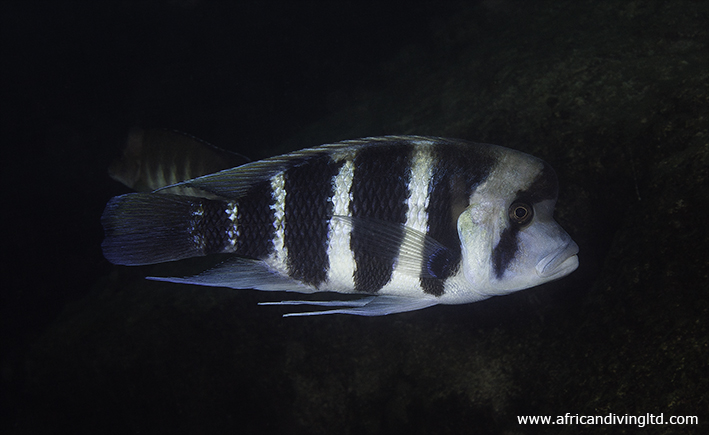
Cyphotilapia frontosaHumphead Cichlid
Boulenger, 1906
Max length255mm SL10in SLTank240 × 60cm96 × 24inTemp23–27°C73–81°FpH8.0–9.0Populations of C. frontosa from different localities are often labelled as such in order to maintain accuracy and preserve pure bloodlines. The majority possess 6 vertical bands on the body with the exception of the form from Kigoma on the eastern side of the lake, which has 7. Forms referred to as 'Blue Zaire' are sometimes misidentified as C. frontosa but are representative of its congener C. gibberosa.
Cyprichromis microlepidotusSmallscale Cyprichromis
authority not recorded
Max length110mm SL4in SLTank120 × 45cm48 × 18inTemp24–27°C75–81°FpH7.8–9.0Quite a rarity in the hobby, but when available it is much sought after by enthusiasts. It can be found living in huge mixed species groups with other Cyprichromis species and the similar Paracyprichromis. There are a few geographical variants known, each of which has both a yellow and blue tailed form. Individual populations can also contain males with different colour and patterning, a phenomenon known as polychromatism. The different forms should never be mixed in the aquarium, as they will i...
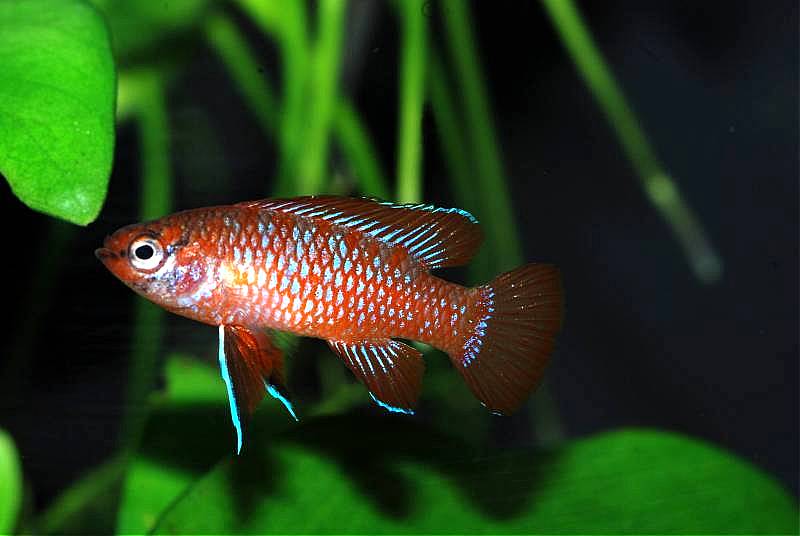
Dario darioScarlet Badis
Hamilton, 1822
Max length20mm SL0.8in SLTank45 × 30cm18 × 12inTemp18–26°C64–79°FpH6.5–8.5This species is among the more well-known badids in the aquarium hobby, and is a popular choice for 'nano' aquaria since it is among the smallest percoid fishes known. It is easily told apart from congeners since it is the only species in which males possess a series of seven iridescent blue vertical bars on the flanks.
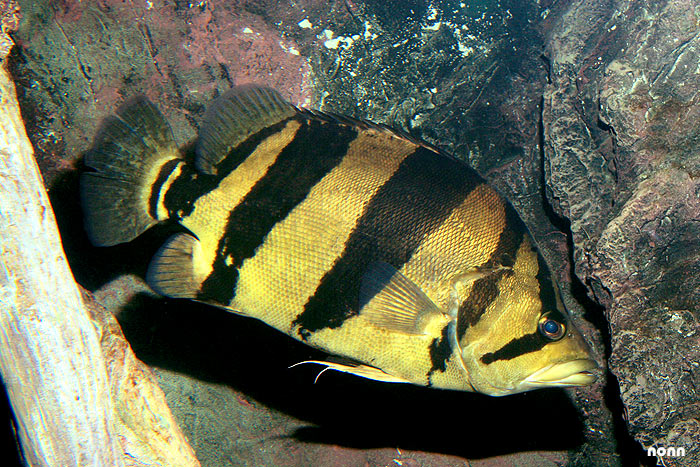
Datnioides pulcherSiamese Tiger Perch
Kottelat, 1998
Max length400mm SL16in SLTanknot recordedTemp20–28°C68–82°FpH5.5–7.5The massive decline in wild populations, hypothesised to be in excess of 90% since the mid-1980s, is thought to have been caused by a variety of factors, including habitat alteration due to construction of dams and other infrastructure, removal of riparian vegetation, and urban pollution, plus over fishing for both human consumption and the aquarium trade.
Dicrossus maculatusSpadetailed Checkerboard Cichlid
authority not recorded
Max length53mm SL2.1in SLTank60 × 30cm24 × 12inTemp26–30°C79–86°FpH3.4–5.4Dicrossus Maculatus are not commonly available in the trade. Sometimes they are mistaken for the more common and popular Dicrossus Filamentosa. The Spadetailed Checkerboards are an absolutely fascinating species to keep. They are a challenge to breed, requiring such acidic and soft water, but when it does happen it is a very rewarding experience. Reports maintain that the pH and temperature of the water when conceived, eggs laid, eggs hatched and in the first month of the fry's life c...
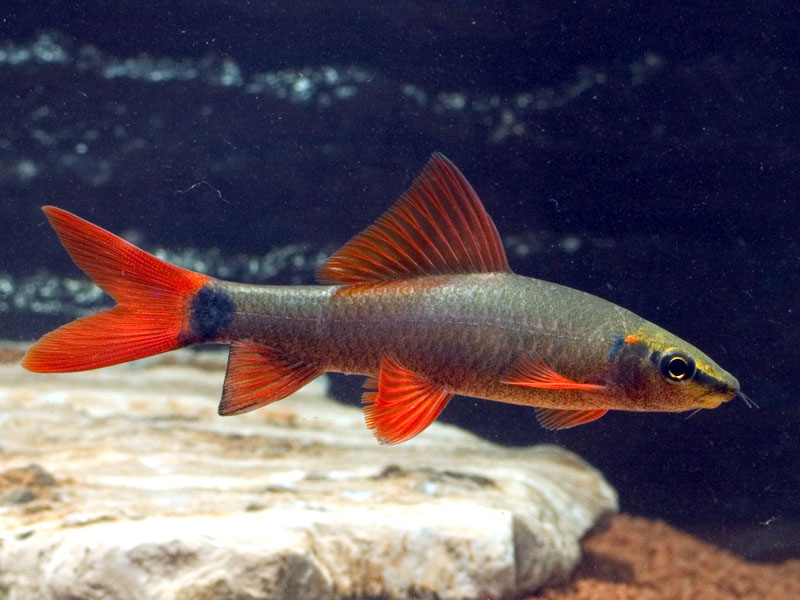
Epalzeorhynchos frenatumRainbow Shark
Fowler, 1934
Max length150mm SL6in SLTank120 × 45cm48 × 18inTemp20–26°C68–79°FpH6.5–8.0The ornamental albino variant is widely-available and has become extremely popular in the hobby and there is a commercially-produced anerythristic (lacking red pigment) mutation that has pale yellowish fins and has sometimes been misidentified as E. munense. Also worthy of note is that the specific name is sometimes misspelled 'frenatus'. Most members of Epalzeorhynchos were formerly regarded as Labeo spp. and are thus referred to as such in older literature. According to Rainboth (1996) they're characterised by absence of a dorsal spine...
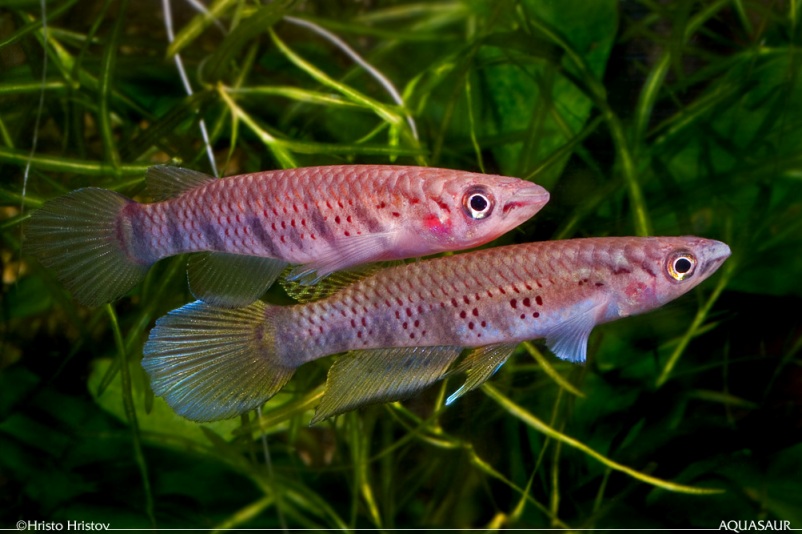
Epiplatys sexfasciatusSix-barred Panchax
Gill, 1862
Max length70mm SL2.8in SLTank80 × 30cm31 × 12inTemp20–27°C68–81°FpH5.0–7.0Distributed throughout coastal regions north and westwards from Gabon through Equatorial Guinea, Cameroon, Nigeria, Benin and Togo as far as Ghana although some consider it restricted to northwestern Gabon and Equatorial Guinea with the remaining populations representing various subspecies (see 'Notes'). Type locality is 'Gaboon River', which presumably refe...
Erythrinus erythrinusRed Wolf Fish
authority not recorded
Max length200mm SL8in SLTank120 × 30cm48 × 12inTemp22–26°C72–79°FpH5.5–7.5A species for the specialist, E. erythrinus is also known as the rainbow wolf fish or red hi-fin wolf fish. It is quite variable in colour and pattern depending on collection locality. There is a variant from Peru that has a bright orange belly. Recent studies have highlighted genetic differences in these different populations, suggesting that E. erythrinus is actually a species complex, rather than a single species. There is currently one other recognised species in the genus, E. kessleri, but ...
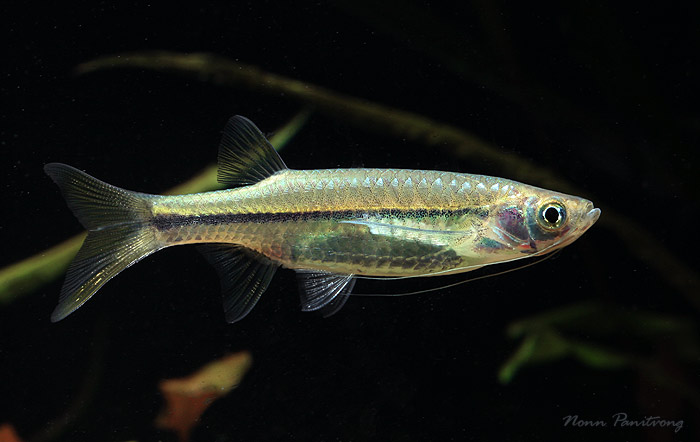
Esomus metallicusStriped Flying Barb
Ahl, 1923
Max length75mm SL3.0in SLTank120 × 30cm48 × 12inTemp20–26°C68–79°FpH6.0–7.0There currently exist a dozen described Esomus spp. alhough few are seen in the aquarium trade and none are especially popular. Most are commonplace in their native countries and also quite plainly-patterned so generally overlooked by collectors. Their most common use in some areas is actually as a feeder fish in the aquaculture of larger species. They're characterised by greatly-enlarged pectoral fins and two pairs of barbels, of which the maxillary pair are extremely long and usually reach the pectoral fins.
Fundulopanchax walkeri
authority not recorded
Max length65mm SL2.6in SLTank45 × 25cm18 × 10inTemp20–23°C68–73°FpH6.0–7.0There exist many different populations of this species in nature, some of which are now threatened or extinct, due to rapid human development in Ghana and the Ivory Coast in recent years. It is not a common fish in the hobby. Interestingly, it appears that F. walkeri occurs as both an annual and non-annual fish. This adaptation allows it to inhabit many different habitats, as it is able to breed in both permananent and temporary bodies of water. Note that this fish prefers cooler temperatures t...
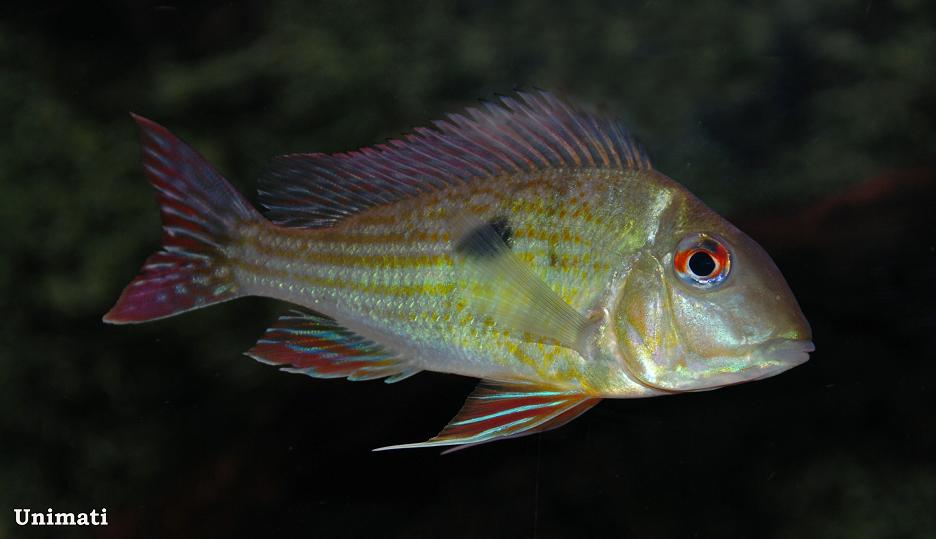
Geophagus abalios
López-Fernández & Taphorn, 2004
Max length200mm SL8in SLTank180 × 60cm72 × 24inTemp26–32°C79–90°FpH4.0–7.0It also occurs in the río Caura on the Guyana Shield plus the Ventauri and Mavaca drainages in the middle and upper Orinoco where it’s also known from some white water, referring to turbidity rather than turbulence, habitats. To the north its distribution appears limited by the Las Majaguas dam on the Río Cojedes, a tributary of the Apure where a probable introduced population inhabits the res...
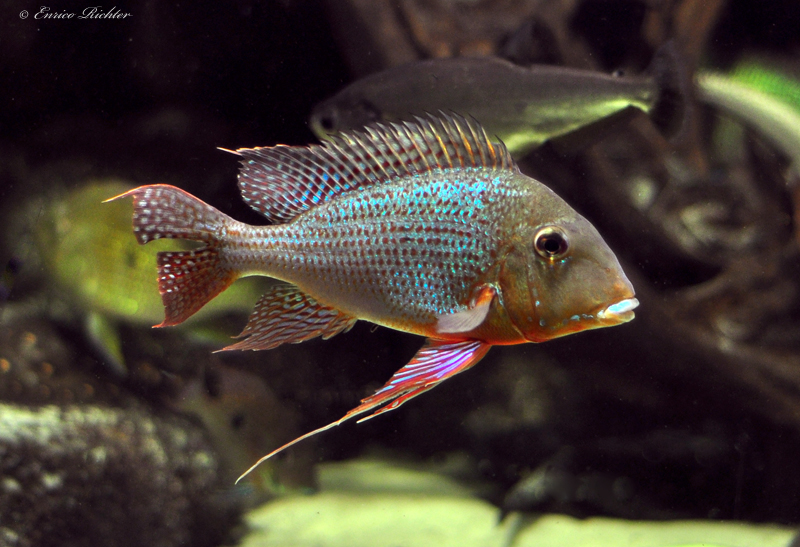
Geophagus altifrons
Heckel, 1840
Max length225mm SL9in SLTank180 × 60cm72 × 24inTemp26–32°C79–90°FpH4.8–6.6Despite its designation as type species this is among the most frequently-misidentified members of the genus. This is in part because its natural distribution was earlier considered even more extensive than the still-substantial range recognised today, with populations from the Río Orinoco, Guianas and rio Tocantins now recognised as species in their own right.