Dicrossus maculatus
Spadetailed Checkerboard Cichlid
On this page11 sections
Quick facts
Difficulty4 of 8 measures
- Space
- medium tank
- Water
- needs soft, acidic water
- Temp
- needs a steady temperature
- Diet
- unknown
- Temperament
- peaceful
- Social
- unknown
- Compatibility
- unknown
Other demands
Each of these can raise the rating on its own, whatever the measures above say.
- Hardiness
- unknown
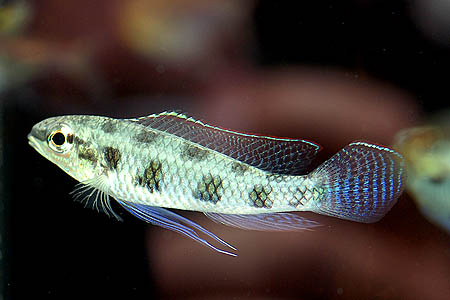
The spadetailed checkerboard cichlid, Dicrossus maculatus, is a cichlid from the Rio Tapajós, Rio Maués and nearby areas of the Brazilian Amazon. Not commonly available in the trade, it is sometimes mistaken for D. filamentosus. A challenge to breed, it needs extremely acidic, very soft water for the eggs to hatch, and a brooding female herds her fry around the tank with signals from her ventral fins.
Distribution
Habitat
Native to the Rio Tapajós, Rio Maués, and surrounding areas of the Brazilian Amazon basin.
Aquarium size
60 ∗ 30 ∗ 38 cm24 ∗ 12 ∗ 15 in - ~68 litres~18 US gal
Maintenance
A heavily planted setup is recommended for Maculatus. Provide plenty of cover in the form of caves with tiny entrances.
Water conditions
Temperature: High temperature - 79 to 86°f (26 to 30°c)
pH: VERY acidic - from 3.4 to 5.4
Hardness: Very soft. Less than 1°dH.
These recommendations come from this profile’s own figures. They contain affiliate links, so we may earn a commission.
Diet
Live foods may be vital to bring Maculatus into breeding condition. Feed a variety of good quality frozen foods as staple.
Behaviour and compatibility
Very peaceful towards non conspecifics.
Sexual dimorphism
Females are of a similar size, if not larger than the males. This however, is not an accurate way of sexing Dicrossus Maculatus. Females have less vivid colouration, males present some striking blue sheen on the side of their heads and gill plates.
Reproduction
Dicrossus Maculatus are a challenge to breed. They require extremely acidic water for the eggs to hatch. High quality water is also absolutely vital, especially at such low pH. It has been noted that adding a few small shoaling fish (tetras and the like) can vastly improve the paternal care that the mature Maculatus display.
Notes
Dicrossus Maculatus are not commonly available in the trade. Sometimes they are mistaken for the more common and popular Dicrossus filamentosus.
The Spadetailed Checkerboards are an absolutely fascinating species to keep. They are a challenge to breed, requiring such acidic and soft water, but when it does happen it is a very rewarding experience.
Reports maintain that the pH and temperature of the water when conceived, eggs laid, eggs hatched and in the first month of the fry's life can affect the gender ratio of a spawn of Dicrossus filamentosus. Raising pH towards 5.5 and lowering the temperature towards 24 in the first month of the fry's lives will give a more balanced ratio of females to males (generally more males than lower pH/higher temp).
Unlike species of Apistogramma females, a brooding Maculatus female may not successfully spawn again until all of the fry are removed from the mature adults' tank.
The mother of a brood will use her ventral fins (which will turn a vivid yellow around breeding time) to give commands to her brood. Basically, the extension of her ventral fins will indicate that the fry should come towards her, and the closure of her ventral fins indicate that the fry need to stop. It is not an uncommon sight to see a Maculatus female parent herding her fry around the tank - they will often be herded into a safe place just before they decide to rest for the night.
Species images · 1
Used with the photographer’s permission. Not licensed for reuse.
Distribution
Profile completeness20 of 24
83% complete
Also missing: etymology.
Community
Questions about Dicrossus maculatus?
Ask on Discord