Results for “pre-”
Type a name: scientific, common, or one a species used to go by. Or narrow the catalogue with the filters.
Filters
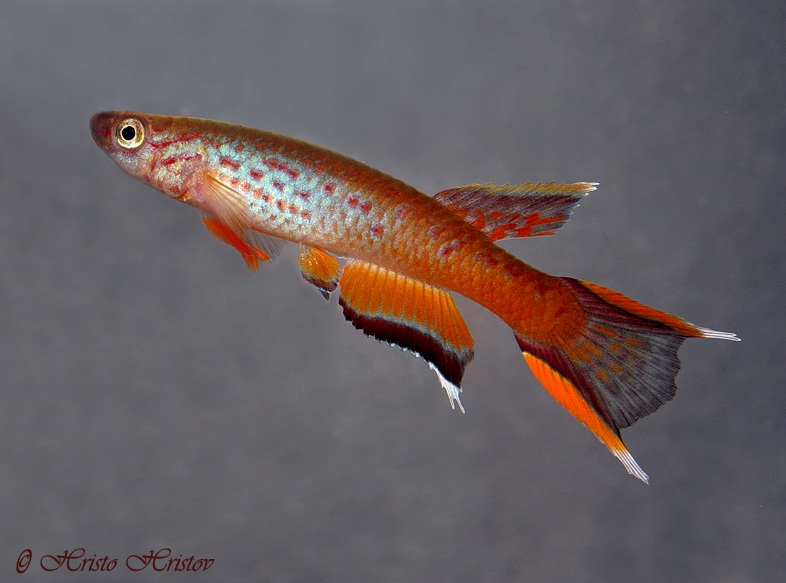
Aphyosemion australeGolden Lyretail
Rachow, 1921
Max length60mm SL2.4in SLTank45 × 25cm18 × 10inTemp21–32°C70–90°FpH5.5–7.0Also known by the vernacular names You might also see it for sale as 'golden lyretail' or 'lyretail panchax, A. australe was among the first killifishes to become popular in the hobby and still a favourite today. There exist a number of wild forms which tend to be labelled with place and year of collection in order to preserve bloodlines and avoid hybridisation, as well as several ornamental strans including 'orange', 'gold', 'chocolate', and 'albino'.
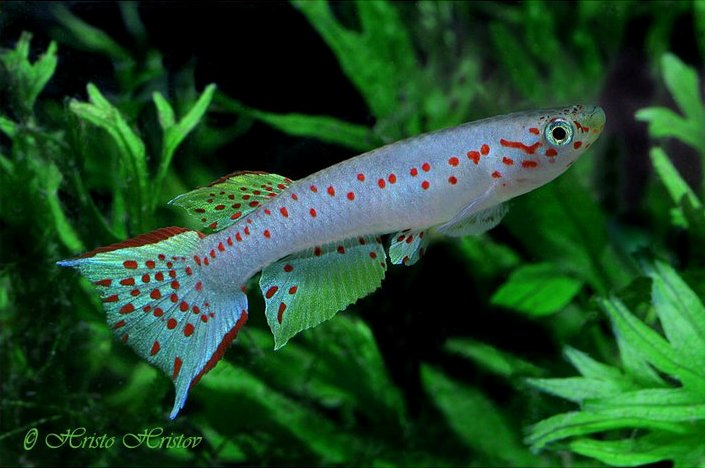
Aphyosemion decorseiDecorse's Lyretail
Pellegrin, 1904
Max length50mm SL2.0in SLTanknot recordedTempnot recordedpHnot recordedType locality is the settlement of Bessou, Lobaye prefecture, Central African Republic, which lies within the Ubangi (also spelled Oubangui) River basin. The Ubangi is a major tributary of the Congo River and this species appears restricted to its middle section and thus probably extends into northern Republic of Congo and Democratic Republic of Congo.
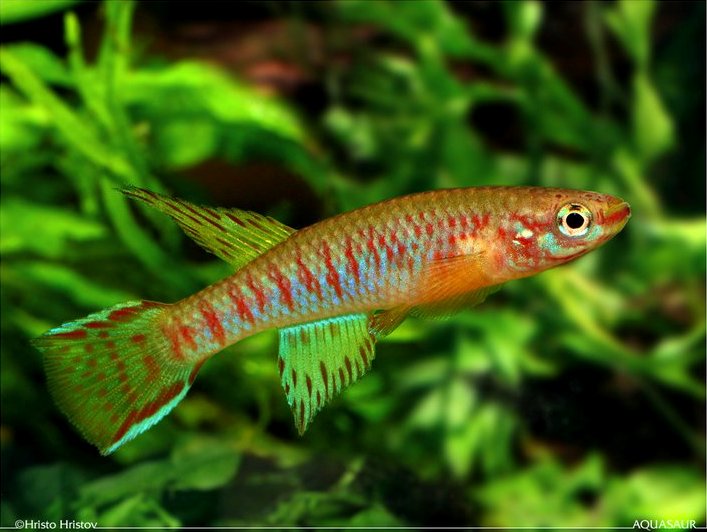
Aphyosemion elbertiRed-Barred Lyretail
Ahl, 1924
Max length40mm SL1.6in SLTanknot recordedTemp18–22°C64–72°FpH6.0–7.0This species' currently accepted range stretches from eastern Nigeria (Mbam River) across central Cameroon (via the Sanaga River system of which the Mbam is a tributary) and across the border into Central African Republic (upper Mambéré basin). It was described from 'Jade Plateau, Cameroon', this apparently corresponding to the Lebo River which lies in what is now the Central African Republic and presumably forms part of the Mambéré headwaters.
Aphyosemion rectogoense
Radda & Huber, 1977
Max lengthnot recordedTanknot recordedTemp20–26°C68–79°FpH5.0–6.5Known only from the Batéké plateau region and surrounding area in southeastern Gabon where it's been recorded from the Léconi-Djouya and upper Mpassa rivers, these forming a portion of the much larger Ogooué basin. Type locality is '6 km west of Léconi', the latter presumably referring to the settlement of that name.
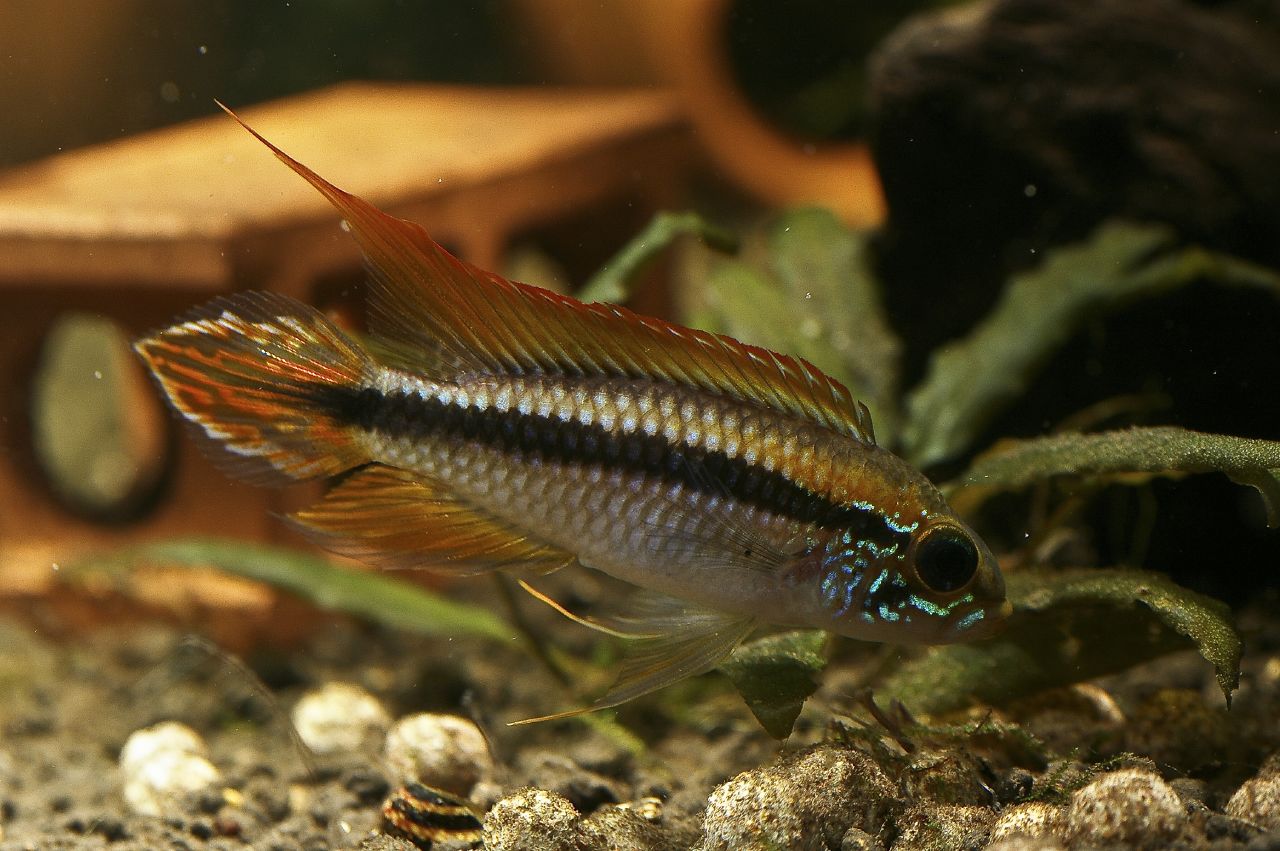
Apistogramma agassiziiAgassizi's Dwarf Cichlid
Steindachner, 1875
Max length♂ 75 · ♀ 50mm SL♂ 3.0 · ♀ 2.0in SLTank60 × 30cm24 × 12inTemp22–29°C72–84°FpH3.0–4.0Numerous ornamental forms of this species have been selectively-bred for the aquarium trade, some of which include. It has also been assigned the 'A' number A234 under the DATZ system with possibly conspecific, related forms similarly numbered A235, A236, A237, A238, A239, A240, A241 and A242 depending on locality. The genus Apistogramma is among the most speciose of South American cichlid genera with around 70 species valid at present but many more awaiting description. In addition ...
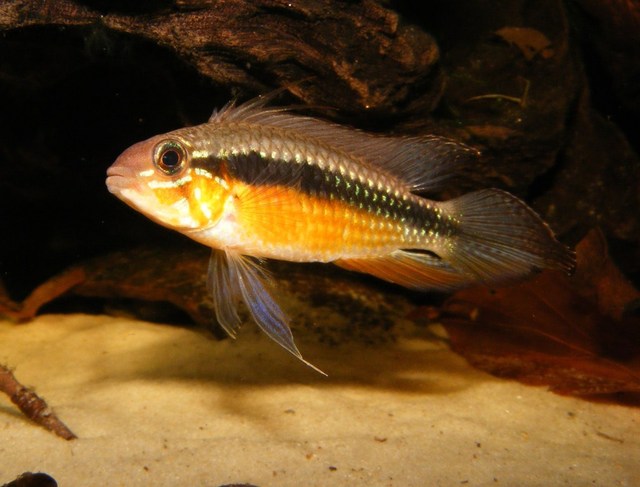
Apistogramma elizabethaeA208
Kullander, 1980
Max length50mm SL2.0in SLTank45 × 30cm18 × 12inTemp23–29°C73–84°FpH4.0–6.0The form from the rio Içana tends to have more blue markings on the head than that from the Uaupés, while a reddish population apparently collected close to the settlement of Tucana (sometimes mis-spelled 'Tucano') on the Uaupés is sometimes traded as A. elizabethae 'super red'. Apistogramma is among the most speciose of South American cichlid genera with around 70 species valid at present but many more awaiting description.
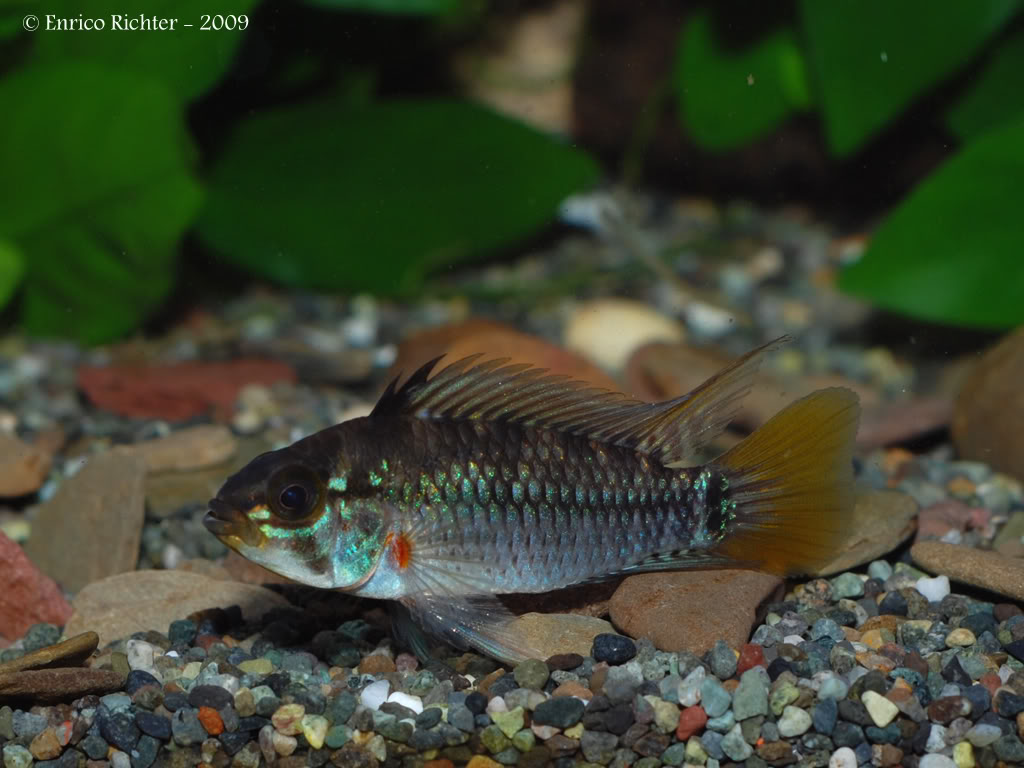
Apistogramma eunotus
Kullander, 1981
Max length♂ 55 · ♀ 40mm SL♂ 2.2 · ♀ 1.6in SLTank45 × 30cm18 × 12inTemp23–29°C73–84°FpH5.5–7.0The genus Apistogramma is among the most speciose of South American cichlid genera with around 70 species valid at present but many more awaiting description. In addition many species exist in two or more geographical colour forms which may or may not turn out to be distinct in the future. Hobbyists tend to label these with collection data if available in order to avoid mixing them and the potential of hybridisation.
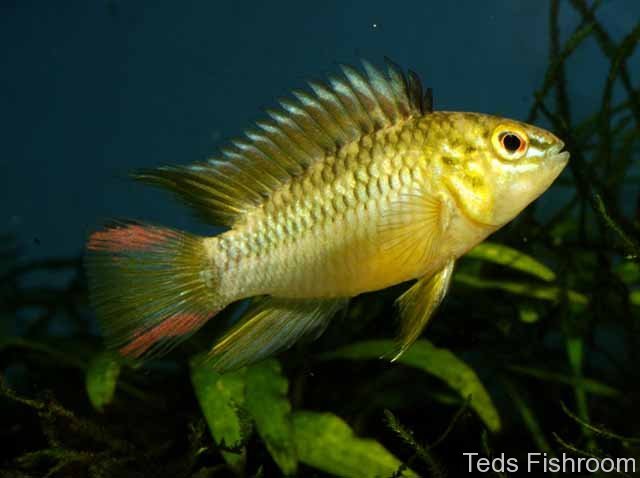
Apistogramma hoignei
Meinken, 1965
Max length60mm SL2.4in SLTank45 × 30cm18 × 12inTemp23–29°C73–84°FpH5.0–7.0The genus Apistogramma is among the most speciose of South American cichlid genera with around 70 species valid at present but many more awaiting description. In addition many species exist in two or more geographical colour forms which may or may not turn out to be distinct in the future. Hobbyists tend to label these with collection data if available in order to avoid mixing them and the potential of hybridisation. Member species have also been organised into a series of species lineages, sublineages, complexes and groups by authors in order to better separate them.
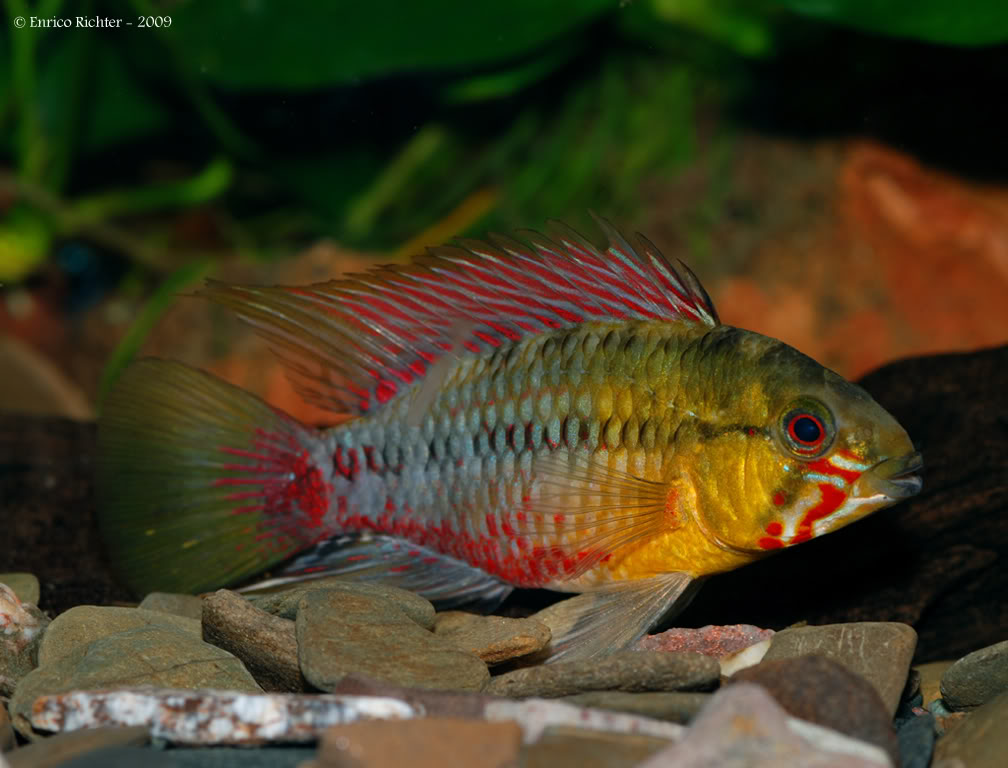
Apistogramma hongsloi
Kullander, 1979
Max length60mm SL2.4in SLTank45 × 30cm18 × 12inTemp23–29°C73–84°FpH5.5–7.0The genus Apistogramma is among the most speciose of South American cichlid genera with around 70 species valid at present but many more awaiting description. In addition many species exist in two or more geographical colour forms which may or may not turn out to be distinct in the future. Hobbyists tend to label these with collection data if available in order to avoid mixing them and the potential of hybridisation.
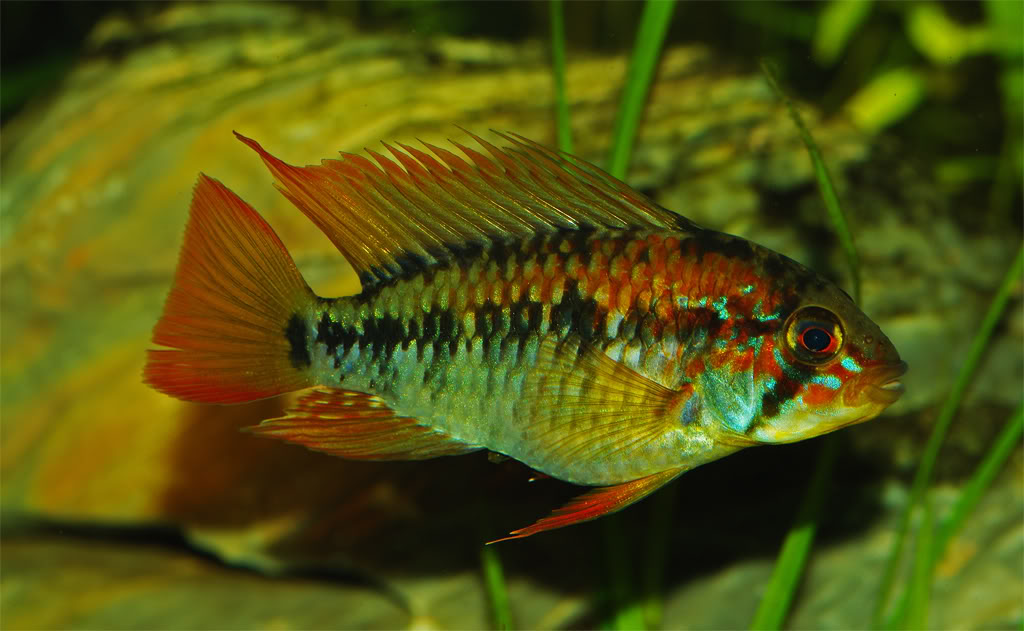
Apistogramma macmasteri
Kullander, 1979
Max length♂ 55 · ♀ 40mm SL♂ 2.2 · ♀ 1.6in SLTank45 × 30cm18 × 12inTemp24–28°C75–82°FpH5.5–7.0The genus Apistogramma is among the most speciose of South American cichlid genera with around 70 species valid at present but many more awaiting description. In addition many species exist in two or more geographical colour forms which may or may not turn out to be distinct in the future. Hobbyists tend to label these with collection data if available in order to avoid mixing them and the potential of hybridisation. Member species have also been organised into a series of species lineages, complexes and groups by authors in order to better separate them.
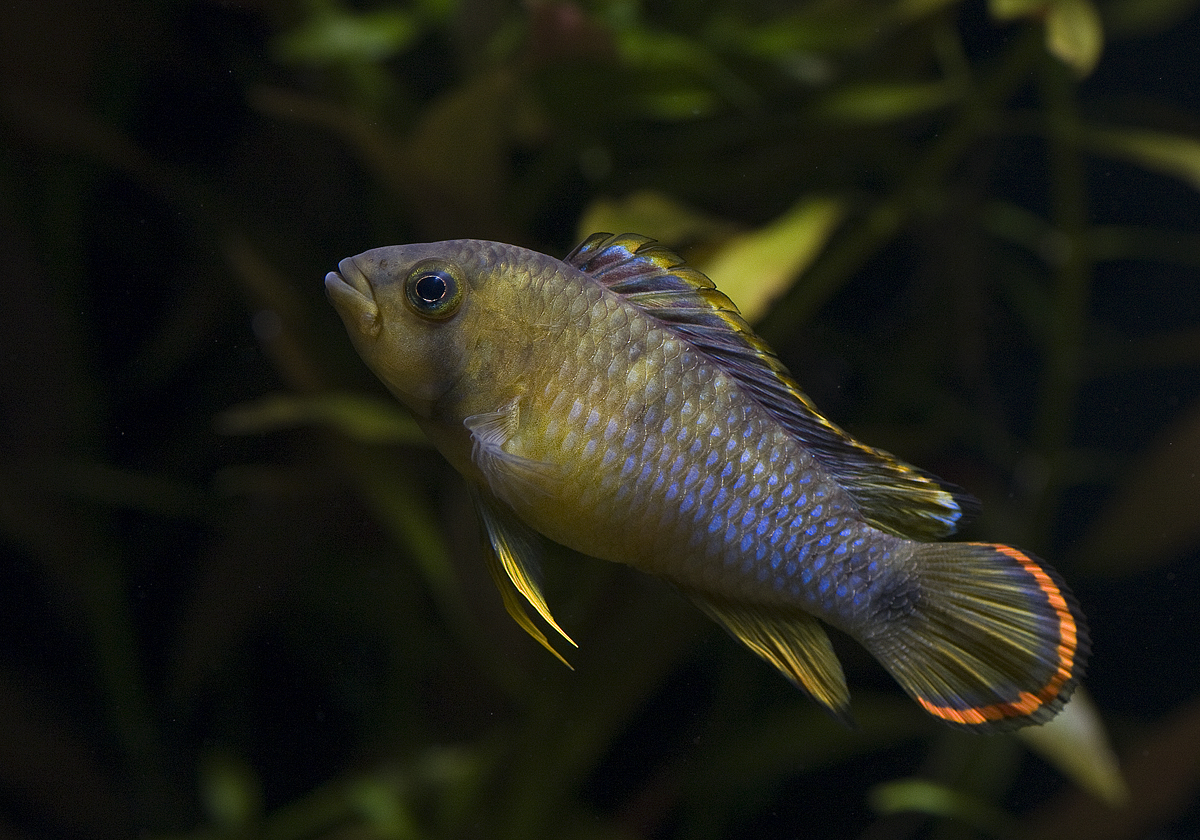
Apistogramma nijsseni
Kullander, 1979
Max length♂ 85 · ♀ 70mm SL♂ 3.3 · ♀ 2.8in SLTank60 × 30cm24 × 12inTemp24–28°C75–82°FpH5.0–6.5The genus Apistogramma is among the most speciose of South American cichlid genera with around 70 species valid at present but many more awaiting description. In addition many species exist in two or more geographical colour forms which may or may not turn out to be distinct in the future. Hobbyists tend to label these with collection data if available in order to avoid mixing them and the potential of hybridisation. Member species have also been organised into a series of species lineages, complexes and groups by authors in order to better separate them. Such lists have been augmented by fish that have appeared in the aquarium trade and are in a state of near-constant flux
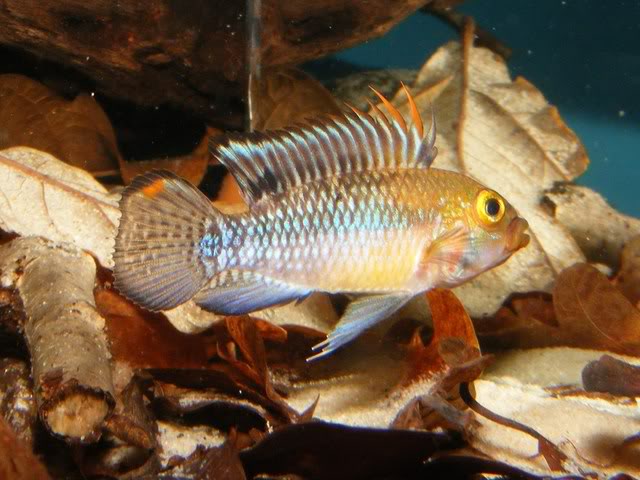
Apistogramma norberti
Staeck, 1991
Max length♂ 60 · ♀ 40mm SL♂ 2.4 · ♀ 1.6in SLTank45 × 30cm18 × 12inTemp24–28°C75–82°FpH4.5–6.5Prior to decription this species was known as A. sp. 'großmaul' or 'bigmouth', and it has also been assigned the code A190 under the DATZ system. The genus Apistogramma is among the most speciose of South American cichlid genera with around 70 species valid at present but many more awaiting description. In addition many species exist in two or more geographical colour forms which may or may not turn out to be distinct in the future. Hobbyists tend to label these with collection data if available in order to avoid mixing them and the potential of hybridisation.
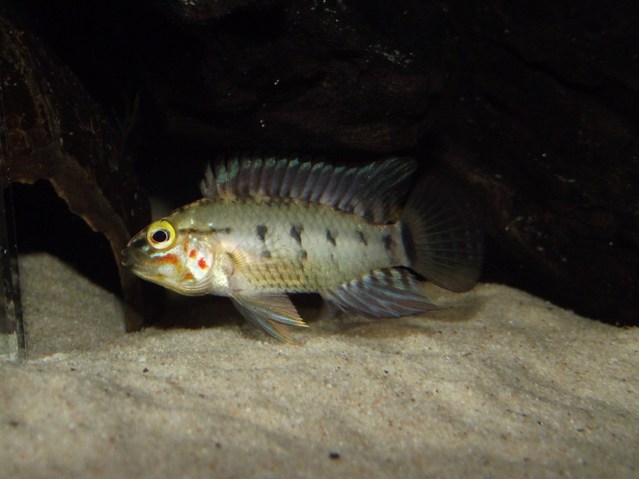
Apistogramma paulmuelleriA52
Römer, Beninde, Duponchelle, García Dávila, Vela Díaz & Renno, 2013
Max length♂ 42 · ♀ 33mm SL♂ 1.7 · ♀ 1.3in SLTank45 × 30cm18 × 12inTemp22–31°C72–88°FpH4.0–6.5This species is assigned the code A52 under the DATZ 'A' number system and is also known by the trade names A. sp. 'Apache', A. sp. 'Peru (II)', A. sp. 'Peru-regani', A. sp. cf. regani (Belém) and A. sp. 'carapintada'. Apistogramma is among the most speciose of South American cichlid genera with around 70 species valid at present but many more awaiting description. In addition many species exist in two or more geographical colour forms which may or ma...
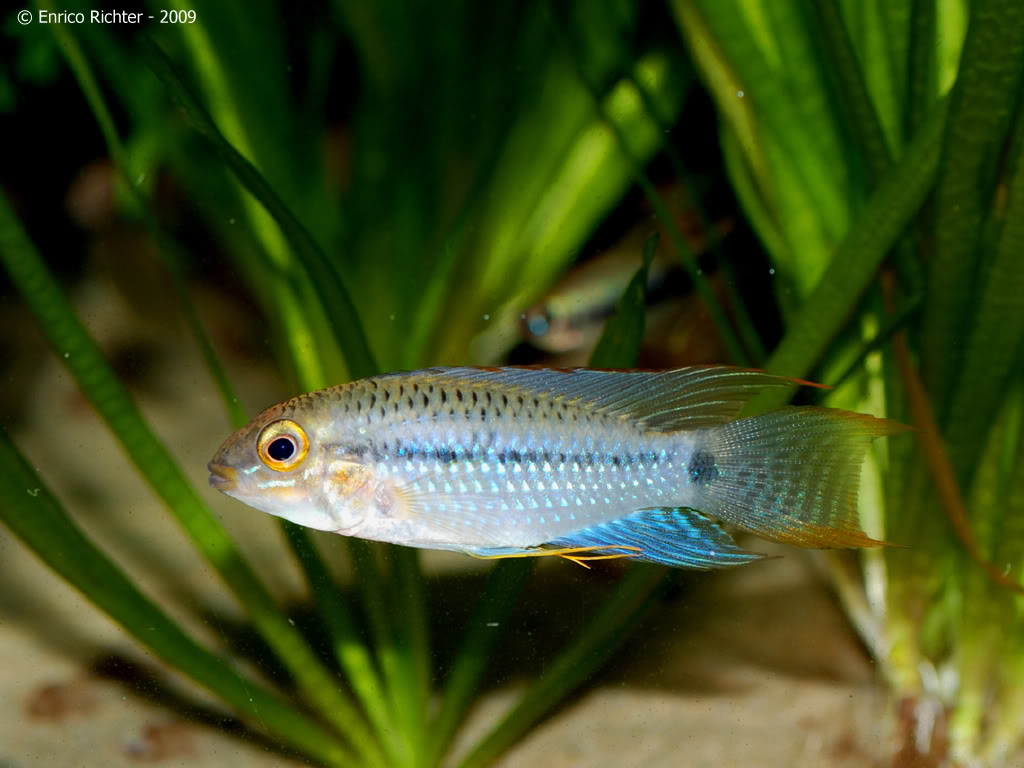
Apistogramma steindachneriSteindachner's Apisto
Regan, 1908
Max length♂ 80 · ♀ 50mm SL♂ 3.1 · ♀ 2.0in SLTank90 × 30cm36 × 12inTemp20–25°C68–77°FpH4.0–7.5This species is assigned the code A138 under the DATZ system, with the Venezuelan variant referred to as A139 for easy reference. The genus Apistogramma is among the most speciose of South American cichlid genera with around 70 species valid at present but many more awaiting description. In addition many species exist in two or more geographical colour forms which may or may not turn out to be distinct in the future. Hobbyists tend to label these with collection dat...
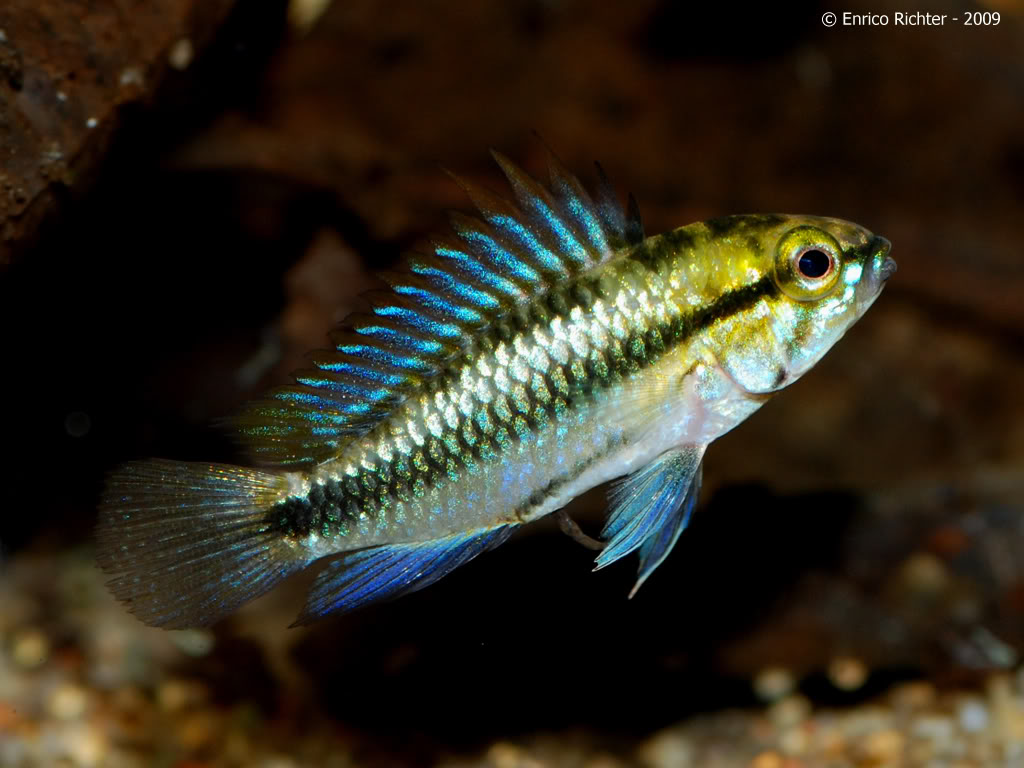
Apistogramma trifasciataThree-striped Apisto
Eigenmann & Kennedy, 1903
Max length♂ 55 · ♀ 40mm SL♂ 2.2 · ♀ 1.6in SLTank45 × 30cm18 × 12inTemp20–25°C68–77°FpH5.0–7.0This species is assigned the 'A' number A204 under the DATZ system with possibly conspecific, related forms coded A205 or A206 depending on collection locality and representing populations from Argentina and the rio Guaporé, respectively. The genus Apistogramma is among the most speciose of South American cichlid genera with around 70 species valid at present but many more awaiting description.
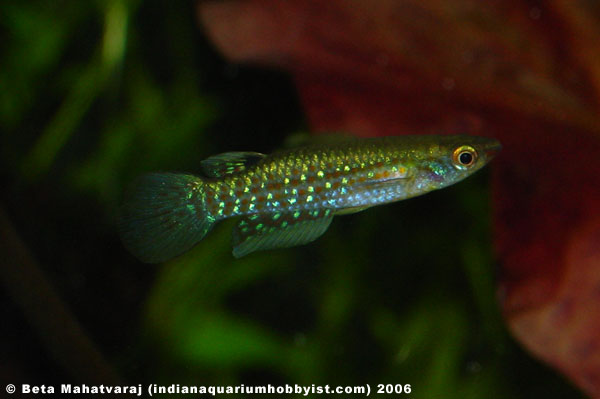
Aplocheilus blockiiGreen Panchax
Arnold, 1911
Max length45mm SL1.8in SLTank45 × 30cm18 × 12inTemp20–28°C68–82°FpH6.0–8.5This species is euryhaline and mostly inhabits lowland, often coastal, habitats containing still or slow-moving brackish or freshwater. It displays a preference for habitats with surface vegetation or overhanging cover and is commonly found in mangrove swamps and rice paddies.
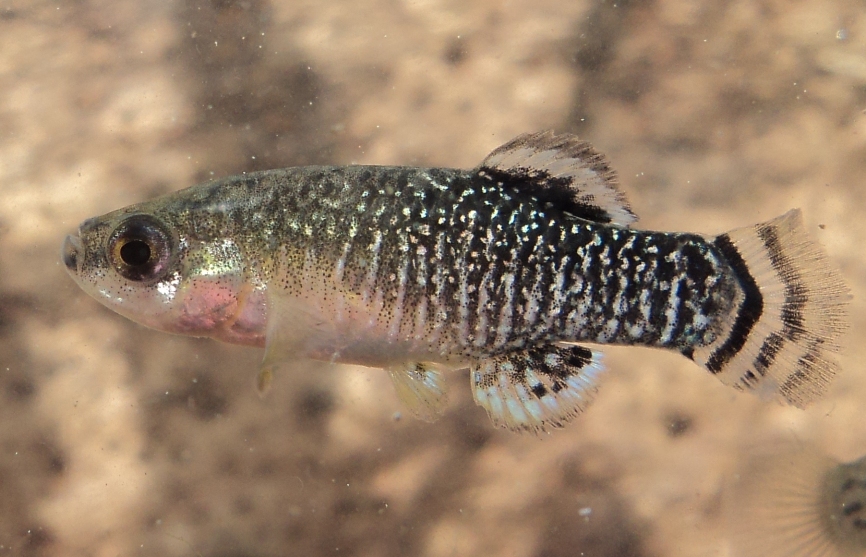
Apricaphanius iberusSpanish Toothcarp
Valenciennes, 1846
Max length50mm SL2.0in SLTank120 × 30cm48 × 12inTemp2–30°C36–86°FpH7.0–9.0Populations of Aphanius from Spain's southern, Atlantic coastline and Algeria previously considered representative of A. iberus have now been elevated to full species status with the names A. baeticus (Doadrio, Carmona & Fernández-Delgado, 2002) and A. saourensis (Blanco, Hrbek & Doadrio, 2006), respectively. All three species look broadly similar although A. saourensis can be easily identified as the patterning in males is mottled and does not form vertical bars, while femal...
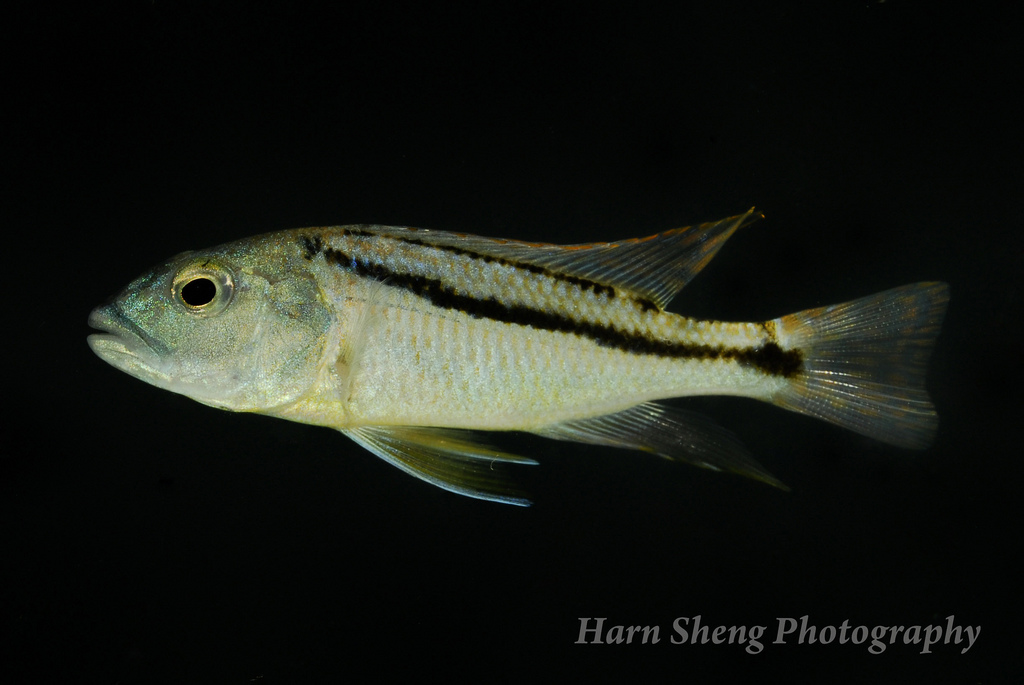
Aristochromis christyi
Trewavas, 1935
Max length300mm SL12in SLTank180 × 60cm72 × 24inTemp24–26°C75–79°FpH7.5–9.0This is currently the only described member ofthe genus and despite having a wide distribution, it's not particularly common in Lake Malawi. Correspondingly it's not seen all that often in the hobby either. It's beak-like mouthparts are specially adapted to allow it to hunt smaller fish among crevices between rocks. It can also extend the mouth in all four directions at once, allowing it to swallow prey up to around 4" long! As well as hunting amongst rocks, Aristoch...
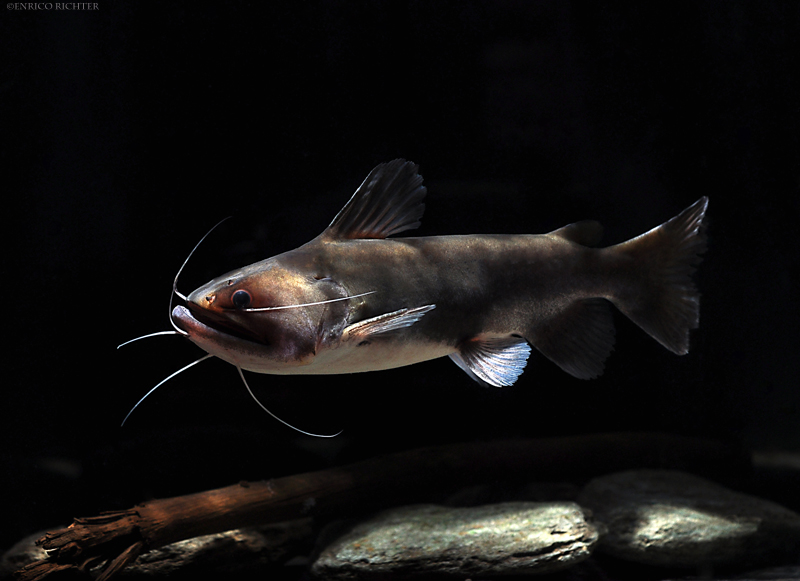
Asterophysus batrachusGulper Catfish
Kner, 1858
Max length250mm SL10in SLTank150 × 60cm60 × 24inTemp22–28°C72–82°FpH5.0–7.0An obligate predator by nature, but captive specimens readily accept strips of white fish, whole shrimp, earthworms, and similar once they are recognised as food. Adult individuals are unlikely to require feeding on a daily basis with 1-2 meals per week sufficient.
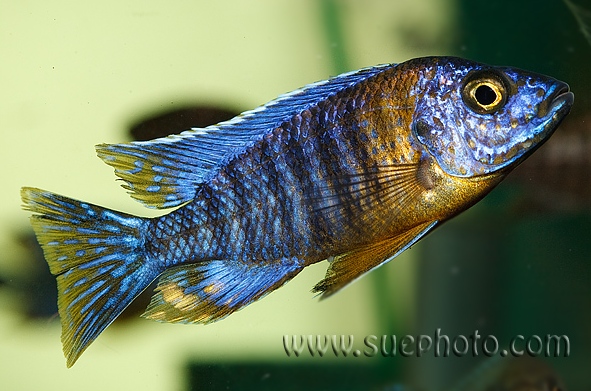
Aulonocara hansbaenschiRed Shoulder Peacock
Meyer, Riehl & Zetzsche, 1987
Max length120mm SL5in SLTank90 × 45cm36 × 18inTemp24–29°C75–84°FpH7.4–9.0Some eminent authors believe this species to be a geographical variant of the highly variable congener A. stuartgranti rather than a distinct taxon but since most popular resources continue to view it as valid we also list it here. At Masinje it has been observed to show a distinct preference for rocky caves and crevices in relatively shallow (3-6 metres deep) water. This is in contrast to most other members of the genus, which tend to forage over sand, but similar to behaviour seen in A. jacobfreibergi.