Results for “sp.”
Type a name: scientific, common, or one a species used to go by. Or narrow the catalogue with the filters.
Filters
Craterocephalus stercusmuscarum stercusmuscarumFly-specked Hardyhead
authority not recorded
Matched on the common name Fly-specked Hardyhead
Max length70mm SL2.8in SLTank76 × 30cm30 × 12inTempnot recordedpHnot recordedA rarely seen species in the trade, although it's kept quite often by Australian hobbyists. Members of this genus are thought to have a more ancient association with Australian freshwaters than most others found in these habitats. Craterocephalus also contains the most species of any Australian freshwater fish genus. It has been shown that there are quite large genetic differences between groups of the species living in close proximity to each other, and even sharing the same waters. In ...
Mogurnda adspersaSouthern Purple Spotted Gudgeon
authority not recorded
Matched on the common name Southern Purple Spotted Gudgeon
Max length140mm SL6in SLTank120 × 30cm48 × 12inTemp16–24°C61–75°FpH7.0–7.5This species is considered endangered across its native range, but has recently begun to appear in the hobby a little more often as a result of commercial farming. It's still by no means common though. Superficially it looks very similar to the much commoner Northern purple spotted gudgeon (Mogurnda mogurnda), but can be distinguished by the presence of only 30-36 scales along its lateral line, (as opposed to 37-48 in M. mogurnda), and a higher degree of red spotting in the second dorsal fi...
Pseudanos trimaculatusThree-spot Headstander
authority not recorded
Matched on the common name Three-spot Headstander
Max length125mm SL5in SLTanknot recordedTemp23–27°C73–81°FpH6.0–7.5This species was formerly known as Anostomus trimaculatus and this name is still used in much of the available literature. It is now invalid, however. The genus Pseudanos contains 3 other known species, P. gracilis, P. irinae and the recently described P. winterbottomi. Care for these species is as for P. trimaculatus....
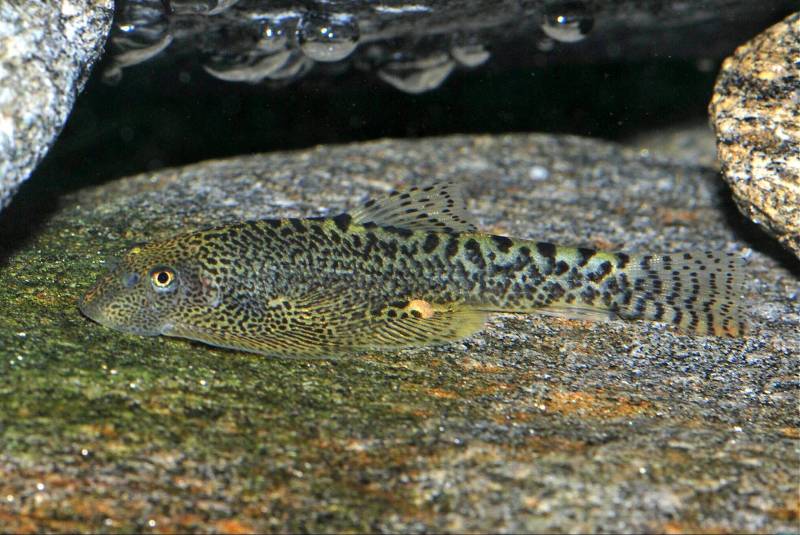
Sewellia sp. 'SEW04'
authority not recorded
Max length60mm SL2.4in SLTank75 × 30cm30 × 12inTemp20–24°C68–75°FpH6.0–7.5This fish has thus far only been imported among shipments of S. sp. 'SEW02' and S. sp. 'SEW03'. It doesn't appear to correspond to any known member of the genus and may be undescribed. Prior to the mid-1990s S. lineolata was the only species in the genus but an upturn in surveys of fresh water fauna in Vietnam and Laos has resulted in the discovery of various new taxa, several of which remain undescribed.
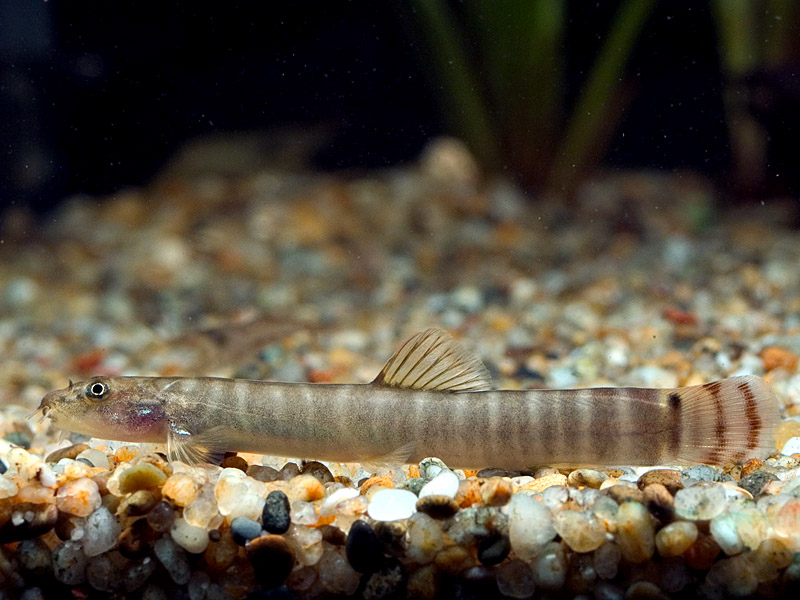
Aborichthys sp. 'AR01'
authority not recorded
Max length55mm SL2.2in SLTank60 × 30cm24 × 12inTemp21–26°C70–79°FpH6.0–7.5This fish is usually traded as A. elongatus but that species appears endemic to higher altitude waters of the Brahmaputra drainage in Darjeeling District which borders Jalpaiguri to the north east. These flow down from the Sivalik Hills whereas the Raidak I originates in Bhutan. Only three species of Aborichthys have been officially described to date meaning this is likely to represent an undescribed species. It was pictured in Tekriwal and Rao (1999) under the name 'A. bijulensis' but...
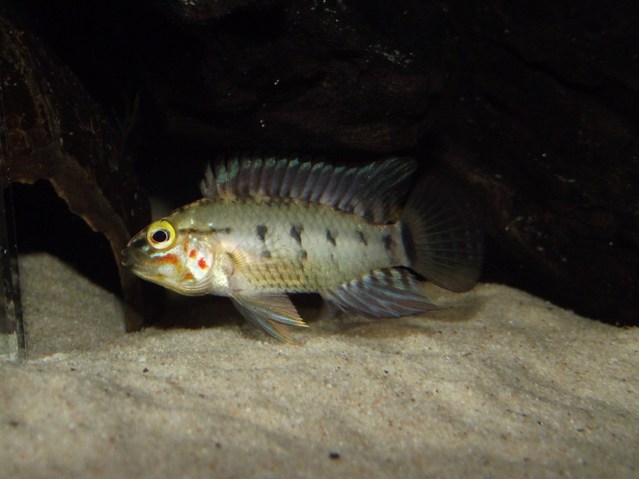
Apistogramma paulmuelleriA52
Römer, Beninde, Duponchelle, García Dávila, Vela Díaz & Renno, 2013
Max length♂ 42 · ♀ 33mm SL♂ 1.7 · ♀ 1.3in SLTank45 × 30cm18 × 12inTemp22–31°C72–88°FpH4.0–6.5This species is assigned the code A52 under the DATZ 'A' number system and is also known by the trade names A. sp. 'Apache', A. sp. 'Peru (II)', A. sp. 'Peru-regani', A. sp. cf. regani (Belém) and A. sp. 'carapintada'. Apistogramma is among the most speciose of South American cichlid genera with around 70 species valid at present but many more awaiting description. In addition many species exist in two or more geographical colour forms which may or ma...
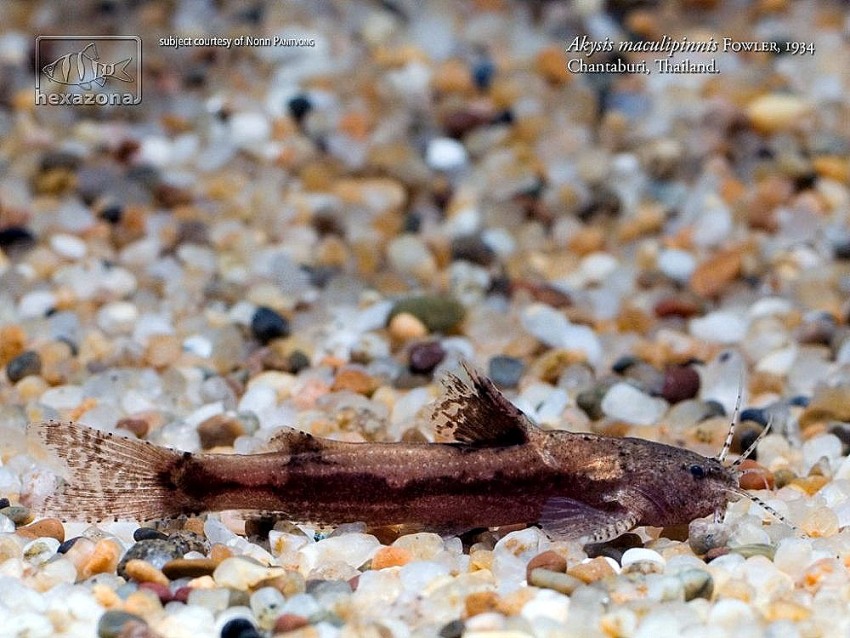
Akysis maculipinnisSpotfin Stream Catfish
Fowler, 1934
Matched on the common name Spotfin Stream Catfish
Max length35mm SL1.4in SLTank45 × 30cm18 × 12inTemp16.5–24°C62–75°FpH6.0–7.5This species has been exported for the aquarium hobby and ranks among the smaller members of the family. It can be differentiated from all other Akysis species by the following combination of characters: head length 22.0-28.6% of standard length (SL); caudal peduncle depth 8.8-10.7% of SL; anal-fin base length 15.2-19.1% of SL; eye diameter 12-16% of head length (HL); nasal barbel length 57 92% of HL; posession of 3-4 serrae on the posterior edge ofspine; body patterning mottled with indistinct ...
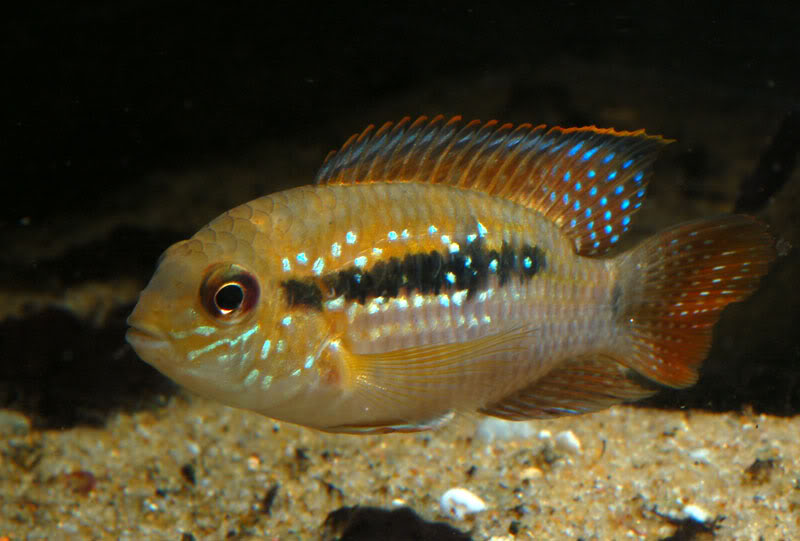
Andinoacara sp. 'Orinoco'
authority not recorded
Max length130mm SL5in SLTank120 × 30cm48 × 12inTemp24–28°C75–82°FpH5.5–7.5This apparently undescribed species was traded as 'Aequidens' sp. 'Orinoco' but following Musilová et al. (2009) appears to be a member of the genus Andinoacara.
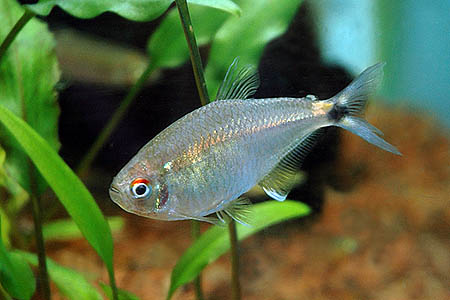
Astyanax bimaculatusTwo Spot Astyanax
Linnaeus, 1758
Matched on the common name Two Spot Astyanax
Max length150mm SL6in SLTank120 × 60cm48 × 24inTemp20–28°C68–82°FpH5.5–7.5A. bimaculatus is not a popular aquarium fish but is available on occasion exception, most often as a contaminant among shipments of other species. It's identity is also in question to an extent with the name currently applied to what is considered to represent a species complex comprising at least four taxa.
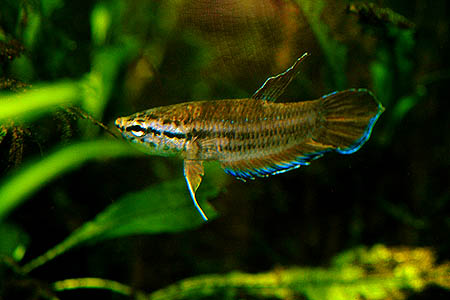
Betta pictaSpotted Betta
Valenciennes, 1846
Matched on the common name Spotted Betta
Max length50mm SL2.0in SLTank60 × 30cm24 × 12inTemp22–28°C72–82°FpH5.5–7.5This species lends its name to the Betta picta complex of closely-related species, an assemblage of which members share the following combination of characters: unpaired fins rounded (anal fin sometimes pointed): I-III, 18-24 anal-fin rays; anal and caudal fins with dark distal margins, most pronounced in mature males; pre- and post-orbital stripes present; chin bar present; opercle with iridescent blue, green, or gold scales.
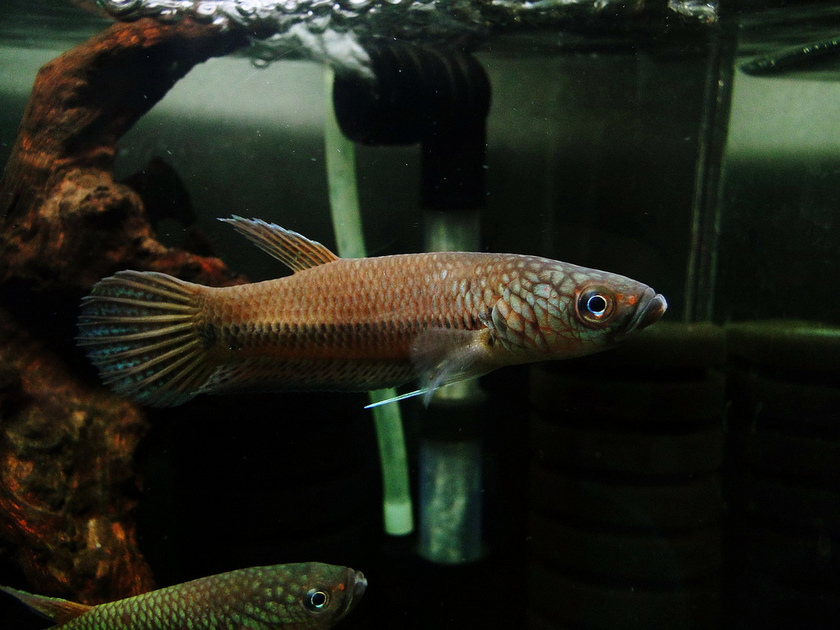
Betta sp. 'Antuta/Bulungan'
authority not recorded
Max length100mm SL3.9in SLTank80 × 30cm31 × 12inTemp21–27°C70–81°FpH5.5–7.5This hypothetically-undescribed species appears to be a member of the Betta unimaculata complex of closely-related species within the genus, of which members share the following set of characters: body long and slender with depth at dorsal fin origin 18-25 % SL; head large and blunt with width 19-24 % SL; long maxilla and lower lip with distance from tip of lower jaw to posterior end of maxilla 27-54 % HL; caudal-fin rounded in shape, occasionally with elongated median rays; pelvic-fin short and filamentous; dorsal and anal fins relatively pointed.
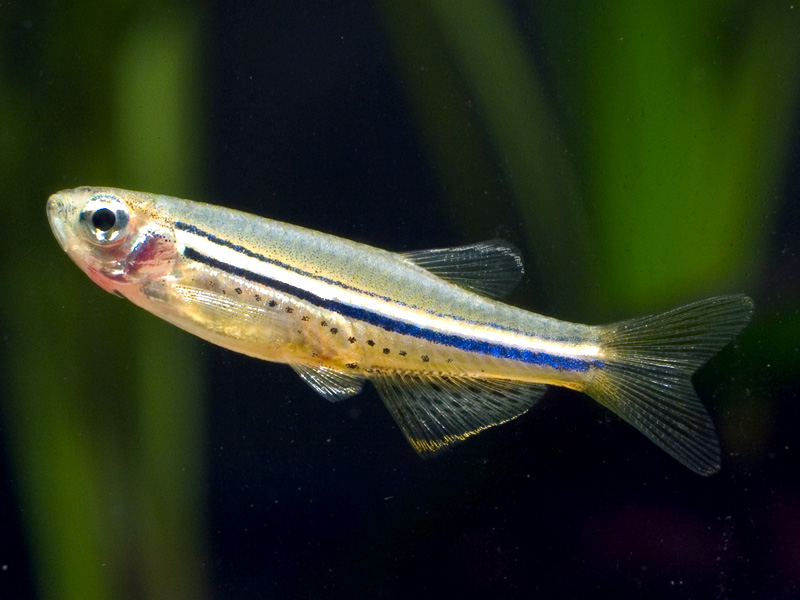
Brachydanio nigrofasciataDwarf Spotted 'Danio'
Day, 1870
Matched on the common name Dwarf Spotted 'Danio'
Max length40mm SL1.6in SLTank60 × 30cm24 × 12inTemp18–26°C64–79°FpH6.0–7.5The genus Danio contains only the type species, D. dangila, separated on the basis of its larger size and the shape of the caudal-fin, which in adults is only slightly emarginate or even truncate in shape, a feature it shares only with Tinca tinca (the common tench) among other cyprinids. The remaining species, of which B. rerio is thought to be the most ancient, are included in the revalidated genus Brachydanio Weber & de Beaufort, 1916.
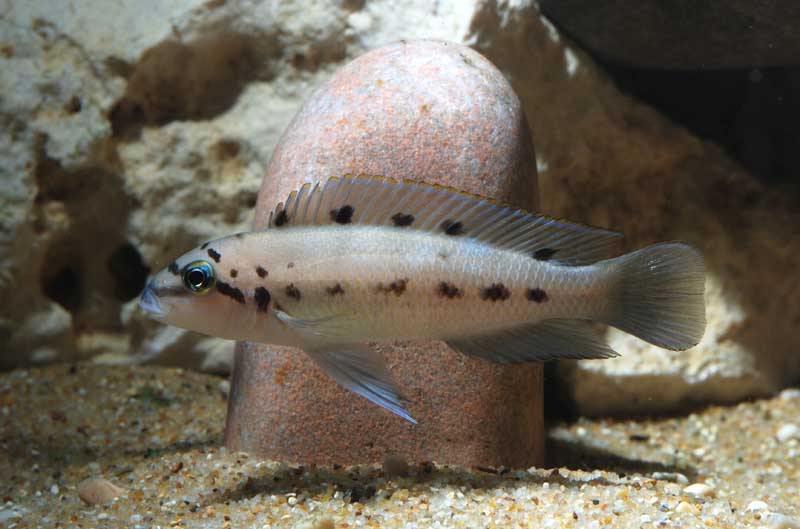
Chalinochromis sp. 'ndobhoi'
authority not recorded
Max length120mm SL5in SLTank120 × 45cm48 × 18inTemp24–28°C75–82°FpH8.0–9.0This undescribed species is also traded as C. sp. 'ndoboi' or 'ndobnoi', and despite its lack of official recognition it's the most commonly-encountered member of the genus in the aquarium trade at time of writing. It can be easily-distinguished from the congeners C. brichardi and C. popelini by its adult body patterning which comprises two or three series of irregular, dark, laterally-orientated blotches, the upper of which is often contained entirely within the dorsal ...
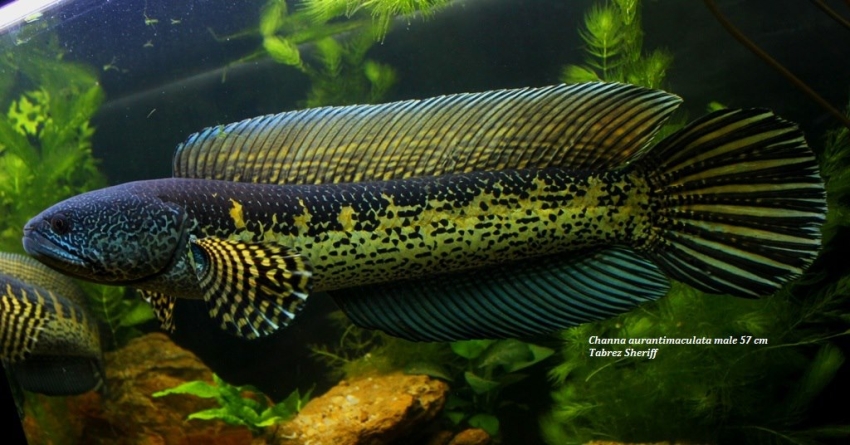
Channa aurantimaculataOrange-spotted Snakehead
Musikasinthorn, 2000
Matched on the common name Orange-spotted Snakehead
Max length400mm SL16in SLTank150 × 60cm60 × 24inTemp10–28°C50–82°FpH6.0–8.0This species is also traded as 'golden cobra snakehead' and is available in the aquarium trade on a regular basis. It can be distinguished from other Channa species by the following combination of characters: 51-54 lateral line scales; 45-47 dorsal-fin rays; 28-30 anal-fin rays; 8-12 cheek scales; 50-52 total verte...
Cichla temensisSpeckled Pavon
authority not recorded
Matched on the common name Speckled Pavon
Max length990mm SL39in SLTanknot recordedTemp27–29°C81–84°FpH5.5–6.5One of the largest cichla species. Due to their large size, Peacock Bass are only really recommended for the experienced fishkeeper that can house them adequately. That said, they are a hardy and robust species that will adapt to a variety of conditions. Peacock Bass are becoming much more available in the hobby and are often seen for sale as cute 2" babies, often tempting people into buying a fish they will not be able to care for in the long term. Peacock Bass are also fished as...
Dicrossus maculatusSpadetailed Checkerboard Cichlid
authority not recorded
Matched on the common name Spadetailed Checkerboard Cichlid
Max length53mm SL2.1in SLTank60 × 30cm24 × 12inTemp26–30°C79–86°FpH3.4–5.4Dicrossus Maculatus are not commonly available in the trade. Sometimes they are mistaken for the more common and popular Dicrossus Filamentosa. The Spadetailed Checkerboards are an absolutely fascinating species to keep. They are a challenge to breed, requiring such acidic and soft water, but when it does happen it is a very rewarding experience. Reports maintain that the pH and temperature of the water when conceived, eggs laid, eggs hatched and in the first month of the fry's life c...
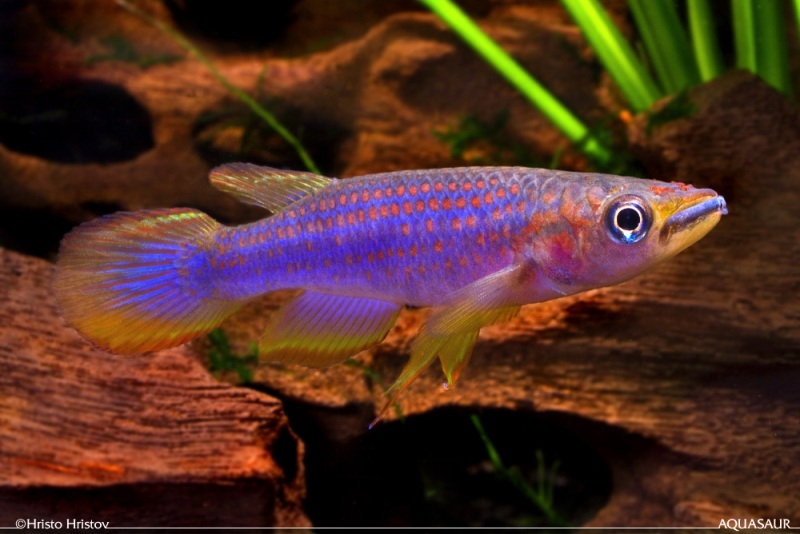
Epiplatys lamotteiRed-spotted Panchax
Daget, 1954
Matched on the common name Red-spotted Panchax
Max length60mm SL2.4in SLTank80 × 30cm31 × 12inTemp18–23°C64–73°FpH5.0–7.0Following the key of Romand (1992) this species can be told apart from congeners by the following combination of characters: adult size > 40 mm SL; large, dark, transverse bars and some reddish-brown pigmentation on flanks; longitudinal bands more-or-less defined; longitudinal bands composed of small red spots; caudal-fin subquadrangular caudal fin; 11-13 anal-fin rays; 16-17 dorsal-fin rays; 7-8 anal-fin rays located anterior to dorsal-fin origin.
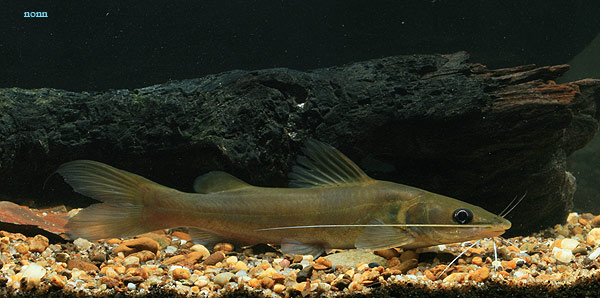
Hemibagrus spilopterus
Ng & Rainboth, 1999
Max length500mm SL20in SLTanknot recordedTemp20–27°C68–81°FpH6.0–8.0This species is relatively common in the aquarium trade but has been widely misidentified as the congener H. nemurus which is native to Java and may never have been exported for ornamental purposes. Hemibagrus has been divided into a number of putative species groups which may or may not rep...
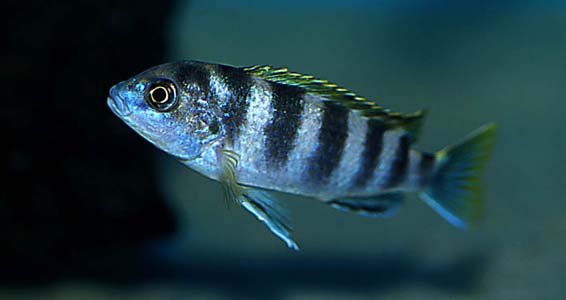
Labidochromis sp. "perlmutt"Pearly Labidochromis
authority not recorded
Max length100mm SL3.9in SLTank90 × 45cm36 × 18inTemp24–28°C75–82°FpH7.5–8.5This 'species' was only discovered in 1995, and remains undescribed to science. The common name 'perlmutt' is the German word for 'mother of pearl', and refers to the beautiful pearly white colouration of adult fish. It's sometimes sold with the alternative trade name of Labidochromis sp. 'yellow bar'. Konings has hypothesised that the Mbamba Bay Island population so closely resembles L. caeruleus that it may turn out to be a geographical variant o...
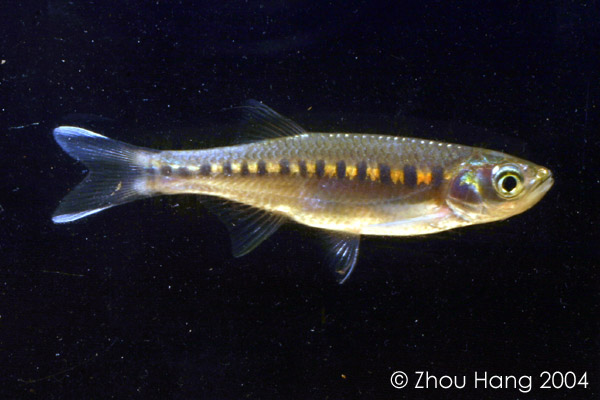
Luciosoma spilopleura
Bleeker, 1855
Max length82mm SL3.2in SLTanknot recordedTempnot recordedpHnot recordedThis species is poorly known in general and is not present in the ornamental trade, although its name is widely misapplied to other Luciosoma species. Its congeners are mostly marketed as 'apollo shark', 'shark minnow', or similar, and often labelled with incorrect scientific names. Identification of the fish pictured here is based on Bleeker (1855, 1860) and Roberts (1989), plus drawings by Bleeker, thus...