Results for “sp.”
Type a name: scientific, common, or one a species used to go by. Or narrow the catalogue with the filters.
Filters
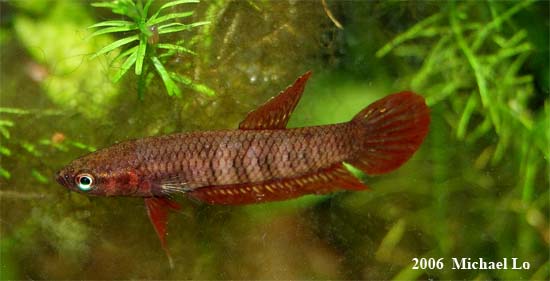
Betta tussyae
Schaller, 1985
Max length37mm SL1.5in SLTank45 × 30cm18 × 12inTemp22–27°C72–81°FpH3.0–6.0This poorly-known betta is included in the B. coccina group of closely-related species within the genus. This assemblage mostly comprises small, red-coloured fishes, with the exceptions of B. persephone and B. miniopinna which are darkish, and identifying some of them can be problematic as external patt...
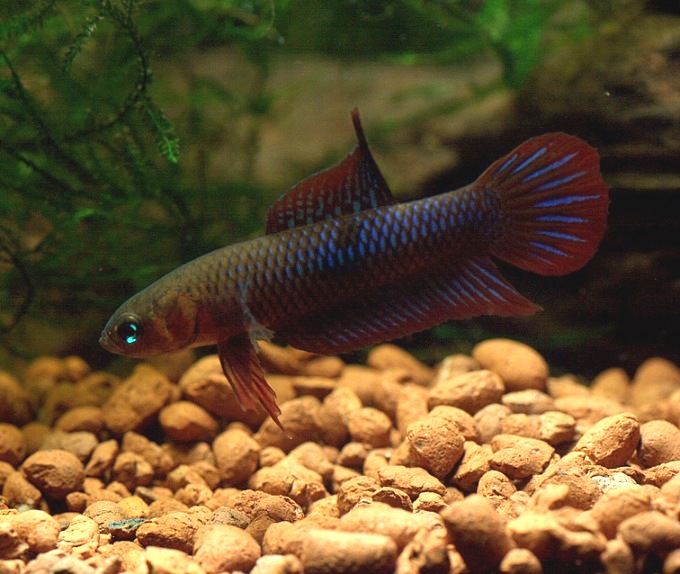
Betta uberis
Tan & Ng, 2006
Max length36mm SL1.4in SLTank45 × 30cm18 × 12inTemp22–27°C72–81°FpH4.0–6.0The majority of records pertain to an area sandwiched between the lower Arut and Kumai rivers, south of the towns of Pangkalan Bun and Kumai in Kalimantan Tengah (Central Kalimantan) province, Borneo, Indonesia. Addditional collections have taken place in the Sampit river basin to the east, and several hundred kilometres further north in Sukadana district Kalimantan Barat (West Kalimantan) province. Type locality is 'Indonesia: Borneo: Kalimantan Tengah: Arut basin: Pankalanbun', with the specimens having been obtained from the aquarium trade.
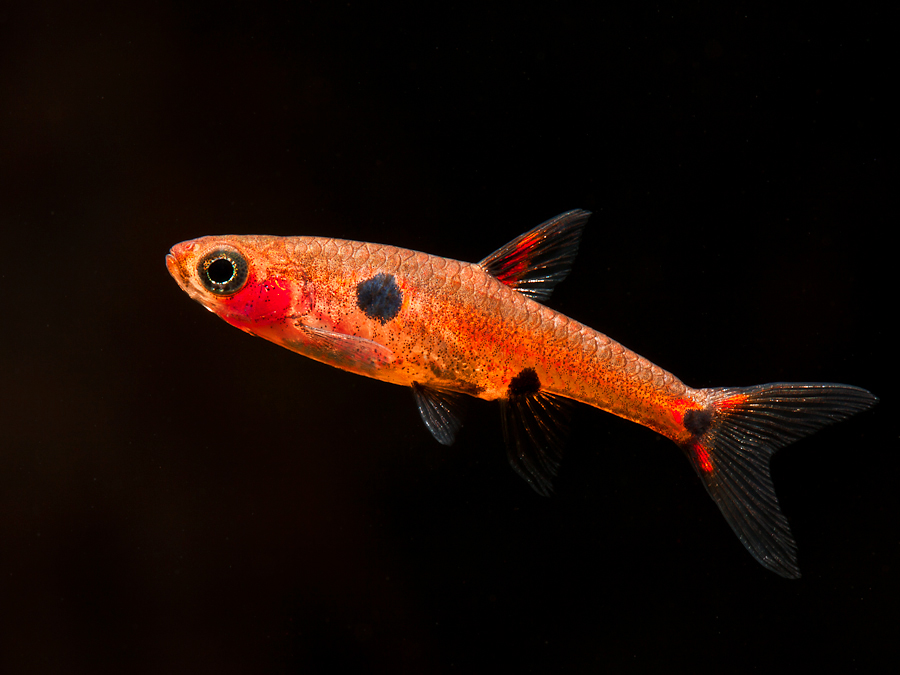
Boraras maculatusDwarf Rasbora
Duncker, 1904
Max length25mm SL1.0in SLTank45 × 30cm18 × 12inTemp20–28°C68–82°FpH4.0–6.5Within the genus Boraras this species is most similar to B. naevus, though in the latter the red body colouration does not extend into the head. The two also differ in the following characters: anteriormost lateral blotch of comparable size in both sexes in B. maculatus vs. significantly larger in male than female B. naevus; 9-10 + 9 principal caudal-fin rays vs. 9 + 8; 26-29 lateral scales vs. 24-26; i.6.i. pelvic-fin rays vs. i.5.i.
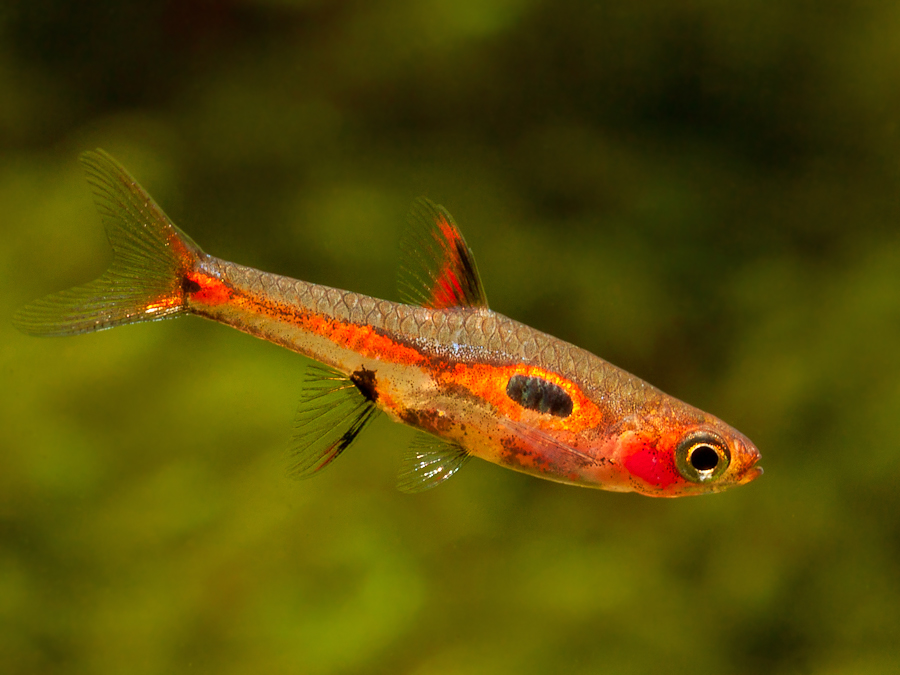
Boraras merah
Kottelat, 1991
Max length20mm SL0.8in SLTank45 × 30cm18 × 12inTemp20–28°C68–82°FpH4.0–6.5Appears endemic to southern Borneo. The type specimens were collected from the Jelai Bila river basin at Nataik Sedawak, presumably a settlement of some kind, near the town of Sukamara in the Indonesian province of Kalimantan Tengah (Central Kalimantan). Its range extends westwards from the Jelai Bila watershed whereas that of the congener B. brigittae, with which it may occur sympatrically there (see 'Notes'), extends east.
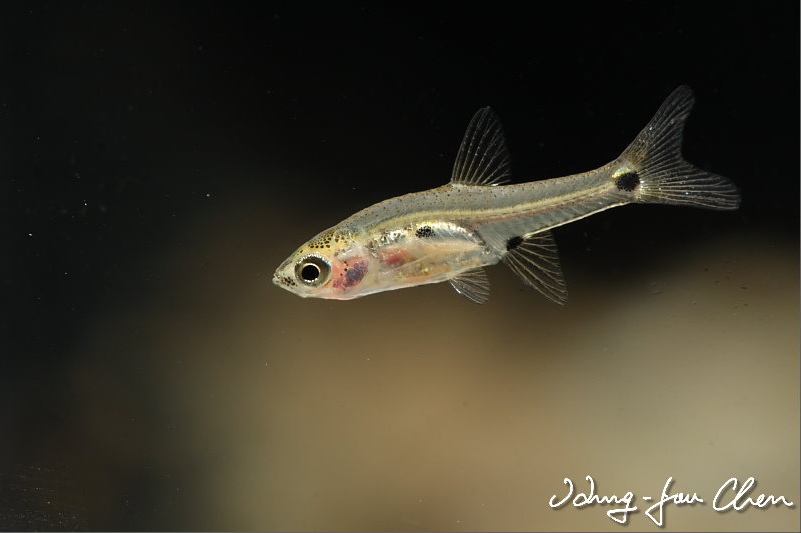
Boraras micros
Kottelat & Vidthayanon, 1993
Max length13mm SL0.5in SLTank45 × 30cm18 × 12inTemp20–28°C68–82°FpH6.0–7.0Bung Khong Long is a lake and confirmed locality in Nong Khai province, Thailand. Aquatic plant species in the lake and surrounding floodplain include Hydrilla verticillata, Ceratophyllum dermersum, Chara zeylanica and Blyxa echinosperma. Salvinia cucullata is found floating on the surface and emergent plants comprise Eleocharis dulcis, Nelumbo nucifera, Lepironia articulata and Nymphaea lotus.
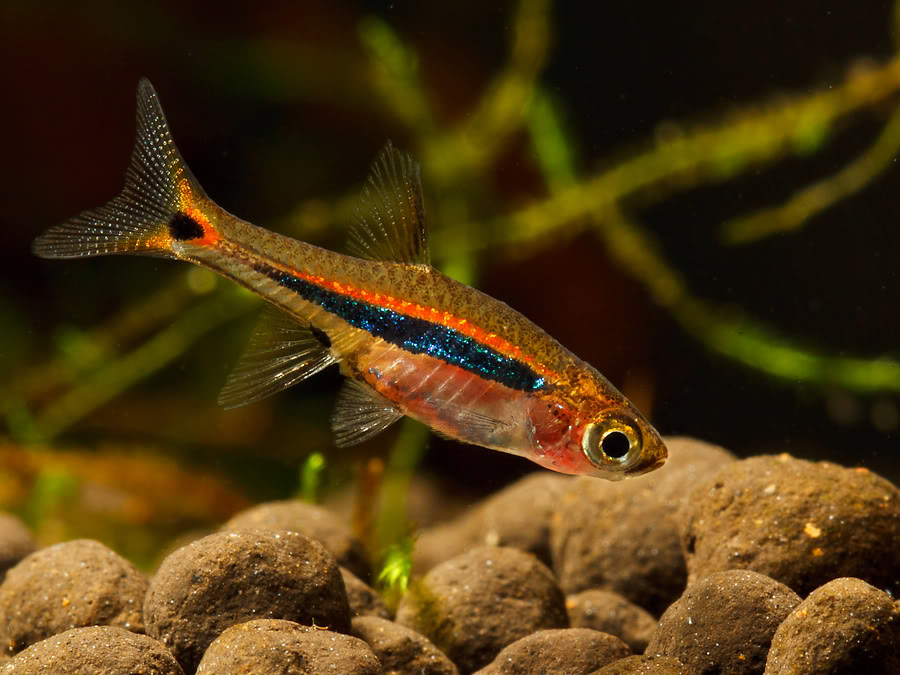
Boraras urophthalmoides
Kottelat, 1991
Max length16mm SL0.6in SLTank45 × 30cm18 × 12inTemp20–28°C68–82°FpH6.0–7.0The anatomical structure of miniaturised cyprinids can vary greatly, and there are two principle 'groupings' with some species possessing intermediate features to some degree. The first contains those fishes which though small are essentially proportionally dwarfed versions of their larger relatives, e.g., Barboides, Microdevario, Microrasbora, Horadandia, Boraras, Sawbwa, Sundadanio, Danio, Laubuca and Rasbora. The other includes those in which anatom...
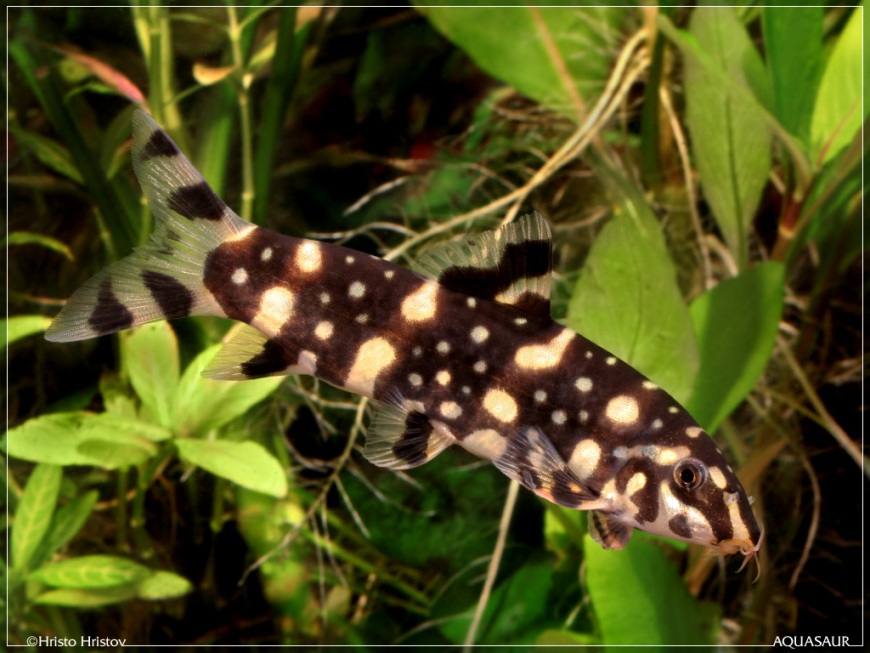
Botia kubotaiPolka-Dot Loach
Kottelat, 2004
Max length150mm SL6in SLTank120 × 45cm48 × 18inTemp22–28°C72–82°FpH6.0–7.5Appears to be endemic to headwaters of the Salween River basin around the border between Myanmar and Thailand. The type specimens were collected from the Megathat Chaung (Megathat stream) in the upper Ataran (known as the Kasat in Thai) River basin, Kayin/Karen State, Myanmar and another population was later discovered in the Hanthayaw River (Suriya in Thai), Tak Province, Thailand.
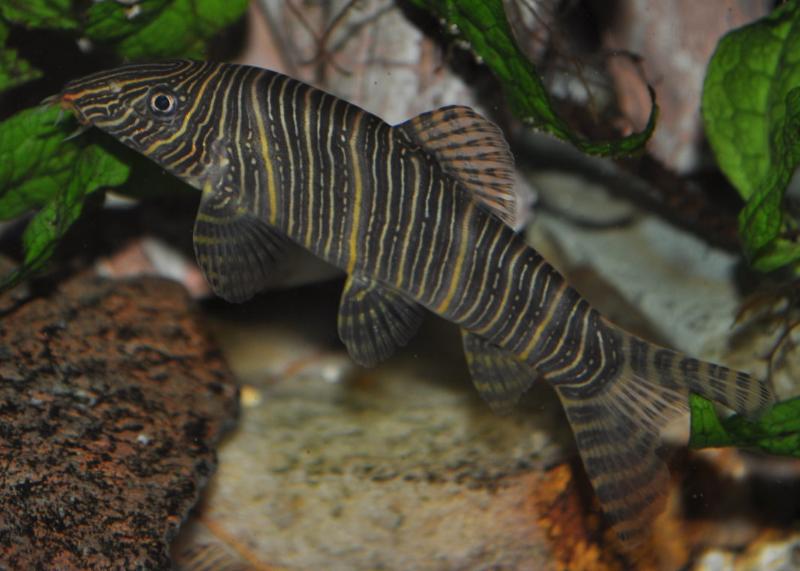
Botia striataZebra Loach
Narayan Rao, 1920
Max length90mm SL3.5in SLTank120 × 30cm48 × 12inTemp21–26°C70–79°FpH6.0–7.5In a survey of fish diversity in the Bhadra River (which joins the Tunga to form the Tungabhadra) it was recorded alongside numerous other species including Puntius chola, Balitora mysorensis, and Mystus armatus. Dry season water paramaters were temperature 69.8°F/21°C, pH 7.0, hardness ~ 2.5°. The substrate was composed of bedrock, boulders, cobbles, gravel, sand and leaf litter in descending order of abundance with a maximum depth of around...
Boulengerella lucius
Cuvier, 1816
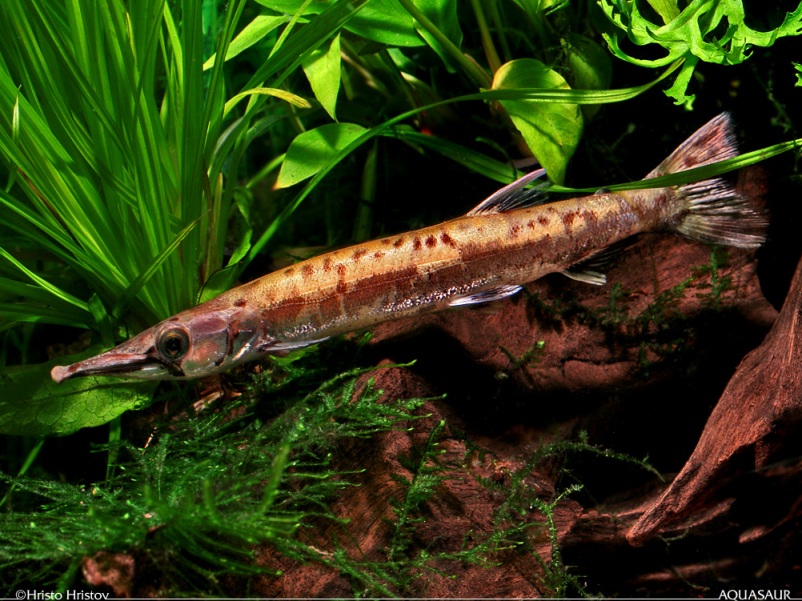
Max length420mm SL17in SLTanknot recordedTemp22–28°C72–82°FpH4.0–7.0This species is largely unsuitable for the home aquarium given its eventual size and natural behaviour, and we know of only a handful of private aquarists with the facilities required to house it long-term. Nonetheless juveniles and subadults are sometimes available in the trade although often misidentified as the congener B. maculata.
Brachychalcinus orbicularisDiscus Tetra
Valenciennes, 1850
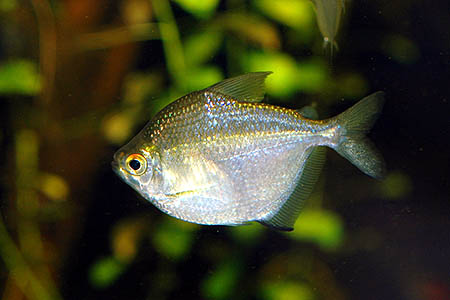
Max length90mm SL3.5in SLTank120 × 30cm48 × 12inTemp20–27°C68–81°FpH5.0–7.5The genus Brachychalcinus currently contains four other species: B. copei (Steindachner 1882) from the rio Madeira and rio Solimões; B. nummus Böhlke 1958 from the Upper Amazon region in Colombia, Ecuador and Peru; B. parnaibae Reis 1989 from the rio Parnaíba basin, and B. retrospina Boulenger 1892 from the Rio Paraguay system. The group is often referred to collectively as 'silver dollar tetras' and tho...
Brachydanio aesculapiiPanther 'Danio'
Kullander & Fang, 2009
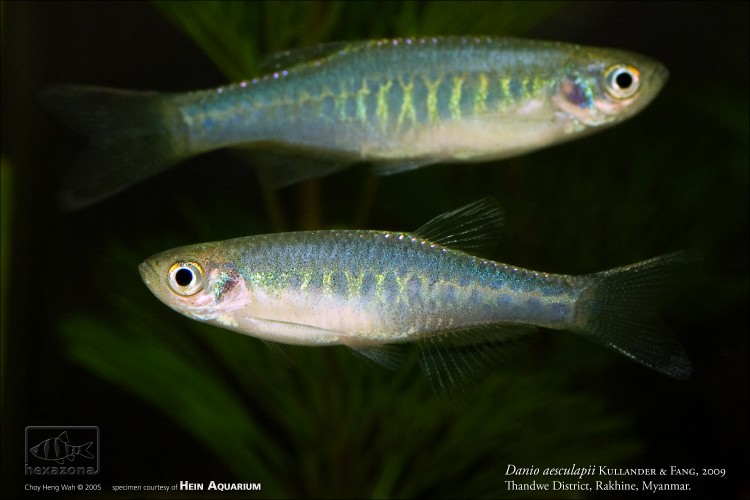
Max length30mm SL1.2in SLTank60 × 30cm24 × 12inTemp22–27°C72–81°FpH6.9–7.1Endemic to the Rakhine Yoma/Arakan mountains in Rakhine state, western Myanmar; this range forms a natural barrier which cuts the state off from the remainder of the country. It was originally collected from a handful of streams and rivers of the western, interior, slopes of which the type specimens originated from the Kananmae Chaung, a coastal rivulet draining into the Bay of Bengal (Kullander and Fa...
Brachydanio albolineataPearl 'Danio'
Blyth, 1860
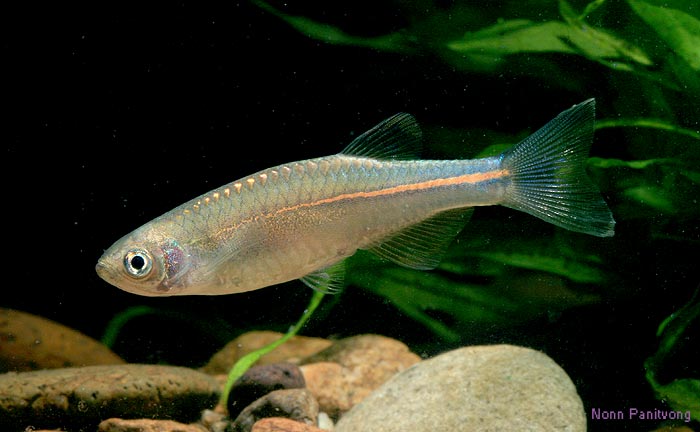
Max length55mm SL2.2in SLTank90 × 30cm36 × 12inTemp16–25°C61–77°FpH6.0–8.0Doubts remain whether B. albolineata is representative of a single species or a group of similarly-patterned, closely-related fish, and the form from Chantaburi province in eastern Thailand was revalidated as B. pulchra (formerly Danio pulcher Smith, 1931) by Kottelat (2013). The status of the currently invalid Danio tweedei (Brittan, 1955) from Kedah state, northern Peninsular Malaysia may also be in question, since fish from that area are clearly...
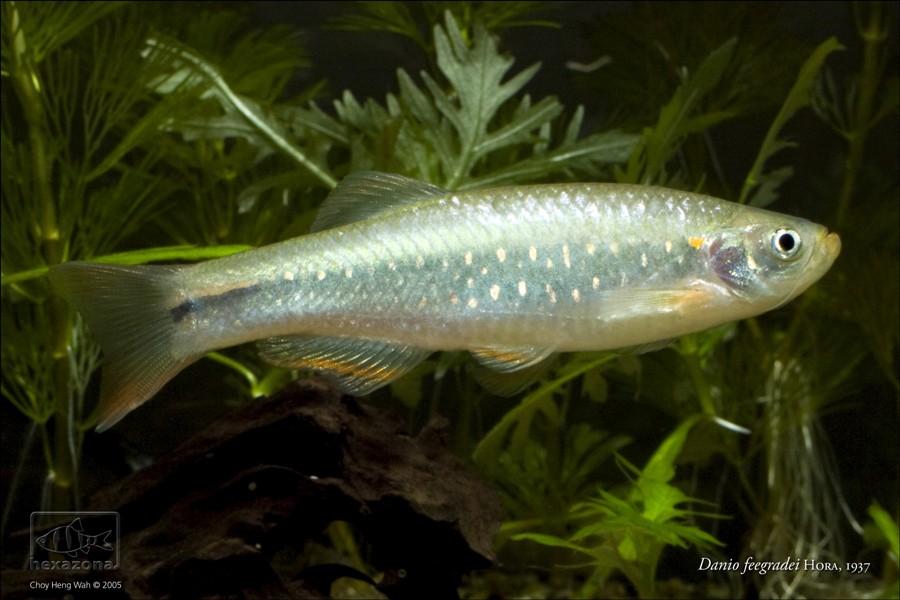
Brachydanio feegradeiYoma 'Danio'
Hora, 1937
Max length60mm SL2.4in SLTank120 × 45cm48 × 18inTemp18–25°C64–77°FpH6.5–7.5Typically inhabits small forest streams. In the Yan Khaw Chaung (Yan Khaw stream) it occurs alongside Devario xyrops, Garra rakhinica, G. vittatula, Xenentodon cancila, Sicyopterus fasciatus and unidentified species of Lepidocephalichthys and Channa (Fang and Kullander, 2009). When sampled during the dry season the habitat consisted of nothing more than a series of small, interconnected po...
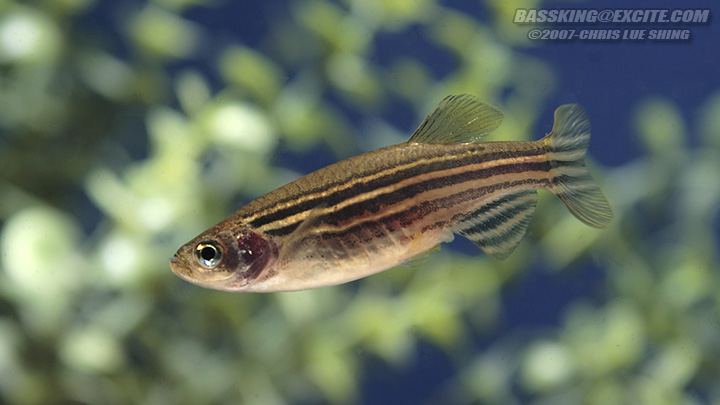
Brachydanio rerioZebra 'Danio'
Hamilton, 1822
Max length50mm SL2.0in SLTank90 × 30cm36 × 12inTemp18–25°C64–77°FpH6.0–8.0This species is very peaceful indeed and can be combined with many of the most popular fish in the hobby including other small cyprinids as well as tetras, livebearers, rainbowfishes, anabantoids, catfishes and loaches. As always when selecting a compatible community of...
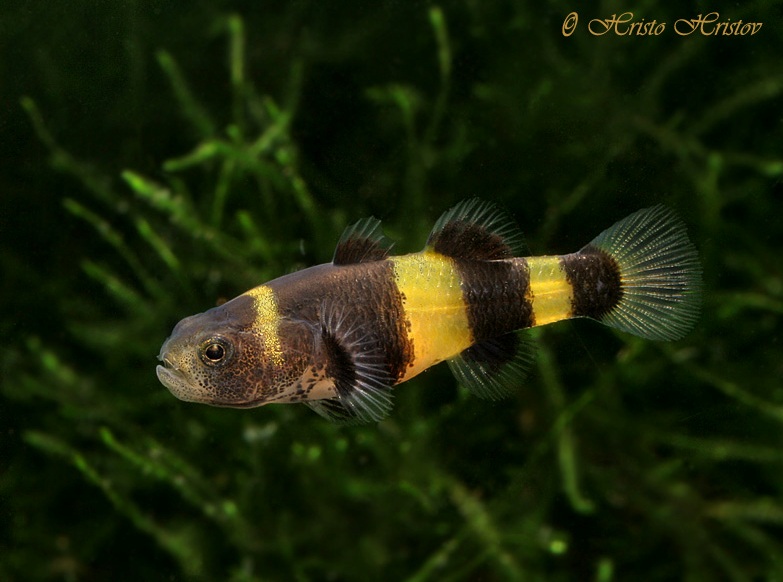
Brachygobius doriaeBumblebee Goby
Günther, 1868
Max length35mm SL1.4in SLTank45 × 30cm18 × 12inTemp22–28°C72–82°FpH7.0–8.5This species is among the more frequently-traded members of the genus, although confusion regarding its identification and natural distribution is commonplace and it's often misidentified as B. nunus or B. xanthozonus. It can be diagnosed as follows: <30 lateral scales; one black band on head, three on body; first black band on body overlapping first dorsal fin to the extent that almost all fin, except a narrow margin, is black, and beginning opposite centre of opercle...
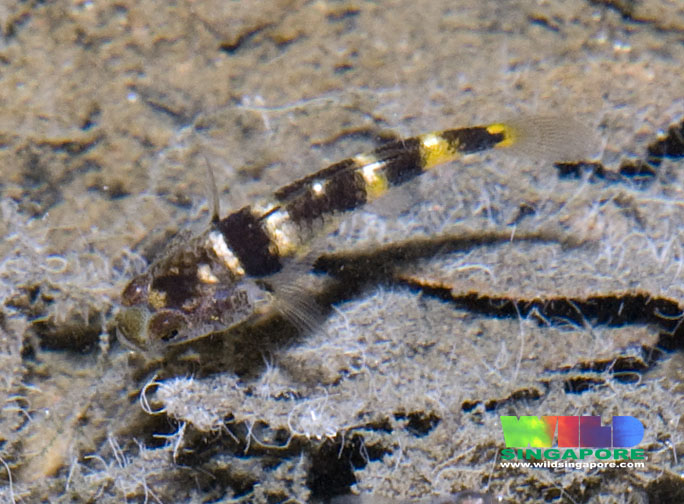
Brachygobius kabiliensisKabili bumblebee goby
Inger, 1958
Max length18mm SL0.7in SLTank45 × 30cm18 × 12inTemp22–28°C72–82°FpHnot recordedIt can be diagnosed as follows: <30 lateral scales; two black body bands reaching ventral midline posterior to anal-fin; band above anal-fin also reaching ventral midline no black band on head, though the first band may touch the posterior margin of the eye; band above anal-fin not reaching ventral midline; 6 branched anal-fin rays; 7-8 predorsal scales. Brachygobius currently contains 9 described species but is likely to prove more diverse should a review be carried out. Alt...
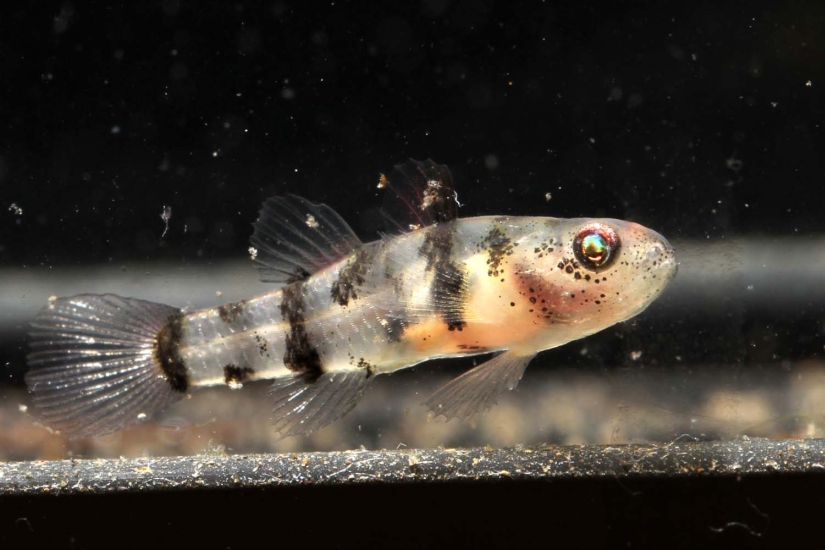
Brachygobius mekongensisMekong Bumblebee Goby
Larson & Vidthayanon, 2000
Max length18mm SL0.7in SLTank45 × 30cm18 × 12inTemp22–28°C72–82°FpH5.5–7.5Apparently restricted to slow-moving or standing freshwater habitats such as marshes, temporal swamps and floodplains where aquatic vegetation and submerged grasses proliferate. One locality consisted of undisturbed marshland with lightly tannin-stained water and dense growth of Vallisneria spp.
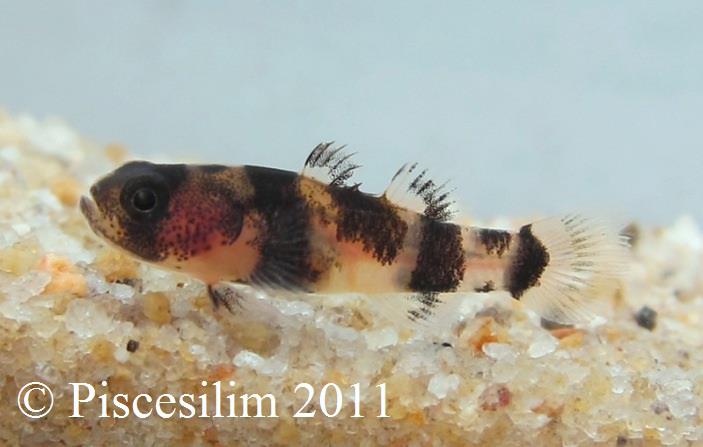
Brachygobius xanthomelas
Herre, 1937
Max length20mm SL0.8in SLTank45 × 30cm18 × 12inTemp22–28°C72–82°FpH7.0–8.5Type locality is '55 miles north of Singapore, freshwater ditches, Mawai District, Johore, Malaysia', and this species has been recorded throughout much of Peninsular Malaysia and southern Thailand. Records from Borneo and Singapore appear to be in error although it may have been extirpated from the latter but as with most members of the genus a degree of confusion surrounds its identity (see 'Notes').
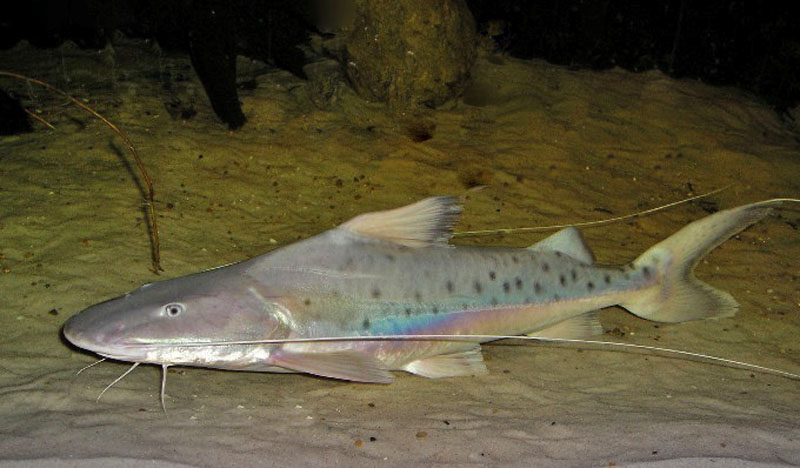
Brachyplatystoma capapretum
Lundberg & Akama, 2005
Max length880mm SL35in SLTanknot recordedTemp22–28°C72–82°FpH6.0–8.0This species can be told apart from the very similar-looking congener B. filamentosum by its smaller adult size (B. filamentosum can grow to almost 3 m in length), shorter maxillary barbels (never extending beyond base of adipose fin (vs. extending beyond base of adipose fin), moderately-forked with lobes of equal size (vs. deeply-forked caudal fin with upper lobe usually longer than the lower) and body col...
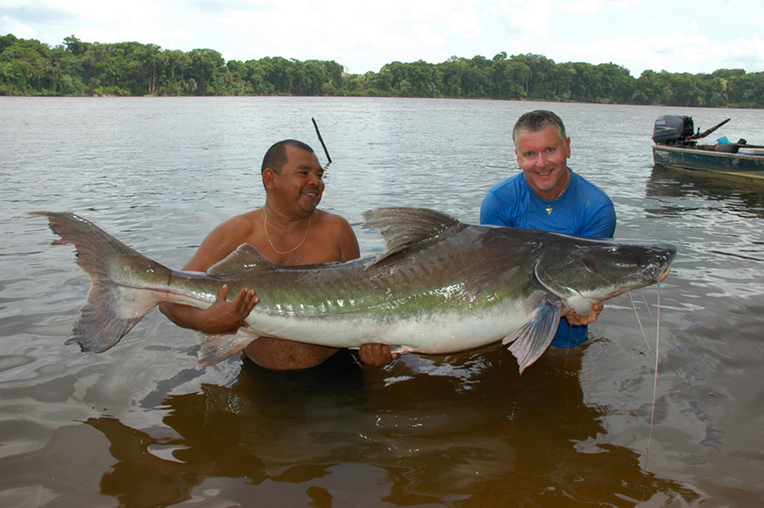
Brachyplatystoma filamentosumPiraíba
Lichtenstein, 1819
Max length2500mm SL98in SLTanknot recordedTemp22–28°C72–82°FpH6.0–8.0In the Amazon region it is only specimens larger than around 160 cm and werighing in excess of 50 kg that are referred to as 'Piraíba' with the name 'filhote' normally applied to smaller individuals. Other vernacular names include 'Salton catfish', 'Kumakuma'; and 'tiger antenna catfish'; with members of the genus often referred to collectively as 'goliath catfishes'.