Results for “species”
Type a name: scientific, common, or one a species used to go by. Or narrow the catalogue with the filters.
Filters
Paracyprichromis brieni
authority not recorded
Max length110mm SL4in SLTank120 × 45cm48 × 18inTemp24–27°C75–81°FpH7.5–9.0Although P. brieni is better kept in a group, it tends to form much looser shoals than the similar Cyprichromis species. Male fish form territories under overhangs if they are available and can often be seen hanging upside down under these or vertically against rock walls. In the aquarium if it is not provided with such retreats, or if it is housed under bright lighting or with boisterous fish it will rapidly lose its best colouration. It is quite easily confused with P. nigripinnis, it'...
Paracyprichromis nigripinnis
authority not recorded
Max length110mm SL4in SLTank120 × 45cm48 × 18inTemp24–27°C75–81°FpH7.5–9.0Although P. nigripinnis is better kept in a group, it tends to form much looser shoals than the similar Cyprichromis species. Male fish form territories under overhangs if they are available and can often be seen hanging upside down under these or vertically against rock walls. In the aquarium, if it is not provided with such retreats, or if it is housed under bright lighting or with boisterous fish, it will rapidly lose it's best colouration. It is quite easily confused with P. brieni,...
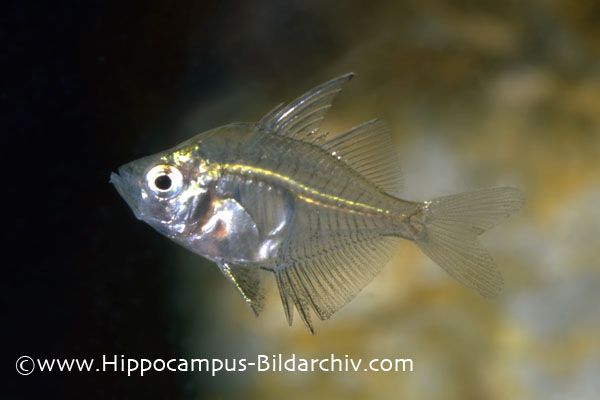
Parambassis rangaIndian Glass Fish
authority not recorded
Max length80mm SL3.1in SLTank80 × 30cm31 × 12inTemp20–30°C68–86°FpH6.5–8.0Previously known as Chanda ranga, the common name of this species arose because it's translucent skin means that the bone structure and internal organs are clearly visible. For many years it has been artificially injected with luminous dyes on fish farms in Asia and then sold as "Painted" glass fish or "Disco fish". This abhorrent act involves injecting the fish repeatedly with a large needle and most fish do not survive more than a few months afterwards. Whilst painted ...
Parambassis siamensis
authority not recorded
Max length60mm SL2.4in SLTank45 × 30cm18 × 12inTemp22–27°C72–81°FpH6.5–7.5This occasional import is sometimes offered for sale as P. ranga, the Indian glass fish. Unlike that species however, P. siamensis is an exclusively freshwater fish and should never be kept under brackish conditions. It can be distinguished from ranga by the lack of patterning behind the eye and it's generally more elongate body....
Parambassis wolffiiDuskyfin Glass Fish
authority not recorded
Max length200mm SL8in SLTank120 × 30cm48 × 12inTemp18–25°C64–77°FpH6.5–8.0This species is an infrequent import. It is very common in it's native countries, where it is used as a food fish.
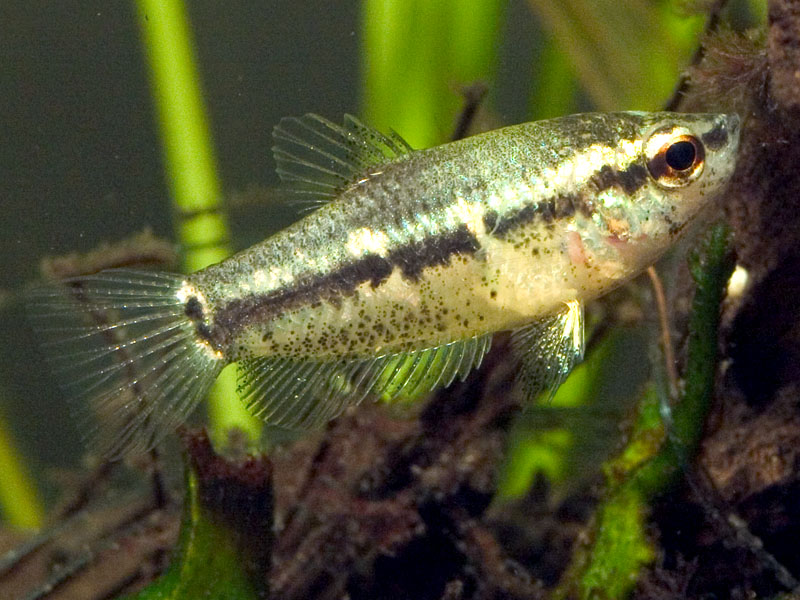
Parasphaerichthys lineatus
Britz & Kottelat, 2002
Max length19mm SL0.7in SLTank40 × 20cm16 × 8inTemp22–27°C72–81°FpH6.5–8.0This species is sometimes traded under the names 'mini chocolate gourami', 'Burmese chocolate gourami' or mislabelled as the congener P. ocellatus, these two currently comprising the only known members of the genus. P. lineatus can be told apart from P. ocellatus via the following combination of characters: smaller body size (maximum standard length 18.7 mm vs. 32.0 mm); absence of ocellus-type marking in middle of each flank (vs. presence); presence of dark, stripe (vs. abs...
Paretrolplus damii
authority not recorded
Max length300mm SL12in SLTank180 × 60cm72 × 24inTemp26–30°C79–86°FpH7.0An attractive, if aggressive Madagascan cichlid. Not commonly available in the UK, it can occasionally be obtained through cichlid enthusiasts aor specialist dealers.
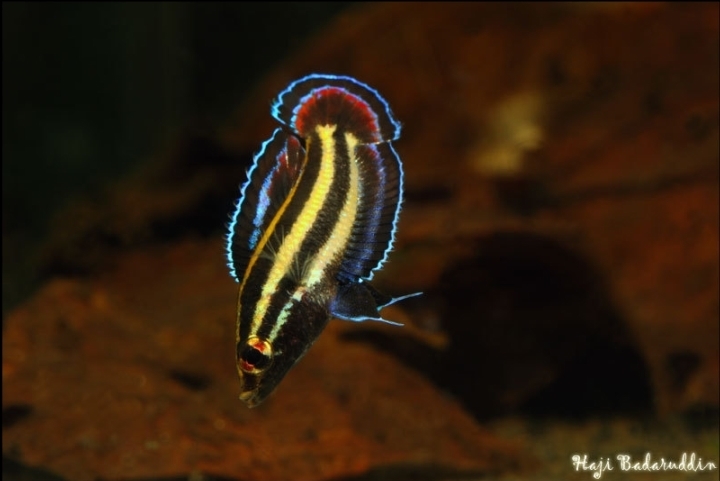
Parosphromenus alfredi
Kottelat & Ng, 2005
Max length26mm SL1.0in SLTank40 × 20cm16 × 8inTemp22–28°C72–82°FpH3.0–6.5Type locality is 'Kota Tinggi, Mawai-Desaru road, Johor, Peninsula Malaysia' and this species is endemic to a small portion of eastern Johor state, Peninsular Malaysia around the towns of Kota Tinggi, Mawai and Desaru. A great deal of its original habitat has been lost via deforestation and other human alterations and it's considered in grave danger of extinction.
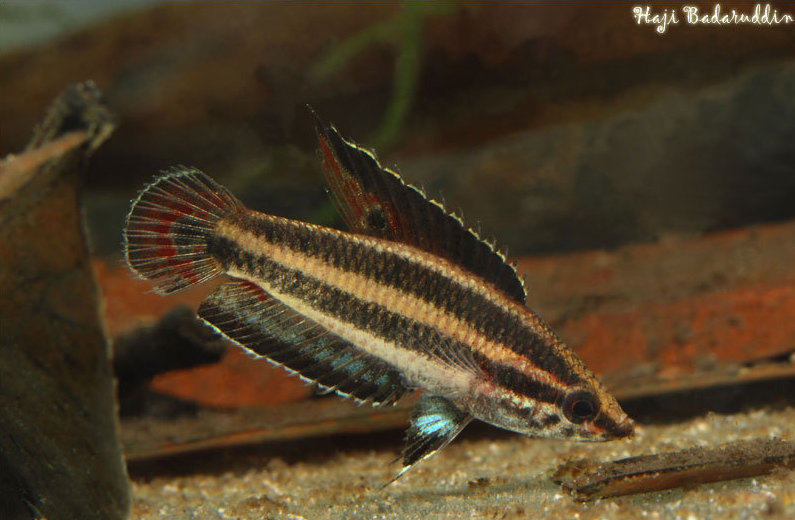
Parosphromenus allani
Brown, 1987
Max length35mm SL1.4in SLTank40 × 20cm16 × 8inTemp22–28°C72–82°FpH3.0–6.5Type locality is given only as 'Sarawak state, Borneo, East Malaysia', with the material deriving from Sibu Division in western Sarawak. It's since been recorded at other localities within Sarawak, to which it appears endemic, but it remains unclear whether all represent a single species or not with those from the area around Lundu in northwestern Kuching Division in par...
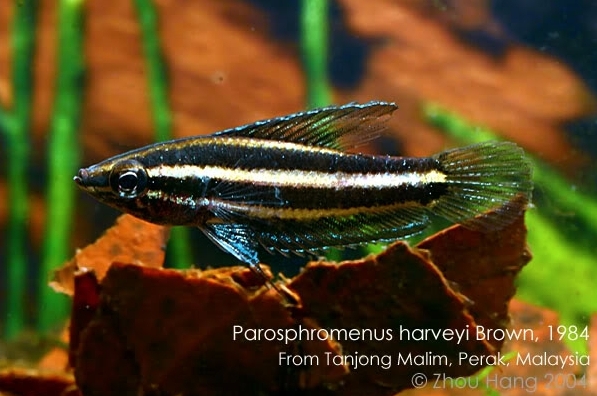
Parosphromenus harveyi
Brown, 1987
Max length35mm SL1.4in SLTank40 × 20cm16 × 8inTemp22–28°C72–82°FpH3.0–6.5Parosphromenus spp. have been grouped arbitrarily based on courtship behaviour in males which adopt a 'head-down', 'head-up', or 'horizontal' position depending on species. P. harveyi belongs to the former, most abundant, assemblage in which the male assumes a near-vertical position with the head lowermost and fins splayed during nuptial displays.
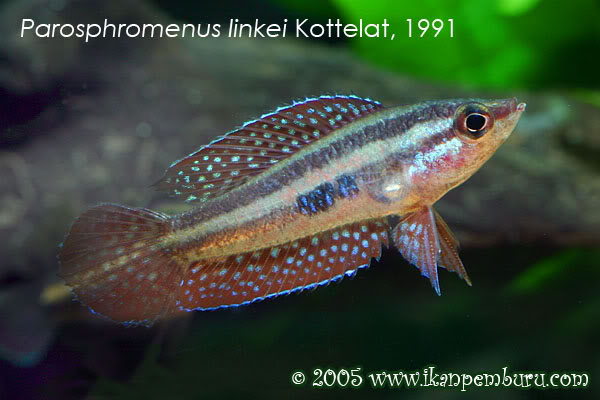
Parosphromenus linkei
Kottelat, 1991
Max length35mm SL1.4in SLTank40 × 20cm16 × 8inTemp22–28°C72–82°FpH3.0–6.5This species is said to be slightly easier to maintain than the majority of congeners and is therefore a recommended choice for those new to maintaining Parosphromenus spp. in the aquarium. It's occasionally available on a commercial basis and we've seen it traded as 'moonspot licorice gourami' in the past. There exist at least three colour forms on...
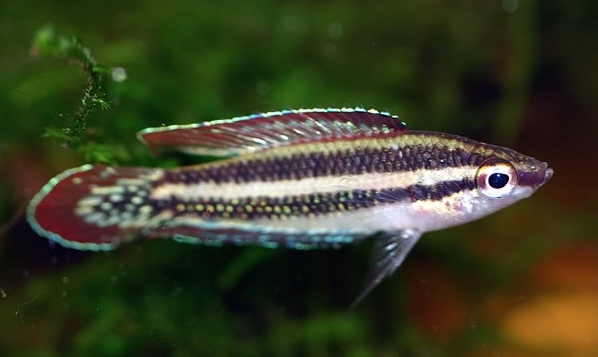
Parosphromenus quindecim
Kottelat & Ng, 2005
Max length40mm SL1.6in SLTank45 × 30cm18 × 12inTemp22–28°C72–82°FpH3.0–6.5This species has occasionally been traded on a commercial basis and was known as P. sp. 'Manis Mata' prior to description, with the latter apparently referring to a location some 100 km away from the type locality where the fish do not occur. It's said to be slightly easier to maintain than the majority of congeners and is therefore a recommended choice for those ne...
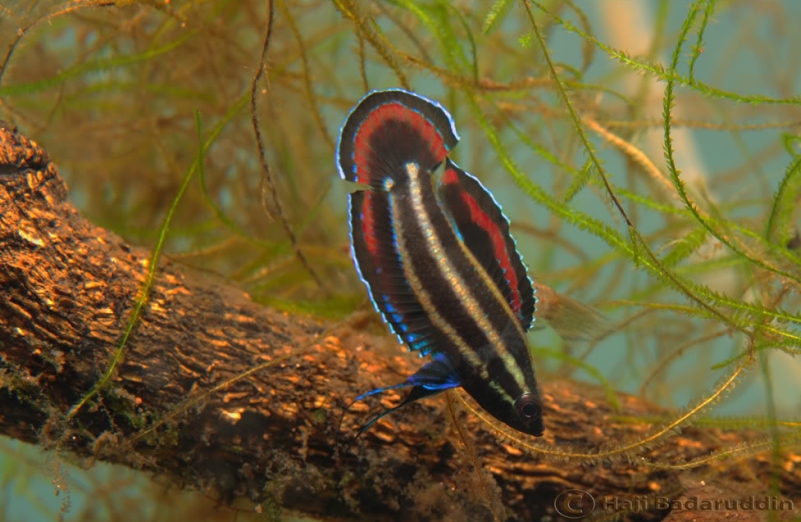
Parosphromenus tweediei
Kottelat & Ng, 2005
Max length35mm SL1.4in SLTank40 × 20cm16 × 8inTemp22–28°C72–82°FpH3.0–6.5This species has been known in the aquarium hobby since the mid-twentieth century but has almost always been identified as the congener P. deissneri and appears as such in the majority of aquarium literature. It can be told apart from congeners by the colour pattern in adult males (see 'Sexual Dimorphism') plus possession of 11-12 spinous dorsal-fin rays, 13-14 spinous anal-fin rays and 6-8 segmented anal-fin rays.
Peckoltia bachiL146
Boulenger, 1898
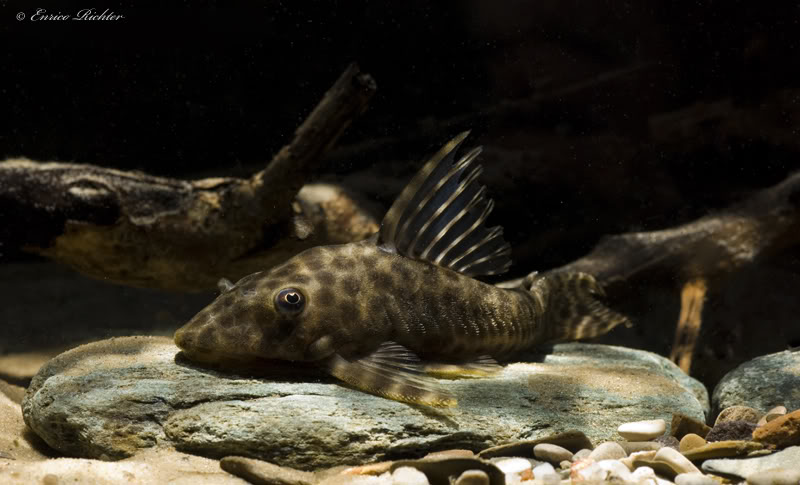
Max length130mm SL5in SLTank120 × 45cm48 × 18inTemp22–29°C72–84°FpH6.0–8.0This species has had several L-numbers assigned to it, with L146 collected from an unspecified locality in Colombia and L232 from the Río Putomayo/Içá. It's exported for the aquarium trade under a number of different generic names including Hemiancistrus, Sophiancistrus and Peckoltichthys. Following Armbruster (2008) it can be to...
Peckoltia sp.L038
authority not recorded
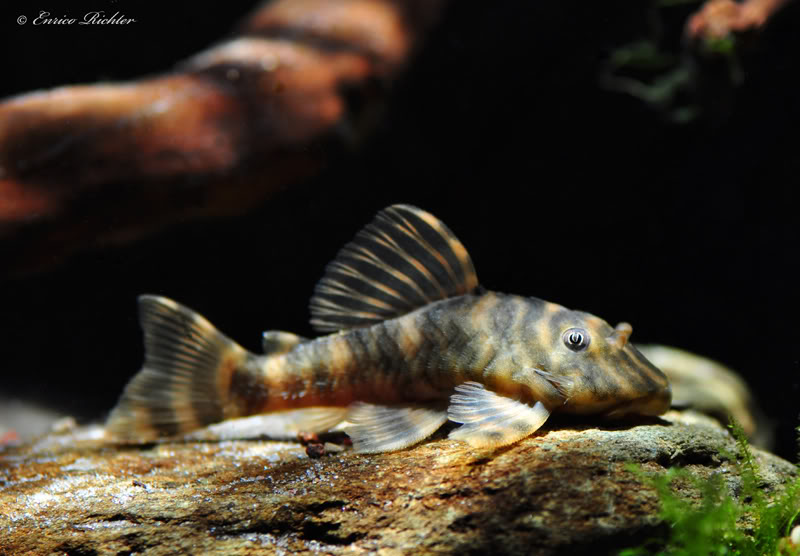
Max length120mm SL5in SLTank120 × 30cm48 × 12inTemp23–29°C73–84°FpH6.0–7.5Wild specimens are probably omnivorous foragers but with a preference for aquatic invertebrates and suchlike. In the aquarium it does best when offered a varied diet comprising sinking dried foods, frozen Daphnia, mosquito larvae, chironomid larvae (bloodworm), and prawn/shrimp, for, example, plus some fresh fruit, parboiled potato, etc.
Peckoltia sp.L076
authority not recorded
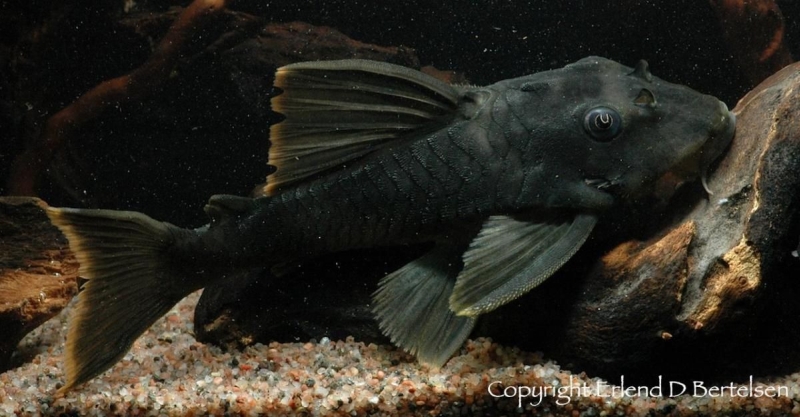
Max length140mm SL6in SLTank120 × 45cm48 × 18inTemp25–29°C77–84°FpH5.5–7.5L076 and L099 appear to be the same species with the former exhibiting a darker diurnal colour pattern than the latter, though both appear similar at night.
Pelvicachromis pulcherKribensis
authority not recorded
Max length100mm SL3.9in SLTanknot recordedTemp24–27°C75–81°FpH5.0–7.5One of the most common and popular Cichlid species in the hobby, the vast majority of Kribensis (often simply called "Krib" by many fishkeepers) seen in the hobby today are captive bred and are far more adaptable in terms of water chemistry than the wild fish. They also tend to be less aggressive when breeding. An aquarium sport albino form is available and is fairly popular. This fish is one of the best choices for newcomers to both Cichlids and fish breeding, being of a manageable...
Pelvicachromis taeniatusStriped Kribensis
authority not recorded
Max length80mm SL3.1in SLTanknot recordedTemp22–26°C72–79°FpH5.0–7.5This stunning species is now much more readily available than it once was. There are over a dozen morphs available, including "Dehane", "Moliwe", "Kienke", "Lobe", "Wouri", "Nigeria Red" and "Calabar". Males and females of these should not be cross bred in order to keep the lines pure. It can be distinguished from others in the genus by the more pronounced upper lip, which is often bright yellow in colour. Males of this spe...
Pethia geliusGolden Dwarf Barb
Hamilton, 1822
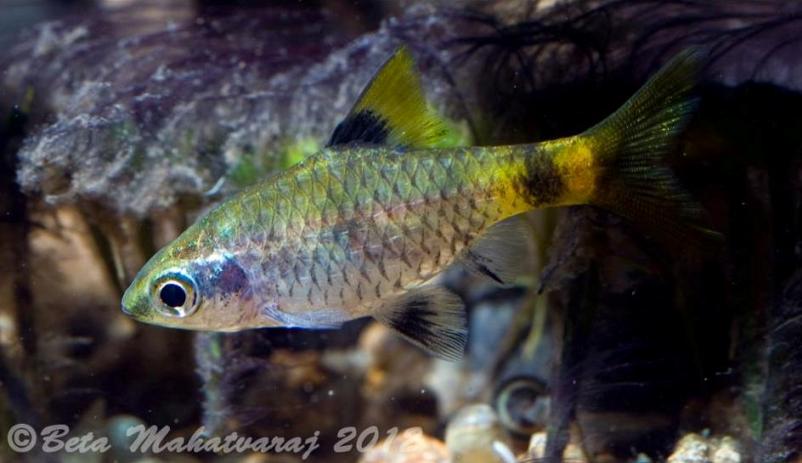
Max length40mm SL1.6in SLTank60 × 30cm24 × 12inTemp18–24°C64–75°FpH6.0–7.0This species' identity was settled and a neotype designated by Knight (2013) who also revalidated the congener P. canius (Hamilton, 1822) and described the closely-related P. aurea. These three had previously been considered to represent geographic forms of P. gelius, albeit on a tentative basis, with the validity of P. canius having been discussed since the late 19th century.
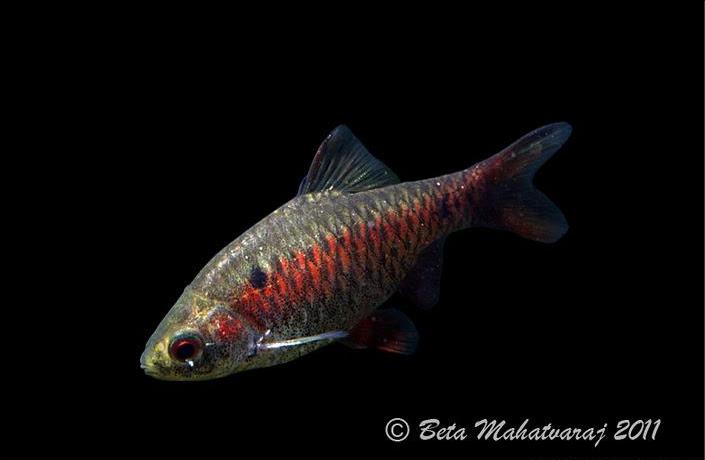
Pethia manipurensis
Menon, Rema Devi & Vishwanath, 2000
Max length62mm SL2.4in SLTank80 × 30cm31 × 12inTemp18–25°C64–77°FpH5.5–7.5Within this assemblage P. manipurensis is most similar to 'P.' meingangbii and P. padamya by virtue of the fact that males in all three possess orange-red pigmentation on the flanks and caudal-fin. It can be told apart most easily by the fact it possesses a relatively small, spot-like humeral marking, vs. a vertically-elongated, relatively large humeral marking in both the other species.