Results for “ex gr.”
Type a name: scientific, common, or one a species used to go by. Or narrow the catalogue with the filters.
Filters
Leporacanthicus triactisThree Beacon Plec
authority not recorded
Max length245mm SL10in SLTank120 × 45cm48 × 18inTemp24–27°C75–81°FpH6.0–7.6There are a few different colour forms of this lovely suckermouth available, each of which possess varying amounts of orange patterning in the fins. Some of these are given extravagant sounding names such as "dragon fin" or "tiger fin". What's nice about this species, is that these flashes of colour don't fade with age, as with many of its relatives, making for a striking fish when fully grown. Leporacanthicus species are commonly referred to as "vampire ple...
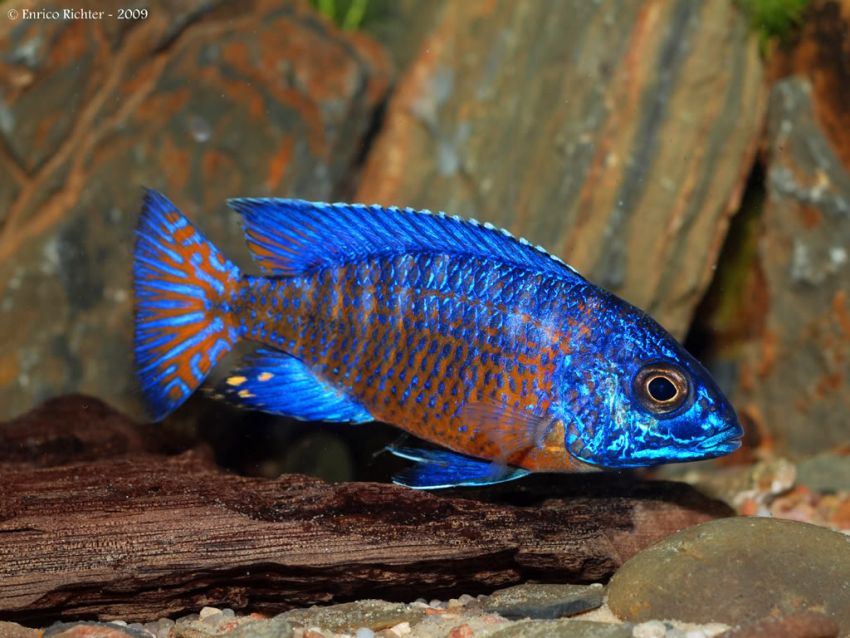
Aulonocara stuartgrantiGrant's Peacock
Meyer & Riehl, 1985
Max length130mm SL5in SLTank120 × 45cm48 × 18inTemp23–29°C73–84°FpH7.5–9.0Males of this species occur in a wide range of colour forms depending on locality, with blue variants being found predominantly (but not exclusively) towards the north of the lake and yellow in the south. This variation, alongside its relatively extensive distribution, has resulted in some taxonomical issues, several of which have not yet been resolved. For example, two forms from the southwest of the lake are referred to as A. sp. "stuartgranti maleri" and A. sp. "stuartgranti mbenji", respectively, and may turn out to be distinct species given their colour patterns an...
Labeotropheus fuelleborniFuelleborn's Cichlid
authority not recorded
Max length175mm SL7in SLTank90 × 45cm36 × 18inTemp24–28°C75–82°FpH7.6–8.8This species has the characteristic overhanging snout possessed by all three members of the genus. It has chisel-shaped teeth which are designed for grazing algae off rocks. These physical adaptations allow it to graze algae from rocks situated in very shallow water which other species cannot reach. The position of the mouth allows the fish to remain parallel to the rock surfaces, thus enabling it to cope with the turbulence in these areas. L. fuelleborni exists in many different colour forms in...
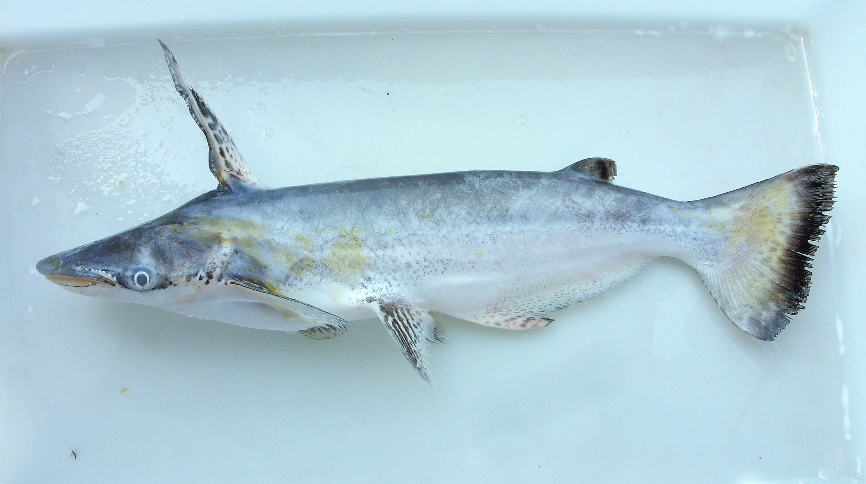
Ageneiosus inermisManduba
Linnaeus, 1766
Max length470mm SL19in SLTank400 × 120cm157 × 48inTemp22.5–26°C73–79°FpH5.5–7.5The genus Ageneiosus was at one point classified in the family Ageneiosidae alongside the genus Tetranematichthys, but this was not accepted by all authors. The grouping remains poorly-studied with the last major revision having been conducted by Watson (1990) in his unpublished dissertation, in which A. inermis was included under the currently synonymous name A. brevifilis. It can be separated from the majority of the genus (except A. marmoratus) by possession of a truncate caudal fin, and from...
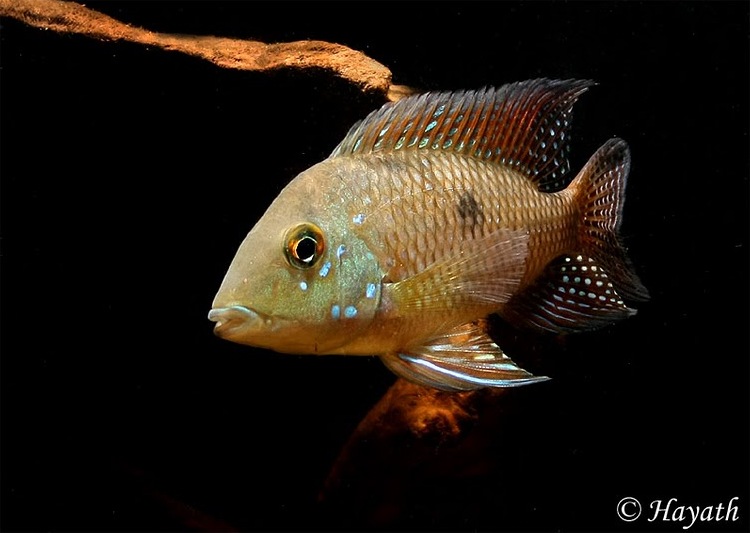
'Geophagus' iporangensis
Haseman, 1911
Max length100mm SL3.9in SLTank120 × 30cm48 × 12inTemp20–26°C68–79°FpH6.0–7.0Juvenile specimens of this species are readily confused with those of other members of the 'G.' brasiliensis species group, but adults are easily-distinguished by their relatively smaller adult size and comparative lack of reflective blue scales on the body and head. The genus Geophagus was rediagnosed by Kullander (1986) who restricted it to include only those species with paired caudal extensions to the swi...
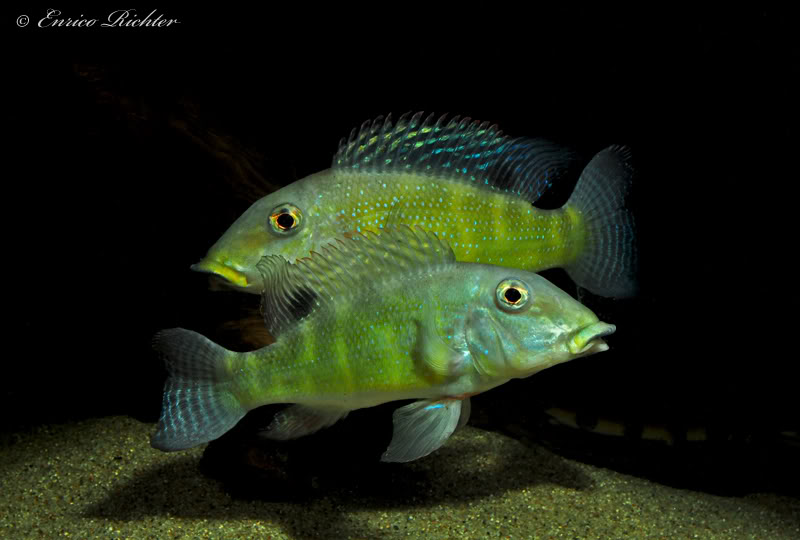
Retroculus xinguensis
Gosse, 1971
Max length200mm SL8in SLTank210 × 60cm84 × 24inTemp26–32°C79–90°FpH6.0–8.0The precise extent of this species' range is unclear. The majority of records pertain to the lower rio Xingu basin in the state of Pará, northern Brazil, including middle and lower reaches of its major tributary the rio Iriri, although the type locality is in Mato Grosso state several hundred kilometres upstream. There also exist a handful of records from the rio Jamanxim (a major affluent of the rio Tapajós which drain...
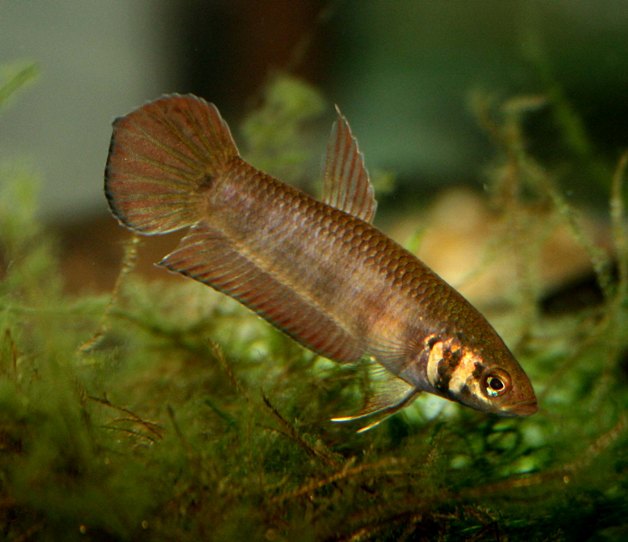
Betta mandor
Tan & Ng, 2006
Max length60mm SL2.4in SLTank60 × 30cm24 × 12inTemp22–27°C72–81°FpH4.0–6.5This species was known as B. sp. 'Mandor' or B. sp. 'ninja' prior to official description. It belongs to the Betta foerschi group/complex of closely-related species within the genus, of which members share the following set of characters: possession of iridescent blue or green unpaired fins; rays and interradial membranes in unpaired fins not contrasting; dorsal fin with thin, bright white distal band; opercle with two, reddish-yellow, vertical bars. Members are regarded as being closely-related to bubble-nesting Betta species since they share exhibit certain similarities in morp...
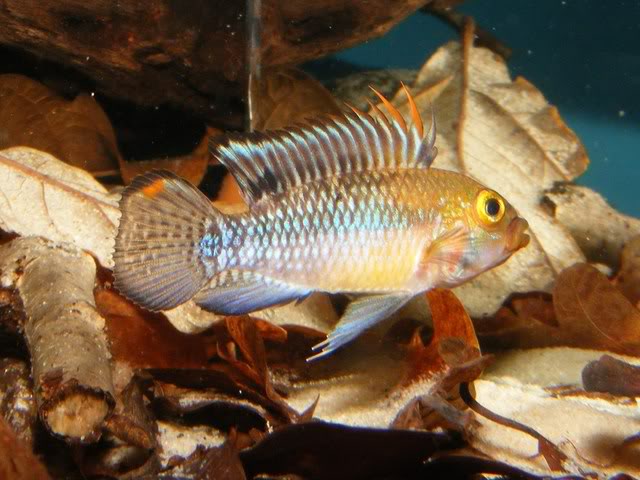
Apistogramma norberti
Staeck, 1991
Max length♂ 60 · ♀ 40mm SL♂ 2.4 · ♀ 1.6in SLTank45 × 30cm18 × 12inTemp24–28°C75–82°FpH4.5–6.5Prior to decription this species was known as A. sp. 'großmaul' or 'bigmouth', and it has also been assigned the code A190 under the DATZ system. The genus Apistogramma is among the most speciose of South American cichlid genera with around 70 species valid at present but many more awaiting description. In addition many species exist in two or more geographical colour forms which may or may not turn out to be distinct in the future. Hobbyists tend to label these with collection data if available in order to avoid mixing them and the potential of hybridisation.
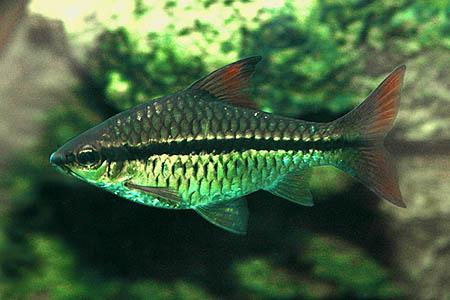
'Barbus' holotaeniaSpotscale Barb
Boulenger, 1904
Max length120mm SL5in SLTank120 × 45cm48 × 18inTemp24–30°C75–86°FpH6.0–7.0This species is native to Central West Africa where it is principally found in the great Ogooué and Congo River systems. It therefore has an extensive range and has been recorded at numerous localities right across the Democratic Republic of Congo (DRC) from the Ituri River in the far east of the country to the Luki River basin in the extreme west. The Congo River appears to represent the southernmost limit of its range as a...
Petrochromis famula
authority not recorded
Max length150mm SL6in SLTank120 × 30cm48 × 12inTemp24–27°C75–81°FpH7.5–9.0The mouthparts of this species are highly specialised, reflecting its natural feeding habits of rasping algae and other organisms from rock surfaces. It feeds almost exclusively on unicellular algae and has very thick, extended lips and brush-like, mobile pads of teeth. The mouthparts thus form a rasping 'plate', used when the fish is feeding. It is somewhat rare in the hobby, perhaps due to its violent reputation or the fact that this is not a particularly gregarious species in nature...
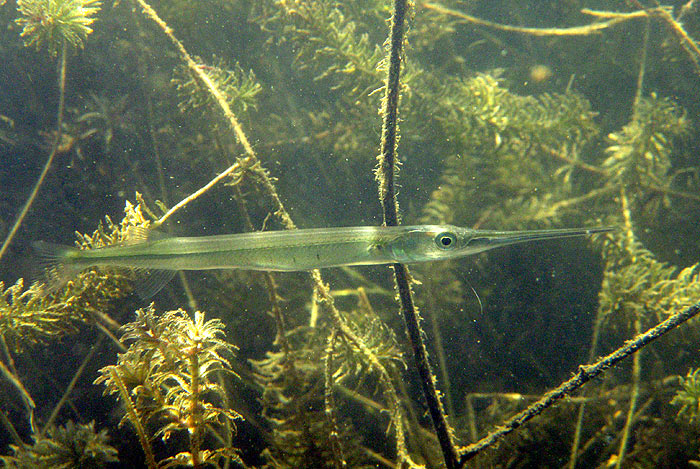
Xenentodon canciloides
Bleeker, 1854
Max length300mm SL12in SLTank180 × 60cm72 × 24inTemp18–26°C64–79°FpH6.0–8.0This species is a near-exclusive inhabitant of the upper water column and appreciates surface cover in the form of floating or overhanging vegetation. Other décor is relatively unimportant but can consist of a sandy substrate with leaf litter plus some large driftwood branches and twisted roots. Plants which can grow rooted in sand can al...
Caecomastacembelus albomaculatus
authority not recorded
Max length220mm SL9in SLTank120 × 30cm48 × 12inTemp23–27°C73–81°FpH8.0–9.5This is a great oddball species for the Tanganyikan community tank, although it is not as attractive as the closely related Aethiomastacembelus ellipsifer. It is rarely seen in the hobby. The species in the family Mastacembelidae are known as "spiny" eels because the dorsal rays are stiffened. Care must therefore be exercised when handling them to avoid injuries. Spiny eels also have no swim bladder, an adaptation to their benthic lifestyle....
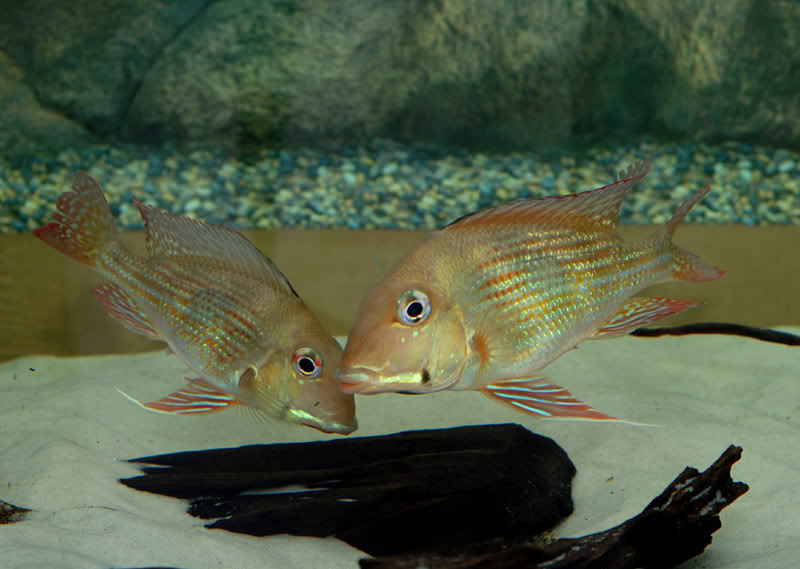
Geophagus brachybranchus
Kullander & Nijssen, 1989
Max length200mm SL8in SLTank180 × 60cm72 × 24inTemp26–30°C79–86°FpH5.0–7.0This species is generally rare in the aquarium hobby though oddly appears to be one of the commoner species in Australia where it's often referred to by the vernacular name 'black-throated eartheater'. It's a member of the nominal G. surinamensis 'group' of closely-related species within the genus and can be identified by a combination of characters including: presence of dark preopercular markings; no vertical bars on the flanks even when stressed/preserved; base of filaments on the first gill arch mostly covered by a flap of skin; exposed part of bra...
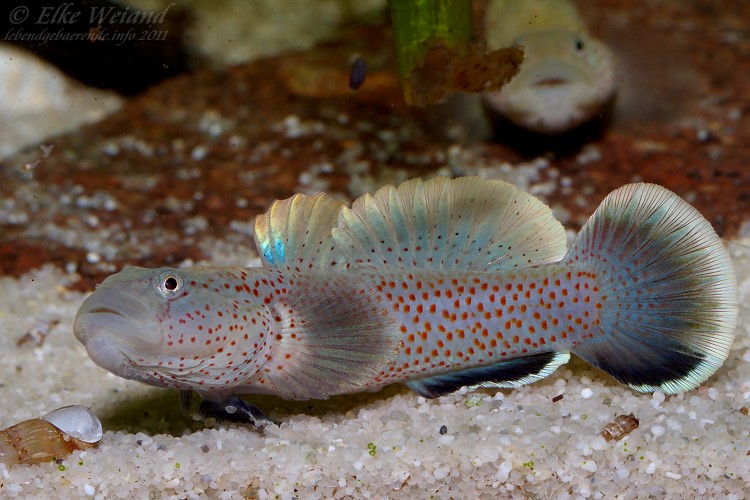
Rhinogobius rubromaculatusRed-spotted Goby
Lee & Chang, 1996
Max length55mm SL2.2in SLTank60 × 30cm24 × 12inTemp18–24°C64–75°FpH6.0–8.0This species occurs in a couple of colour forms with fish from northern and central Taiwan possessing a greyish base body colour and those from the Linbian river, southern Taiwan having a dark marking in the anterior portion of the first dorsal fin and larger, more intense red spots on the body. The latter form is also smaller in size, lays smaller eggs, does not exhibit extreme sexual dimorphism and has been refe...
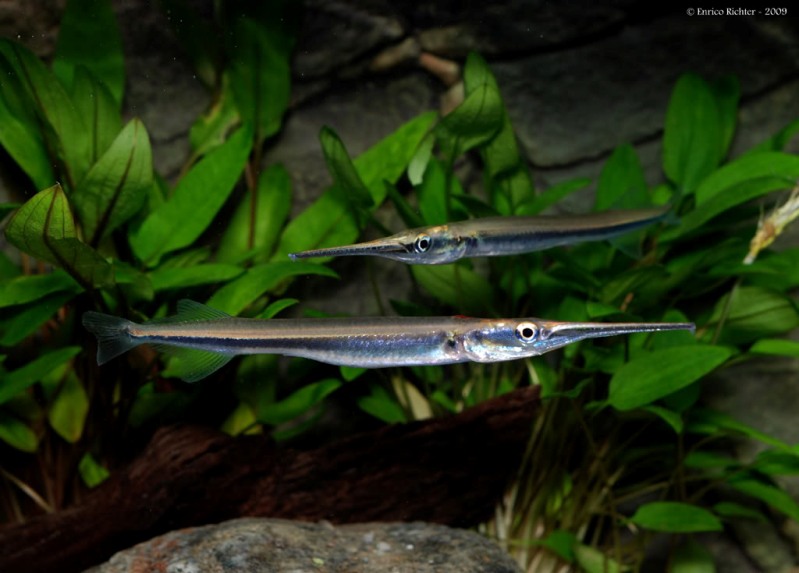
Xenentodon cancilaFreshwater Needlefish
Hamilton, 1822
Max length350mm SL14in SLTank180 × 60cm72 × 24inTemp18–30°C64–86°FpH6.0–8.0X. cancila is often seen referred to as 'freshwater garfish', and although it does superficially resemble the true gars of the family Lepisosteidae, it's actually a member of the Belonidae, or needlefishes, the majority of which are marine or estuarine in existence. There are currently just two species in the genus although the probable existence of a third member has been noted by Roberts (1989) among oth...
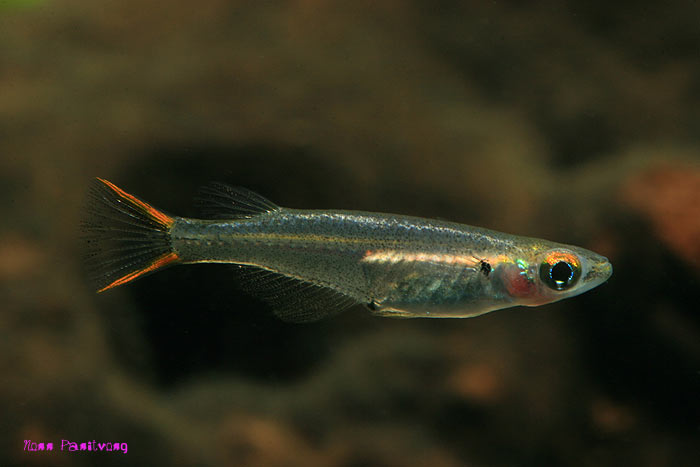
Oryzias songkhramensis
Magtoon, 2010
Max length20mm SL0.8in SLTank40 × 20cm16 × 8inTemp23–30°C73–86°FpH6.0–7.5An exclusive inhabitant of fresh, normally standing, waters including shallow pools, ditches, rice paddies and clear water swamps. The type locality is a small ditch measuring just 3 - 6 metres in width and 0.5 - 2 metres deep. The water was clear and the substrate composed of sand, detritus and mud with growths of the macrophytes Nymphaea lotus, Jussiaea repens and Hydrilla verticillata.
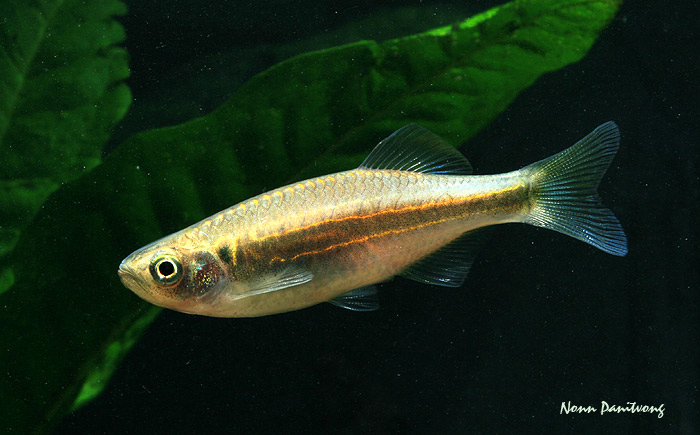
Devario acrostomus
Fang & Kottelat, 1999
Max length80mm SL3.1in SLTank120 × 45cm48 × 18inTemp23–26°C73–79°FpH6.0–7.0The type series was collected during the dry season from localities with varying gradient both within the Nam Leuk mainstream and smaller tributaries. In the tributaries the fish were found congregating in pools some of which were isolated on steep slopes. All habitats above Tad Leuk falls were characterised by clear to very clear water under forest cover while below the falls they were dominated by exposed basalt slabs with some underground water channels.
Pseudotropheus fainzilberiGoldbreast Zebra
authority not recorded
Max length175mm SL7in SLTank120 × 45cm48 × 18inTemp24–28°C75–82°FpH7.6–8.8There is ongoing debate as to the true genus of this species, it having been variously grouped in both Maylandia and Metriaclima as well as the currently valid Pseudotropheus. It is unlikely it will remain in Pseudotropheus, however. One interesting feature is the presence of additional rows of teeth when compared to others in the genus. Also, the rows of bicuspid teeth, used for rasping algae from rock surfaces, extend further back into the mouth than in other Pseudotropheus. P. fainzilberi...
Iodotropheus sprengeraeRusty Cichlid
authority not recorded
Max length100mm SL3.9in SLTank90 × 30cm36 × 12inTemp25–29°C77–84°FpH7.5–8.8This lovely dwarf mbuna makes a great choice for newcomers to Mbuna due to its temperament, subdued but unique colouration and the fact it can be kept in smaller tanks. Iodotropheus is the only genus of Mbuna which has a very limited distribution within Lake Malawi, with its three (possibly two; the validity of I. declivitas is disputed by some experts) members being restricted to the south eastern arm of the lake. I. sprengerae is sometimes confused with certain populations of the similar looki...
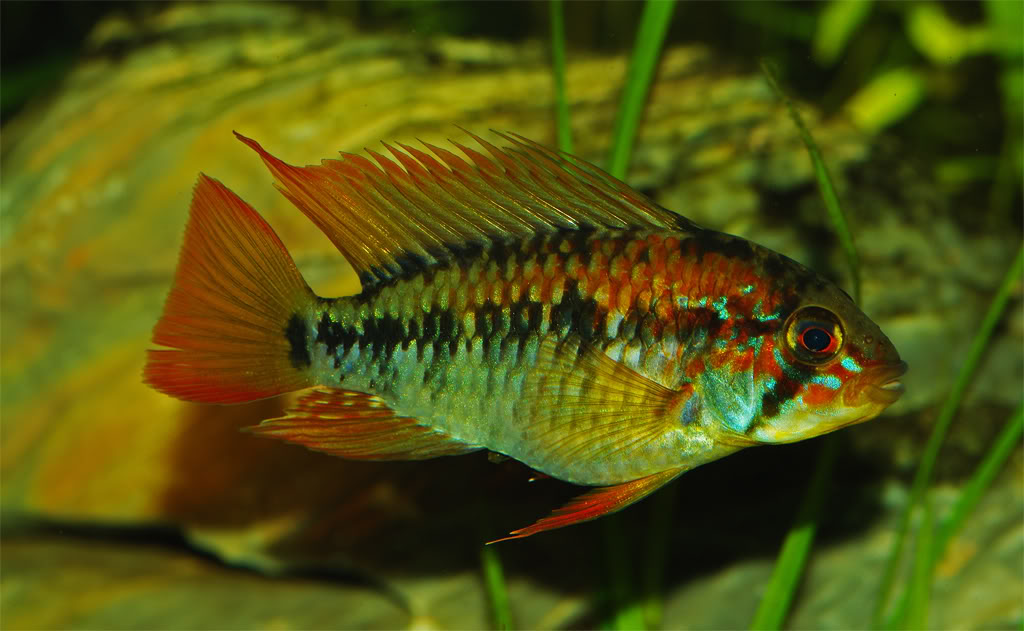
Apistogramma macmasteri
Kullander, 1979
Max length♂ 55 · ♀ 40mm SL♂ 2.2 · ♀ 1.6in SLTank45 × 30cm18 × 12inTemp24–28°C75–82°FpH5.5–7.0The genus Apistogramma is among the most speciose of South American cichlid genera with around 70 species valid at present but many more awaiting description. In addition many species exist in two or more geographical colour forms which may or may not turn out to be distinct in the future. Hobbyists tend to label these with collection data if available in order to avoid mixing them and the potential of hybridisation. Member species have also been organised into a series of species lineages, complexes and groups by authors in order to better separate them.