Results for “gene”
Type a name: scientific, common, or one a species used to go by. Or narrow the catalogue with the filters.
Filters
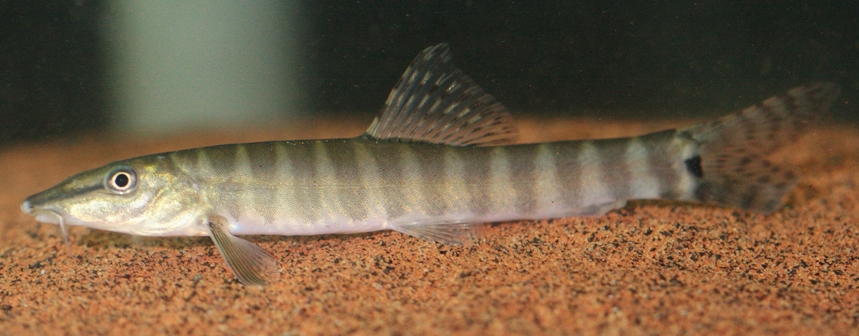
Parabotia fasciata
Dabry de Thiersant, 1872
Max length150mm SL6in SLTank120 × 45cm48 × 18inTemp20–24°C68–75°FpH6.0–7.5P. fasciata is rarely seen in the trade and is typically available only as bycatch among shipments of Sinibotia spp., particularly S. robusta. According to current classification numerous species from several genera are considered synonymous with it.
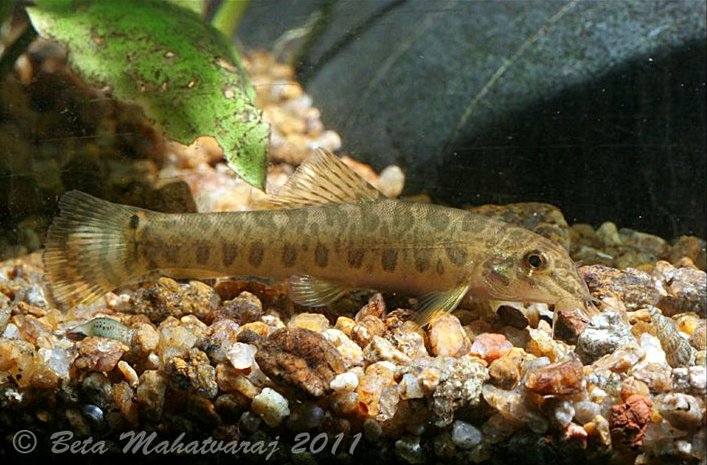
Paracanthocobitis mooreh
Sykes, 1839
Max length75mm SL3.0in SLTank75 × 30cm30 × 12inTemp20–26°C68–79°FpH6.0–7.5This species is still considered a member of the genus Nemacheilus by some sources, but it was reclassified and placed in Acanthocobitis by Grant (2008). Acanthocobitis sinuata, generally considered a junior synonym of A. mooreh (Kottelat, 2012b), also appears distinct and differs in geographical distribution plus number of dorsal-fin rays (2-3/9-10 in A. mooreh vs. 2/8-9 in A. sinuata) and some aspects of colour pattern.
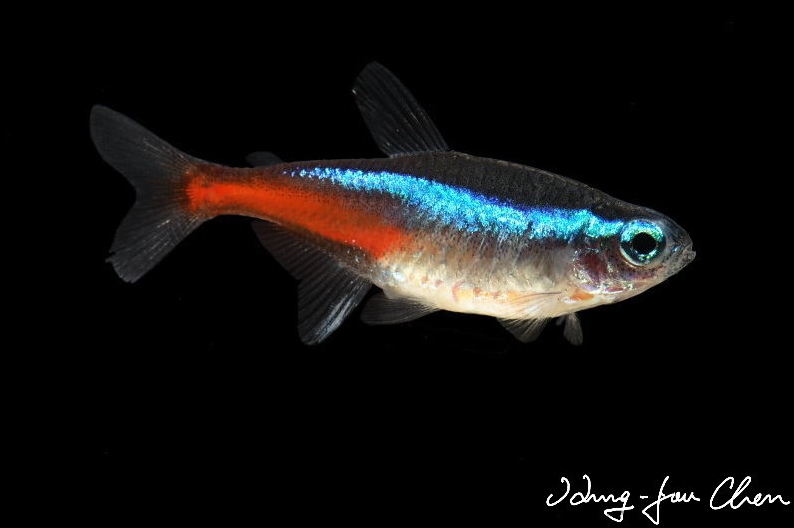
Paracheirodon innesiNeon Tetra
Myers, 1936
Max length30mm SL1.2in SLTank60 × 30cm24 × 12inTemp21–25°C70–77°FpH4.0–7.5One of the most popular and instantly recognisable fishes in the aquarium hobby, this species has been selectively-bred to produce a number of additional strains including albino, 'golden' (leucistic), short-bodied, long-finned and 'diamond' (in which the dorsal surface is covered in reflective scales). Unfortunately years of commercial breeding have somewhat affected the genetic vigour of the ornamental strain meaning morphological defects an...
Parambassis siamensis
authority not recorded
Max length60mm SL2.4in SLTank45 × 30cm18 × 12inTemp22–27°C72–81°FpH6.5–7.5This occasional import is sometimes offered for sale as P. ranga, the Indian glass fish. Unlike that species however, P. siamensis is an exclusively freshwater fish and should never be kept under brackish conditions. It can be distinguished from ranga by the lack of patterning behind the eye and it's generally more elongate body....
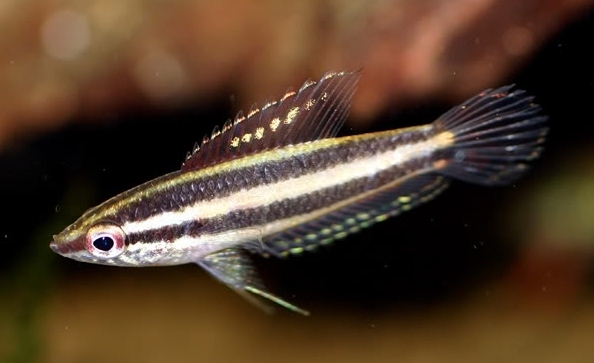
Parosphromenus bintan
Kottelat & Ng, 1998
Max length26mm SL1.0in SLTank40 × 20cm16 × 8inTemp22–28°C72–82°FpH3.0–6.5This species is not generally available in the aquarium hobby on a commercial basis but is occasionally collected and distributed by private aquarists. It's name is sometimes misapplied to commercial shipments of other species, and there also exist a number of other fish with rounded caudal-fins that may or may not be conspecific, including P. sp. 'blue line' and P. sp. 'Selatan' from Sumatra.
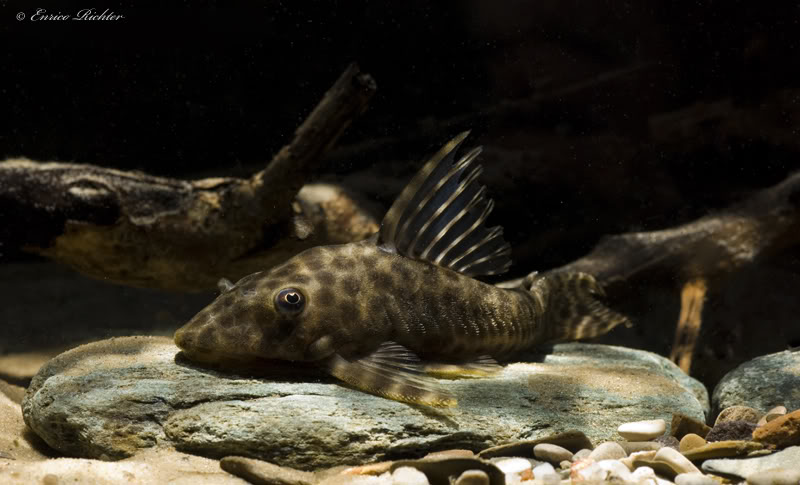
Peckoltia bachiL146
Boulenger, 1898
Max length130mm SL5in SLTank120 × 45cm48 × 18inTemp22–29°C72–84°FpH6.0–8.0This species has had several L-numbers assigned to it, with L146 collected from an unspecified locality in Colombia and L232 from the Río Putomayo/Içá. It's exported for the aquarium trade under a number of different generic names including Hemiancistrus, Sophiancistrus and Peckoltichthys. Following Armbruster (2008) it can be to...
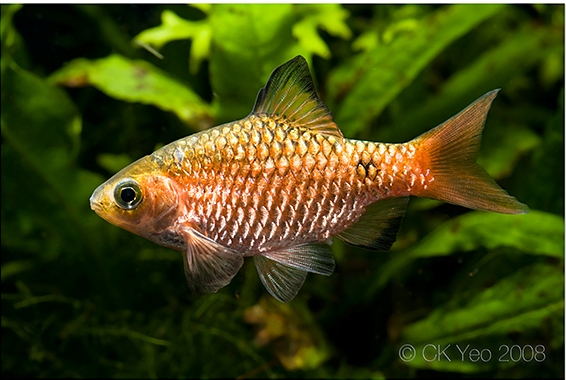
Pethia conchoniusRosy Barb
Hamilton, 1822
Max length100mm SL3.9in SLTank100 × 30cm39 × 12inTemp16–24°C61–75°FpH6.0–8.0Generally considered one of the hardiest small cyprinids available in the aquarium hobby, P. conchonius is an excellent choice for the beginner. Selective breeding has produced various ornamental strains including long-finned, 'veil-tail', 'super red', 'neon', and 'golden' forms. It's also been hybridised with some congeners although the offspring of such experiments are apparently infertile. It was formerly included in th...
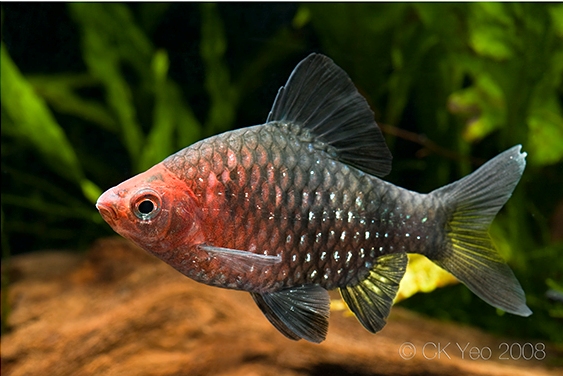
Pethia nigrofasciataBlack Ruby Barb
Günther, 1868
Max length55mm SL2.2in SLTank80 × 30cm31 × 12inTemp20–27°C68–81°FpH5.5–7.5Little sun is able to penetrate the forest floor so aquatic habitats are shaded and water temperature may be relatively cool, while conductivity and hardness are generally low and pH slightly acid. Macrophytes are uncommon though there may be dense, marginal vegetation, sometimes overhanging the full width of the stream, the roots of which may penetrate the banks underwater. Typical substrates are sandy but covered by a layer of leaf litter with fallen twigs and branches.
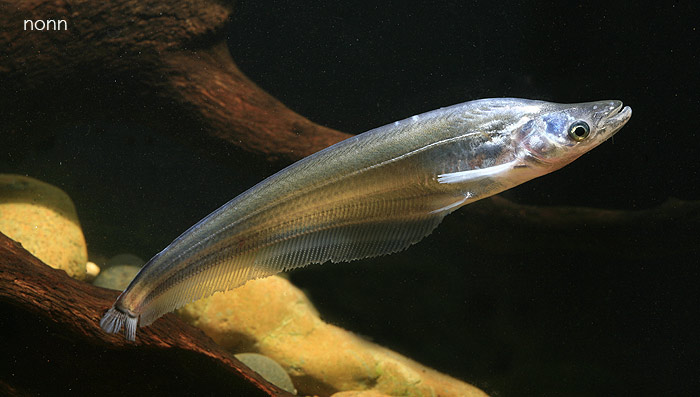
Phalacronotus apogon
Bleeker, 1851
Max length700mm SL28in SLTanknot recordedTemp20–27°C68–81°FpH6.0–7.5P. apogon has formerly been placed within the genera Kryptopterus, Micronema (Rainboth, 1996) and more recently Phalacronotus (Ferraris, 2007) and is an important food fish across much of its native range. It's very similar to P. micronema but can be told apart by its longer head (HL fits 4.6± 5.3 times in...
Platystacus cotylephorusBanded Banjo Catfish
authority not recorded
Max length320mm SL13in SLTank120 × 30cm48 × 12inTemp22–25°C72–77°FpH6.0–8.2Not a particularly good catfish for the general community tank, as it's a largely inactive, secretive species that will only emerge and become active under cover of darkness. It is, nonetheless, an interesting aquarium subject for the enthusiast, exhibiting an incredible degree of camouflage. It's designed to resemble a dead leaf, and usually will not even swim to escape a net. When released into the aquarium will simply drift in the current until it hits the bottom. All members of the...
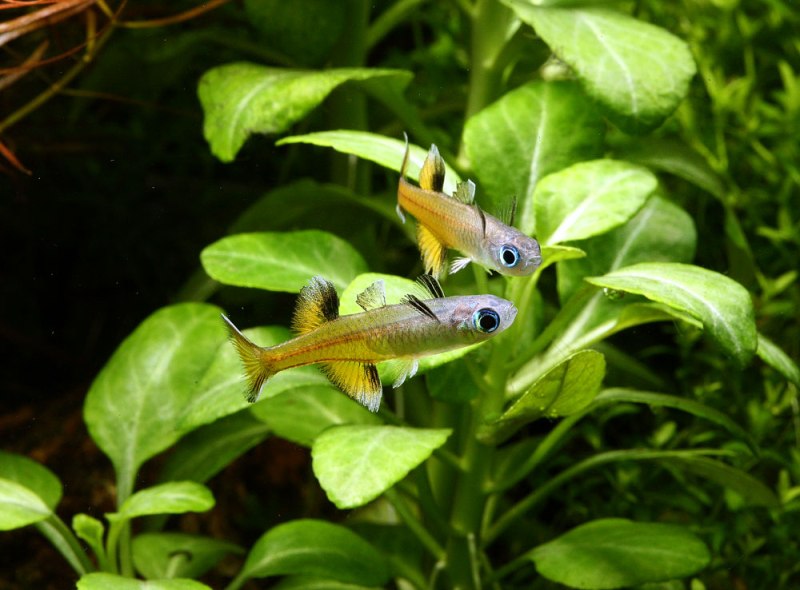
Pseudomugil signiferPacific Blue-eye
Kner, 1866
Max length70mm SL2.8in SLTank60 × 30cm24 × 12inTemp20–26°C68–79°FpH6.5–7.5Generally found within 15-20 km of the sea but habitat-type is extremely variable. It's been recorded in full marine conditions as well as pure freshwater environments, and commonly inhabits coastal mangrove creeks, swamps, and salt marshes. Freshwater habitats tend to comprise lowland swamps or forest streams with clear water but some populations inhabit acidic, tannin-stained, black waters. It's also abundant in the artificial canals typical of residential zones in the Gold Coast, southern Queensland.
Pseudotropheus flavus
authority not recorded
Max length90mm SL3.5in SLTank90 × 45cm36 × 18inTemp24–28°C75–82°FpH7.6–8.8Although it is a good choice for the general mbuna community, as mentioned above P. flavus should not be kept together with any member of the P. elongatus complex. Not only will these species interbreed, producing undesirable hybrid offspring, but males of these species will clash very heavily. As with other members of the genus it possesses flat, bicuspid teeth which are designed for scraping algae and other organisms from the surface of rocks....
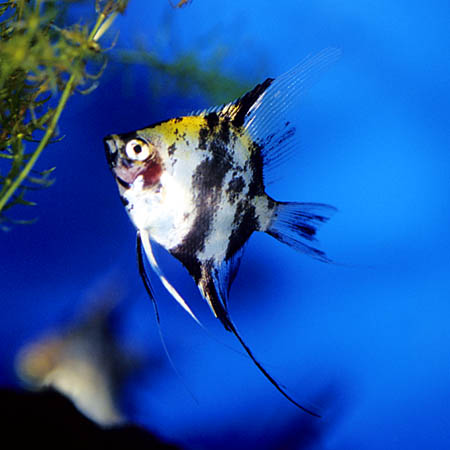
Pterophyllum "scalare"Angelfish
authority not recorded
Max length150mm SL6in SLTank100 × 40cm39 × 16inTemp24–30°C75–86°FpH6.0–7.4A well known and popular aquarium fish. Angels are available in a number of colour forms including black, gold and koi strains, in addition to the standard silver. It is worth remembering that although angels are generally peaceful, they are still cichilds so some aggression should be expected from time to time.
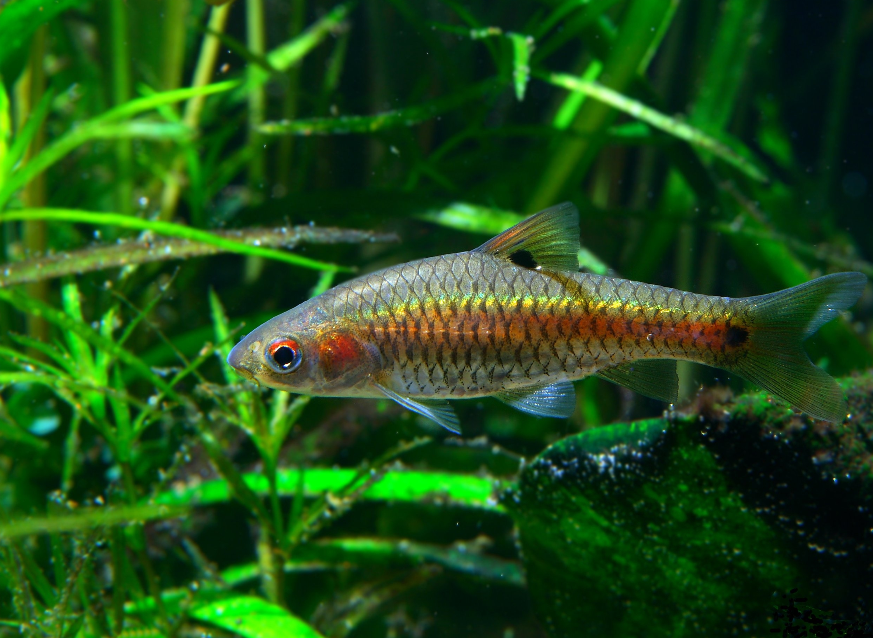
Puntius bimaculatusTwo-spotted Barb
Bleeker, 1863
Max length50mm SL2.0in SLTank60 × 30cm24 × 12inTemp18–24°C64–75°FpH6.0–7.5Generally very peaceful making it an ideal resident of the well-researched community tank. As it places no special demands in terms of water chemistry it can be combined with many of the most popular fish in the hobby including other small cyprinids as well as tetras, livebearers, rainbowfishes, anabantoids, catfishes and loaches. It's a schooling species by nature, and at least 6-10 specimens should be purchased. Maintaining it in such...
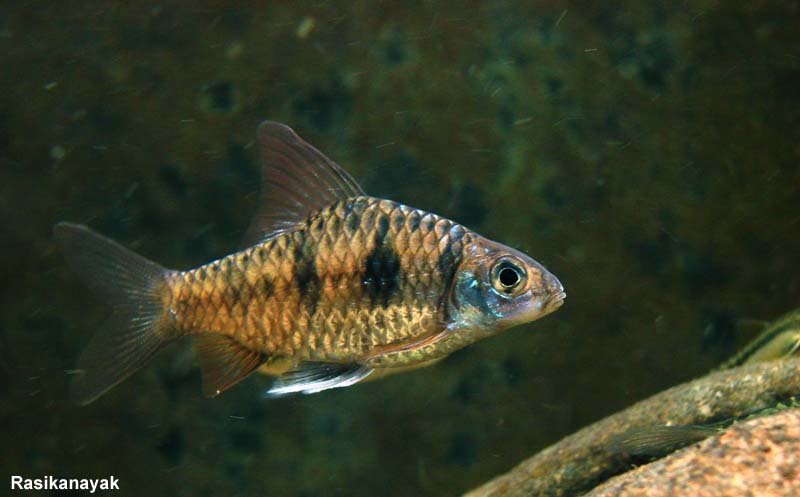
Puntius sahyadriensisMaharaja Barb
Silas, 1953
Max length65mm SL2.6in SLTank80 × 30cm31 × 12inTemp18–24°C64–75°FpH6.0–7.8The hill streams in which this fish can be found are generally shaded by the forest canopy and dense marginal vegetation. Substrates are typically composed of boulders, smaller stones, sand or gravel with submerged tree roots around the margins and quieter areas in which fallen branches and leaf litter collect. Other fish species occurring in the Tunga...
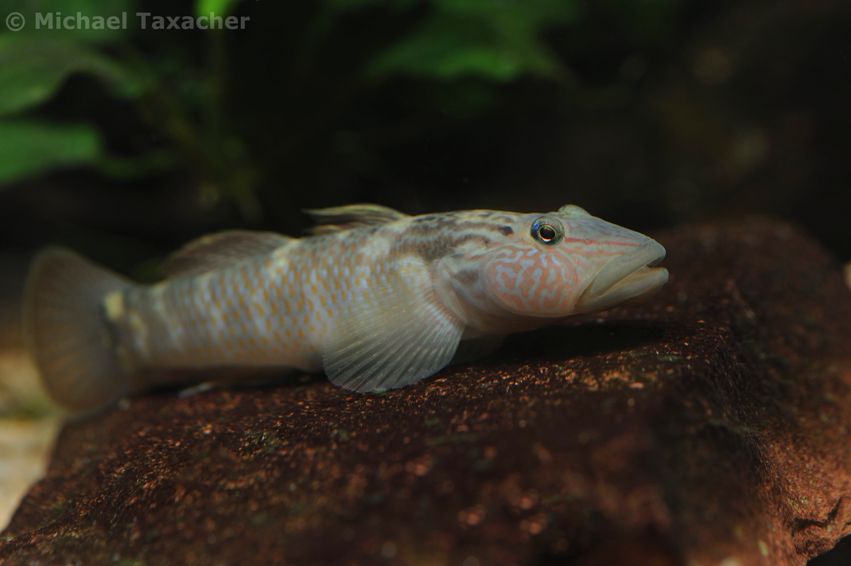
Rhinogobius formosanus
Oshima, 1919
Max length100mm SL3.9in SLTank80 × 30cm31 × 12inTemp18–28°C64–82°FpH6.0–8.0This species was previously considered to be a subspecies of R. nagoyae but has generally been accepted as distinct since 2008. It can be told apart from other Rhinogobius spp. from Taiwan by presence of irregular, wavy, reddish brown lines on the cheek and opercle.
Sandelia bainsiiEastern Cape Rocky
authority not recorded
Max length325mm SL13in SLTank180 × 60cm72 × 24inTemp18–22°C64–72°FpH6.8–8.0There are only two described species in the genus Sandelia. Both have very limited natural ranges in parts of South Africa, which in itself is odd as they're completely isolated from other genera of anabantoids. This is probably due to some ancient radiation of species, but as yet remains unresolved. Sandelia spp. are also considered the most primitive of anabantoids, as they possess a less well-developed labyrinth organ than their relatives. You're unlikely to see any of these fo...
Sandelia capensisCape kurper
authority not recorded
Max length215mm SL8in SLTank120 × 45cm48 × 18inTemp18–22°C64–72°FpH6.5–7.2There are only two described species in the genus Sandelia. Both have limited natural ranges in parts of South Africa, which in itself is odd as they're completely isolated from other genera of anabantoids. This is probably due to some ancient radiation of species, but as yet remains unresolved. Sandelia spp. are also considered the most primitive of anabantids, as they possess a less well-developed labyrinth organ than their relatives. S. capensis is of considerable conservation importa...
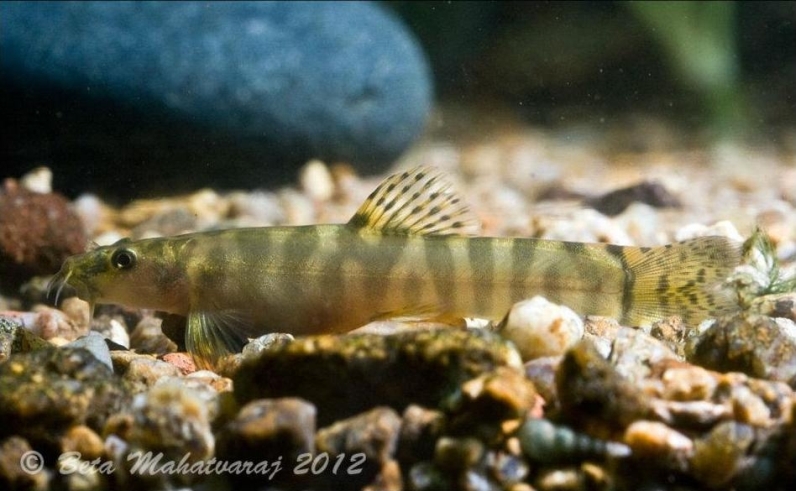
Schistura denisonii
Day, 1867
Max length52mm SL2.0in SLTank75 × 30cm30 × 12inTemp18–24°C64–75°FpH6.0–7.5This species is feisty and largely unsuitable for the general community aquarium. This is not to say it must be kept alone, rather that tankmates must be selected with care and proper research. Slow-moving or long-finned species should certainly be omitted because they're likely to struggle with the necessary level of water movement and may end up with nipped fins.
Sciaenochromis fryeriElectric Blue Hap
authority not recorded
Max length200mm SL8in SLTank150 × 45cm60 × 18inTemp24–28°C75–82°FpH7.6–8.8This popular species was previously imported and classified as Sciaenochromis ahli, and is still named as such in much of the available literature. Many morphs exist, although males of all these exhibit the characteristic blue colouration, differing only in fin colouration and patterning. These should not be mixed in aquaria as they will hybridise. Extra care must be taken regarding tankmates, too, as male S. fryeri have been known to spawn with females of other genera, particularly Aulonoca...