Results for “species”
Type a name: scientific, common, or one a species used to go by. Or narrow the catalogue with the filters.
Filters
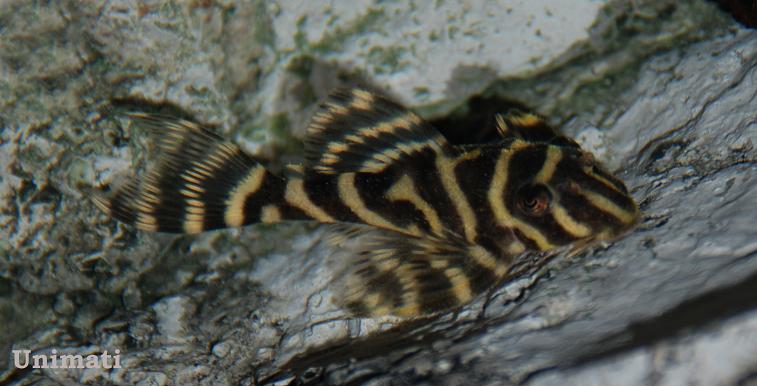
Hypancistrus sp.L333
authority not recorded
Max length150mm SL6in SLTank120 × 45cm48 × 18inTemp26–30°C79–86°FpH5.5–7.5This unidentified species possesses a highly variable colour pattern with the pale, randomly-arranged spots and blotches on the body ranging in colour from whitish to yellowish to rusty orange depending on the specimen. It's regularly confused with similar-looking relativ...
Hyphessobrycon metaePurple Tetra
Eigenmann & Henn, 1914
Max length40mm SL1.6in SLTank80 × 30cm31 × 12inTemp20–28°C68–82°FpH4.0–7.0A beautiful species that's not often seen for sale in the hobby, and is usually a little more expensive than other tetras when available. This is mainly due to the wild caught nature of most specimens entering the trade. It can be a little delicate when initially imported, and is sensitive to deteriorating water conditions in general. As a result, it's not a good choice for the beginner, and should only be added to well-matured tanks. As with the closely related Hemigrammus, the ta...
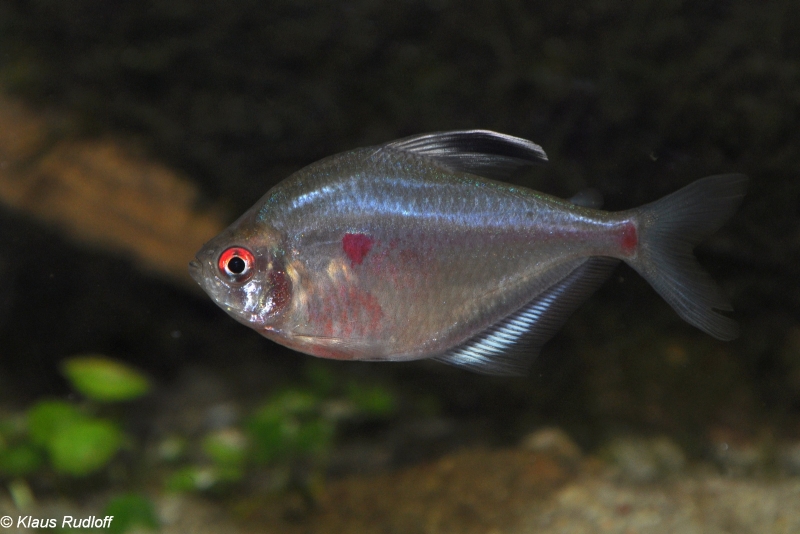
Hyphessobrycon socolofiLesser Bleeding Heart Tetra
Weitzman, 1977
Max length56mm SL2.2in SLTank90 × 30cm36 × 12inTemp22–28°C72–82°FpH4.0–7.5This species is an opportunistic omnivore by nature. The stomach contents of wild specimens from the rio Padauari were composed of fruit remains and aquatic insects with the former constituting 99% and latter 1% of all items consumed. Stomachs of individuals from igarapé Água Boa cont...
Labidochromis caeruleusCaeruleus
authority not recorded
Max length100mm SL3.9in SLTank90 × 45cm36 × 18inTemp24–28°C75–82°FpH7.7–8.6This species is one of the most popular Rift Lake cichlids in the hobby, due to its striking colouration and somewhat peaceful (for a mbuna) nature. It exists in many different colour forms in nature, and the ubiquitous "electric yellow" morph, so popular in the hobby, is actually one of the rarer forms in nature, with the blue and white variety being more widespread. Wild fish are correspondingly rare in the hobby, with the vast majority of specimens offered for sale being tank-bred. ...
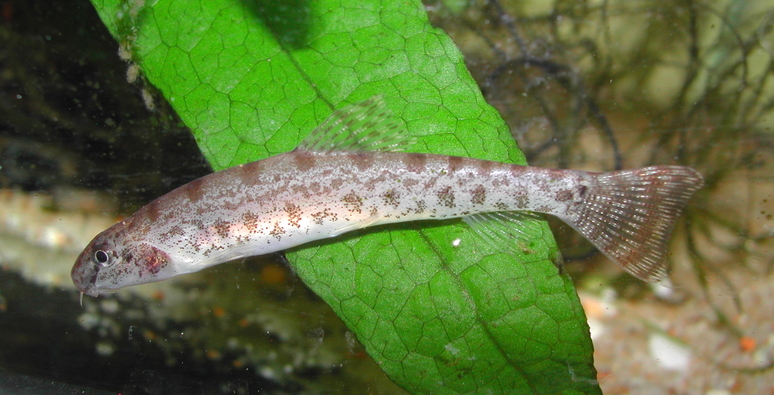
Lepidocephalichthys goalparensis
Pillai & Yazdani, 1976
Max length45mm SL1.8in SLTank45 × 30cm18 × 12inTemp22.8–26.1°C73–79°FpH6.0–7.5This species is almost unheard of in the hobby with the specimen pictured above the only one we're aware of. It was imported into the United Kingdom in late 2011 as bycatch among a shipment of mastacembelid eels from northern India, and the identification was subsequently confirmed by Justin Havird, senior author of the most recent revision of the genus.
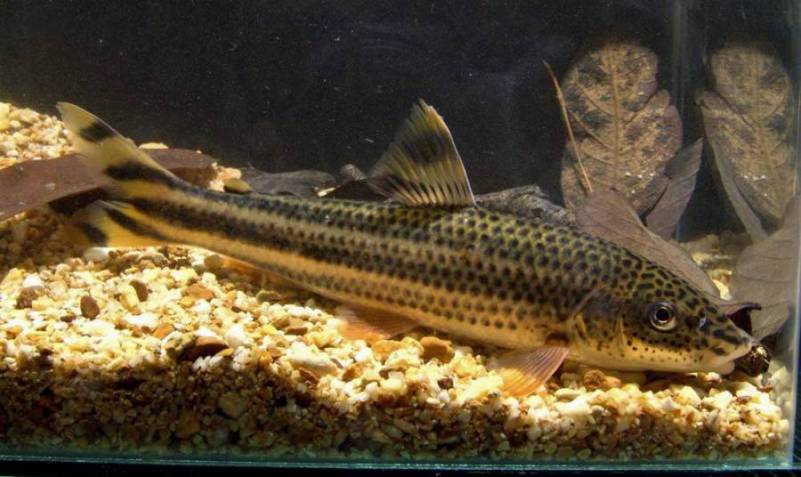
Leporellus vittatus
Valenciennes, 1850
Max length300mm SL12in SLTank210 × 60cm84 × 24inTemp18–26°C64–79°FpH5.5–7.5Type locality is given simply as 'Amazon River, Brazil' and according to current thinking this species has a huge natural range encompassing the Amazon River system in Brazil and Peru plus the Paraná-Paraguay drainage in southern Brazil and Paraguay and rio São Francisco basin in southern Brazil. Specimens in our images were collected fro...
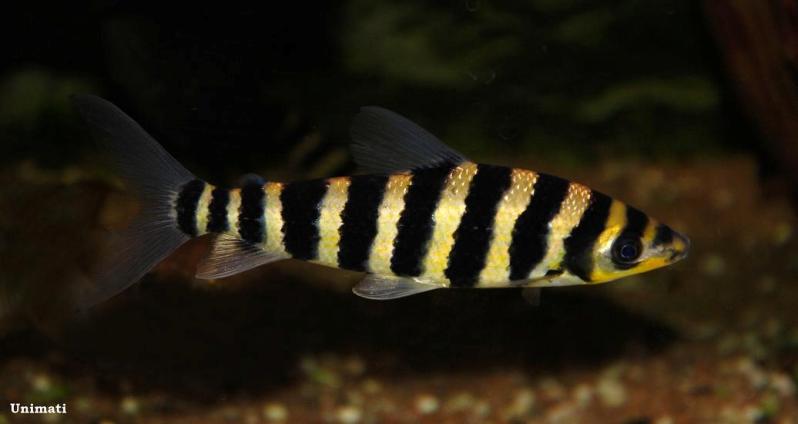
Leporinus fasciatusBanded Leporinus
Bloch, 1794
Max length270mm SL11in SLTank210 × 60cm84 × 24inTemp20–28°C68–82°FpH5.0–7.5This species is also referred to as 'black-anded leporinus', 'striped leporinus' and 'eight-banded leporinus'. Young specimens are often traded for aquaria without warning as to their potential size and requirements, and as a result it's fairly ubiquitous in public aquarium displays.
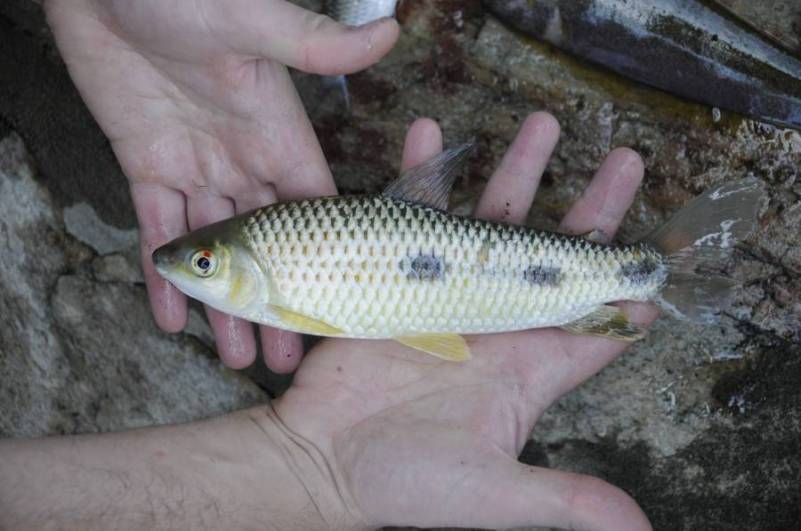
Leporinus fridericiThreespot Leporinus
Bloch, 1794
Max length400mm SL16in SLTank240 × 90cm96 × 36inTemp20–28°C68–82°FpH5.0–8.0This species was described from Suriname but no specific locality was given. It's currently accepted to occur throughout much of the Amazon river system in Brazil, Peru and Bolivia with additional records from coastal drainages of Guyana, Suriname and French Guiana plus the island of Trinidad (Trinidad and Tobago).
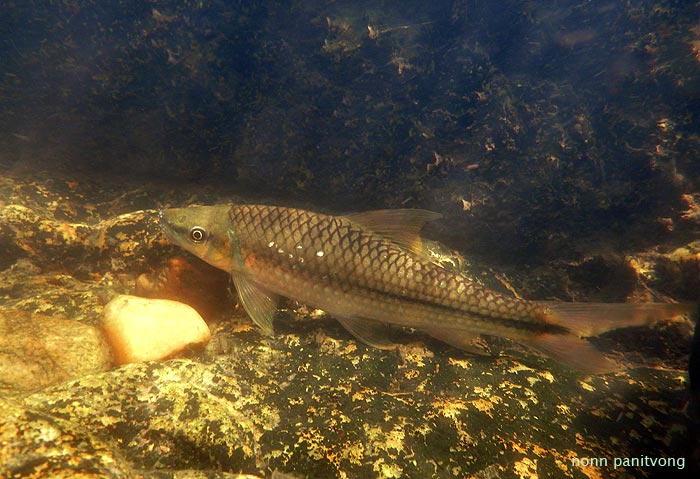
Lobocheilos rhabdoura
Fowler, 1934
Max length220mm SL9in SLTank180 × 60cm72 × 24inTemp20–26°C68–79°FpH6.0–8.0Lobocheilos species are specialised grazers of periphyton, benthic algae, and other organisms which grow attached to rocks and other solid surfaces, and they typically leave visible scrape marks in places where they have been feeding. They are by no means herbivorous and should be offered meaty foods such as live or frozen chironomid larvae (bloodworm), Tubifex, Artemia, chopped prawn, etc., along with good quality, sinking dried products, at lea...
Luciocephalus pulcherGiant Pikehead
authority not recorded
Max length200mm SL8in SLTank120 × 30cm48 × 12inTemp22–26°C72–79°FpHnot recordedWith a reputation as a difficult species to maintain in captivity, L. pulcher is recommended only to those enthusiasts able to provide the specialist diet and care it requires for its long-term health. It seems to travel very poorly, and is often seen on sale in a weakened, emaciated state. It is also particularly susceptible to bacterial infections when initially imported. Observe the fish carefully when buying and avoid any that are showing red patches around the mouthparts or fins, or that ap...
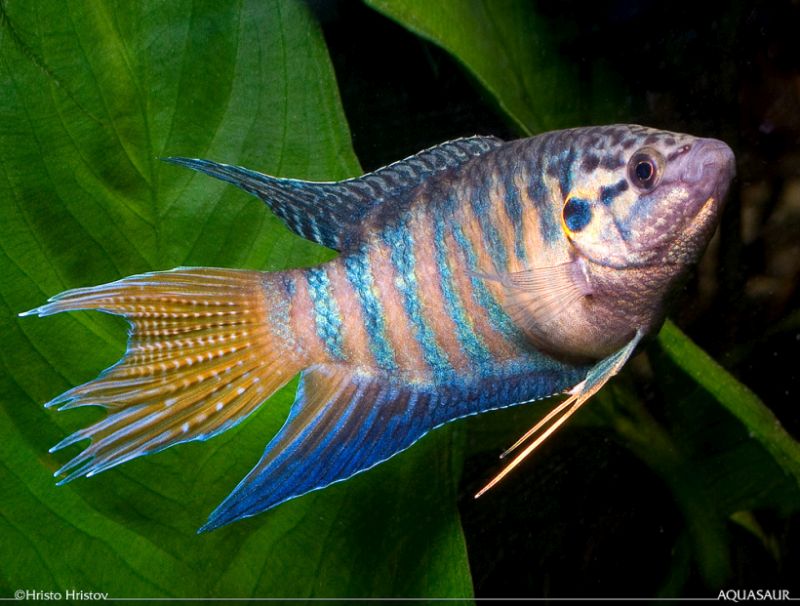
Macropodus opercularisParadise Fish
Linnaeus, 1758
Max length80mm SL3.1in SLTank80 × 30cm31 × 12inTemp10–22°C50–72°FpH6.0–8.0M. opercularis is a classic aquarium fish, having been introduced to the hobby by a French soldier named Gerault in 1869. Of the initial 100 specimens shipped, 22 survived and were successfully bred later that same year by another Frenchman, the Parisian Pierre Carbonnier. This gives the species the distinction of being one of the very first ornamental fish imported to Europe. It is also known as 'Chinese fighting fish', 'paradise gourami', and 'blue paradise fish'.
Mchenga flavimanus
authority not recorded
Max length120mm SL5in SLTank120 × 45cm48 × 18inTemp25–29°C77–84°FpH7.5–8.5The genus Mchenga was erected in 2006 by Stauffer and Konings and currently numbers half a dozen species, all of which are previous members of Copadichromis. The reclassification was based on various morphological and behavioural traits, including habitat preference and breeding strategy. Together with Copadichromis, Mchenga spp. form an exclusive group of Malawian cichlids commonly referred to as "Utaka" (prounounced "ooh-taw-kuh"). They're specialised to a pelagic l...
Melanotaenia splendida rubrostriataRed-striped Rainbowfish
authority not recorded
Max length125mm SL5in SLTank120 × 30cm48 × 12inTemp24–30°C75–86°FpHnot recordedThere are currently 4 described subspecies of Melanotaenia splendida, of which this species is one of the most colourful. The principle differences are generally in colour, pattern and fin counts, although even these vary depending on the locality of the fish. The different forms and subspecies should not be mixed in the aquarium, as they may hybridise. Adult specimens are rarely seen for sale, and it's the much drabber juvenile fish that are almost always offered in dealers tanks. However,...
Monopterus albusSwamp Eel
authority not recorded
Max length1000mm SL39in SLTank180 × 60cm72 × 24inTemp25–28°C77–82°FpH6.0–8.0An incredibly hardy species, M. albus has the ability to travel over land for short distances if kept moist and as mentioned above, often burrows into moist earth (sometimes up to a depth of 1.5 metres!) in order to survive dry conditions. It has only a single gill slit, located on the bottom of the throat, that allows it to trap air in its specially adapted gills. These contain an accessory breathing organ, which takes the form of a pair of lung-like sacs at the rear of the gill chamber. In thi...
Oreochromis tanganicaeTanganyikan Tilapia
authority not recorded
Max length420mm SL17in SLTank210 × 60cm84 × 24inTemp24–28°C75–82°FpH7.5–9.0This large Tanganyikan species is not seen very often in the hobby. It is often seen in shoals in nature, where it appears to feed primarily on phytoplankton. An adult male would make a truly stunning specimen fish....
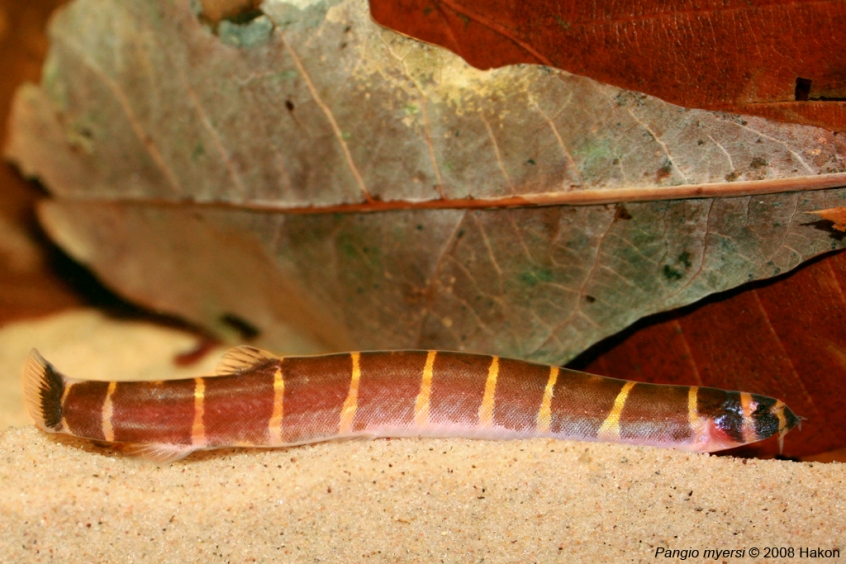
Pangio myersiGiant Kuhli Loach
Harry, 1949
Max length100mm SL3.9in SLTank60 × 30cm24 × 12inTemp21–26°C70–79°FpH3.5–7.0It's included in the P. kuhlii group of closely-related species and can be distinguished from other members by the following combination of characters: 8-11 very broad, quadrangular, regular dark body bars; orange base body colour; caudal-fin either entirely black or with a large black blotch at the base and a submarginal dark bar or row of spots. The latter feature can be useful in identifying young or newly-imported, undernourished specimens which can...
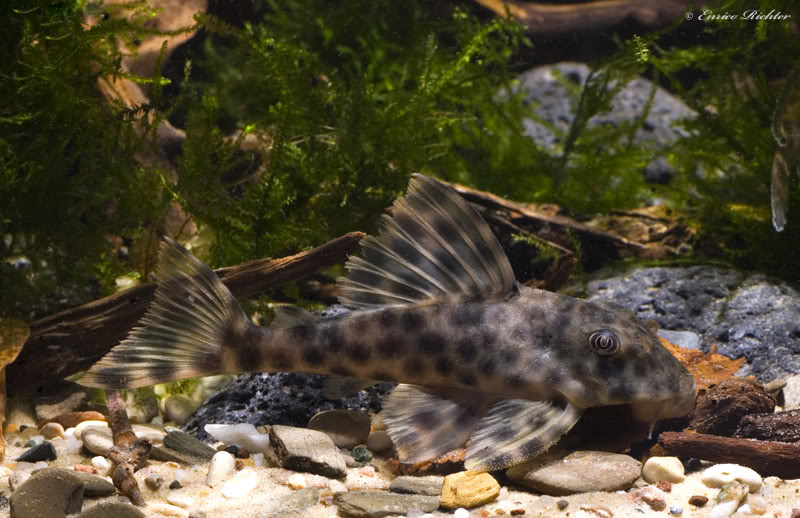
Peckoltia oligospilaL006
Günther, 1864
Max length100mm SL3.9in SLTank120 × 30cm48 × 12inTemp24–30°C75–86°FpH5.5–7.5This species can be distinguished from all congeners except P. bachi and some specimens of P. furcata by possessing only faint spots and saddles on the body. It can be told apart from P. bachi by possession of narrow (vs. wide) pelvic-fin spines, having the eyes positioned high (vs. low) on the head, and distinctly round (vs. appearing more as a mottling) spots on the body.
Periophthalmus barbarusAtlantic Mudskipper
authority not recorded
Max length150mm SL6in SLTanknot recordedTemp25–30°C77–86°FpH7.0–8.5Due to its highly amphibious nature this must be one of the most interesting, endearing species that can be kept in aquaria. Some specimens rarely enter deep water, preferring to sit in the shallows with the body submerged and eyes protruding above the surface. Others seem to favour resting completely exposed on rocks, sand or bogwood, returning to the water periodically to wet themselves. Subdominant individuals (those that are unable to secure a favourable territory) tend to attach themselves ...
Periophthalmus novemradiatusDwarf Indian Mudskipper
authority not recorded
Max length100mm SL3.9in SLTanknot recordedTemp25–30°C77–86°FpH7.0–8.5Due to its highly amphibious nature this must be one of the most interesting, endearing species that can be kept in aquaria. Some specimens rarely enter deep water, preferring to sit in the shallows with the body submerged and eyes protruding above the surface. Others seem to favour resting completely exposed on rocks, sand or bogwood, returning to the water periodically to wet themselves. Subdominant individuals (those that are unable to secure a favourable territory) tend to attach themselves ...
Potamotrygon yepeziMaracaibo River Stingray
authority not recorded
Max length400mm SL16in SLTanknot recordedTemp23–29°C73–84°FpHnot recordedThis species is often confused with P. reticulata, P. humerosa and P. scobina. Such specimens are usually imported and sold as "teacup" stingrays and it is important to correctly identify what you are buying. There is also a ray sold as P. sp. "Nazca" that is often said to be P. yepezi; unlikely given that it is imported from Peru. This latter fish is one of the commonest rays seen in the trade and is usually quite reasonably priced, making it a good choice for newcomers to k...