Oreochromis tanganicae
Tanganyikan Tilapia
Last revised 2026Edit this page
On this page11 sections
Quick factsEdit
Difficulty4 of 8 measures
Rated difficult because it needs a tank at least 2 m long.
- Space
- very large tank
- Water
- flexible
- Temp
- needs a steady temperature
- Diet
- unknown
- Temperament
- territorial
- Social
- unknown
- Compatibility
- unknown
Other demands
Each of these can raise the rating on its own, whatever the measures above say.
- Hardiness
- unknown
- Needs a tank at least 2 m long
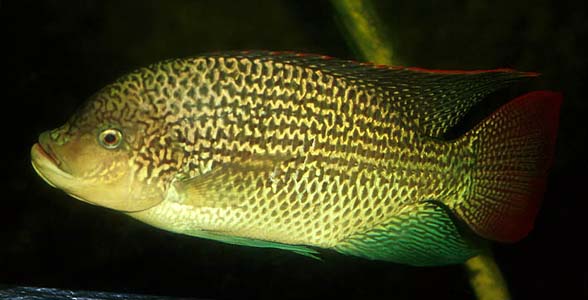
The Tanganyikan tilapia, Oreochromis tanganicae, is a large cichlid endemic to Lake Tanganyika, where it inhabits river mouths and shorelines. It is often seen in shoals in nature and appears to feed primarily on phytoplankton. Reaching 42 cm, it is not seen very often in the hobby.
Distribution
EditHabitat
Write a noteEditIt inhabits the mouths of rivers and shorelines of the lake.
Aquarium size
Write a noteEdit210 ∗ 60 ∗ 60 cm84 ∗ 24 ∗ 24 in - ~756 litres~200 US gal for adult fish. Juveniles can be grown on in smaller aquaria.
Maintenance
Write a noteEditNot critical. A sandy substrate is best. Plants should not be used as they will be eaten and a large, efficient filtration system is essential as this species is very messy. Otherwise, decor is down to personal preference.
Water conditions
EditTemperature: 24 – 28 °C75 – 82 °F
pH: 7.5-9.0
Hardness: 8-25°H
These recommendations come from this profile’s own figures. They contain affiliate links, so we may earn a commission.
Diet
Write a noteEditVery unfussy and will eat most foods offered. Some vegetable matter should be included in the diet.
Behaviour and compatibility
Write a noteEditIt is not particularly aggressive with anything too large to fit in its mouth but the choices are fairly limited. We suggest keeping it alone but tankmates could include Aristochomis, Boulengerochromis or large mbuna. Larger Central American cichlids are also a possiblity as they like similar water conditions but care must be taken when selecting species and a very large tank would be required. Most aquaria are not large enough to support more than one male of this species, as they are territorial but several females can be kept with a single male.
Sexual dimorphism
Write a noteEditReproduction
Write a noteEditNot known to have been achieved in aquaria. Maternal mouthbrooder. In nature the fish breed around sandy beaches, most likely in a similar fashion to some other large Oreochromis species such as O. mossambicus and O. niloticus. It is known that male fish play no part in broodcare but the female is a very good mother, defending the brood for several weeks after they become free swimming.
Notes
EditThis large Tanganyikan species is not seen very often in the hobby. It is often seen in shoals in nature, where it appears to feed primarily on phytoplankton. An adult male would make a truly stunning specimen fish.
Species images · 1
These photographs are used with each photographer's permission.
Send a photographDistribution
Profile completeness19 of 24
79% complete
Also missing: taxonomic authority, etymology.
Community
Questions about Oreochromis tanganicae?
Ask on Discord