Results for “character”
Type a name: scientific, common, or one a species used to go by. Or narrow the catalogue with the filters.
Filters
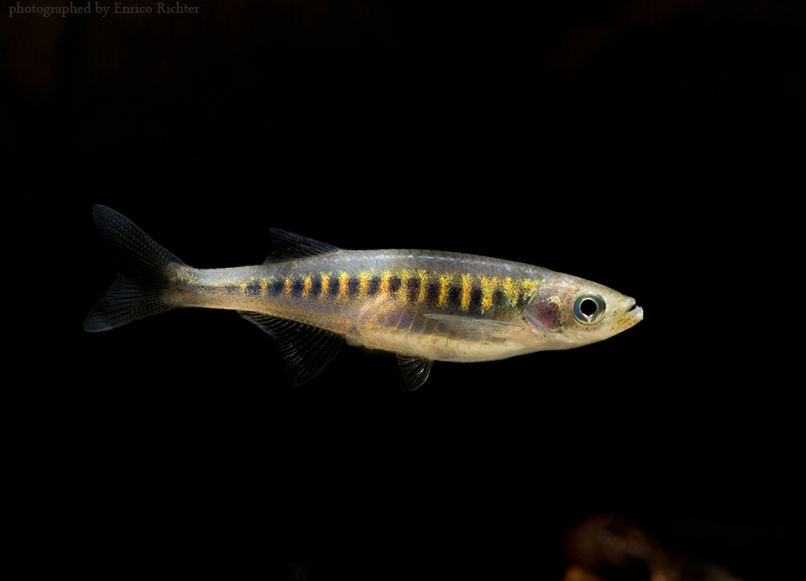
Inlecypris auropurpurea
Annandale, 1918
Max length80mm SL3.1in SLTank90 × 30cm36 × 12inTemp20–24°C68–75°FpH6.0–8.0Originally described as a member of Barilius (Annandale, 1918) but Howes (1980a) considered it more closely related to cheline cyprinids (Chela and Laubuca spp.) based on morphological characters and erected the genus Inlecypris for it (Howes, 1980b). Fang (2003) supported Howes' conclusions in her 2003 phylogenetic study of the genus Danio, hypothesising that Inlecypris and Chela together form a sister group to Devario.
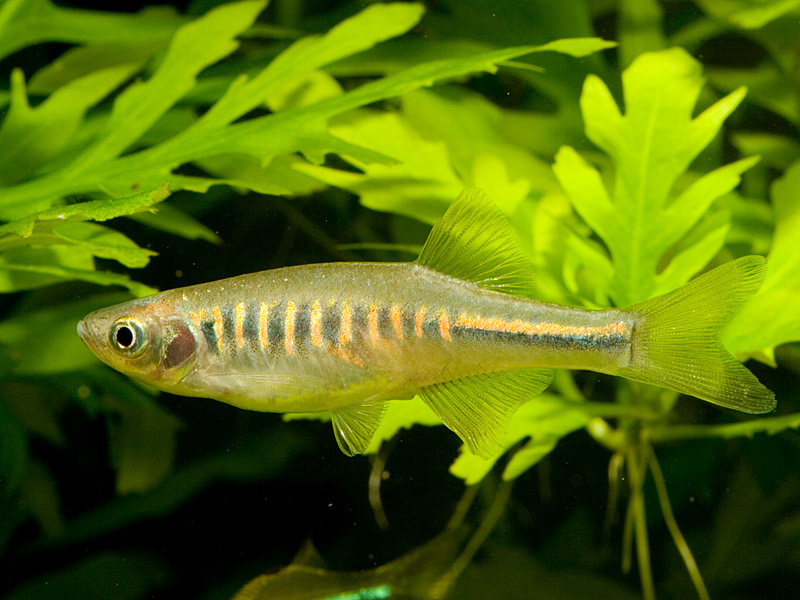
'Inlecypris' shanensis
Hora, 1928
Max length60mm SL2.4in SLTank80 × 30cm31 × 12inTemp18–26°C64–79°FpH6.0–8.0This species is sometimes referred to as 'Hora danio' or Salween danio'. It is distinguished from similar-looking species by a combination of characters as follows: lateral line complete or incomplete with 22-33 pored scales; absence of infraorbital process; 7 branched dorsal-fin rays; usually 10 or 11 branched anal-fin rays; barbels absent or rudimentary; flank markings comprising a series of narrow vertical bars on the anterior portion of each flank, fol...
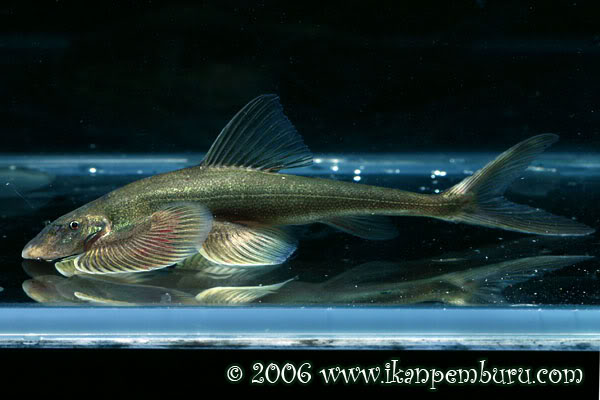
Jinshaia sinensis
Sauvage & Dabry de Thiersant, 1874
Max length75mm SL3.0in SLTank90 × 30cm36 × 12inTemp20–24°C68–75°FpH6.0–7.5This species may not yet have been seen in the aquarium trade outside its native country but has been maintained by a few private collectors. There are currently three species recognised in the genus, all endemic to the Yangtze river drainage, and they're separated from other balitorids by a combination of characters including: relatively long, deeply-forked caudal-fin; roun...
Julidochromis marlieriMarlier's Julie
authority not recorded
Max length150mm SL6in SLTanknot recordedTemp23–27°C73–81°FpH7.5–9.5Julidochromis are commonly known as "Julies" in the hobby. This particular species may also be seen for sale as the Chequered Julie. A truly characterful cichlid exhibiting quirky behaviour, it will swim hugging the rock surfaces no matter what the angle is. As with other Julies, large water changes should be avoided as this can cause mated pairs to turn on one another. Several geographical morphs are available. However, no two species or morphs of Julidochromis should be kept togethe...
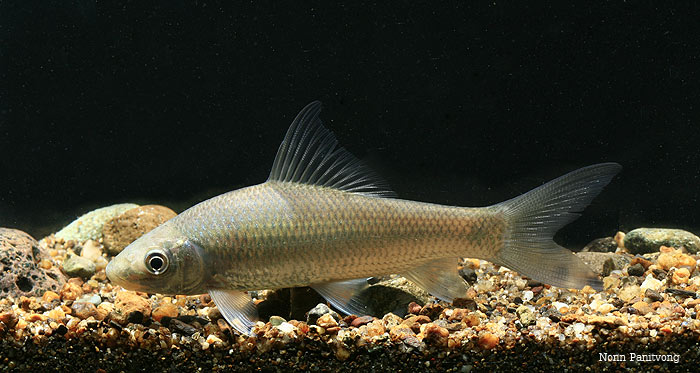
Labeo pierrei
Sauvage, 1880
Max length800mm SL31in SLTanknot recordedTempnot recordedpHnot recordedThis species can be distinguished by the following characters: juveniles with brown body and dark marking at base of caudal-fin; 37-42 + 3-4 lateral line scales; 11½ branched dorsal-fin rays; 7½ scale rows between lateral line and dorsal-fin origin; 20-25 predorsal scales; dorsal-fin relatively small with anterior branched rays shorter than head in juveniles, slightly longer than head in adults.
Labeotropheus fuelleborniFuelleborn's Cichlid
authority not recorded
Max length175mm SL7in SLTank90 × 45cm36 × 18inTemp24–28°C75–82°FpH7.6–8.8This species has the characteristic overhanging snout possessed by all three members of the genus. It has chisel-shaped teeth which are designed for grazing algae off rocks. These physical adaptations allow it to graze algae from rocks situated in very shallow water which other species cannot reach. The position of the mouth allows the fish to remain parallel to the rock surfaces, thus enabling it to cope with the turbulence in these areas. L. fuelleborni exists in many different colour forms in...
Labeotropheus trewavasaeTrewavas' Cichlid
authority not recorded
Max length113mm SL4in SLTank90 × 45cm36 × 18inTemp24–28°C75–82°FpH7.6–8.8This species has the characteristic overhanging snout possessed by all three members of the genus. It also has chisel-shaped teeth which are designed for scraping algae off rocks. These physical adaptations give it a competitive advantage, as they allow it to graze from rocks situated in very shallow water which other species cannot reach. The position of the mouth allows the fish to remain parallel to the rock surfaces, thus enabling it to cope with the turbulence in these areas. L. trewava...
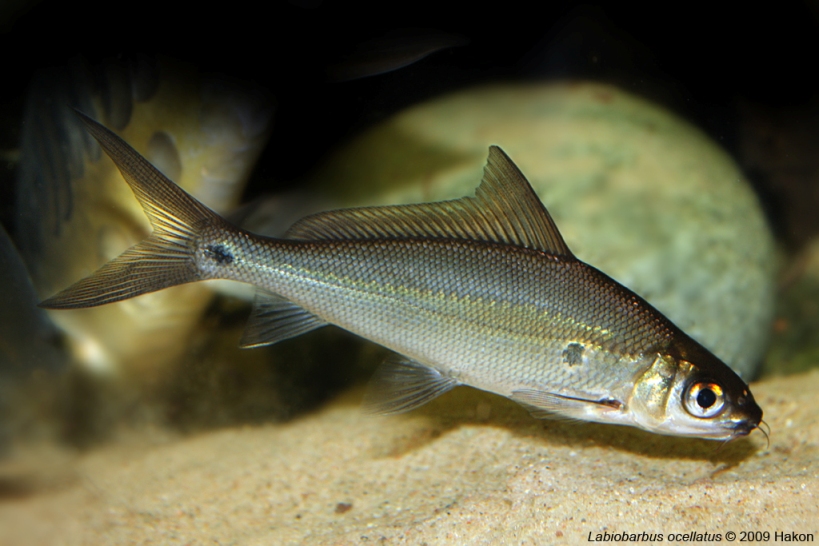
Labiobarbus ocellatus
Heckel, 1843
Max length180mm SL7in SLTank150 × 45cm60 × 18inTemp20–28°C68–82°FpH6.0–7.5It can be distinguished from congeners by the following combination of characters: 61-68 scales in the lateral series; a small, well-defined, sometimes ocellated black spot on the shoulder and another in the centre of the caudal peduncle; body without longitudinal stripes formed by spots on scales; caudal fin uniformly dusky or colourless, lobes without stripes or black margins.
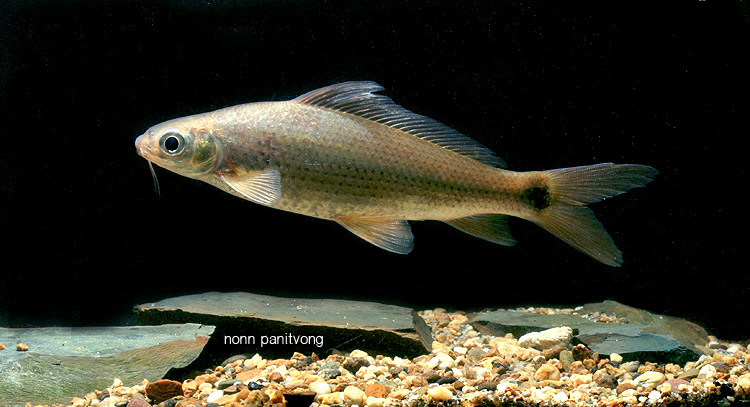
Labiobarbus siamensis
Sauvage, 1881
Max length200mm SL8in SLTanknot recordedTempnot recordedpHnot recordedL. siamensis can be distinguished from congeners by the following combination of characters: 39-42 scales in the lateral series; shoulder spot usually absent, but sometimes well-defined; body with longitudinal stripes formed by a spot on each scale; dorsal fin with dusky median stripe and no red coloration; caudal fin dusky, sometimes with reddish coloration, but no well-defined stripes; 20-23 circumpeduncular scales...
Lamprologus ocellatusOcellated Shell-dweller
authority not recorded
Max length60mm SL2.4in SLTanknot recordedTemp23–27°C73–81°FpH7.5–9.0A charming little cichlid with real character, L. ocellatus is a deservedly popular hobbyists' fish. It has an endearing habit of burying its shell and defending it against all-comers. Many an unsuspecting hobbyist has recieved a sharp nip from an ocellatus who feels its territory is being invaded. Neighbouring shells may also be buried to prevent other fish moving in. Koning has hypothesisesd that the burying of the shell and the resultant pile of sand around it not only provides additiona...
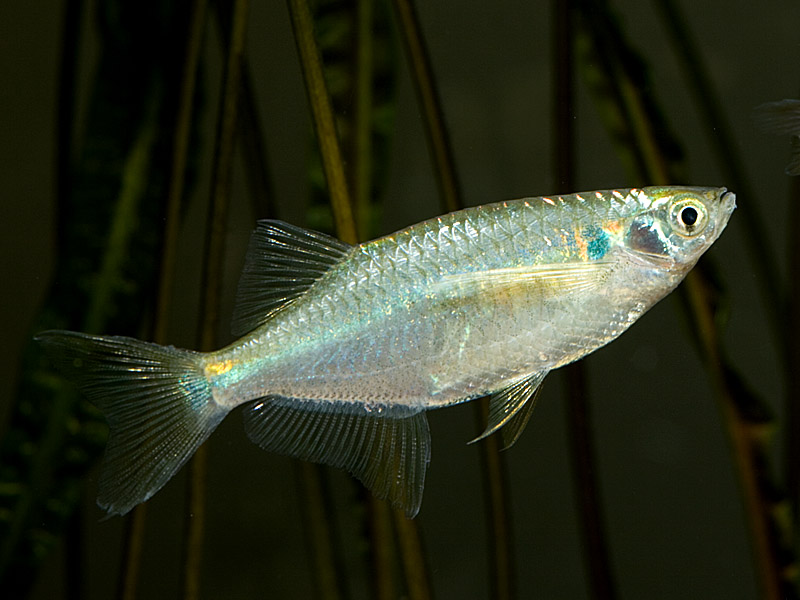
Laubuka caeruleostigmataFlying Minnow
Smith, 1931
Max length70mm SL2.8in SLTank120 × 30cm48 × 12inTemp20–26°C68–79°FpH6.0–8.0This species is also known as 'leaping barb' and was once quite common in the ornamental trade but is now seldom seen. It can be distinguished from other members of the genus by the following characters: bright blue spot on top of head; series of 4-5 short faint bars on anterior portion of body; 19-23½ branched anal-fin rays; body depth fits 2.1-2.9 times in SL.
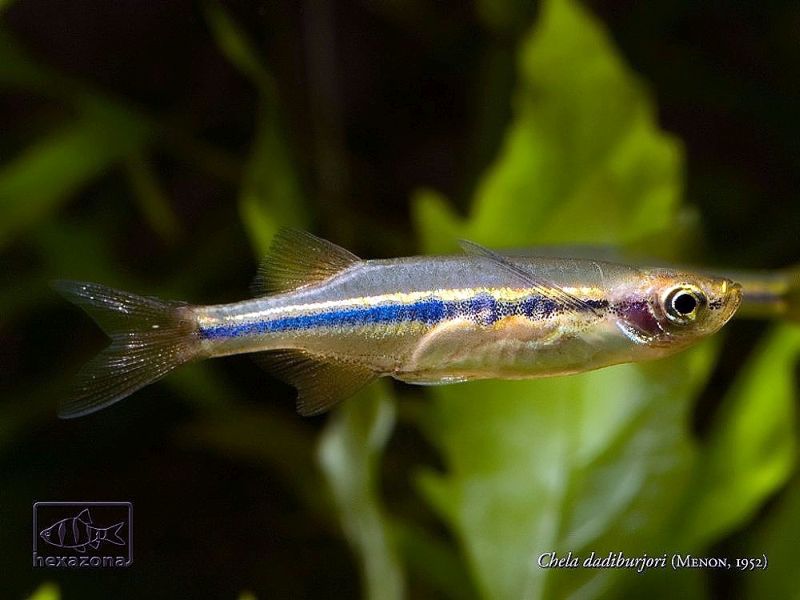
Laubuka dadiburjoriDadio
Menon, 1952
Max length30mm SL1.2in SLTank90 × 30cm36 × 12inTemp20–24°C68–75°FpH6.0–7.5It can be distinguished from other members of the genus by the following characters: lateral line absent or perforating only 2-5 scales; pharyngeal teeth hooked; body size small, not exceeding 30 mm SL; body depth less than 25 % SL; colour pattern comprising a dark bluish lateral stripe extending from the eye to the caudal peduncle, typically, but not always, forming 2-5 circular spots along its length.
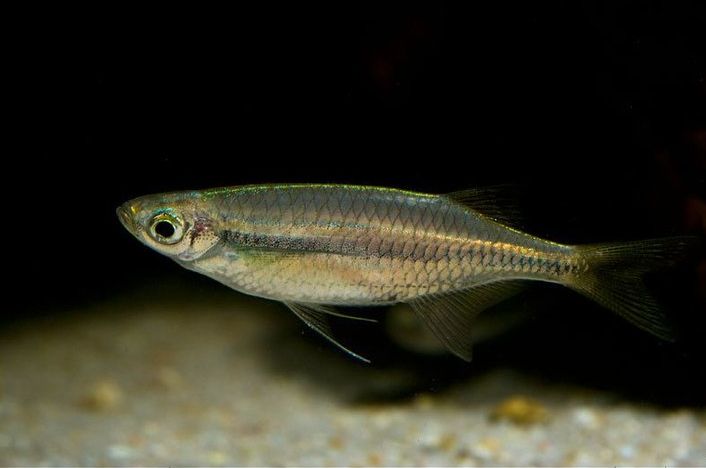
Laubuka fasciataMalabar Hatchet Chela
Silas, 1958
Max length50mm SL2.0in SLTank120 × 30cm48 × 12inTemp20–26°C68–79°FpH6.5–7.5It can be distinguished from other members of the genus by the following characters: dark longitudinal stripe on body, extending from eye to caudal peduncle; scattered tubercles present on lower jaw; 14½-16½ branched anal-fin rays; pelvic-fin long, reaching beyond anus.
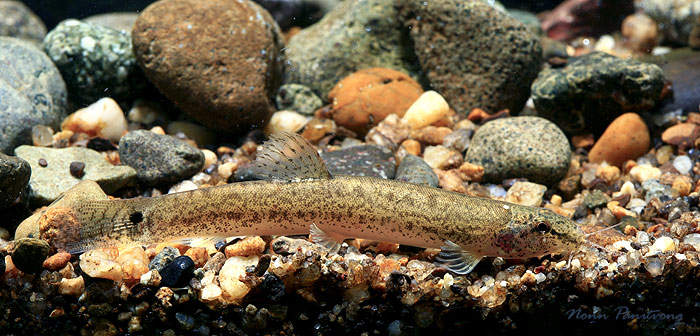
Lepidocephalichthys berdmorei
Blyth, 1860
Max length120mm SL5in SLTank75 × 30cm30 × 12inTemp20–25°C68–77°FpH6.0–8.0This is one of the most frequently-traded members of the genus and is an excellent choice for those new to keeping loaches. It's distinguishable from congeners by a combination of characters including: relatively large adult size (to at least 80 mm SL); rounded/truncate caud...
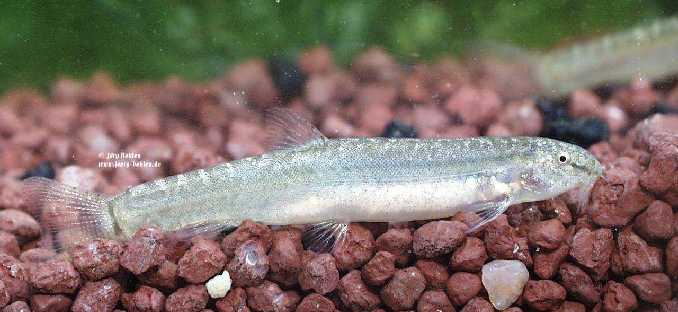
Lepidocephalichthys cf. irrorataLoktak Loach
Hora, 1921
Max length30mm SL1.2in SLTank45 × 30cm18 × 12inTemp20–25°C68–77°FpH5.5–7.5This species is not traded often but may occasionally be exported as bycatch among shipments of other species. It can be distinguished from congeners by the following combination of characters: presence of large, exposed scales on top of head; dorsal-fin origin posterior to pelvic-fin origin; moderate to small size (to 29 mm SL); caudal-fin emarginate and with dark reticulations; caudal-fin lobes with dark, elongated spots along upper and lower edges.
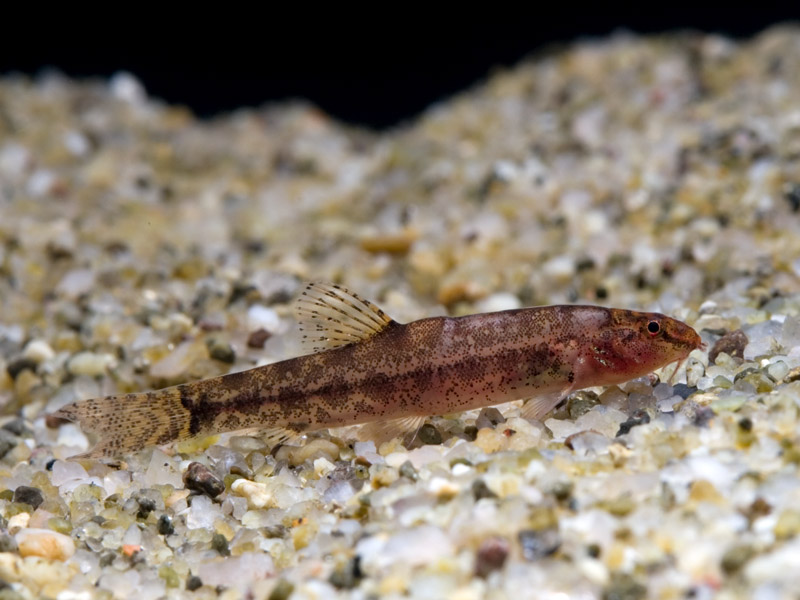
Lepidocephalichthys furcatus
de Beaufort, 1933
Max length50mm SL2.0in SLTank45 × 30cm18 × 12inTemp23–26°C73–79°FpH5.5–7.5This species is not traded often but is occasionally available as bycatch among shipments of other species. It can be told apart from congeners most easily by the prominent, dorsally-orientated, roughly semi-circular lamina circularis in males, a feature unique within the genus. Other distinguishing characters include a combination of: forked caudal-fin; relatively small adult size; dark <-shaped mark at the base of the caudal-fin; a black spot at the base of branched caudal-fin rays 3-5.
Lepidocephalichthys guntea
Hamilton, 1822
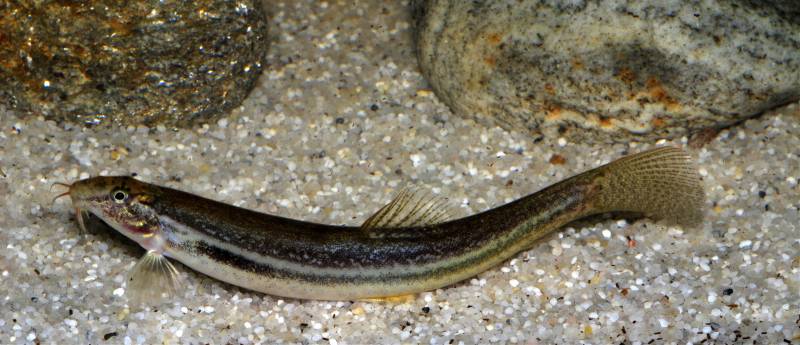
Max length150mm SL6in SLTank80 × 30cm31 × 12inTemp20–25°C68–77°FpH6.0–8.0This is one of the most frequently-traded members of the group and is an excellent choice for those new to keeping loaches. It's distinguishable from congeners by a combination of characters including: rounded/truncate caudal-fin; a scaleless patch on top of the head; relatively large adult size; flanks with spotted patterning in females and a solid...
Lepidocephalichthys sp. 'LE2'
authority not recorded
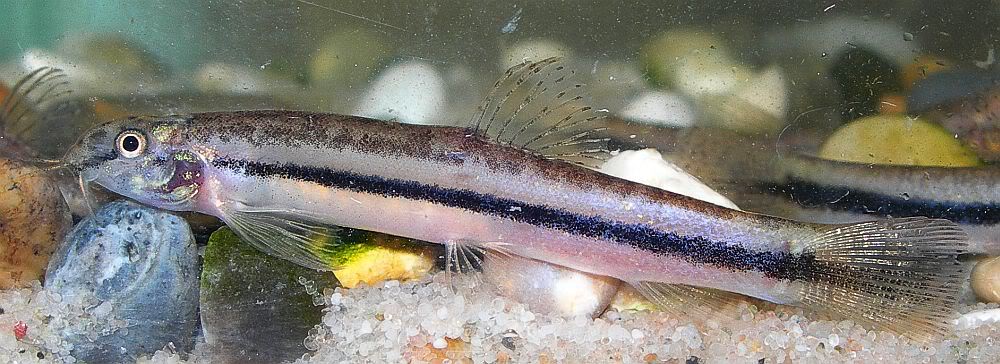
Max length60mm SL2.4in SLTank45 × 30cm18 × 12inTemp26°C79°FpH6.0–7.5This fish may only have been exported for aquaria on a single occasion to date. It exhibits characters reminiscent of both L. alkaia and L. guntea, and has been referred to as L. cf. guntea) but is most likely an undescribed species (Havird, pers. comm.).
Lepidocephalichthys thermalis
Valenciennes, 1846
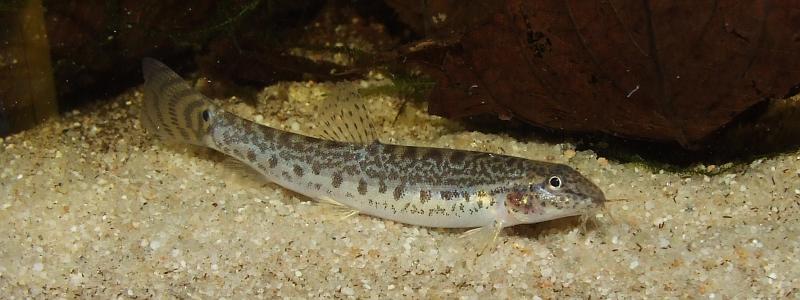
Max length50mm SL2.0in SLTank45 × 30cm18 × 12inTemp20–25°C68–77°FpH6.0–8.0This species is available sporadically and makes an excellent choice for those new to keeping loaches. It's distinguishable from congeners by a combination of characters including: truncate/rounded caudal-fin; no scales on top of head; dark, squarish spots o...
Lepidocephalichthys tomaculum
Kottelat & Lim, 1992
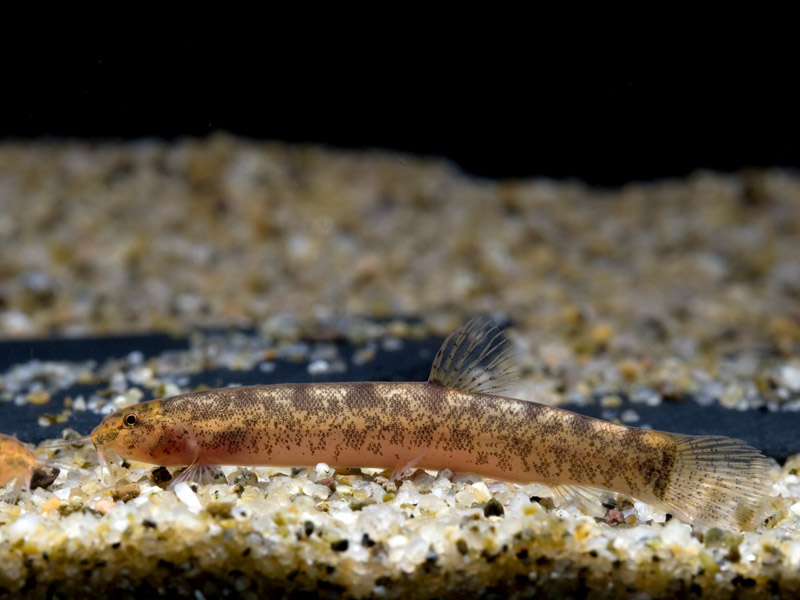
Max length39mm SL1.5in SLTank45 × 30cm18 × 12inTemp23–29°C73–84°FpH3.5–7.0This species is not traded often but may be available occasionally bycatch among shipments of other species. It can be told apart from congeners most easily by the following combination of characters: truncate caudal-fin; scaleless patch on top of head; caudal-fin with reticulated patterning, sometimes appearing as a series of thin vertical bars; body reddish brown with darker markings; 3-7 predorsal and 3-6 postdorsal thin, transverse dark bars running across the dorsal surface; relatively deep...