Results for “species name”
Type a name: scientific, common, or one a species used to go by. Or narrow the catalogue with the filters.
Filters
Rasbora vulcanus
authority not recorded
Max length40mm SL1.6in SLTank60 × 38cm24 × 15inTemp23–26°C73–79°FpHnot recordedThis species was described in 1999 and may still occasionally be seen on sale under the incorrect names R. reticulata or R. cf. reticulata as well as the trade name 'volcano rasbora'. The real reticulata is endemic to the small island of Nias which lies off Sumatra's northwestern coast and is virtually inaccessible to fish collectors so is unlikely to be in the hobby although it may have been exported on a couple of occasions. It's a deeper-bodied fish and does not exhibit th...
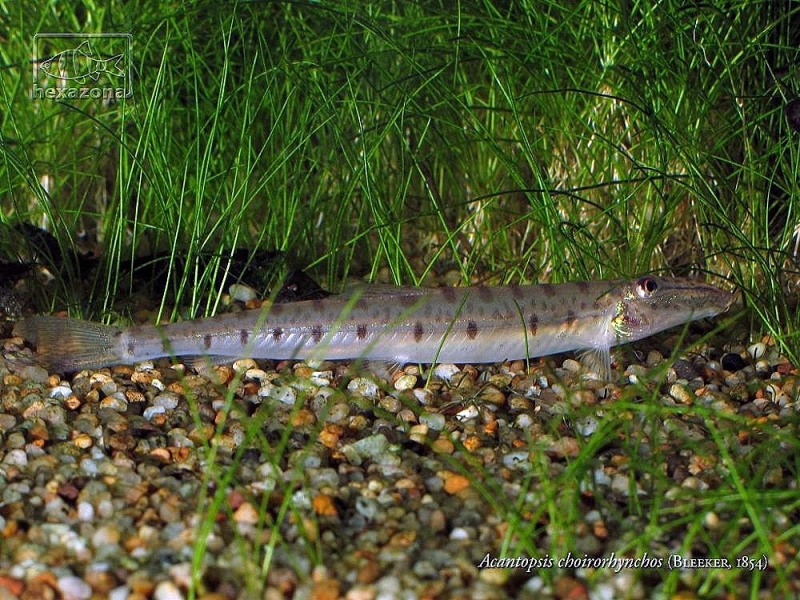
Acantopsis dialuzonaHorseface Loach
van Hasselt, 1823
Max length200mm SL8in SLTank120 × 45cm48 × 18inTemp16–24°C61–75°FpH6.0–8.0Juveniles of this 'species' (probably a group of species - see 'distribution') are traded in large numbers but it's still uncommon to see adult specimens in the hobby suggesting their needs are not catered for often enough. This is a shame as when maintained properly they're hardy, long-lived and interesting aquarium residents. Other trade names include 'long-nosed' and 'banana' loach. Please note although certain that more than one species is being tr...
Metynnis hypsauchenSilver Dollar
authority not recorded
Max length150mm SL6in SLTank180 × 38cm72 × 15inTemp24–28°C75–82°FpH6.0–7.0Metynnis hypsauchen is sometimes referred to as the Plain Metynnis in an effort to distinguish it from its close relation, Metynnis argenteus. Both fish are sold in the hobby under the name "Silver Dollar" and are virtually indentical in terms of appearance and care requirements. The two species can be told apart as m. hypsauchen has a black blotch located slightly above and behind each eye. This species also occurs in a striped colour form which is sometimes referred to as(m. hypsauch...
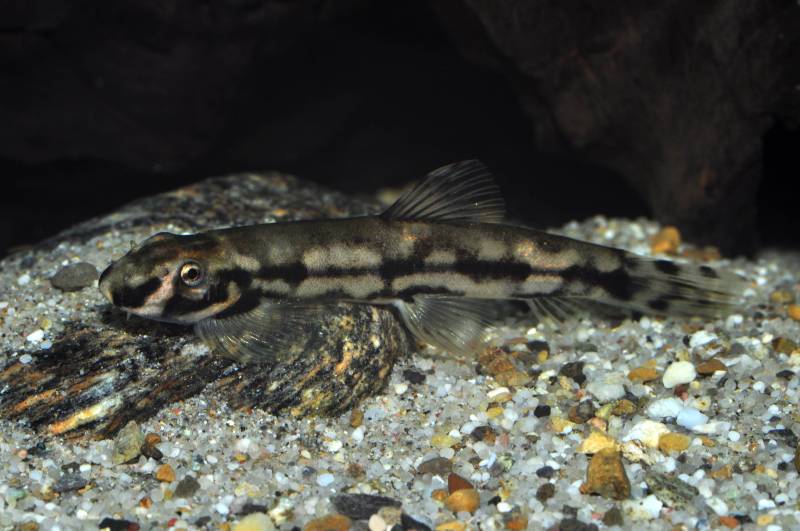
Yaoshania pachychilusPanda Loach
Chen, 1980
Max length60mm SL2.4in SLTank60 × 30cm24 × 12inTemp15.5–24°C60–75°FpH6.5–7.5Juvenile specimens were first exported for the aquarium hobby during 2009 and have since been available on a sporadic basis with prices generally reflecting its rarity and, hopefully, number of specimens being collected. The striking black-and-white-striped juvenile colour pattern inspired the vernacular name although it's sometimes labelled as 'panda goby' rather than 'panda loach'.
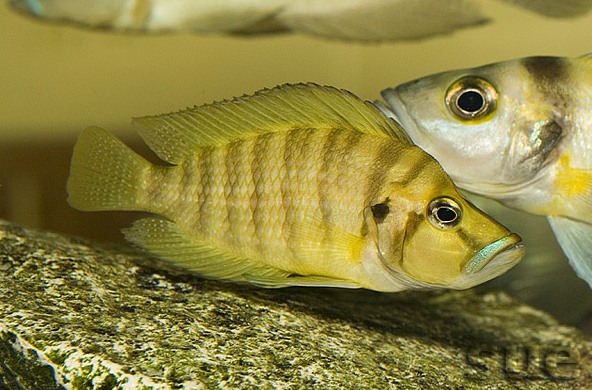
Altolamprologus compressicepsCompressed Cichlid
Boulenger, 1898
Max length125mm SL5in SLTank120 × 45cm48 × 18inTemp24–28°C75–82°FpH8.0–9.0This species varies in colour pattern depending on locality. Some of them are sold under several such names with the variant from Kigoma being known variously as A. compressiceps "Kigoma red", "Kigoma red fin", "Kigoma orange top" or "firefin" for example. The different populations should ideally be kept apart in aquaria and clearly labelled with collection locality in order to avoid hybridisation. Forms popular in the aquarium hobby include: - &quo...
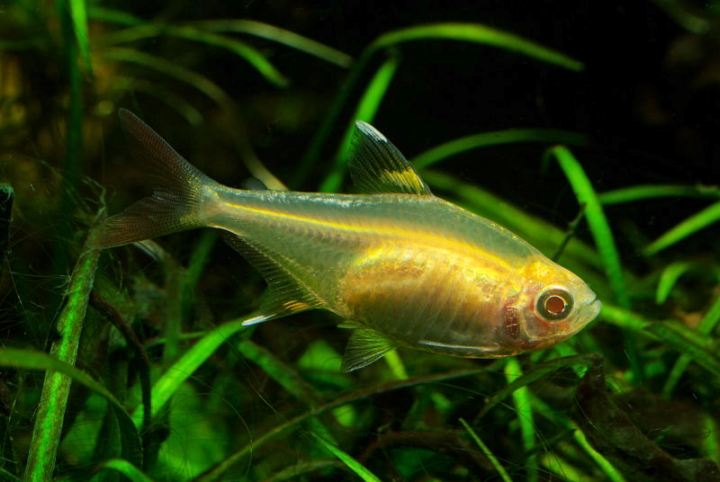
Pristella maxillarisX-ray Tetra
Ulrey, 1894
Max length45mm SL1.8in SLTank60 × 30cm24 × 12inTemp22–28°C72–82°FpH6.0–7.5P. maxillaris is one of the more popular tetras in the hobby, and is easily obtainable from most aquatic shops. It must rank among the very best choices for the newcomer to fishkeeping as it's peaceful, hardy and inexpensive. There's a selectively-bred "golden" strain available which is actually a semi-albino fish. Care is much the same as for the standard form. Currently the only species in the genus, in older literature it's often referred to by the now invalid name...
Serrasalmus maculatusMac
authority not recorded
Max length210mm SL8in SLTank120 × 45cm48 × 18inTemp21.1–30°C70–86°FpHnot recordedS. maculatus is one of the better choices for aquarists new to this group of fishes. It grows to a manageable size, is relatively hardy, attractive and usually quite inexpensive. It's sometimes referred to by the alternative vernacular names "gold piranha" or "golden mac" in the hobby. There are in excess of 30 described species of Serrasalmus many of which appear superficially similar and have confusing taxonomic histories. S. maculatus and S. spilopleura have often ...
Catoprion mentoWimpel Piranha
authority not recorded
Max length150mm SL6in SLTank120 × 38cm48 × 15inTemp23–26°C73–79°FpH5.8–6.5This species is not actually a piranha in ichthyologic terms, being monotypic and therefore unique. It was so named due to its general resemblance to true piranha, and the fact that it is quite closely related to Pygocentrus species. Mento means "chin", referring to the protruding jaw of the fish. This jaw structure, along with the adapted teeth, is used in its natural feeding behaviour. It has been observed to swim at great speed into a selected target, biting hard as it collides w...
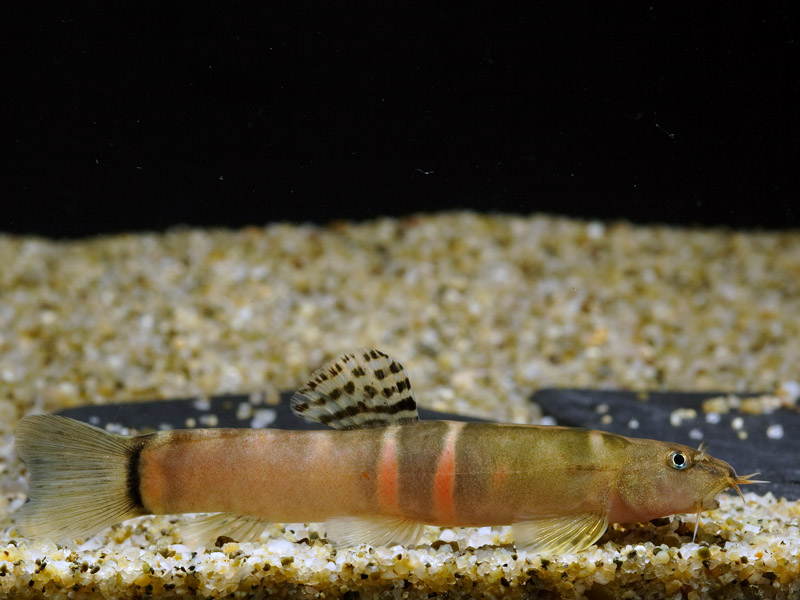
Schistura cf. balteataSumo Loach II
authority not recorded
Max length80mm SL3.1in SLTank90 × 30cm36 × 12inTemp22–26°C72–79°FpH6.5–7.5This apparently undescribed species has been available in the hobby since around 2006 and has been traded under several trade names of which others include 'tri-band sumo loach' and 'chubby loach'. The name 'Sumo II' is now in wide use to distinguish it from the real S. balteata since both have been traded as 'Sumo loach'...
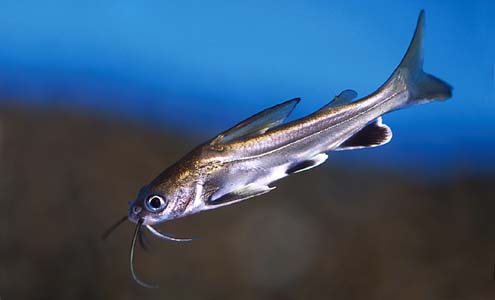
Ariopsis seemanniColombian Shark Catfish
Günther, 1864
Max length350mm SL14in SLTank240 × 60cm96 × 24inTemp22–26°C72–79°FpH6.8–8.5This species is not recommended to those lacking the facilities to house it for life. Sadly it's all too often seen for sale as an attractive, silvery 2-3" juvenile, supposedly suitable for the general freshwater community tank. To make matters worse, it is also usually given an 'alluring' name such as 'black-finned' or 'silvertip' shark catfish. The fate of the majority of these specimens is in all likelihood a depressing one.
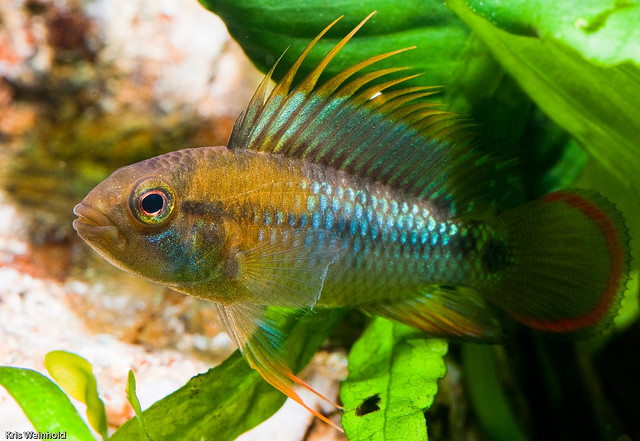
Apistogramma baenschiA188
Römer, Hahn, Römer, Soares & Wöhler, 2004
Max length♂ 55 · ♀ 40mm SL♂ 2.2 · ♀ 1.6in SLTank80 × 30cm31 × 12inTemp20–26°C68–79°FpH4.0–6.5This species is assigned the code A188 under the DATZ system and is also known by the trade names A. sp. 'Inca/Inka', A. sp. 'Inka 50', A. sp. 'highfin nijsseni', A. sp. 'Nijsseni 2', A. sp. 'red crescent' or A. baenschi 'Inca'. It's among those members of the genus produced on a commercial basis and is regularly available in the aquarium trade.
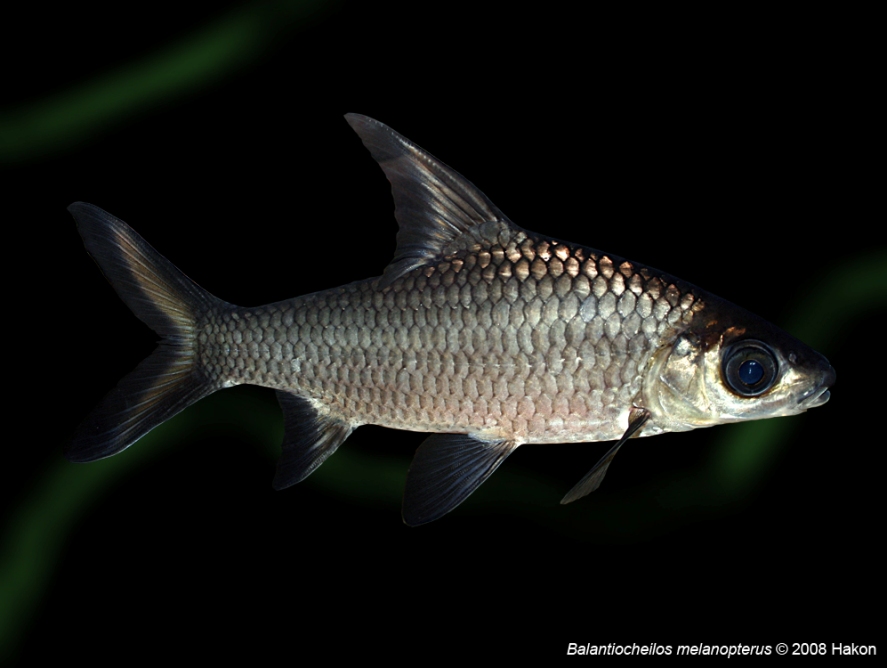
Balantiocheilos melanopterusSilver Shark
Bleeker, 1850
Max length350mm SL14in SLTank240 × 60cm96 × 24inTemp20–28°C68–82°FpH6.0–8.0May also be seen on sale under the trade names 'Bala shark' or 'tricolor shark minnow' and perhaps among the most commonly-encountered ornamental fish species. It is unfortunate that the vast majority of those traded are juveniles and tend to come supplied with little to no information provided regarding their potential size and requirements, a fairly ironic situation given the apparently precarious status of wild populations.
Thayeria obliquaPenguin Tetra
authority not recorded
Max length80mm SL3.1in SLTank60 × 38cm24 × 15inTemp22–28°C72–82°FpHnot recordedThere are only three species in the genus Thayeria, of which Thayeria boehlkei is by far the most popular in the hobby. This is a shame, as T. obliqua is an equally attractive fish. It is the type species of the genus and was the original "penguin" fish or tetra, although Thayeria boehlkei is now usually sold under this name. T. sanctaemariae, described by Ladiges in 1951 is now classed as a synonym of T. obliqua. The species are easy to tell apart, as in Thayeria boehlkei the thic...
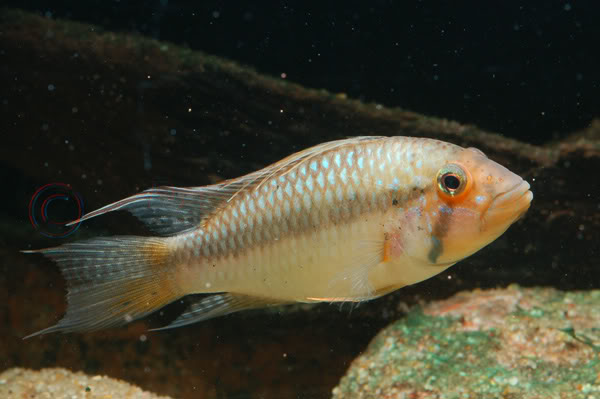
Apistogramma barlowiA174
Römer & Hahn, 2008
Max length♂ 65 · ♀ 40mm SL♂ 2.6 · ♀ 1.6in SLTank60 × 30cm24 × 12inTemp22–29°C72–84°FpH4.5–6.5This species has been assigned the code A174 under the DATZ system, and is also known by the trade names A. sp. 'Maulbrüter/mouthbrooder', A. sp. 'Glaser' (these referring to the 'red' colour form) and A. sp. 'Hauswell' (referring to the 'white' colour form). It can be told apart from other members of the genus most eas...
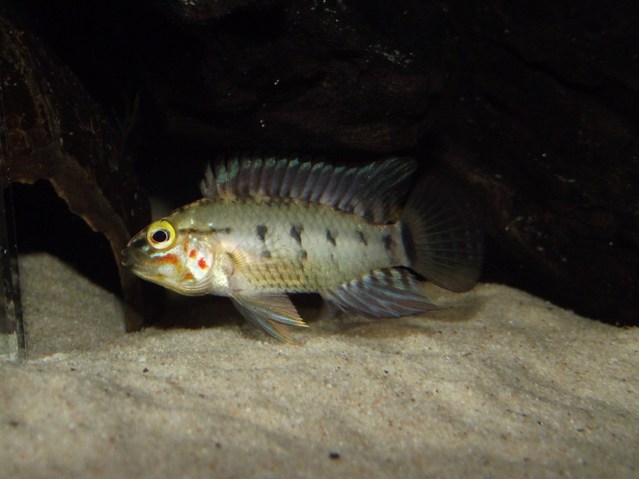
Apistogramma paulmuelleriA52
Römer, Beninde, Duponchelle, García Dávila, Vela Díaz & Renno, 2013
Max length♂ 42 · ♀ 33mm SL♂ 1.7 · ♀ 1.3in SLTank45 × 30cm18 × 12inTemp22–31°C72–88°FpH4.0–6.5This species is assigned the code A52 under the DATZ 'A' number system and is also known by the trade names A. sp. 'Apache', A. sp. 'Peru (II)', A. sp. 'Peru-regani', A. sp. cf. regani (Belém) and A. sp. 'carapintada'. Apistogramma is among the most speciose of South American cichlid genera with around 70 species valid at present but many more awaiting description. In addition many species exist in two or more geographical colour forms which may or ma...
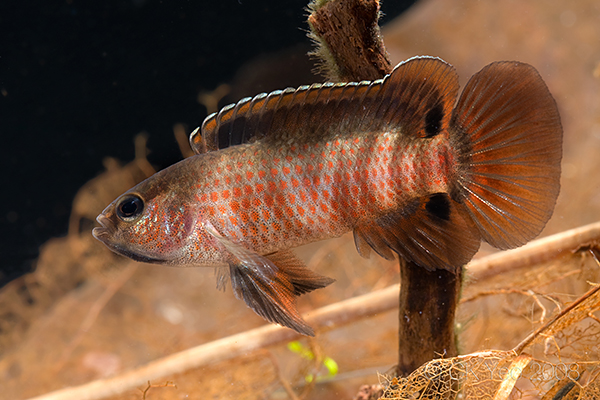
Badis sp. 'Buxar'
authority not recorded
Max length50mm SL2.0in SLTank60 × 30cm24 × 12inTemp15–25°C59–77°FpH6.5–7.5This undescribed species has been available in the aquarium hobby since 2006. It may also be seen on sale with the name Badis sp. 'flame dot' in reference to the body scales which in males possess a bright red centre or B. sp. 'red' as it appeared in a 2007 German magazine article. It appears to belong to the B. corycaeus group of species (see below). Since the species Badis singenensis was...
Dianema longibarbisPorthole Catfish
authority not recorded
Max length100mm SL3.9in SLTank90 × 38cm36 × 15inTemp24–28°C75–82°FpH5.5–7.5So named because of the row of spots running along the lateral line, the porthole cat is a good community species. Newly imported fish tend to be a little delicate and are susceptible to disease. This is at least in part because all specimens sold for the trade are wild caught. Once acclimatised, it usually proves very hardy and can be exceptionally long-lived for a fish of this size, having the potential to survive for over 10 years....
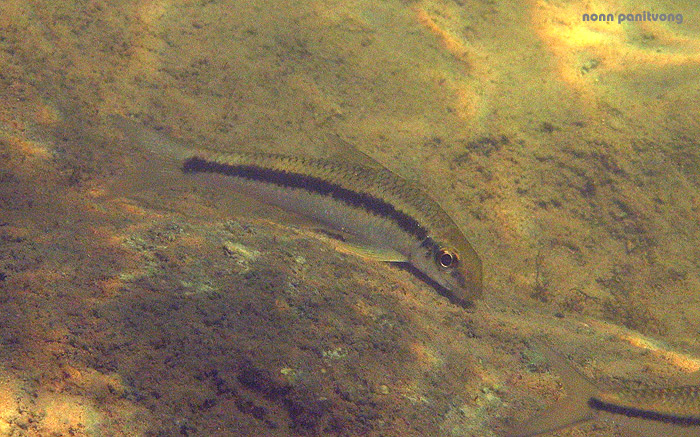
Crossocheilus burmanicus
Hora, 1936
Max length120mm SL5in SLTank150 × 45cm60 × 18inTemp20–26°C68–79°FpHnot recordedWe've been unable to obtain a diagnosis for this species to date but it can at least be distinguished from those congeners traded as 'Crossocheilus siamensis' (an invalid name synonymous with C. oblongus, which is itself of questionable identity), 'Siamese algae eater', or 'SAE' by the fact that the dark lateral stripe does not extend into the caudal-fin. Members of Crossocheilus are characterised by...
Lamprologus stappersi
authority not recorded
Max length63mm SL2.5in SLTanknot recordedTemp23–27°C73–81°FpH7.5–9.0This fish was originally thought to be a morph of L. ocellatus but has now been described as a distinct species. It is still occasionally offered for sale as "pearly ocellatus" and may also be seen under the invalid name L. meleagris....
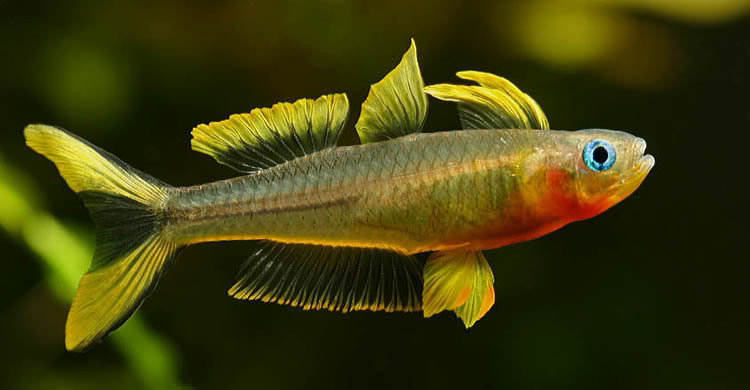
Pseudomugil furcatusForktail Blue-eye
Nichols, 1955
Max length60mm SL2.4in SLTank60 × 30cm24 × 12inTemp24–28°C75–82°FpH7.0–8.0This species is also traded as 'forktail rainbowfish' or 'yellow forktail', and it's also undergone several changes in scientific name since description. Pseudomugil furcatus is the original designation, but Allen (1980) created the genus Popondetta for it on the basis of morphological characters including number of anal-fin rays (16-20 in P. furcatus, 8-12 in other Pseudomugil spp.), absence of anterior...