Results for “albino”
Type a name: scientific, common, or one a species used to go by. Or narrow the catalogue with the filters.
Filters
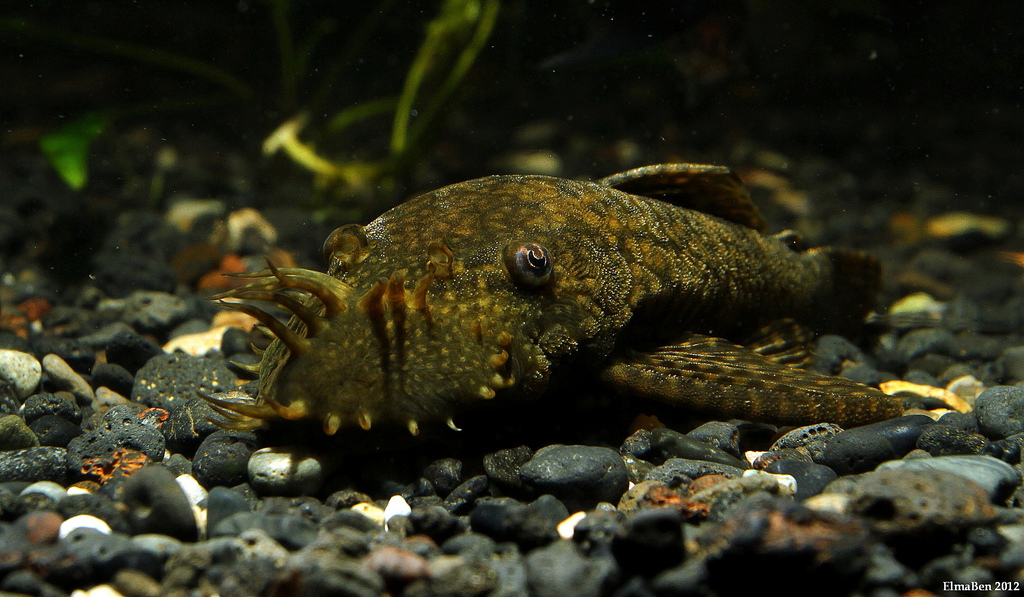
Ancistrus sp. '3'Common Bristlenose Catfish
authority not recorded
Max length125mm SL5in SLTank60 × 30cm24 × 12inTemp21–26°C70–79°FpH5.5–7.5This is the ubiquitous 'bristlenose' catfish in the aquarium hobby and is bred commerically on a large scale although it's precise origin is unknown with some of the opinion that it may be a hybrid. Several line-bred ornamental varieties exist, including piebald, albino and long-finned forms of both the standard and albino fish, of which long-finned fish are sometimes sold as 'butterfly' or 'veiltail' catfish.
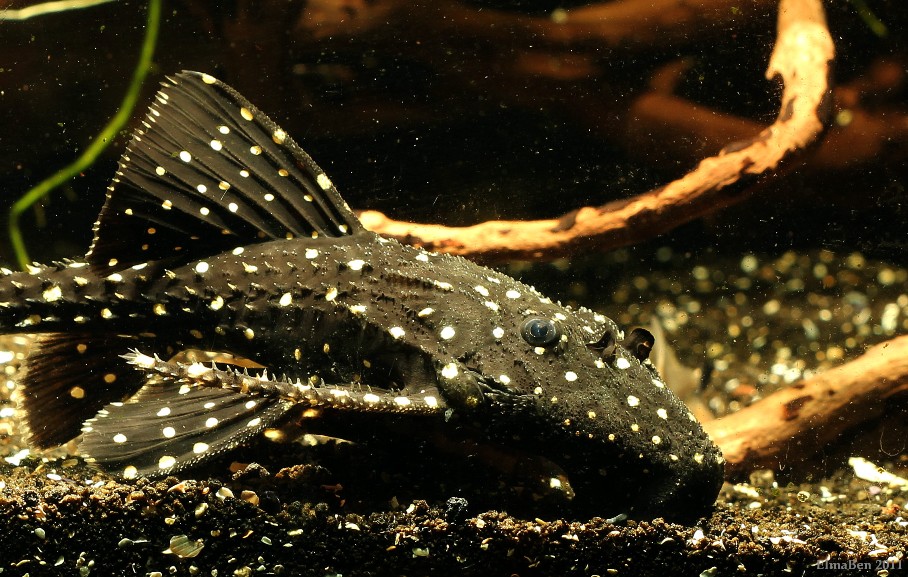
Acanthicus adonisPolka Dot Lyre Tail Pleco
Isbrücker & Nijssen, 1988
Max length1000mm SL39in SLTank600 × 200cm236 × 79inTemp23–30°C73–86°FpH6.0–7.5Despite its patent unsuitability as an aquarium subject attractively-coloured juvenile specimens of this species are traded in quite large numbers, although the scarcity of privately-maintained adults would suggest that most fail to reach their potential. The striking, spotted patterning also disappears as this species matures, and since it also becomes increasingly bellligerent with age it can only be recommended to owners of the largest private aquaria or tropical ponds. There exists an albino...
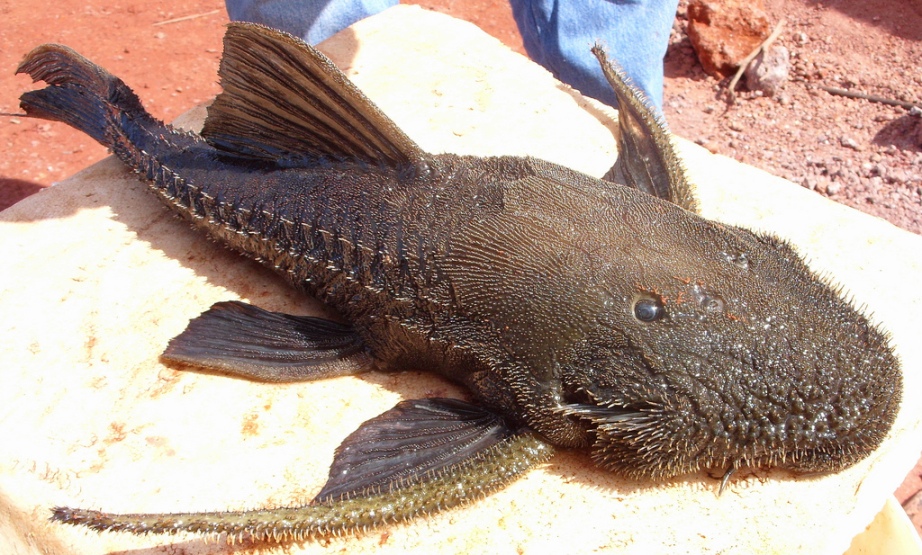
Acanthicus hystrixL155
Spix & Agassiz, 1829
Max length1000mm SL39in SLTank600 × 200cm236 × 79inTemp23–30°C73–86°FpH6.0–7.5Despite its patent unsuitability as an aquarium subject attractively-coloured juvenile specimens of this species are traded in quite large numbers, although the scarcity of privately-maintained adults would suggest that most fail to reach their potential. The striking, spotted patterning also disappears as this species matures, and since it also becomes increasingly bellligerent with age it can only be recommended to owners of the largest private aquaria or tropical ponds. There exists an albino...
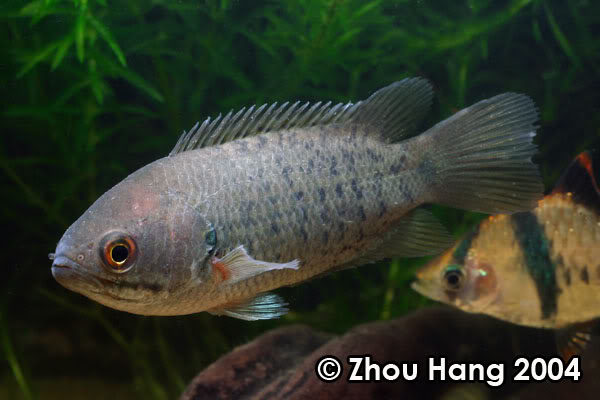
Anabas testudineusClimbing Perch
Bloch, 1792
Max length200mm SL8in SLTanknot recordedTemp15–30°C59–86°FpH5.5–8.0This species isn't especially popular in the aquarium trade but is undoubtedly interesting despite its lack of colour. In addition to its survival ability in the absence of water it's also capable of producing audible sounds though the purpose of these has not been fully-studied. Naturally-occurring xanthic and albino forms have also been recorded. There is considerable confusion as to the taxonomic status of the two species currently occupying this genus, with ichthyologists widely...
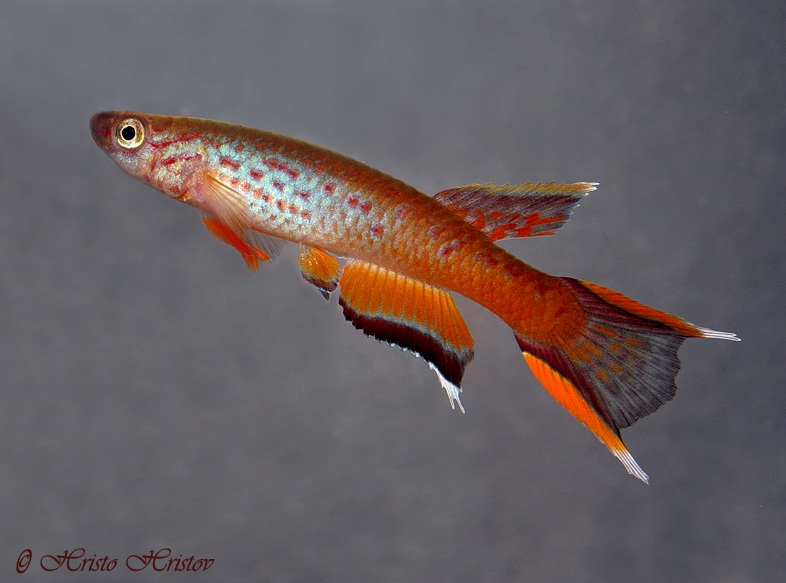
Aphyosemion australeGolden Lyretail
Rachow, 1921
Max length60mm SL2.4in SLTank45 × 25cm18 × 10inTemp21–32°C70–90°FpH5.5–7.0Also known by the vernacular names You might also see it for sale as 'golden lyretail' or 'lyretail panchax, A. australe was among the first killifishes to become popular in the hobby and still a favourite today. There exist a number of wild forms which tend to be labelled with place and year of collection in order to preserve bloodlines and avoid hybridisation, as well as several ornamental strans including 'orange', 'gold', 'chocolate', and 'albino'.
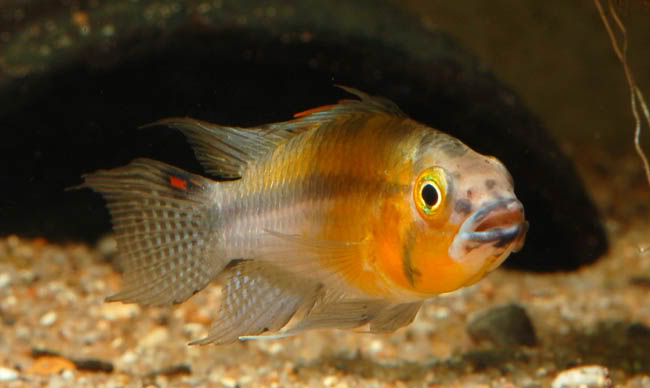
Apistogramma cacatuoidesCockatoo Cichlid
Hoedeman, 1951
Max length♂ 75 · ♀ 50mm SL♂ 3.0 · ♀ 2.0in SLTank60 × 30cm24 × 12inTemp22–29°C72–84°FpH5.0–6.0Numerous ornamental forms of this species have been selectively line-bred for the aquarium trade, vernacular names for which include "sunset", "sunburst", "double red", "triple red", "gold", "white gold", "orange flash" and "albino". It has also been assigned the 'A' number A200 under the DATZ system with possibly conspecific, related forms similarly numbered A201, A202 and A203 depending on locality. Th...
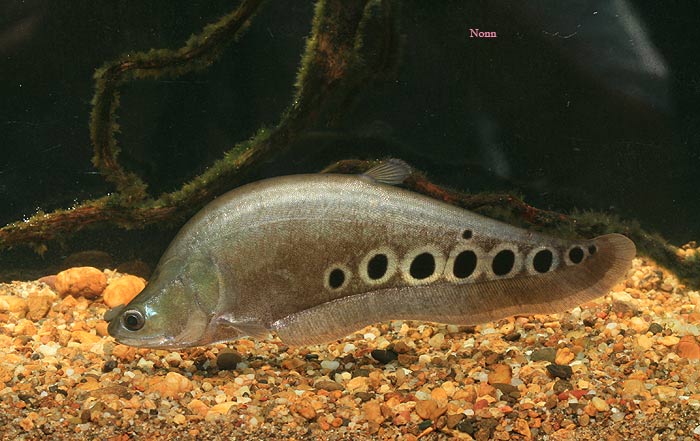
Chitala ornataClown Featherback
Gray, 1831
Max length1000mm SL39in SLTanknot recordedTemp20–28°C68–82°FpH6.0–8.0This species is also referred to as 'clown knifefish' in the aquarium trade. It arguably has no place in the ornamental hobby given its adult size and specialised requirements but remains inexplicably popular and an albino form has even been line-bred for the purpose. It can be distinguished from all congeners by presence of one or more rows of large ocellated spots above the base of the anal-fin, but...
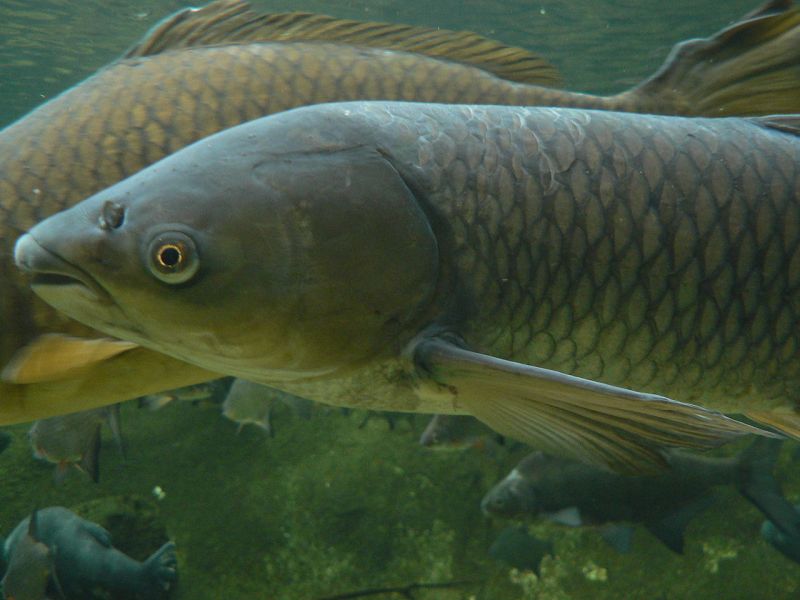
Ctenopharyngodon idellaGrass Carp
Valenciennes, 1844
Max length1200mm SL47in SLTanknot recordedTemp0–33°C32–91°FpH6.0–9.0Despite being a wholly unsuitable aquarium subject, C. idella is often traded as such, with an albino form having been developed specifically for the ornamental market. Individuals which have outgrown their aquarium or pond should never be released into natural waters, either, since this species has proven capable of causing serious environmental damage under a wide range of climatic conditions.
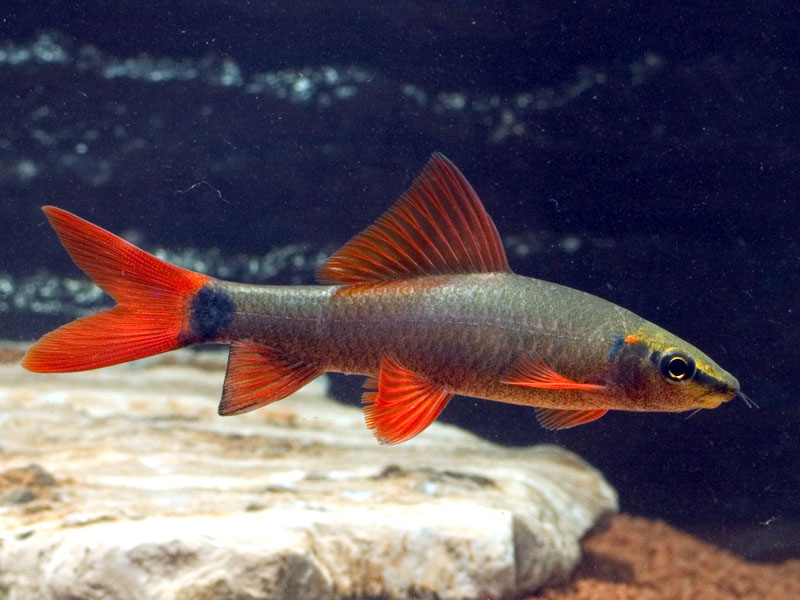
Epalzeorhynchos frenatumRainbow Shark
Fowler, 1934
Max length150mm SL6in SLTank120 × 45cm48 × 18inTemp20–26°C68–79°FpH6.5–8.0The ornamental albino variant is widely-available and has become extremely popular in the hobby and there is a commercially-produced anerythristic (lacking red pigment) mutation that has pale yellowish fins and has sometimes been misidentified as E. munense. Also worthy of note is that the specific name is sometimes misspelled 'frenatus'. Most members of Epalzeorhynchos were formerly regarded as Labeo spp. and are thus referred to as such in older literature. According to Rainboth (1996) they're characterised by absence of a dorsal spine...
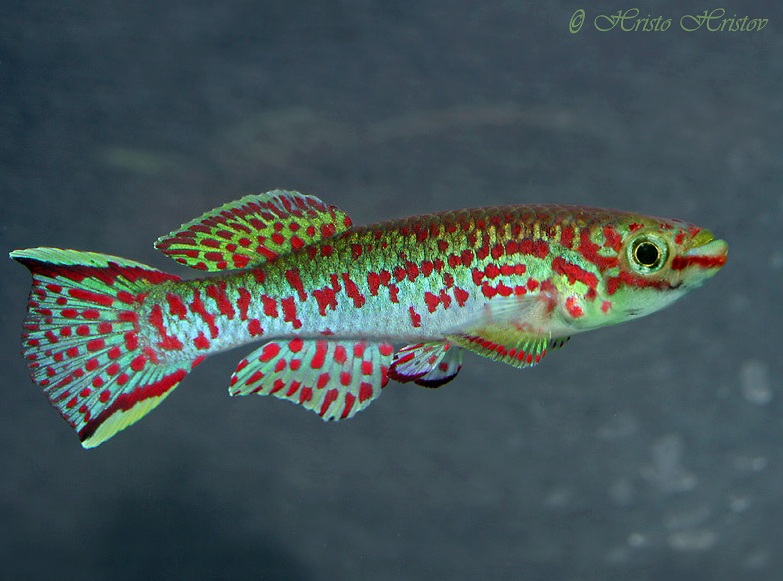
Fundulopanchax gardneriSteel-blue Killifish
Boulenger, 1911
Max length55mm SL2.2in SLTanknot recordedTemp20–26°C68–79°FpH6.0–7.5This species is also known as 'Gardner's Killi' and 'blue lyretail' and the commonly-available aquarium forms are perhaps among the best choices for those new to keeping killifishes being relatively hardy, colourful and easy to breed. A number of ornamental strains have also been line-bred by aquarists including 'gold' and 'albino'.
Hemigrammus erythrozonusGlowlight Tetra
authority not recorded
Max length40mm SL1.6in SLTank60 × 38cm24 × 15inTemp24–28°C75–82°FpH5.5–7.5This species is ubiquitous in most dealers' tanks and is one of the best choices for the newcomer to fishkeeping, being both hardy and inexpensive. There is a selectively-bred albino form that has been produced for the trade and has become popular in recent years. Care for this is identical to the standard form. Like all Hemigrammus, the taxonomic status of this species is currently Incertae Sedis, meaning uncertain. The genus is currently used as something of a catch-all for over 70 spe...
Hemigrammus ocelliferHead-and-tail light Tetra
authority not recorded
Max length45mm SL1.8in SLTank60 × 38cm24 × 15inTemp24–28°C75–82°FpH5.5–7.5Also known as the beacon tetra, this species is ubiquitous in most dealers' tanks and is one of the best choices for the newcomer to fishkeeping. It's both hardy and inexpensive. It has been popular in the hobby for several decades. There is a selectively bred albino form that has become popular in recent years, for which care is identical to the standard fish. There is possibly also a subspecies, H. ocellifer falsus that lacks the red spot at the caudal peduncle (the gold-coloured tai...
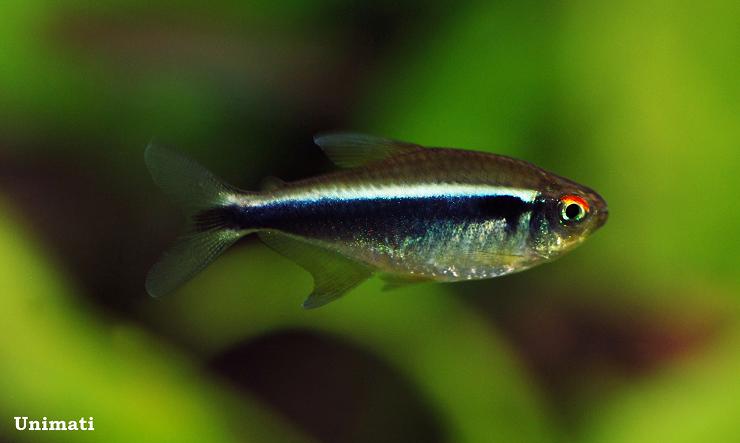
Hyphessobrycon herbertaxelrodiBlack Neon Tetra
Géry, 1961
Max length35mm SL1.4in SLTank80 × 30cm31 × 12inTemp20–28°C68–82°FpH5.0–7.5This species has been a ubiquitous aquarium fish since its discovery, and is produced on a commercial basis in several countries, therefore wild fish are no longer collected. An ornamental albino form is sometimes available. Apart from its distinctive colour pattern, it can be identified from related species via the following combination of charac...
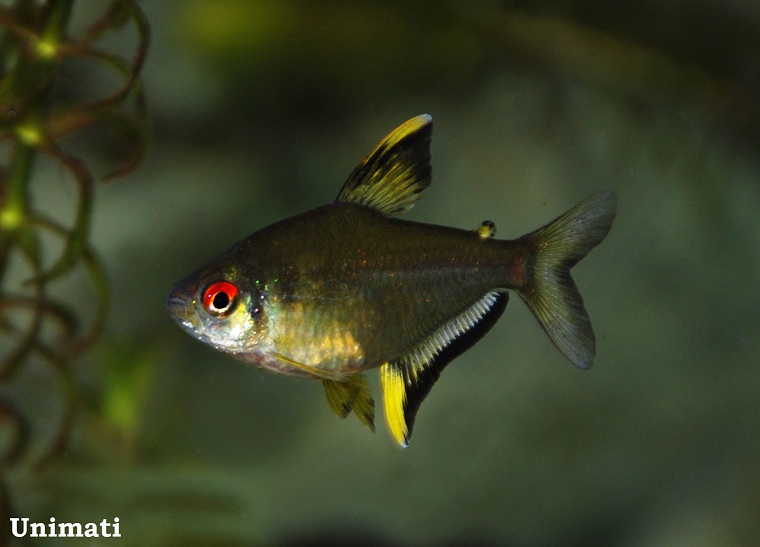
Hyphessobrycon pulchripinnisLemon Tetra
Ahl, 1937
Max length40mm SL1.6in SLTank80 × 30cm31 × 12inTemp20–28°C68–82°FpH5.0–7.5This species is a popular aquarium fish and is bred on a commercial basis in several countries, with a selectively-bred albino form also available. Wild specimens are rarely collected due to the low price of the farmed fish, but the origin of the commercial strain is questionable. The species was considered endemic to the rio Tapajós basin, but in the early 1990s fish appearing identical to the aquarium form were photographed in the...
Julidochromis ornatusGolden Julie
authority not recorded
Max length80mm SL3.1in SLTanknot recordedTemp23–27°C73–81°FpH7.5–9.0Julidochromis are commonly known as "Julies" in the hobby. This is one of the most common Julie species encountered in aquaria and may also be sold as the Yellow or Ornate Julie. The majority of specimens available are tank bred and do not exhibit as bright colouration as wild fish. As with other Julies, large water changes should be avoided as this can cause mated pairs to turn on one another. Several geographical morphs of this species are available, as is an aquarium sport albino...
Labeo chrysophekadionBlack Shark
Bleeker, 1849
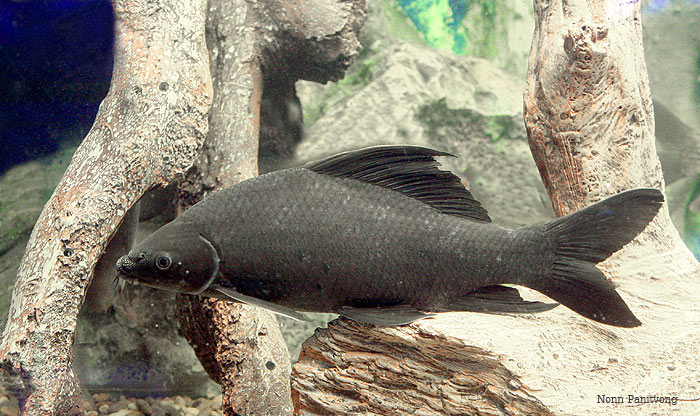
Max length600mm SL24in SLTanknot recordedTemp20–26°C68–79°FpH6.0–8.0L. chrysophekadion is also known as 'black sharkminnow'. It continues to be available in the ornamental trade despite its patent unsuitability for the home aquarium, and an albino form has been selectively bred for the purpose. It can be distinguished from other members of the genus by the following combination...
Maylandia greshakeiRed Top Ice Blue Zebra
authority not recorded
Max length135mm SL5in SLTank90 × 45cm36 × 18inTemp24–28°C75–82°FpH7.6–8.8This species was formerly classified as Pseudotropheus greshakei and Metriaclima greshakei and is still named as either of these by many sources. The genus name Maylandia is now used to describe all former members of the 'zebra' group of Pseudotropheus. An albino form of this species exists in aquaria and is occasionally available....
Neolamprologus pulcherBrichardi
Trewavas & Poll, 1952
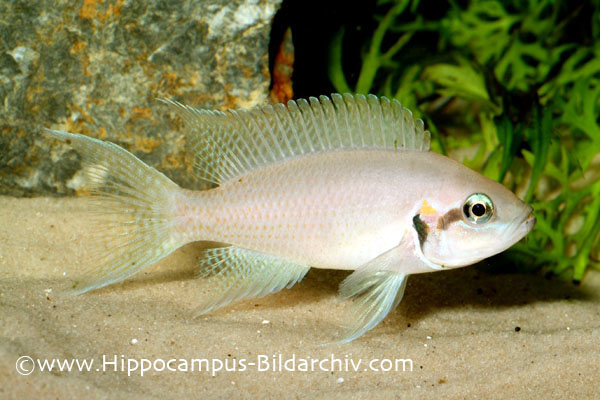
Max length90mm SL3.5in SLTank120 × 30cm48 × 12inTemp23–27°C73–81°FpH8.0–9.0Deservedly one of the most popular Tanganyikan species available in the hobby, N. brichardi is ideal for newcomers to both Rift Lake cichlids and cichlids in general, being beautiful and easy to keep and breed. It is seen for sale under several common names including "Fairy Cichlid", "Lyretail Cichlid" and "Princess of Burundi". There are several colour morphs available, although these do not vary much in patterning, and an albino form is also occasionally available...
Ompok bimaculatusButter Catfish
authority not recorded
Max length450mm SL18in SLTank180 × 60cm72 × 24inTemp20–26°C68–79°FpH6.0–8.0This infrequently seen (in the trade) species is also known as the two spot glass catfish, for fairly obvious reasons. It is more than likely that a number of separate species are currently considered within this one, as there are clear morphological differences between populations. Pending a taxonomic revision, these currently all remain classified as O.bimaculatus. This would also seem to explain the apparent toleration of the fish to wildly different water chemistry. Xanthic and albino forms ...
Paracheirodon innesiNeon Tetra
Myers, 1936
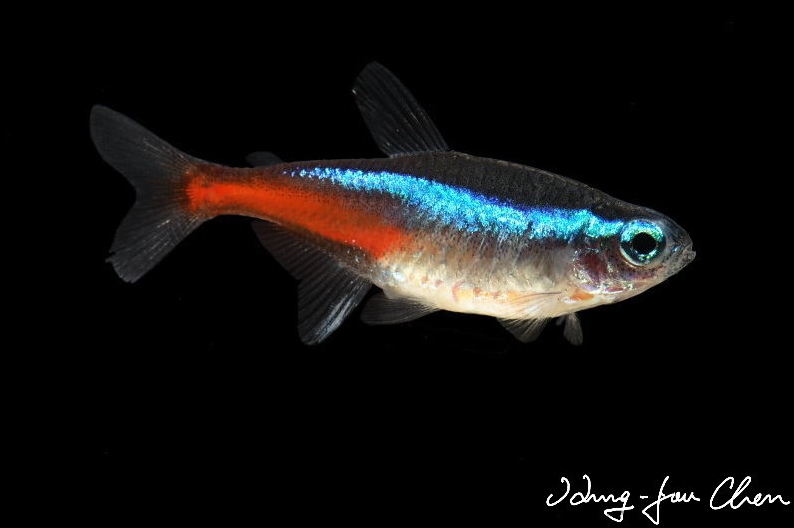
Max length30mm SL1.2in SLTank60 × 30cm24 × 12inTemp21–25°C70–77°FpH4.0–7.5One of the most popular and instantly recognisable fishes in the aquarium hobby, this species has been selectively-bred to produce a number of additional strains including albino, 'golden' (leucistic), short-bodied, long-finned and 'diamond' (in which the dorsal surface is covered in reflective scales). Unfortunately years of commercial breeding have somewhat affected the genetic vigour of the ornamental strain meaning morphological defects an...