Results for “character”
Type a name: scientific, common, or one a species used to go by. Or narrow the catalogue with the filters.
Filters
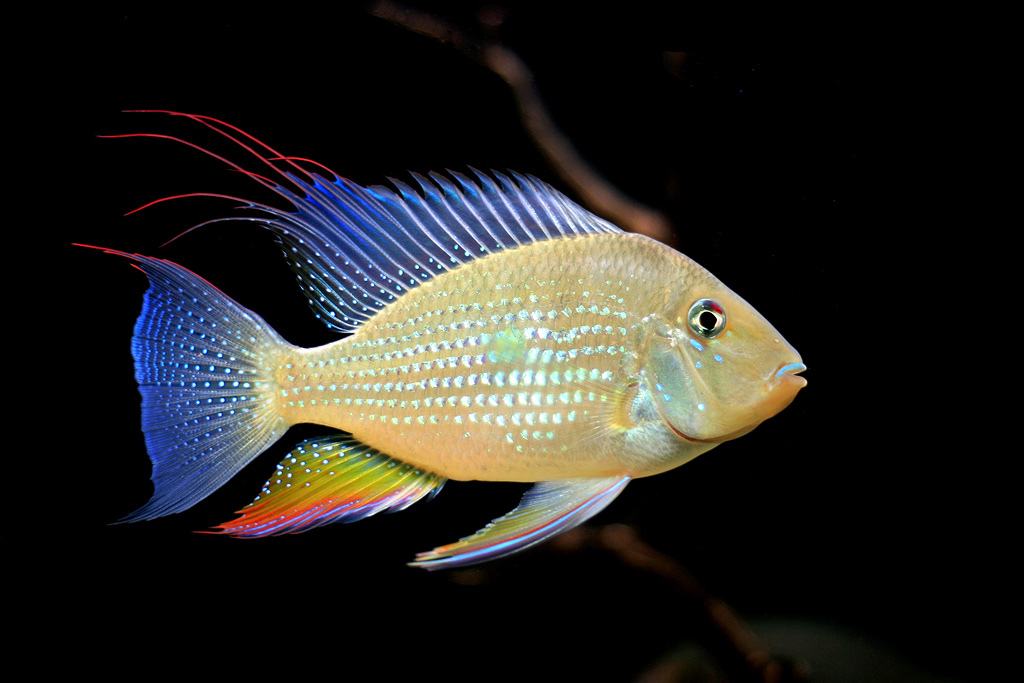
Acarichthys heckeliiThreadfin Acara
Müller & Troschel, 1849
Max length200mm SL8in SLTanknot recordedTemp24–30°C75–86°FpH6.0–8.0The genus Acarichthys remains monotypic and was resdescribed by Kullander (1986) who characterised it by the following: lack of epibranchial lobe; comparatively few (12-14)rays; pelvic fins with relatively broad tips (branches of the first ray are equal in length or the inner is slightly longer); possession of a single supraneural plus 14-15 vertebrae (these characters taken as a combination); no caudal extensions to swim bladder; no caudal ribs. Its current taxonomic position is based largel...
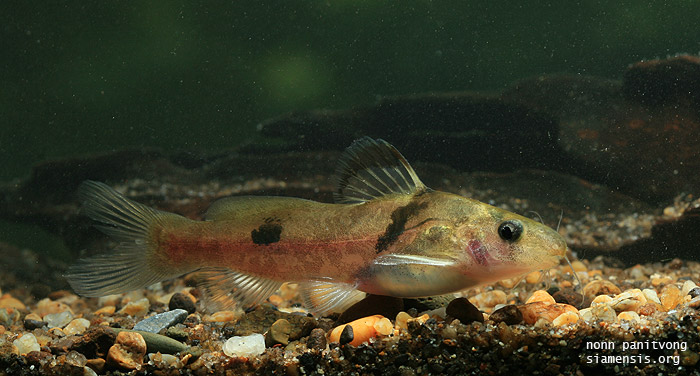
Batasio fluviatilis
Day, 1888
Max length72mm SL2.8in SLTank120 × 30cm48 × 12inTemp16–24°C61–75°FpH6.0–7.0Batasio havmolleri (Smith, 1931) is currently considered a junior synonym of B. fluviatilis. Members of the genus Batasio are characterised by the following combination of characters; laterally-compressed body shape; presence of large sensory pores on the head; a narrow mental region; a pair of prominent posterior proces...
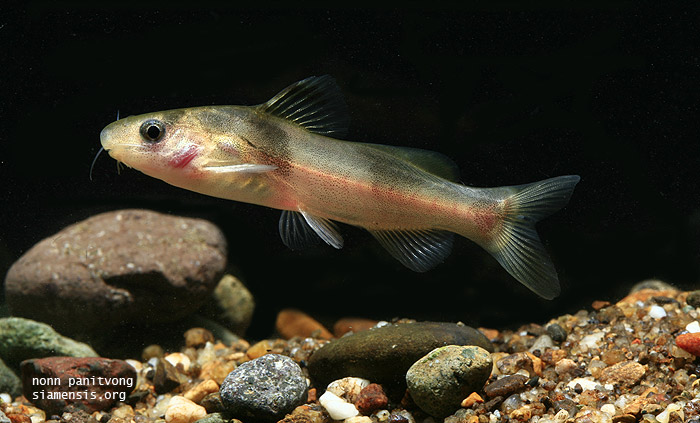
Batasio tigrinus
Ng & Kottelat, 2001
Max length80mm SL3.1in SLTank120 × 30cm48 × 12inTemp17–23°C63–73°FpH6.0–7.0Members of the genus Batasio are characterised by the following combination of characters; laterally-compressed body shape; presence of large sensory pores on the head; a narrow mental region; a pair of prominent posterior processes on the anterior portion of the vomer; a transversely elongated, bar-like entopterygoid; close contact between the metapterygoid and quadrate.
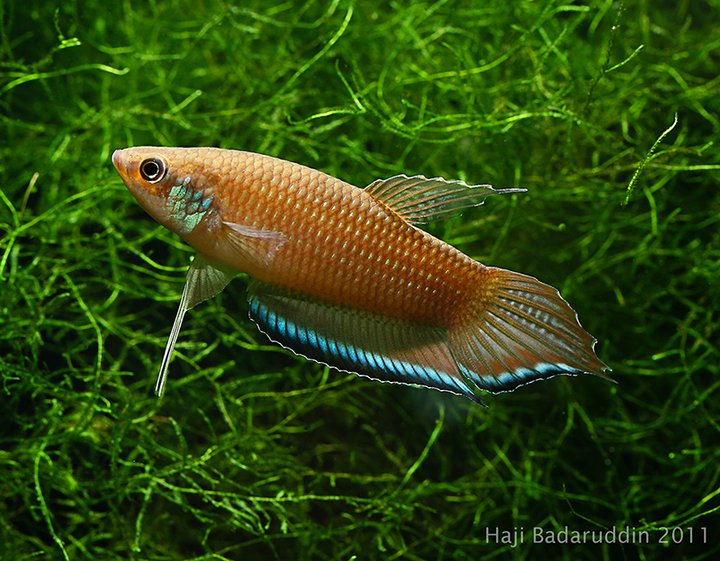
Betta enisae
Kottelat, 1995
Max length60mm SL2.4in SLTank45 × 30cm18 × 12inTemp21–24°C70–75°FpH5.5–7.0This species is included in the B. pugnax complex of closely-related species within the genus, an assemblage of which members are notoriously difficult to tell apart from one another, but which can be characterised collectively by the following set of shared characters: relatively large head measuring 28-40% SL; live colouration usually brown with green or blue iridescent spots; male with similarly-coloured scales on opercle, sometimes extending to abdomen; juveniles and females usually brown with two central body stripes and a dark marking on the caudal peduncle; anal-fin in mature specimens pointed and often elongated; caudal-fin lanceolate.
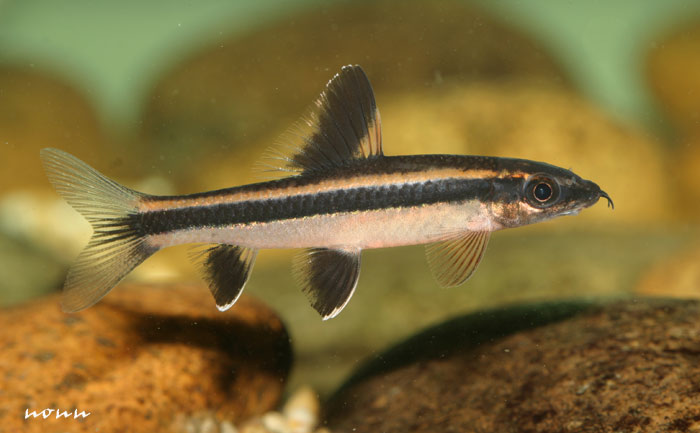
Epalzeorhynchos kalopterumFlying Fox
Bleeker, 1850
Max length160mm SL6in SLTank120 × 45cm48 × 18inTemp20–26°C68–79°FpH6.0–7.5Confusion with similar-looking fishes from other genera, such as Garra cambodgiensis, laterally-striped Crossocheilus spp. or Gyrinocheilus aymonieri is not uncommon, and are largely attributable to the use of trade names such as 'false flying fox' or 'Siamese flying fox'. When compared with the other species E. kalopterus exhibits several unique characters but perhaps the simplest way to identify it is by the characteristic white-edged, red and black coloured fins and the presence of two pairs of barbels.
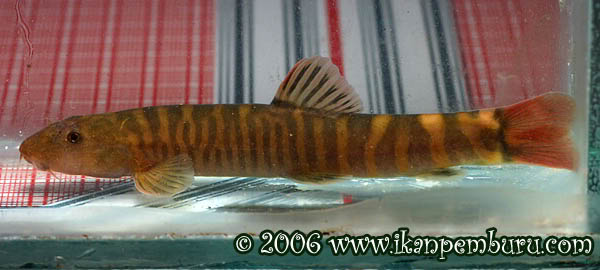
Schistura yingjiangensis
Zhu, 1982
Max lengthnot recordedTank80 × 30cm31 × 12inTemp20–24°C68–75°FpH6.0–7.5Following Kottelat (1990) the genus Nemacheilus is characterised by a combination of characters as follows: elongate body; complete lateral line; presence of enlarged scales above and below the lateral line in some species; caudal-fin forked to deeply forked with enlarged upp...
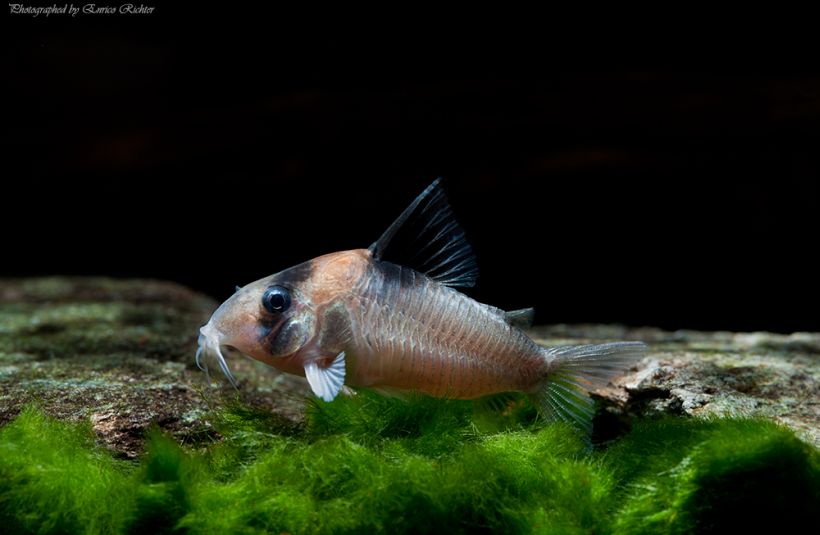
Corydoras burgessiBurgess' Cory
Axelrod, 1987
Max length55mm SL2.2in SLTank80 × 30cm31 × 12inTemp20–28°C68–82°FpH5.0–7.0The most obvious distinguishing characters are that the black marking in the upper part of the body is restricted to the area beneath the dorsal-fin and extends into the majority of the fin , while the paler patch anterior to it, on top of the head, is yellowish rather than orangish. Additional diagnostic characters have proven unavailable thus far since it was described in a hobbyist magazi...
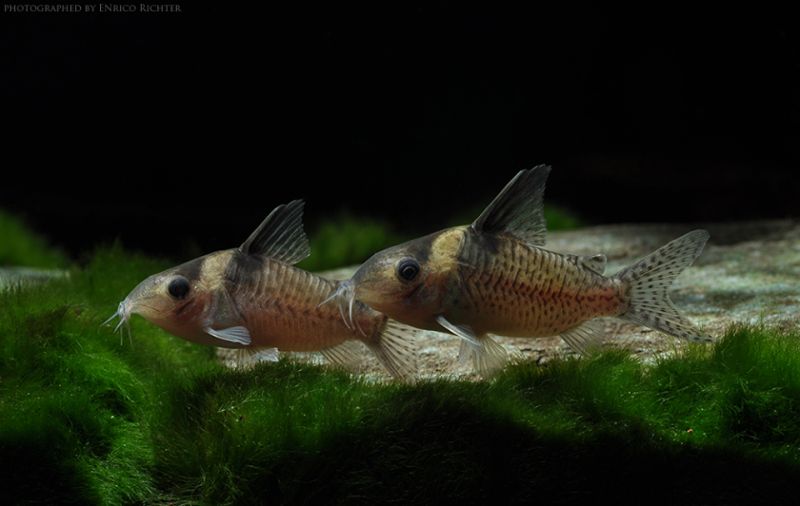
Corydoras delphax
Nijssen & Isbrücker, 1983
Max length60mm SL2.4in SLTank90 × 30cm36 × 12inTemp22–27°C72–81°FpH5.5–7.5Unfortunately, precise diagnostic characters cannot currently be provided since we’ve been unable to obtain the type description, and little has been Characters said to separate it from species such as C. ambiacus, C. agassizii, C. brevirostris, C. ephippifer, and C. melanistius include a combination of relatively elongated snout, dark spots on body fading in adults, dark anterior dorsal-fin patch extending to upper extremity of fin, and presence of spots in the caudal-fin.
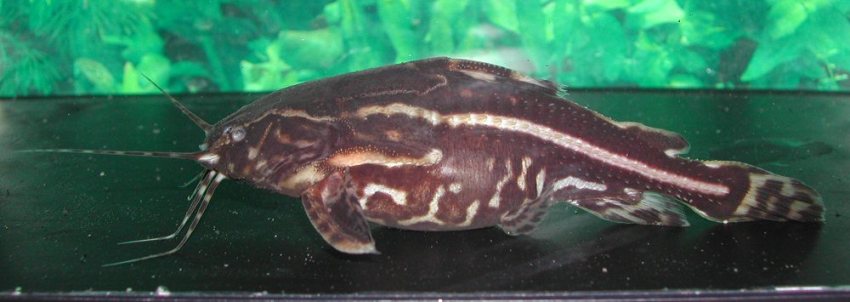
Acanthodoras cataphractusChocolate Talking Catfish
Linnaeus, 1758
Max length115mm SL5in SLTank120 × 30cm48 × 12inTemp22–26°C72–79°FpH6.0–7.5This species, which may also be referred to by the alternative vernacular names 'spiny catfish', 'painted talking catfish' or 'chocolate raphael', isn't particularly common in the trade and most often exported only as bycatch among shipments of Platydoras armatulus. It appears very similar to the congener A. spinosissimus with the most useful external distinguishing character being the presence of pale blotches on the dorsal surface, between the dorsal and caud...
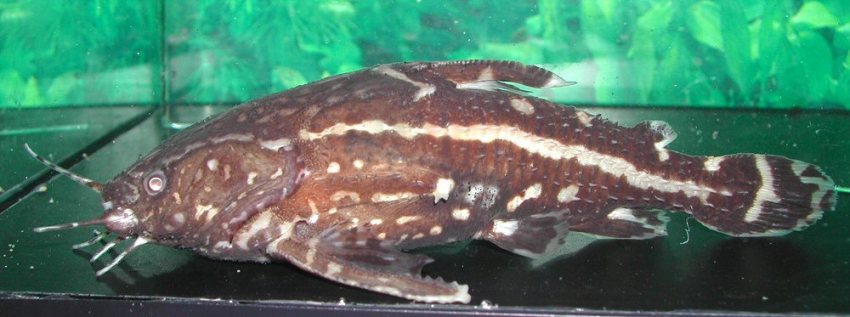
Acanthodoras spinosissimusChocolate Talking Catfish
Eigenmann & Eigenmann, 1888
Max length137mm SL5in SLTank120 × 30cm48 × 12inTemp22–26°C72–79°FpH6.0–7.5This species, which may also be referred to by the alternative vernacular names 'spiny catfish', 'painted talking catfish' or 'chocolate raphael', isn't particularly common in the trade and most often exported only as bycatch among shipments of Platydoras armatulus. It appears very similar to A. cataphractus with the most useful external distinguishing character being the presence of pale blotches on the dorsal surface, between the dorsal and caudal fins, in....
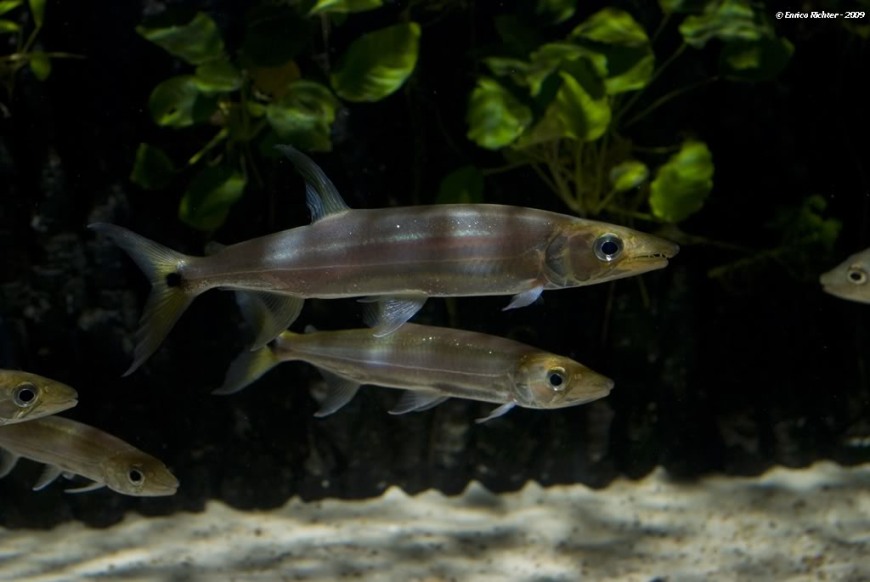
Acestrorhynchus falcirostrisBig-Eyed Cachorro
Cuvier, 1819
Max length350mm SL14in SLTank250 × 90cm98 × 36inTemp22–28°C72–82°FpH6.0–7.5This species is a member of the putative A. nasutus group of closely-related species within the genus alongside A. nasutus, A. maculipinna and A. isalineae. These are characterised by possession of two dark, longitudinal stripes, one running from the tip of the snout to the base and the other from the posterior edge of the lower maxilla to the underside of the caudal peduncle.
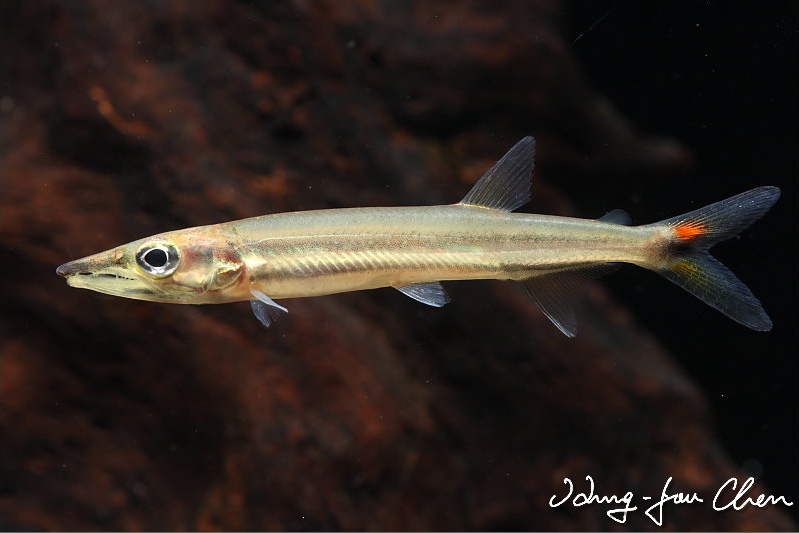
Acestrorhynchus isalineaeStriped Barracuda Tetra
Menezes & Géry, 1983
Max length105mm SL4in SLTank120 × 45cm48 × 18inTemp24–28°C75–82°FpH6.0–7.5This species is a member of the putative A. nasutus group of closely-related species within the genus alongside A. nasutus, A. maculipinna and A. isalineae. These are all characterised by possession of two dark, longitudinal stripes, one running from the tip of the snout to the base and the other from the posterior edge of the lower maxilla to the underside of the caudal peduncle.
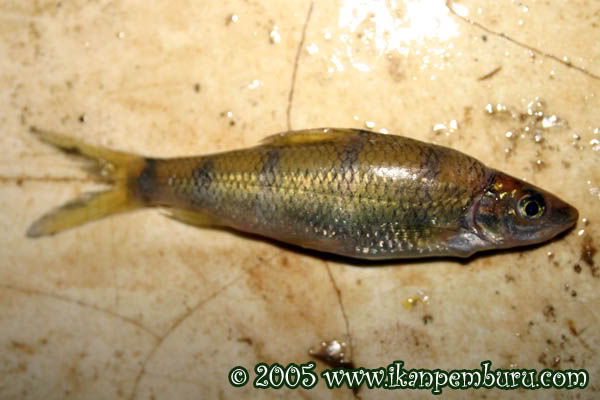
Acrossocheilus iridescens
Nichols & Pope, 1927
Max length300mm SL12in SLTanknot recordedTempnot recordedpHnot recordedA. iridescens and its closest relative A. longipinnis can be distinguished from all other barred species of Acrossocheilus by the following characters: wider (vs. narrower) black vertical bars on the flank in adults, each five to eight (vs. no more than four) scales in width; a horse-shoe shaped (vs. arched) mouth gape; rostral barbel located posteriorly (vs. anteriorly) to a horizontal line through the anteriormost margin of the lower jaw; two postlabial grooves extending anteromedially beyond (vs. away from) a horizontal line through the roots of the rostral barbels.
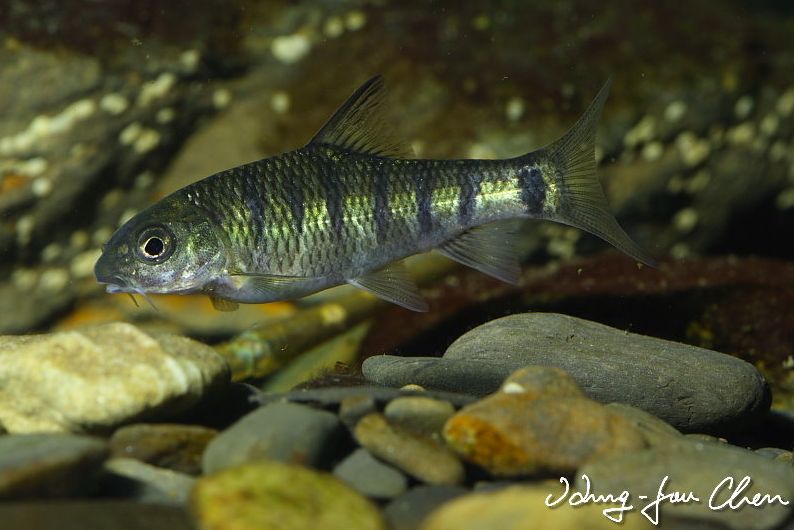
Acrossocheilus paradoxusTaiwan Banded Barb
Günther, 1868
Max length200mm SL8in SLTank180 × 45cm72 × 18inTemp15–25°C59–77°FpH6.0–8.0The genus Acrossocheilus is restricted to southern China, northern Vietnam and northern Laos. It can be distinguished from related genera by the following combination of characters: rostral fold present; lips fleshy and continuous around corners of mouth; lower lip with a median interruption; mouth inferior; horny sheath on lower jaw; two pairs of barbels; last simple ray of dorsal fin osseous with a serrated or smooth posterior margin.
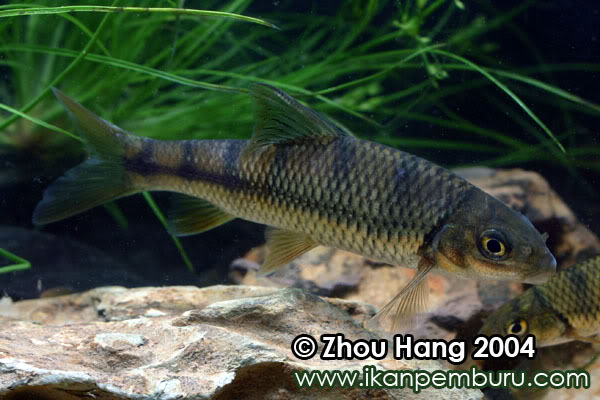
Acrossocheilus parallens
Nichols, 1931
Max length160mm SL6in SLTanknot recordedTempnot recordedpHnot recordedMembers of the genus are characterised by possessing a particular number of dark vertical bar on each flank, and A. parallens belongs to a group of species with five or six such bars, each of which is two scales in width. Congeners sharing this pattern include A. fasciatus, A. hemispinus (in juveniles only), A. jishouensis, A. kreyenbergii, A. paradoxus, A. spinifer, A. wenchowensis, and A. wuyiensis.
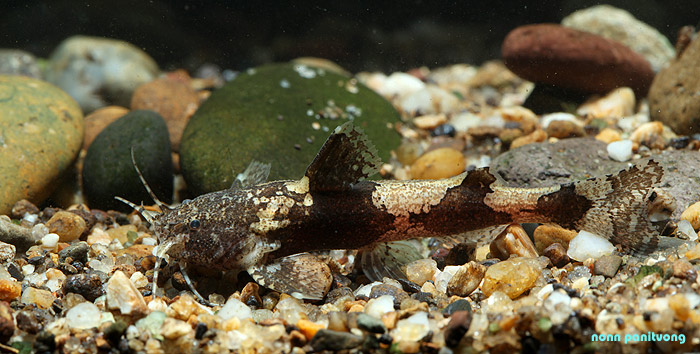
Akysis hendricksoniHendrickson's Stream Catfish
Alfred, 1966
Max length50mm SL2.0in SLTank45 × 30cm18 × 12inTemp16.5–24°C62–75°FpH6.0–7.2This species is among the few members of the family to have been exported for the aquarium hobby. It can be differentiated from all other Akysis species by the following combination of characters: head length 17.7-26.5% of standard length (SL); head width 25.4-28.7% SL; body depth at anus 13.0-17.0% SL; caudal peduncle depth 8.1-10.1% SL; interorbital di...
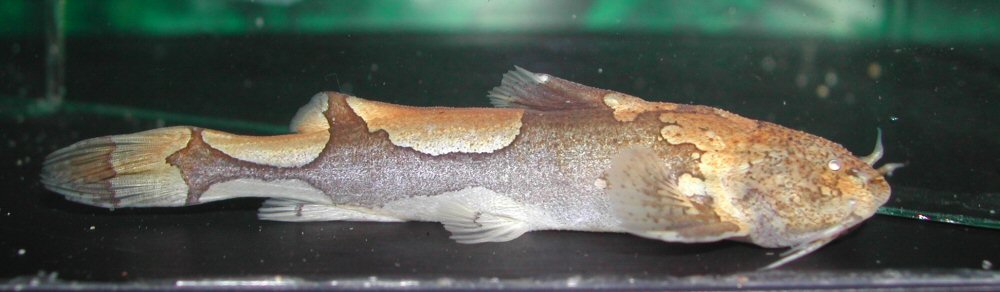
Akysis longifilisSittaung Stream Catfish
Ng, 2006
Max length53mm SL2.1in SLTank45 × 30cm18 × 12inTemp16.5–24°C62–75°FpH6.0–7.5This species is among the few members of the family to have been exported for the aquarium hobby. It can be differentiated from all other Akysis species by the following combination of characters: base of...
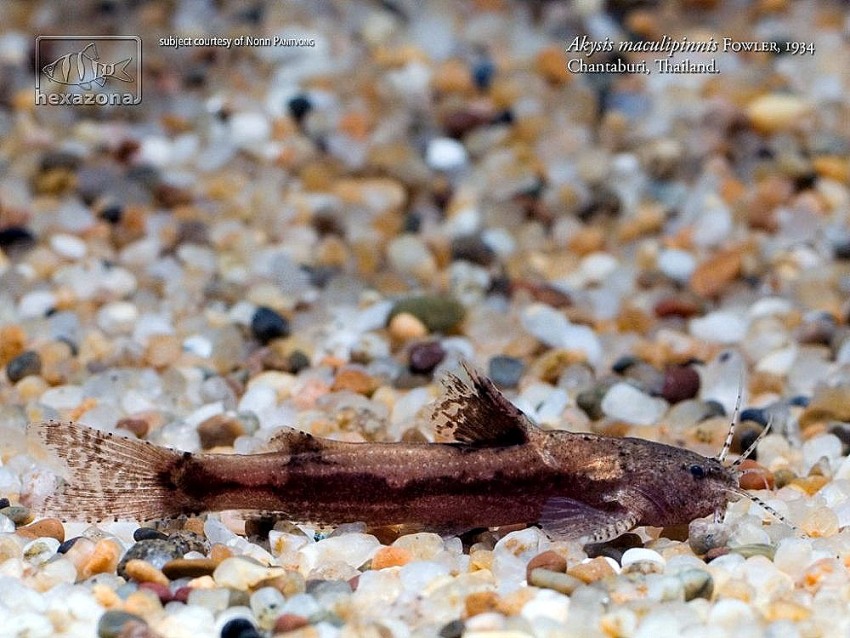
Akysis maculipinnisSpotfin Stream Catfish
Fowler, 1934
Max length35mm SL1.4in SLTank45 × 30cm18 × 12inTemp16.5–24°C62–75°FpH6.0–7.5This species has been exported for the aquarium hobby and ranks among the smaller members of the family. It can be differentiated from all other Akysis species by the following combination of characters: head length 22.0-28.6% of standard length (SL); caudal peduncle depth 8.8-10.7% of SL; anal-fin base length 15.2-19.1% of SL; eye diameter 12-16% of head length (HL); nasal barbel length 57 92% of HL; posession of 3-4 serrae on the posterior edge ofspine; body patterning mottled with indistinct ...
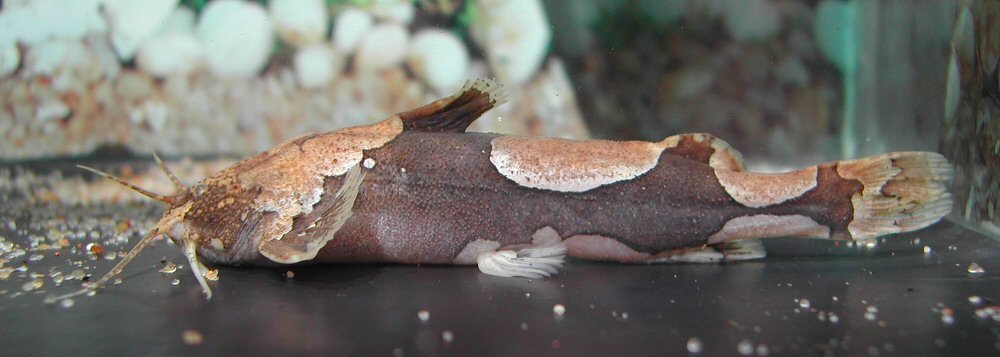
Akysis portellusSmallmouth Stream Catfish
Ng, 2009
Max length43mm SL1.7in SLTank45 × 30cm18 × 12inTemp16.5–24°C62–75°FpH6.0–7.5This species is among the few members of the family to have been exported for the aquarium hobby. It can be differentiated from all other Akysis species by the following combination of characters: base ofmeasures 17.1-19.2% of standard length (S...
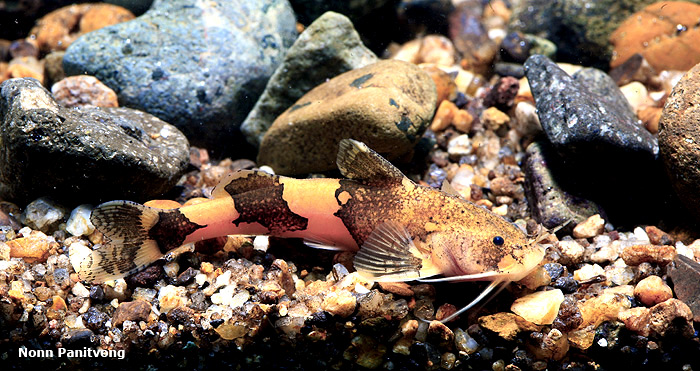
Akysis pulvinatusKra Stream Catfish
Ng, 2007
Max length30mm SL1.2in SLTank45 × 30cm18 × 12inTemp16.5–23.5°C62–74°FpH6.0–7.2This species has been exported for the aquarium hobby on an extremely limited basis. It can be differentiated from all other Akysis species by the following combination of characters: head length 27.6–29.8% of standard length (SL); head width 21.9–25.1% SL; caudal peduncle depth 9.4–10.3% SL; length ofbase 23.0–25.2% SL; nasal barbel len...