Ophthalmotilapia nasuta
Last revised 2026Edit this page
On this page11 sections
Quick factsEdit
Difficulty6 of 8 measures
- Space
- very large tank
- Water
- flexible
- Temp
- needs a steady temperature
- Diet
- no meaty foods
- Temperament
- fights its own kind
- Social
- one male with several females
- Compatibility
- unknown
Other demands
Each of these can raise the rating on its own, whatever the measures above say.
- Hardiness
- unknown
- Needs a very large tank
Before you buy
Needs a soft, sandy substrate
A sandy substrate and good biological filtration are essential.
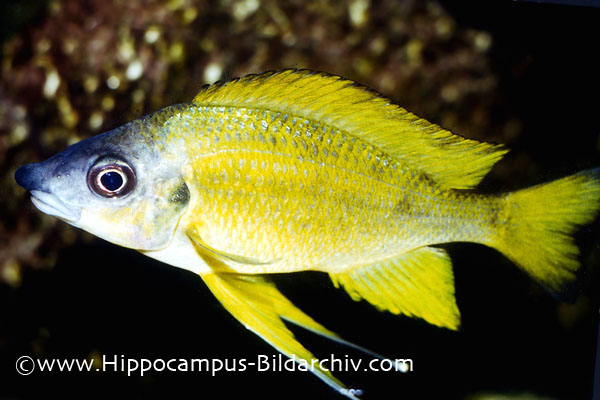
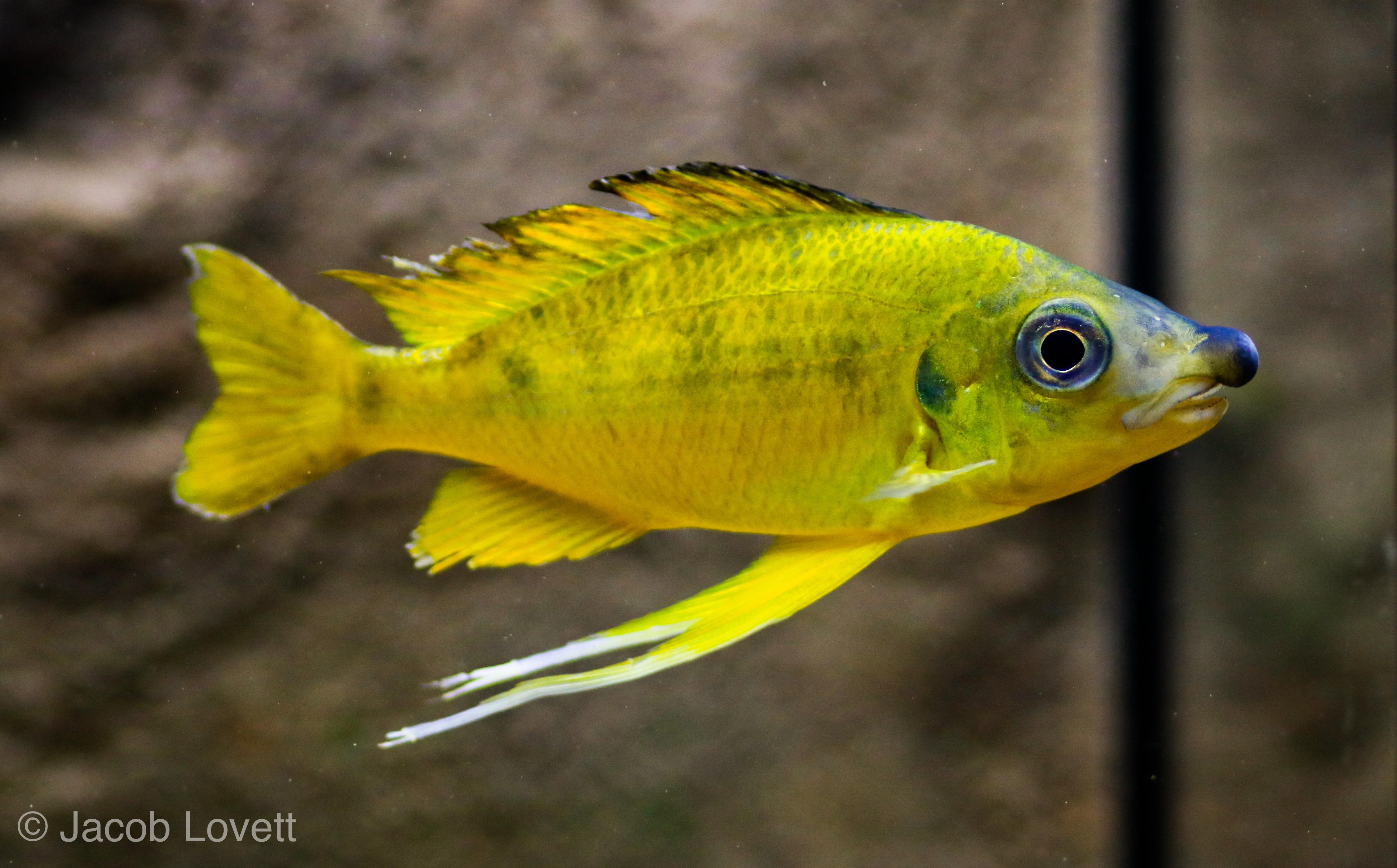
Ophthalmotilapia nasuta is a mouthbrooding cichlid endemic to Lake Tanganyika, found on its northwestern, southwestern and southern coasts. A fleshy, proboscis-like growth extending beyond the upper lip, more prominent in males, separates it from the rest of the genus. Several geographical morphs exist, including 'Kachese', 'Mpimbwe', 'Cape Tembwe' and 'Chamba', and these should not be mixed as they hybridise freely.
Distribution
EditHabitat
Write a noteEditAquarium size
Write a noteEdit150 ∗ 45 ∗ 45 cm60 ∗ 18 ∗ 18 in - ~304 litres~80 US gal.
Maintenance
Write a noteEditThe aquarium should contain scattered piles of rocks arranged to form caves for with large areas of open water as O. nasuta requires a lot of space for its size. A sandy substrate and good biological filtration are essential. This species does not damage vegetation so plants can be used but are not essential, likewise driftwood pieces. If plants are to be used select hard water-tolerant species such as Anubias or Vallisneria.
Water conditions
EditTemperature: 23 – 27 °C73 – 81 °F
pH: 7.5-9.0
Hardness: 8-25°H
These recommendations come from this profile’s own figures. They contain affiliate links, so we may earn a commission.
Diet
Write a noteEditWill accept most foods but high protein varieties should be avoided. Ensure the fish receive some vegetable matter as part of the diet, such as blanched spinach or spirulina.
Behaviour and compatibility
Write a noteEditA relatively boisterous species that requires a lot of space for its size. However, it should be the dominant species in the tank or it will become withdrawn and male fish will lose colour and should therefore be housed only with peaceful species. Do not keep it with mbuna or the like. Cyprichromis sp. and rockdwellers such as Altolamprologus and Julidochromis make good tankmates. Male fish are aggressive towards other males and unless the tank is very large only a single male should be kept. The males should always be provided with a harem of several females.
Sexual dimorphism
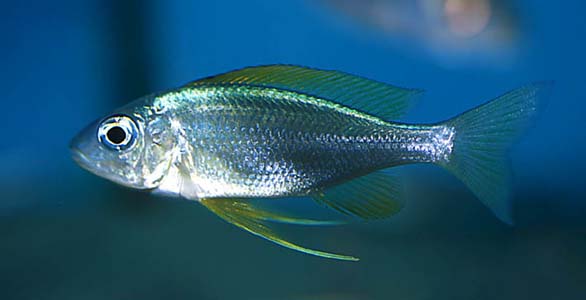
Write a noteEditMale fish are larger and more colourful, with longer fins than females, particularly the ventral fins. The extended 'nose' is also more prominent in males.
Reproduction
Write a noteEditPossible. Maternal mouthbrooder. A large tank furnished as suggested above is ideal. Large areas of sandy substrate are particularly essential. The fish should be kept in groups with several females and a single male. Condition them with lots of high quality foods.
When ready, the male will excavate a spawning site in the substrate. These crater-like structures may be up to 90 cm35 in in diameter. They may also carry sand to higher sites on flat rock surfaces and build their nests there if these are made available.
The male fish will display around his chosen spawning site, showing intense colour, and attempt to entice females to mate with him. He can be quite aggressive in his pursuits and it is in order to dissipate this aggression, that this species should be spawned in a harem. When a female is willing, she will approach the spawning site and lay her eggs there, after which she immediately picks them up in her mouth. The male fish has egg-shaped structures at the end of his long ventral fins and the female is attracted to these. When she tries to add them to the brood in her mouth, she actually recieves sperm from the male, thus fertilising the eggs.
The female may carry the eggs for 3-4 weeks before releasing the free swimming fry. She will not eat during this period and can be easily spotted by her distended mouth. If a female is overly stressed, she may spit out the brood prematurely or eat them, so care must be taken if you decide to move the fish in order to avoid fry predation. It is also worth noting that if a female is away from the colony for too long, she may lose her position in the pecking order of the group. We recommend waiting at least 2 weeks before moving a female unless she is being harassed.
The fry are large enough to take brine shrimp nauplii and crushed spirulina flake from the day they are released.
Notes
EditO. nasuta can be distinguished from other members of the genus primarily by the fleshy proboscis-like growth that extends beyond the upper lip. It exists in several different geographical morphs including "Kachese", "Mpimbwe", "Cape Tembwe" and "Chamba", among others. These should not be mixed in aquaria as they will hybridise freely.
Species images · 3
These photographs are used with each photographer's permission.
Send a photographDistribution
Profile completeness19 of 24
79% complete
Also missing: taxonomic authority, a common name, etymology.
Contributors
Improved by
- Birch28
The number beside each name is how many contributions that person has had accepted on Seriously Fish.
Community
Questions about Ophthalmotilapia nasuta?
Ask on Discord