Results for “fang”
Type a name: scientific, common, or one a species used to go by. Or narrow the catalogue with the filters.
Filters
Tetraodon cochinchinensisFang's Puffer
authority not recorded
Matched on the common name Fang's Puffer
Max length70mm SL2.8in SLTank45 × 30cm18 × 12inTemp24–28°C75–82°FpH6.5–7.8Puffer fish are so called as they have the ability to inflate their elastic stomachs with water or air. This is usually a response to some kind of threat, although in the aquarium many specimens appear to inflate themselves for no apparent reason. The fish becomes 2 or 3 times it's normal size, which makes the fish both big enough to scare away many potential predators, and difficult to swallow. Many parts of the body of puffers contain the deadly neurotoxin tetrodoxin. This is the same ...
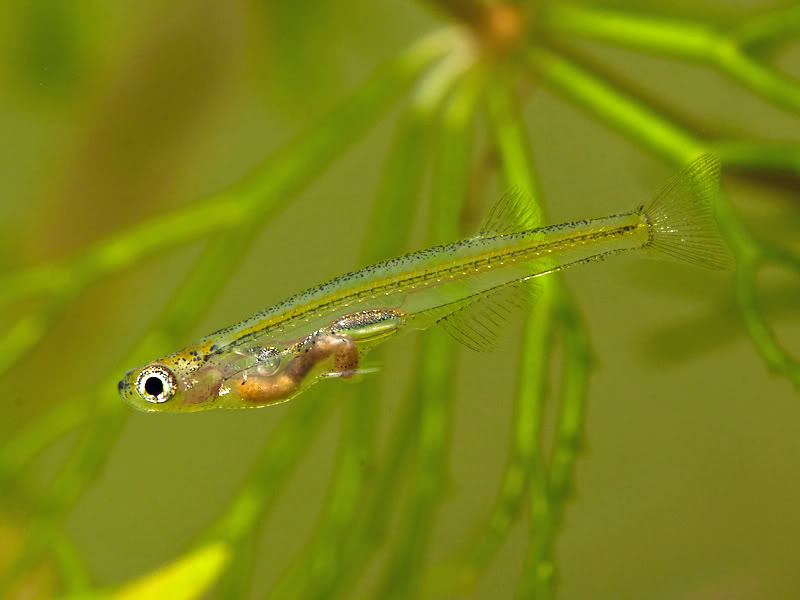
Danionella dracula
Conway & Rüber, 2009
Max length17mm SL0.7in SLTank45 × 30cm18 × 12inTemp20–26°C68–79°FpH6.5–7.5This species is available in the trade on occasion and has been sold as Danionella sp. 'neon green' or 'flourescent green'. The specific name was inspired by its jaw morphology which according to current knowledge is unique among cypriniform fishes. Both upper and lower jaws contain a series of toothlike odontoid processes; these are only rudimentary in females but in males appear to form rows of teeth of which the front pair is large and fang-like. The upper fangs project th...
Telmatochromis vittatus
authority not recorded
Max length85mm SL3.3in SLTank75 × 30cm30 × 12inTemp23–27°C73–81°FpH8.0–9.5Similar in lifestyle to Julidochromis species, Telmatochromis vittatus is ideal for the smaller Tanganyikan community and is also a good choice for the beginner. It can be distinguished from the similar T. brichardi and T. bifrenatus primarily by its larger size, smaller eyes and more rounded nose. Like other Lamprologines, Telmatochromis have fang-like, caniform teeth, which they use for scraping microrganisms from rock surfaces. On adult specimens these are clearly visible....
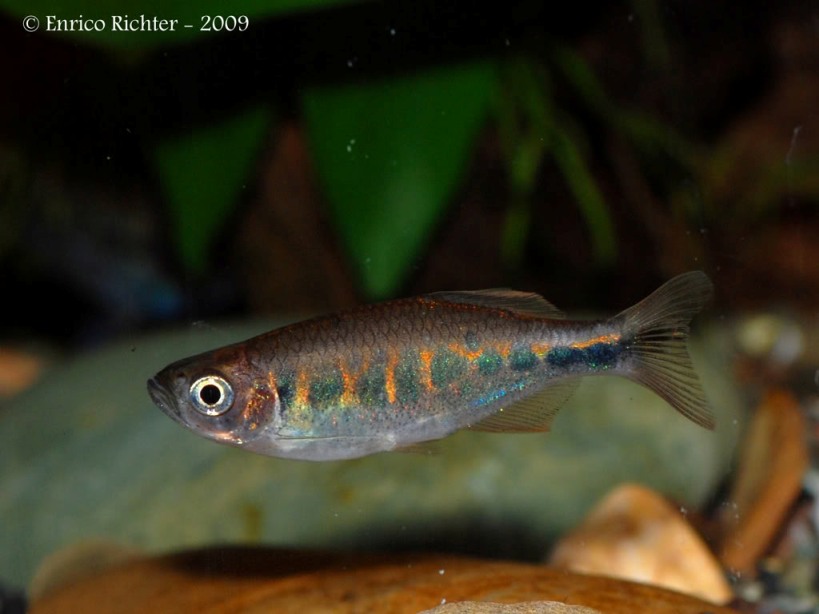
Devario pathiranaBarred 'Danio'
Kottelat & Pethiyagoda, 1990
Max length80mm SL3.1in SLTank120 × 45cm48 × 18inTemp23–26°C73–79°FpH6.0–7.5This species is diagnosable from other members of the genus primarily by its unique colour pattern which consists of 7-11 dark blue, irregularly-shaped, parallel vertical bars on the anterior portion of each flank plus a short horizontal stripe on the caudal peduncle which extends into the central caudal fin rays. Phylogenetic analyses suggest it's most closely-related to Indian Devario spp. plus D. xyrops from the western slope of the Rakhine Yoma mountains in Myanmar (Fang et al., 2009; Fang and Kullander, 2009).
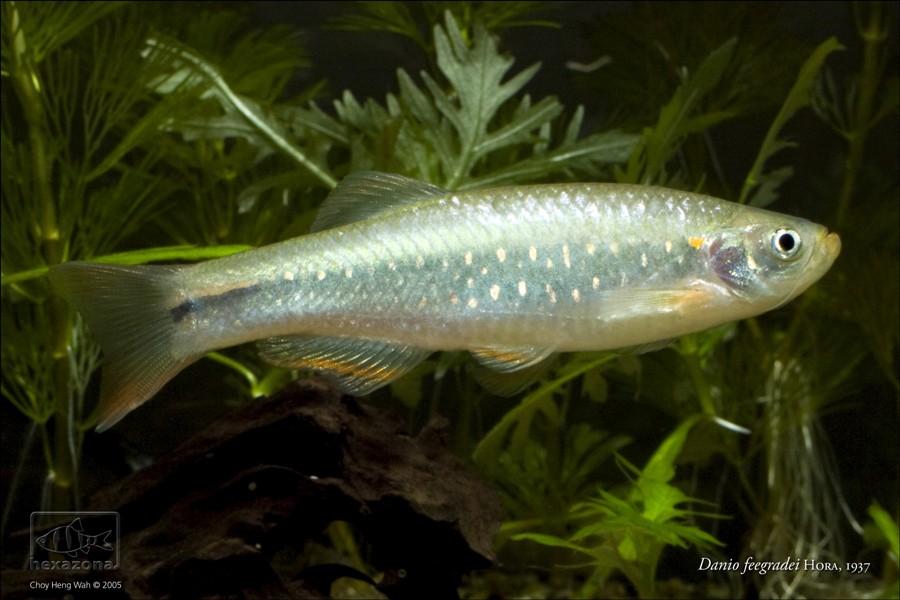
Brachydanio feegradeiYoma 'Danio'
Hora, 1937
Max length60mm SL2.4in SLTank120 × 45cm48 × 18inTemp18–25°C64–77°FpH6.5–7.5Typically inhabits small forest streams. In the Yan Khaw Chaung (Yan Khaw stream) it occurs alongside Devario xyrops, Garra rakhinica, G. vittatula, Xenentodon cancila, Sicyopterus fasciatus and unidentified species of Lepidocephalichthys and Channa (Fang and Kullander, 2009). When sampled during the dry season the habitat consisted of nothing more than a series of small, interconnected po...
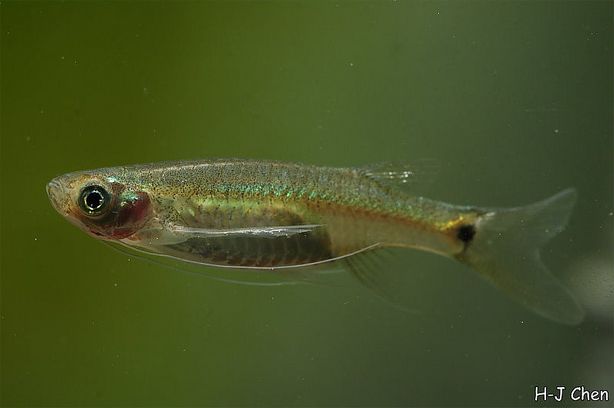
Esomus caudiocellatus
Ahl, 1924
Max length40mm SL1.6in SLTank120 × 30cm48 × 12inTemp20–26°C68–79°FpHnot recordedE. caudiocellatus can be told apart from congeners by lacking a dark lateral stripe and possessing a prominent dark marking on the caudal peduncle. In recent years a number of phylogenetic studies involving Esomus and its near relatives have been conducted and conflicting results published. For example a 2003 study by Fang et al. concluded that the genus is the sister group, i.e., most closely-related to...
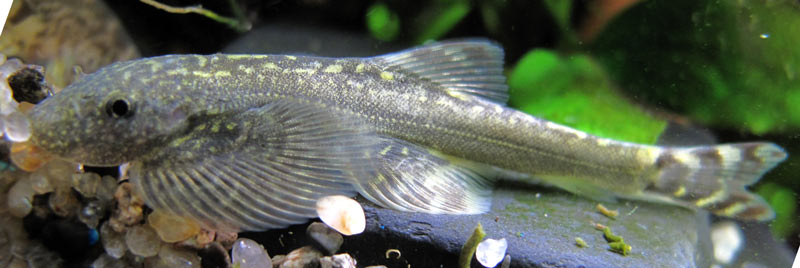
Hemimyzon formosanus
Boulenger, 1894
Max length100mm SL3.9in SLTank120 × 30cm48 × 12inTemp16–22°C61–72°FpH6.5–8.0Current knowledge suggests that H. formosanus is the most widely-distributed and following Chen and Fang (2009) it can be distinguished by the following suite of characters: 3+7 dorsal-fin rays; 10-12 pectoral-fin rays (modally 11) +9-11 (modally 10)...
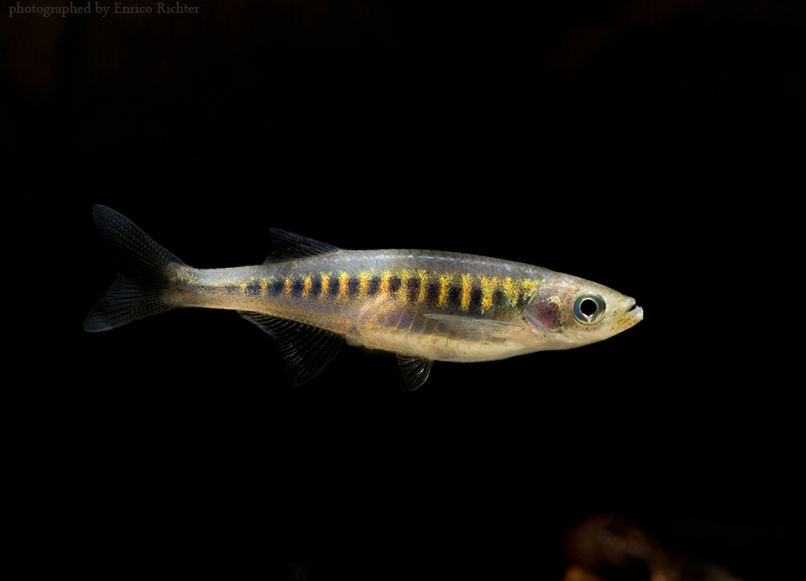
Inlecypris auropurpurea
Annandale, 1918
Max length80mm SL3.1in SLTank90 × 30cm36 × 12inTemp20–24°C68–75°FpH6.0–8.0Originally described as a member of Barilius (Annandale, 1918) but Howes (1980a) considered it more closely related to cheline cyprinids (Chela and Laubuca spp.) based on morphological characters and erected the genus Inlecypris for it (Howes, 1980b). Fang (2003) supported Howes' conclusions in her 2003 phylogenetic study of the genus Danio, hypothesising that Inlecypris and Chela together form a sister group to Devario.
Leporacanthicus galaxiasGalaxy Plec
authority not recorded
Max length250mm SL10in SLTank120 × 45cm48 × 18inTemp22–26°C72–79°FpH5.6–7.0A very stylish looking plec, L. galaxias can also be seen for sale as the vampire or tusken plec. Both these names relate to features of morphology that are shared by all members of the genus. The latter arose from the presence of a characteristic growth on the head of the fish. The vampire moniker, meanwhile, is derived from the unique upper jaw dentition, consisting of, you guessed it, two large teeth or "fangs". The exact use for these is unknown, but they're probably utilised ...
Leporacanthicus heterodonGolden Vampire Plec
authority not recorded
Max length100mm SL3.9in SLTank120 × 30cm48 × 12inTemp22–26°C72–79°FpH6.0–7.0The vampire part of the common name is derived from the unique upper jaw dentition exhibited by members of this genus, consisting of, you guessed it, two large teeth or "fangs". The exact use for these is unknown, but they're probably utilised to grip prey items such as snails or other aquatic invertebrates in some way. When buying one of these (or any Loricariid), be sure to check the fish has a rounded belly and that its eyes aren't sunken, as these are classic signs of ema...
Leporacanthicus joselimaiSultan Plec
authority not recorded
Max length150mm SL6in SLTank120 × 30cm48 × 12inTemp25–27°C77–81°FpH6.0–7.5Leporacanthicus species are commonly referred to as "vampire plecs". This is derived from the unique upper jaw dentition exhibited by members of this genus, unsurprisingly consisting of two large teeth or "fangs". The exact use for these is unknown, but they're probably utilised to grip prey items such as snails or other aquatic invertebrates in some way. Another feature shared by all Leporacanthicus is a small bony growth of unknown use on top of the head. This particul...
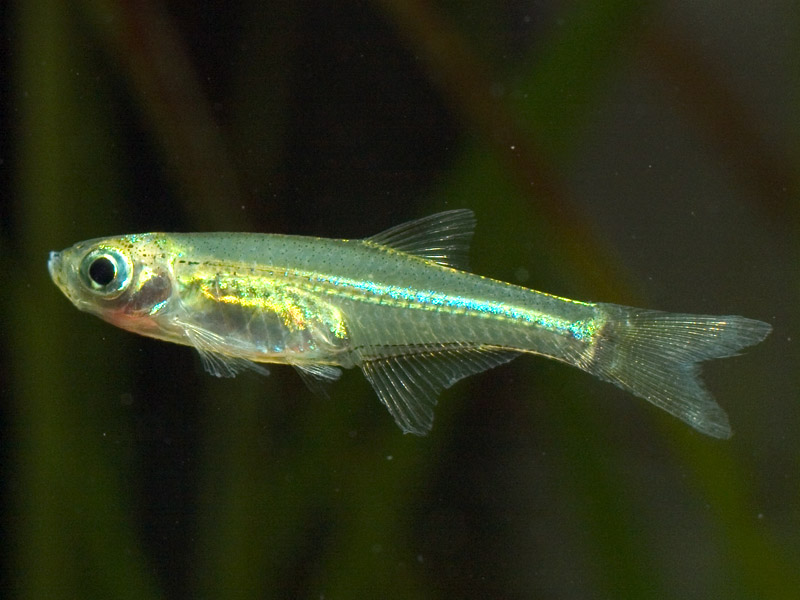
Microdevario gatesi
Herre, 1939
Max length23mm SL0.9in SLTank45 × 30cm18 × 12inTemp20–27°C68–81°FpH6.0–7.5The genus Microdevario was raised by Fang et al. (2009) after phylogenetic analyses revealed that some species formerly included in Microrasbora to be more closely allied with Devario and in need of reclassification. Microdevario is largely separated from Devario and other closely related genera such as Chela and Laubuca by virtue of internal characters but also the following: small adult size; anal and dorsal fins with concave-shaped distal margin; absence of barbels; absence of perforated scales; 9-10 branched anal-fin rays; 7 branched dorsal-fin rays; less abdominal than caudal vertebrae.
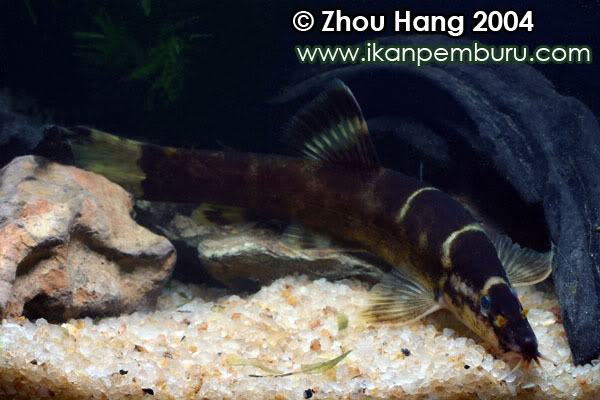
Leptobotia rubrilabris
Dabry de Thiersant, 1872
Matched on Botia fangi, a name it was formerly known by
Max length150mm SL6in SLTank120 × 45cm48 × 18inTemp15.5–21°C60–70°FpH6.5–7.5Should be kept in a set-up designed to resemble a flowing stream with a substrate of variably-sized rocks, gravel and some water-worn boulders. This can be further furnished with driftwood roots and branches arranged to form some shaded spots while lengths of PVC piping or similar can be used to provide additional cover. Although most plant species will fail to thrive in such surroundings hardy genera such as Microsorum, Bolbitis or Anubias spp. can be grown attached to the décor and bright lighting will promote the growth of aufwuchs.