Results for “filament”
Type a name: scientific, common, or one a species used to go by. Or narrow the catalogue with the filters.
Filters
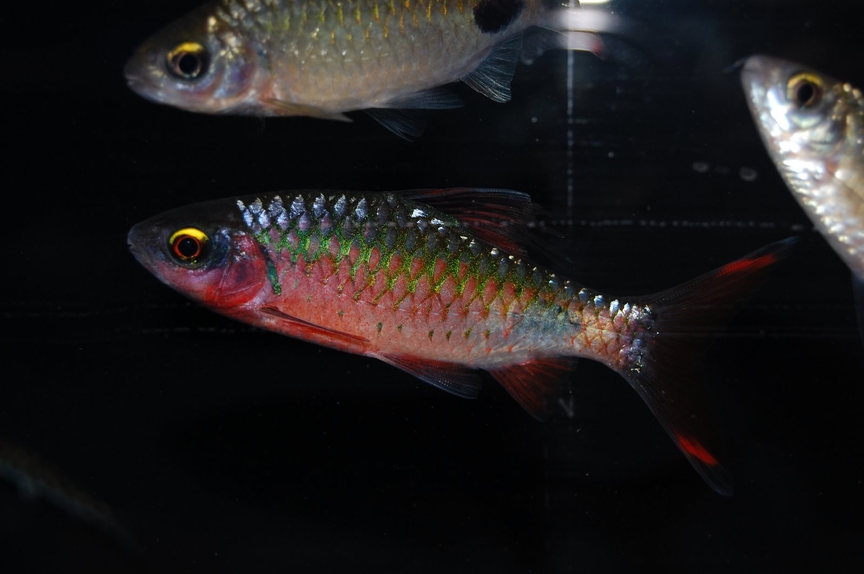
Dawkinsia filamentosaFilament Barb
Valenciennes, 1844
Matched on Leuciscus filamentosus, a name it was formerly known by
Max length120mm SL5in SLTank120 × 45cm48 × 18inTemp20–25°C68–77°FpH6.0–7.0Not difficult to keep in a well-maintained set-up, though we recommend aquascaping the tank to resemble a flowing stream/river with a substrate of variably-sized, water-worn rocks, sand, fine gravel and perhaps some small boulders. This can be further furnished with driftwood roots or branches, and while the majority of aquatic plants will fail to thrive in such surroundings hardy types such as Microsorum, Bolbitis or Anubias spp. can be grown attached to the décor.
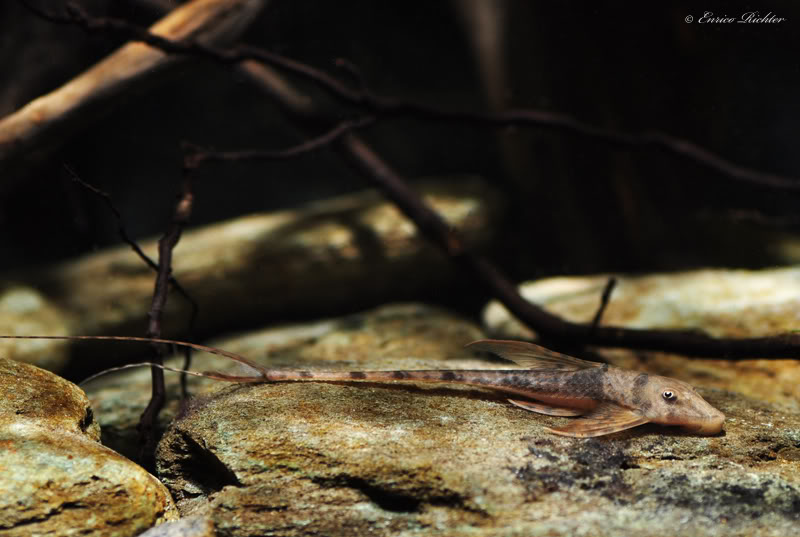
Lamontichthys filamentosusSturgeon Catfish
La Monte, 1935
Matched on Harttia filamentosa, a name it was formerly known by
Max length167mm SL7in SLTank120 × 45cm48 × 18inTemp22–30°C72–86°FpH5.5–7.5This species is relatively common in the aquarium hobby but is not easy to maintain and recommended only for experienced aquarists. It can be told apart from all congeners by specimens larger than 60 mm SL possessing an extended pectoral-fin spine forming an extremely long filament that may be more than four times the length of the first branched pectoral-fin ray (vs. not possessing such a filament in other species of Lamontichthys).
Dicrossus filamentosusLyretail Checkerboard Cichlid
authority not recorded
Max length102mm SL4in SLTank60 × 30cm24 × 12inTemp27–30°C81–86°FpHnot recordedDicrossus Filamentosa were once part of the Crenicara genus, but now share the Dicrossus genus with Dicrossus Maculata. The two species look similar, but the Maculata lack the lyretailed of the Filamentosa. Some say however, that the Maculata has even more striking body colouration than the already impressive Filamentosa. These fish aren't impossible to find, but aren't readily available in local fish shops either. They are seen as a challenge to breed, but plenty of breeders have h...
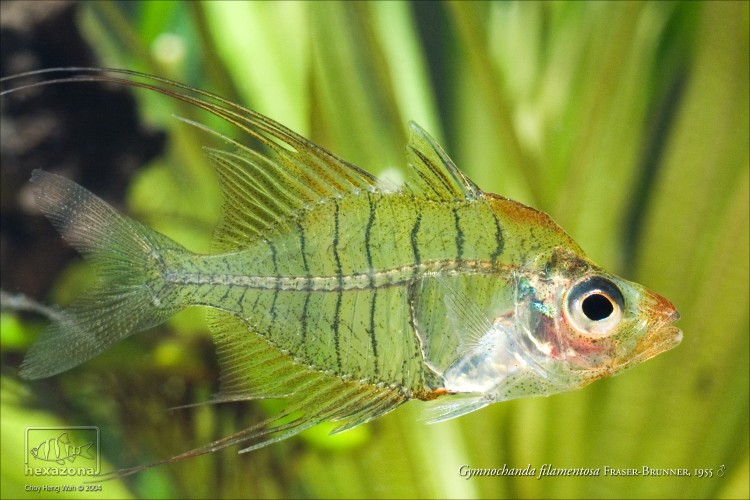
Gymnochanda filamentosa
Fraser-Brunner, 1955
Matched on Gymnochanda filamentosa, a name it was formerly known by
Max length32mm SL1.3in SLTank60 × 30cm24 × 12inTemp20–28°C68–82°FpH4.0–6.0G. filamentosa has appeared in the ornamental trade but is evidently delicate and therefore recommended only to experienced aquarists. It can be told apart from congeners by the following combination of characters: possession of filamentous dorsal and anal-fin rays in males; body transparent to translucent yellowish-brown colour in life; absence of a highly-extended second anal-fin spine; absence of carmine-red pigmentation in the dorsal, anal an...
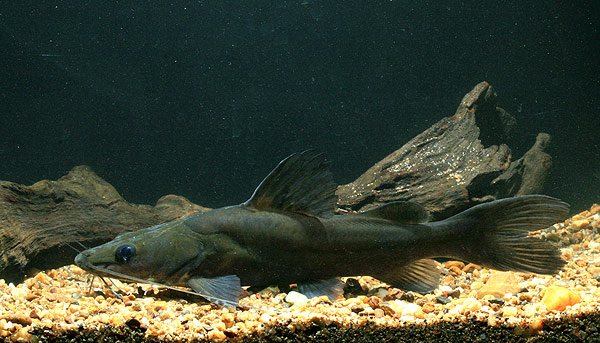
Hemibagrus filamentus
Fang & Chaux, 1949
Matched on Macrones filamentus, a name it was formerly known by
Max length420mm SL17in SLTanknot recordedTempnot recordedpHnot recordedThis species appears to be unknown in the aquarium trade but is a valued food fish within its native range. Hemibagrus has been divided into a number of putative species groups which may or may not represent monophyletic assemblages, and following a major review by Ng and Kottelat (2013) H. filamentus is included in the H. nemurus group.
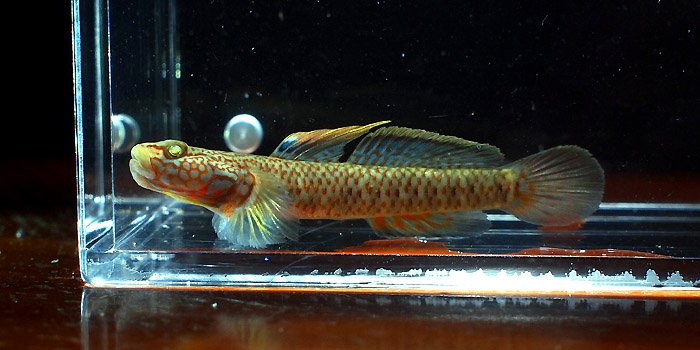
Rhinogobius filamentosus
Wu, 1939
Matched on Ctenogobius filamentosus, a name it was formerly known by
Max length55mm SL2.2in SLTank60 × 30cm24 × 12inTemp18–25°C64–77°FpH6.0–8.0Very few details exist but the type locality is given as 'Yangso, Li Kiang, Kwangsi Province, southern China', which should correspond to an unspecified location within the Li River (Li Jiang) system in Guangxi Zhuang Autonomous Region, southern China. The specimens in our images were collected i...
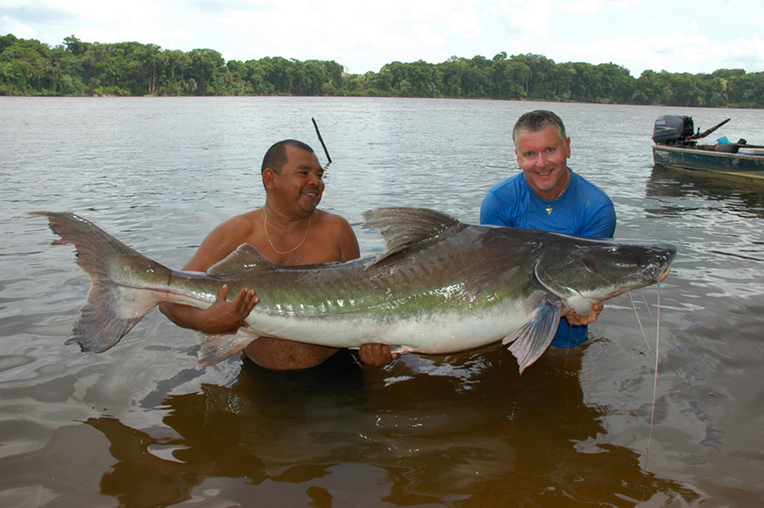
Brachyplatystoma filamentosumPiraíba
Lichtenstein, 1819
Max length2500mm SL98in SLTanknot recordedTemp22–28°C72–82°FpH6.0–8.0In the Amazon region it is only specimens larger than around 160 cm and werighing in excess of 50 kg that are referred to as 'Piraíba' with the name 'filhote' normally applied to smaller individuals. Other vernacular names include 'Salton catfish', 'Kumakuma'; and 'tiger antenna catfish'; with members of the genus often referred to collectively as 'goliath catfishes'.
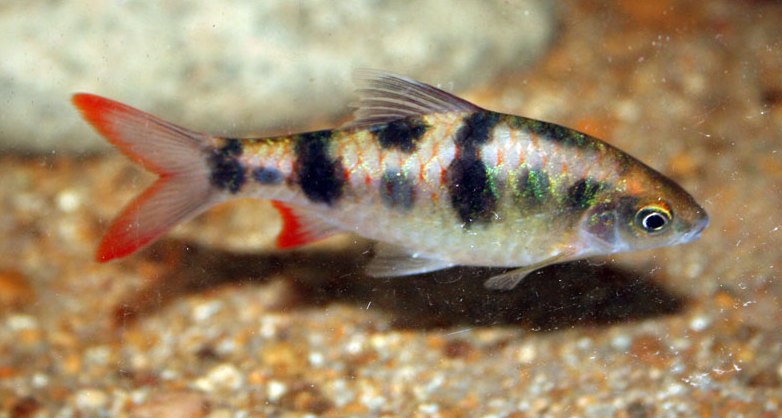
Dawkinsia tambraparniei'Arulius' Barb
Silas, 1954
Max length130mm SL5in SLTank120 × 45cm48 × 18inTemp18–25°C64–77°FpH6.0–8.0D. exclamatio should also have a sub-terminal mouth and lack dorsal-fin filaments but some specimens possess a terminal mouth and/or possess dorsal filaments, and one specimen also had black caudal-fin tips as typically seen in D. filamentosa, whereas the description states that the fin tips are only dusky and lack distinctive markings.
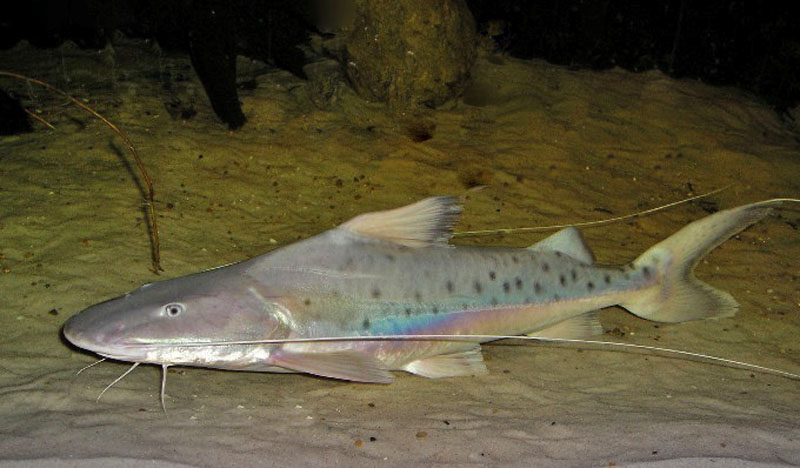
Brachyplatystoma capapretum
Lundberg & Akama, 2005
Max length880mm SL35in SLTanknot recordedTemp22–28°C72–82°FpH6.0–8.0This species can be told apart from the very similar-looking congener B. filamentosum by its smaller adult size (B. filamentosum can grow to almost 3 m in length), shorter maxillary barbels (never extending beyond base of adipose fin (vs. extending beyond base of adipose fin), moderately-forked with lobes of equal size (vs. deeply-forked caudal fin with upper lobe usually longer than the lower) and body col...
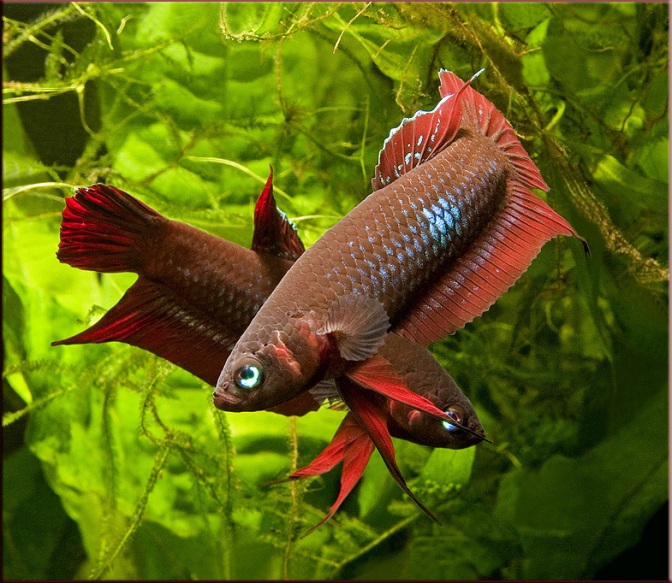
Betta coccinaScarlet Betta
Vierke, 1979
Max length40mm SL1.6in SLTank45 × 30cm18 × 12inTemp22–30°C72–86°FpH4.0–6.0B. coccina can be told apart from other members by the following combination of characters: iridescent green lateral blotch present in male, absent in female; body dark red in colour; no parallel vertical iridescent gold opercle bars; pelvic fin falcate with black filamentous tip, remainder red; median fins with discrete iridescent green spots; dorsal fin-rays 9-12; anal-fin rays 27-29; subdorsal scales 7-8; lateral scales 31-32; predorsal scales 18-21. The genus Betta is the most speciose within the family Osphronemidae with almost 70 reco...
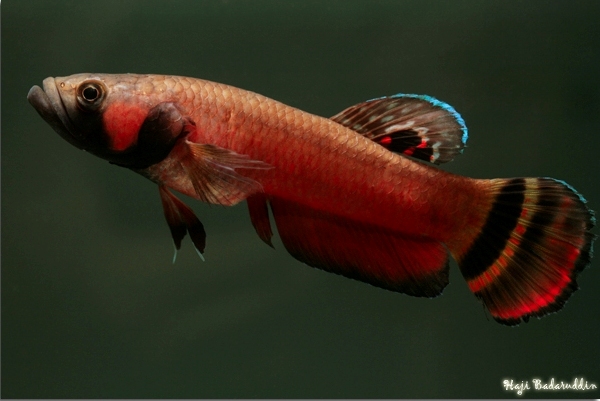
Betta macrostomaBrunei Beauty
Regan, 1910
Max length100mm SL3.9in SLTank80 × 30cm31 × 12inTemp20–25°C68–77°FpH4.0–6.0B. macrostoma is included in the Betta unimaculata complex of closely-related species within the genus, of which members share the following set of characters: body long and slender with depth at dorsal fin origin 18-25 % SL; head large and blunt with width 19-24 % SL; long maxilla and lower lip with distance from tip of lower jaw to posterior end of maxilla 27-54 % HL; caudal-fin rounded in shape, occasionally with elongated median rays; pelvic-fin short and filamentous; dorsal and anal fins relatively pointed.
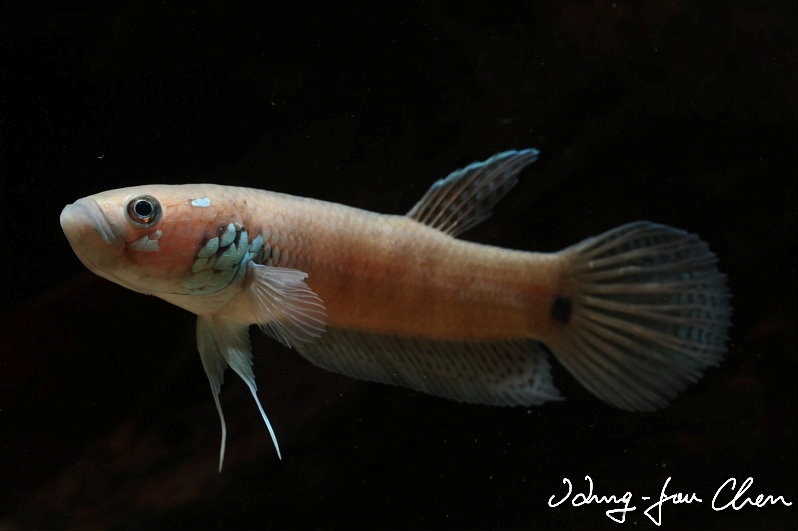
Betta ocellata
de Beaufort, 1933
Max length90mm SL3.5in SLTank80 × 30cm31 × 12inTemp21–25°C70–77°FpH5.5–7.5This species is included in the Betta unimaculata complex of closely-related species within the genus, of which members share the following set of characters: body long and slender with depth at dorsal fin origin 18-25 % SL; head large and blunt with width 19-24 % SL; long maxilla and lower lip with distance from tip of lower jaw to posterior end of maxilla 27-54 % HL; caudal-fin rounded in shape, occasionally with elongated median rays; pelvic-fin short and filamentous; dorsal and anal fins relatively pointed.
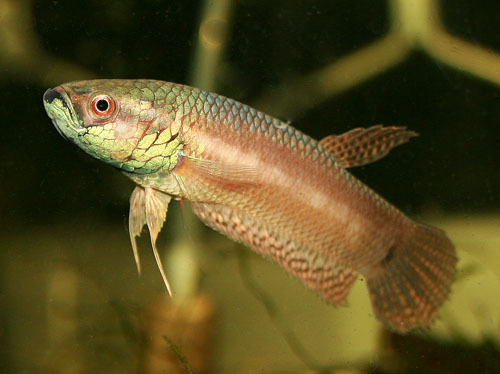
Betta pallifina
Tan & Ng, 2005
Max length90mm SL3.5in SLTanknot recordedTemp22–27°C72–81°FpH5.5–7.5This species is included in the Betta unimaculata complex of closely-related species within the genus, of which members share the following set of characters: body long and slender with depth at dorsal fin origin 18-25 % SL; head large and blunt with width 19-24 % SL; long maxilla and lower lip with distance from tip of lower jaw to posterior end of maxilla 27-54 % HL; caudal-fin rounded in shape, occasionally with elongated median rays; pelvic-fin short and filamentous; dorsal and anal fins relatively pointed.
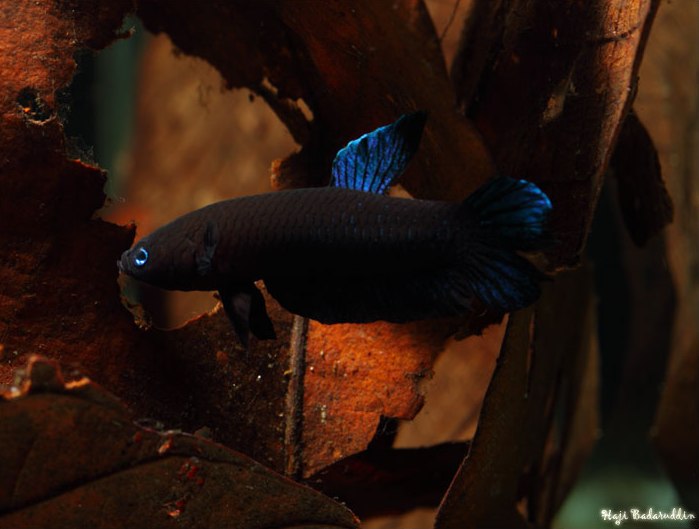
Betta persephone
Schaller, 1986
Max length35mm SL1.4in SLTank45 × 30cm18 × 12inTemp22–28°C72–82°FpH4.0–6.0B. persephone can be told apart from other members of the group by the following characters: no lateral blotch; body blackish; dorsal surface of head posterior to eye sloping gently; no parallel vertical iridescent gold opercle bars; pelvic-fin falcate with white filamentous tip, remainder black to reddish; median fins covered diffusely with light green iridescence; dorsal fin-rays 9; anal-fin rays 24-27; subdorsal scales 6-7; lateral scales 27-29; predorsal scales 17-18.
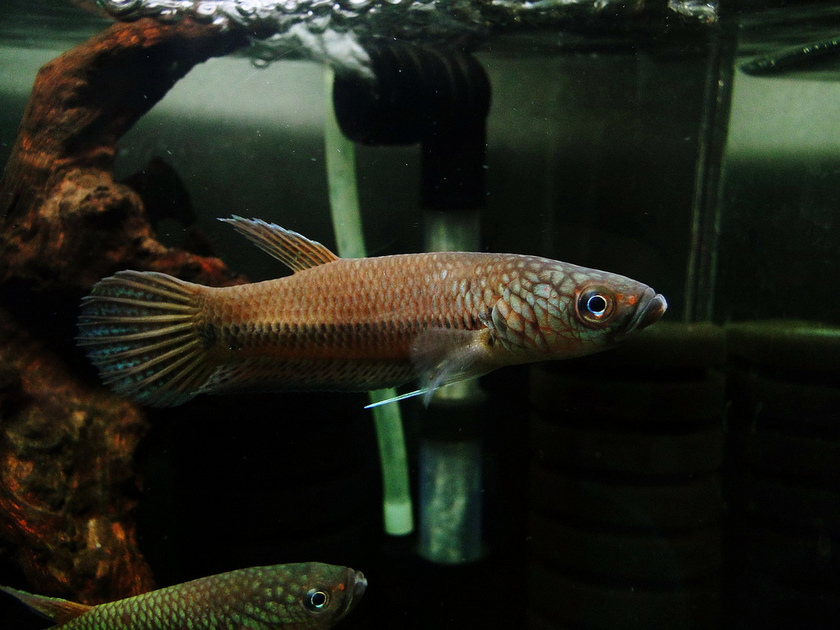
Betta sp. 'Antuta/Bulungan'
authority not recorded
Max length100mm SL3.9in SLTank80 × 30cm31 × 12inTemp21–27°C70–81°FpH5.5–7.5This hypothetically-undescribed species appears to be a member of the Betta unimaculata complex of closely-related species within the genus, of which members share the following set of characters: body long and slender with depth at dorsal fin origin 18-25 % SL; head large and blunt with width 19-24 % SL; long maxilla and lower lip with distance from tip of lower jaw to posterior end of maxilla 27-54 % HL; caudal-fin rounded in shape, occasionally with elongated median rays; pelvic-fin short and filamentous; dorsal and anal fins relatively pointed.
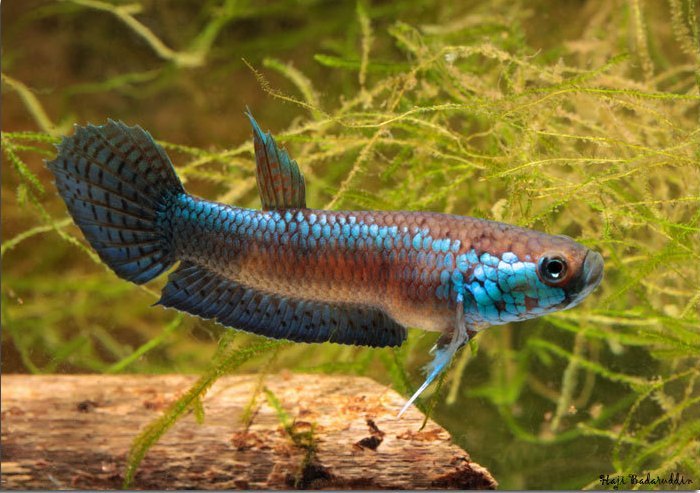
Betta unimaculata
Popta, 1905
Max length115mm SL5in SLTank80 × 30cm31 × 12inTemp21–26°C70–79°FpH5.0–7.5This species is included in the Betta unimaculata complex of closely-related species within the genus, of which members share the following set of characters: body long and slender with depth at dorsal fin origin 18-25 % SL; head large and blunt with width 19-24 % SL; long maxilla and lower lip with distance from tip of lower jaw to posterior end of maxilla 27-54 % HL; caudal-fin rounded in shape, occasionally with elongated median rays; pelvic-fin short and filamentous; dorsal and anal fins relatively pointed.
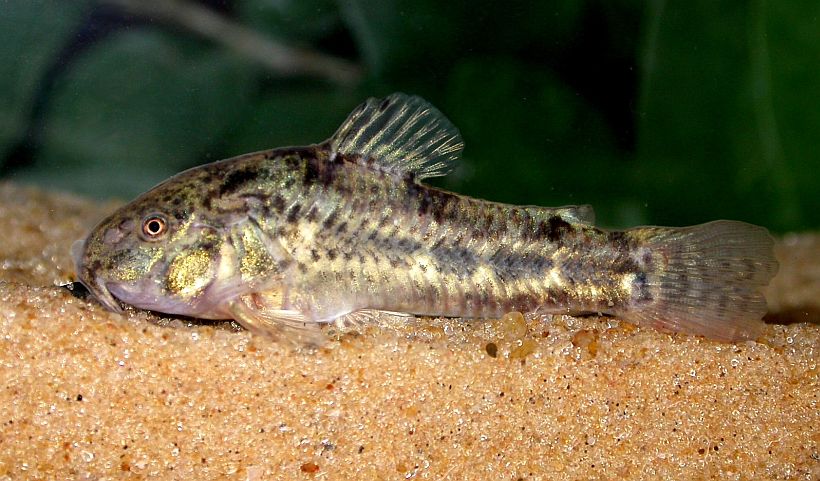
Corydoras gladysae
Calviño & Alonso, 2010
Max length38mm SL1.5in SLTank60 × 30cm24 × 12inTemp8–16°C46–61°FpH7.5–8.5The Río Calchaquí rises at almost 6000 m AMSL and flows swiftly through a mountainous valley where it is largely fed by snow melt. The climate is semi-arid and cool with an air temperature of 12-18°C, while rainfall is largely concentrated during summer when the flow can be torrential. The water is hard and rich in salts, with pH measured at 8.04 during the month of August. Aquatic vegetation and filamentous algae grow around the margins and in tributaries.
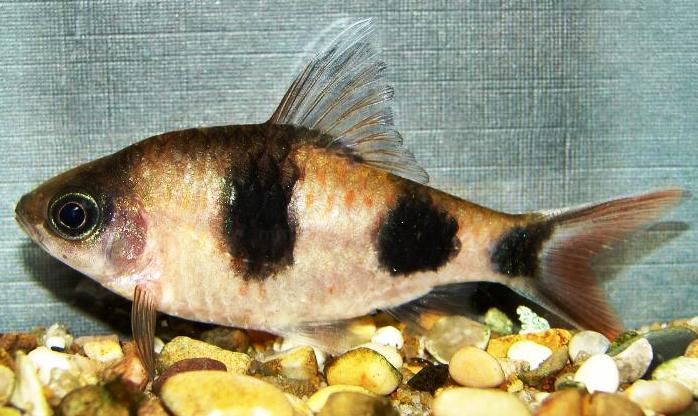
Dawkinsia arulius
Jerdon, 1849
Max length100mm SL3.9in SLTank120 × 45cm48 × 18inTemp19–25°C66–77°FpH6.0–7.5The fish appearing in the majority of earlier literature as P. arulius or 'arulius barb', and often still traded as such, is the related D. tambraparniei. Though similar the latter can be told apart from D. arulius by possession of filamentous extensions to the dorsal-fin rays in males, longer maxillary barbels measuring > ½ eye diameter, i.e., 2.4 - 4.7 % SL, and some aspects of colour pattern.
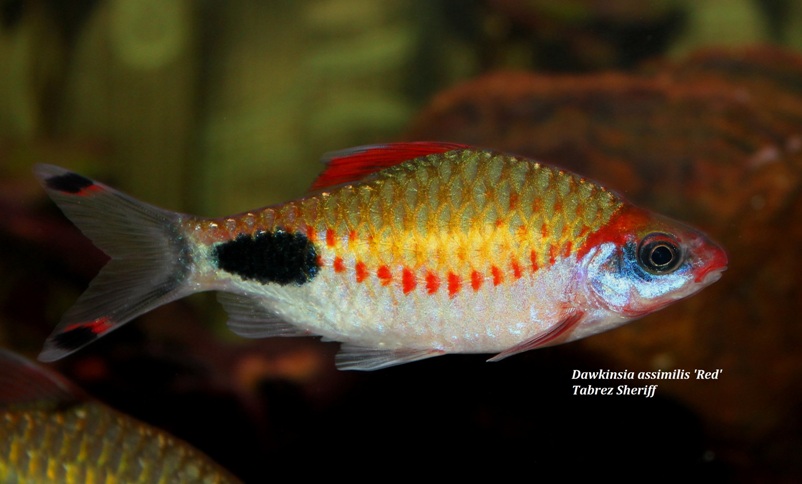
Dawkinsia assimilisMascara Barb
Jerdon, 1849
Max length120mm SL5in SLTank120 × 45cm48 × 18inTemp19–25°C66–77°FpH6.0–7.0D. assimilis has been misidentified as Puntius mahecola (Valenciennes 1844) in the past but the identity of both species was resolved by Pethioyagoda and Kottelat (2005 a, 2005b). They inspected the syntypes of P. mahecola and concluded that though valid it isn't closely related to any Dawkinsia (then the Puntius filamentosus group) but is rather a smaller, silvery fish with a single dark blotch on the caudal peduncle, located entirely posterior to the anal-fin. It's wi....
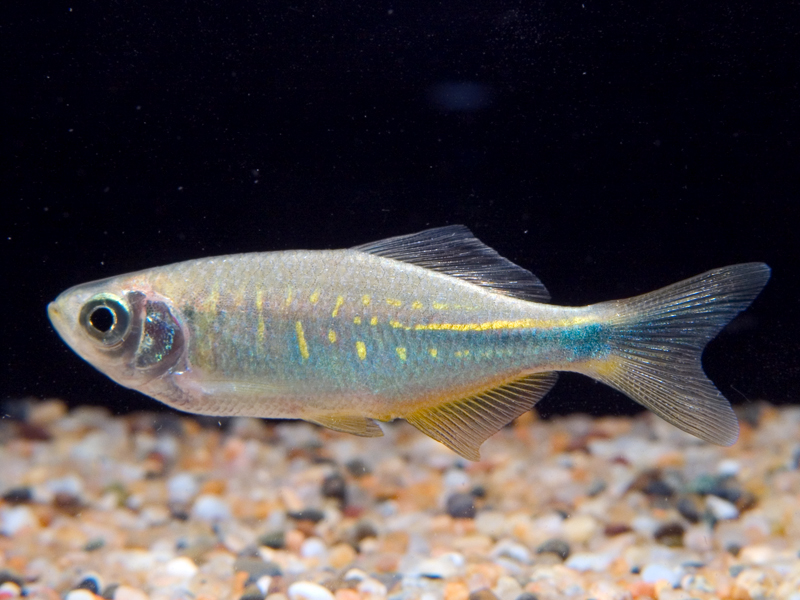
Devario devarioBengal Danio
Hamilton, 1822
Max length80mm SL3.1in SLTank120 × 45cm48 × 18inTemp15–26°C59–79°FpH6.0–8.0Ecological studies have revealed this species to be more of a generalist than its chiefly insectivorous congeners. Aquatic and terrestrial insects form a significant proportion of the diet, but substantial amounts of filamentous algae and diatoms are consumed with water mites, fish scales, isopods, nematodes and detritus also taken occasionally. In the aquarium it's largely unfu...