Results for “strain”
Type a name: scientific, common, or one a species used to go by. Or narrow the catalogue with the filters.
Filters
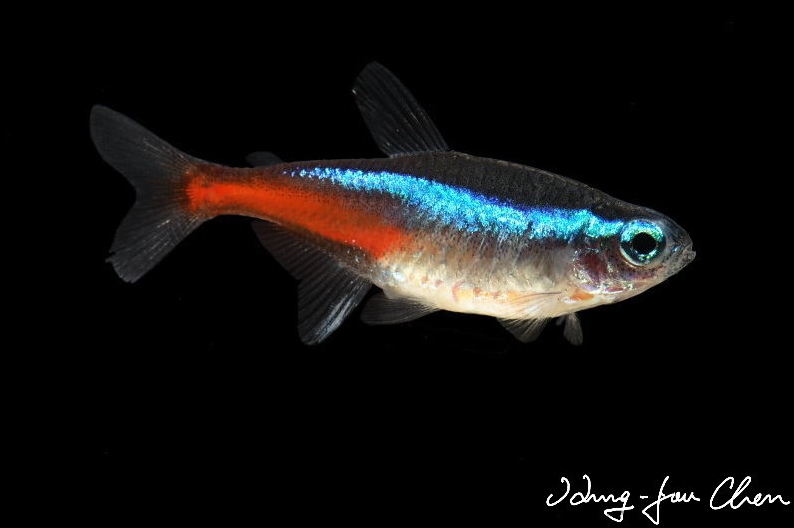
Paracheirodon innesiNeon Tetra
Myers, 1936
Max length30mm SL1.2in SLTank60 × 30cm24 × 12inTemp21–25°C70–77°FpH4.0–7.5One of the most popular and instantly recognisable fishes in the aquarium hobby, this species has been selectively-bred to produce a number of additional strains including albino, 'golden' (leucistic), short-bodied, long-finned and 'diamond' (in which the dorsal surface is covered in reflective scales). Unfortunately years of commercial breeding have somewhat affected the genetic vigour of the ornamental strain meaning morphological defects an...
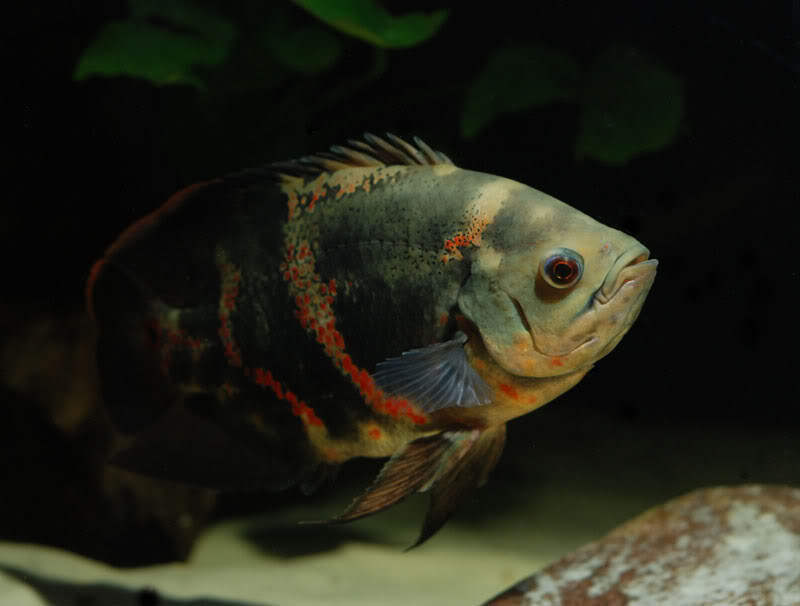
Astronotus ocellatusOscar
Agassiz, 1831
Max length350mm SL14in SLTank150 × 60cm60 × 24inTemp20–28°C68–82°FpH6.0–7.5This species is also referred to as 'velvet cichlid', 'red oscar', 'tiger oscar', or 'marble cichlid'. It is a popular aquarium fish although its adult size and typical life-span of 10-20 years must be taken into account before purchase. Numerous ornamental strains are now available, and while care is more-or-less identical for all of them a degree of additional care must be taken with the 'long-finned' variety which is a little less competitive than other forms.
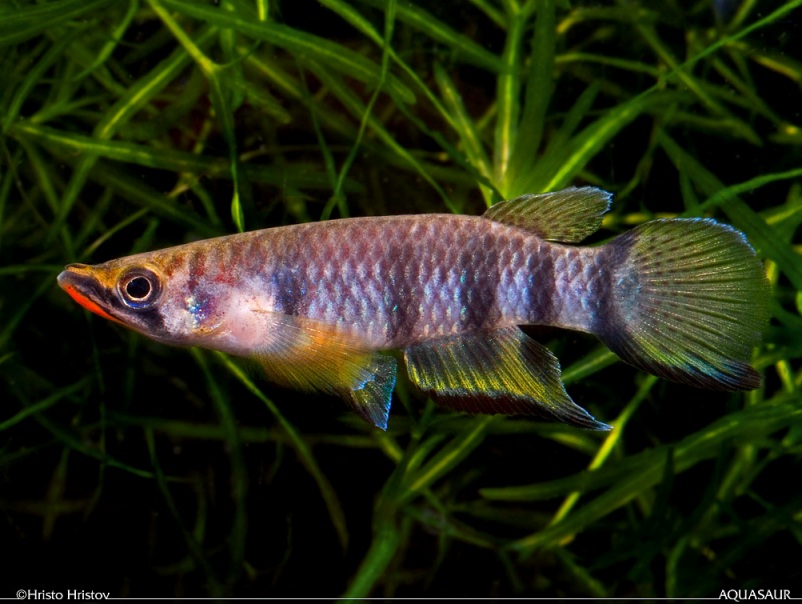
Epiplatys dagetiRed-chinned Panchax
Poll, 1953
Max length45mm SL1.8in SLTank60 × 30cm24 × 12inTemp20–30°C68–86°FpH5.0–7.0This species is also known as 'Daget's panchax', 'black-lipped panchax', 'orange-throated panchax' or 'firemouth killifish' and is an aquarium stalwart with the red-throated form having first been exported in 1908. It's an excellent choice for those new to killifishes or egg-laying species in general since the aquarium strain is well-established, quite hardy and easy to breed. There was some initial confusion after Belgian ich...
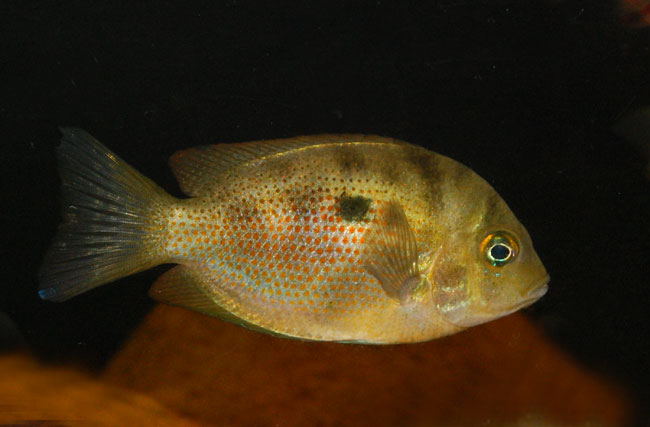
Etroplus maculatusOrange Chromide
Bloch, 1795
Max length80mm SL3.1in SLTank120 × 60cm48 × 24inTemp20–28°C68–82°FpH7.0–8.5Wild examples are rarely-seen in the aquarium hobby although selectively-bred ornamental strains are widely-available for which care is identical. These are normally traded as 'red' or 'yellow' chromide and have a solid yellow-orange colour pattern with no dark elements. It exhibits a widespread sympatry with the con...
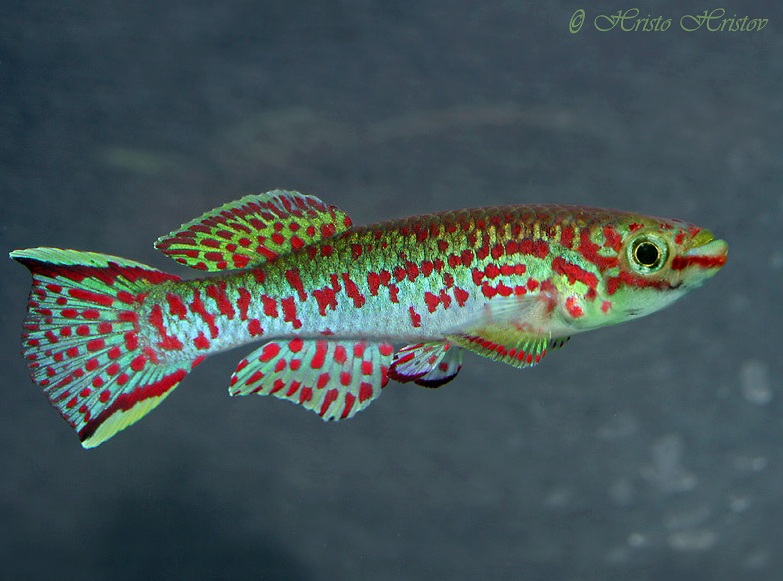
Fundulopanchax gardneriSteel-blue Killifish
Boulenger, 1911
Max length55mm SL2.2in SLTanknot recordedTemp20–26°C68–79°FpH6.0–7.5This species is also known as 'Gardner's Killi' and 'blue lyretail' and the commonly-available aquarium forms are perhaps among the best choices for those new to keeping killifishes being relatively hardy, colourful and easy to breed. A number of ornamental strains have also been line-bred by aquarists including 'gold' and 'albino'.
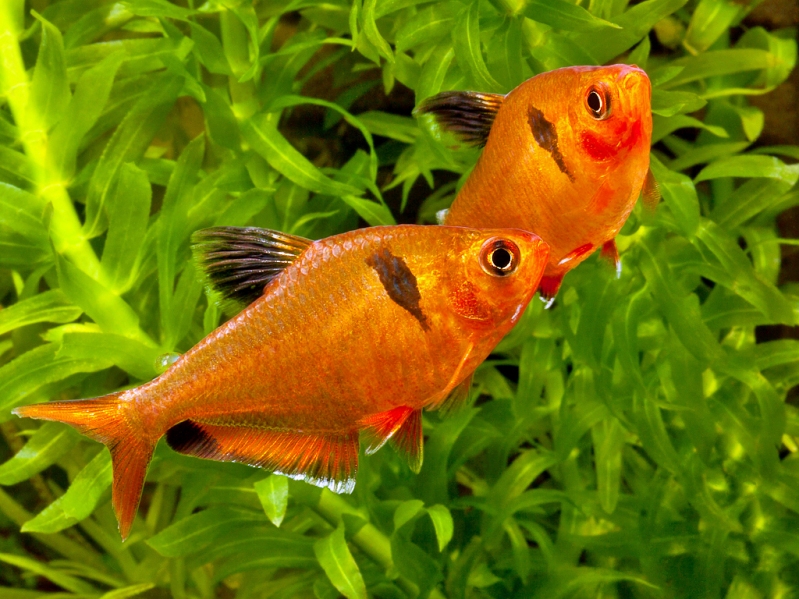
Hyphessobrycon equesSerpae Tetra
Steindachner, 1882
Max length40mm SL1.6in SLTank80 × 30cm31 × 12inTemp20–28°C68–82°FpH5.0–7.5This species is very common in the aquarium trade and is also referred to as 'jewel', 'red minor', 'blood', or 'callistus' tetra. A number of selectively-bred ornamental strains have been developed, including 'metallic', 'long-finned', 'balloon' and 'fairy-fin'. Characiformes is among the most diverse orders of freshwa...
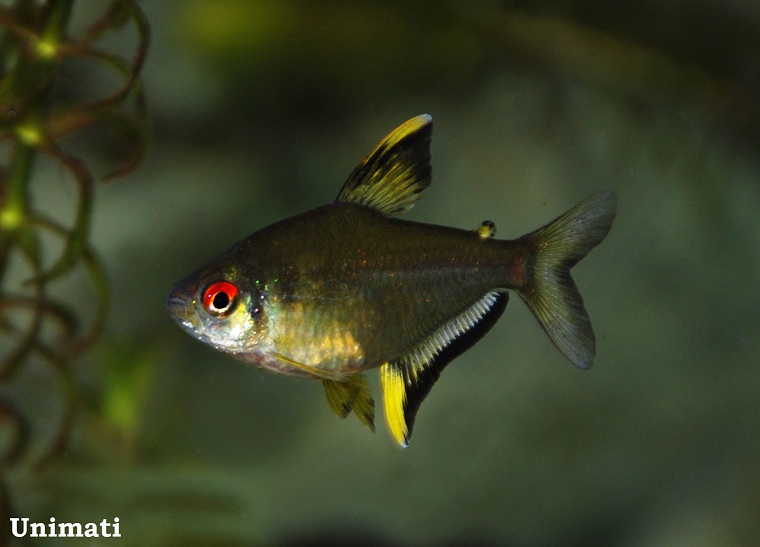
Hyphessobrycon pulchripinnisLemon Tetra
Ahl, 1937
Max length40mm SL1.6in SLTank80 × 30cm31 × 12inTemp20–28°C68–82°FpH5.0–7.5This species is a popular aquarium fish and is bred on a commercial basis in several countries, with a selectively-bred albino form also available. Wild specimens are rarely collected due to the low price of the farmed fish, but the origin of the commercial strain is questionable. The species was considered endemic to the rio Tapajós basin, but in the early 1990s fish appearing identical to the aquarium form were photographed in the...
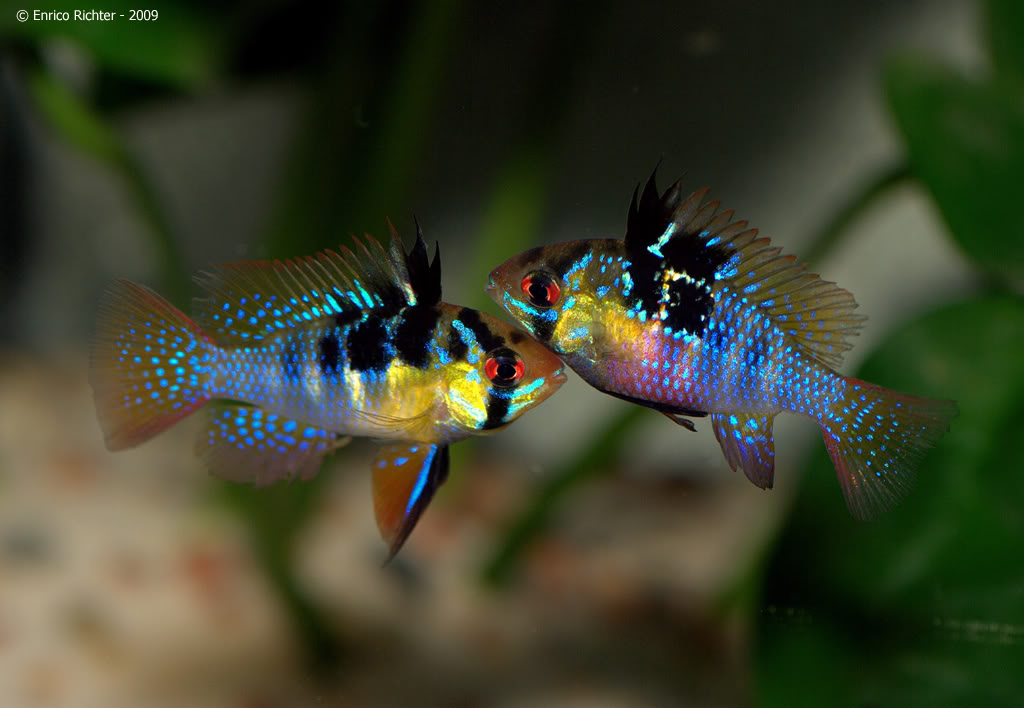
Mikrogeophagus ramireziRam
Myers & Harry, 1948
Max length40mm SL1.6in SLTank60 × 30cm24 × 12inTemp27–30°C81–86°FpH4.0–7.0M. ramirezi is also known by the names 'Ramirez' dwarf cichlid' and 'butterfly cichlid' and is among the more popular dwarf cichlids in the aquarium hobby. As a result, it is produced on a commercial basis in huge numbers and a number of ornamental strains have been developed including 'gold', 'long-finned' (both blue and gold forms; also traded as 'lyre-tail', 'veil-tail' and 'hi-fin'), 'electric/neon blue', 'super neon blue gold' 'pearl/perlmutt' and 'balloon'.
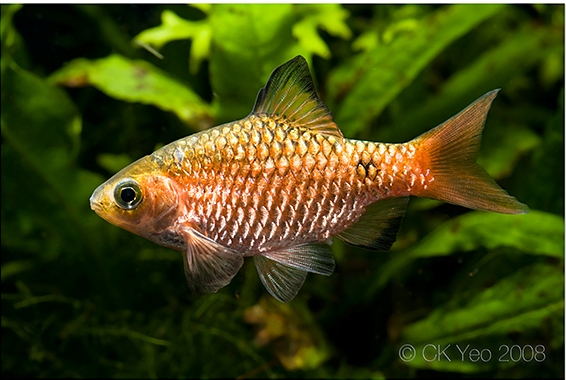
Pethia conchoniusRosy Barb
Hamilton, 1822
Max length100mm SL3.9in SLTank100 × 30cm39 × 12inTemp16–24°C61–75°FpH6.0–8.0Generally considered one of the hardiest small cyprinids available in the aquarium hobby, P. conchonius is an excellent choice for the beginner. Selective breeding has produced various ornamental strains including long-finned, 'veil-tail', 'super red', 'neon', and 'golden' forms. It's also been hybridised with some congeners although the offspring of such experiments are apparently infertile. It was formerly included in th...
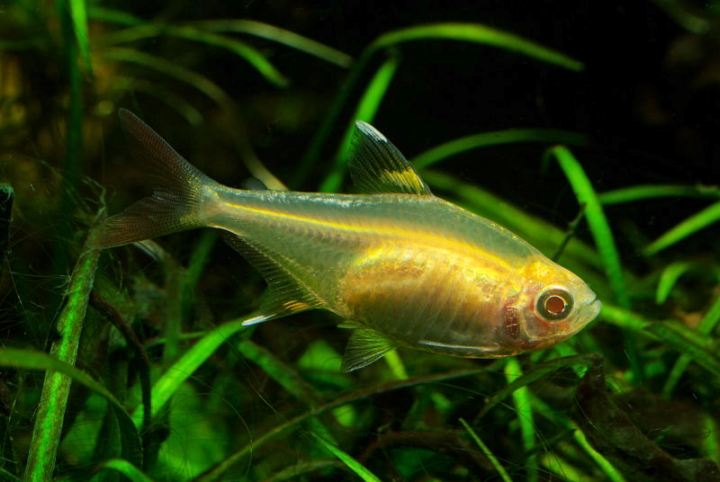
Pristella maxillarisX-ray Tetra
Ulrey, 1894
Max length45mm SL1.8in SLTank60 × 30cm24 × 12inTemp22–28°C72–82°FpH6.0–7.5P. maxillaris is one of the more popular tetras in the hobby, and is easily obtainable from most aquatic shops. It must rank among the very best choices for the newcomer to fishkeeping as it's peaceful, hardy and inexpensive. There's a selectively-bred "golden" strain available which is actually a semi-albino fish. Care is much the same as for the standard form. Currently the only species in the genus, in older literature it's often referred to by the now invalid name...
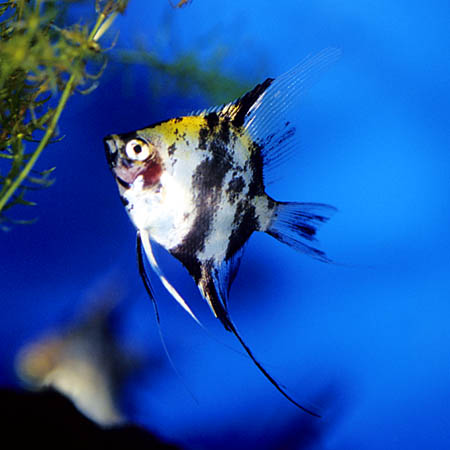
Pterophyllum "scalare"Angelfish
authority not recorded
Max length150mm SL6in SLTank100 × 40cm39 × 16inTemp24–30°C75–86°FpH6.0–7.4A well known and popular aquarium fish. Angels are available in a number of colour forms including black, gold and koi strains, in addition to the standard silver. It is worth remembering that although angels are generally peaceful, they are still cichilds so some aggression should be expected from time to time.
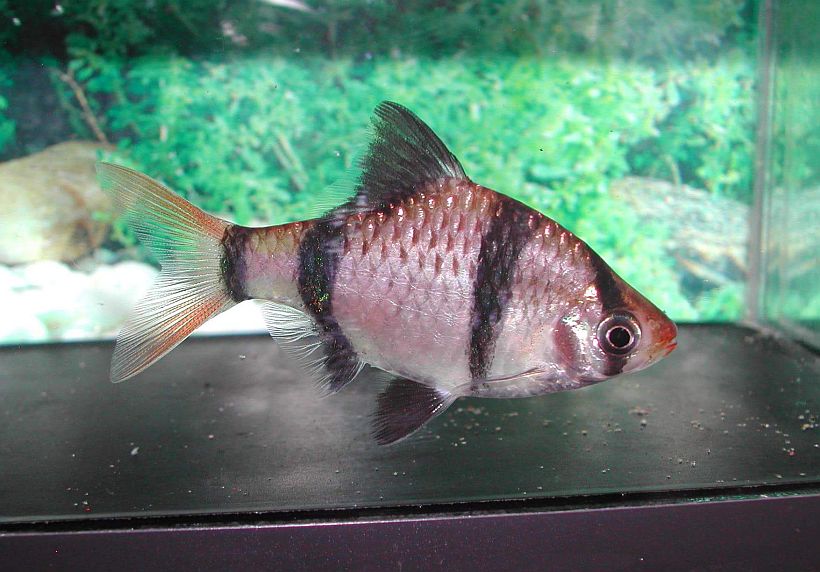
Puntigrus tetrazonaTiger Barb
Bleeker, 1855
Max length60mm SL2.4in SLTank80 × 30cm31 × 12inTemp20–26°C68–79°FpH5.0–8.0P. tetrazona is traditionally considered to be among the most ubiquitous species available in the aquarium trade. Wild examples are rarely traded, however, and there exists ongoing confusion as to the identity of the commercially-produced 'aquarium' tiger barb. A number of selectively-bred, ornamental strains are available. The albino, 'green' (aka 'moss'), and 'golden' (leucistic) variants are particularly pop...
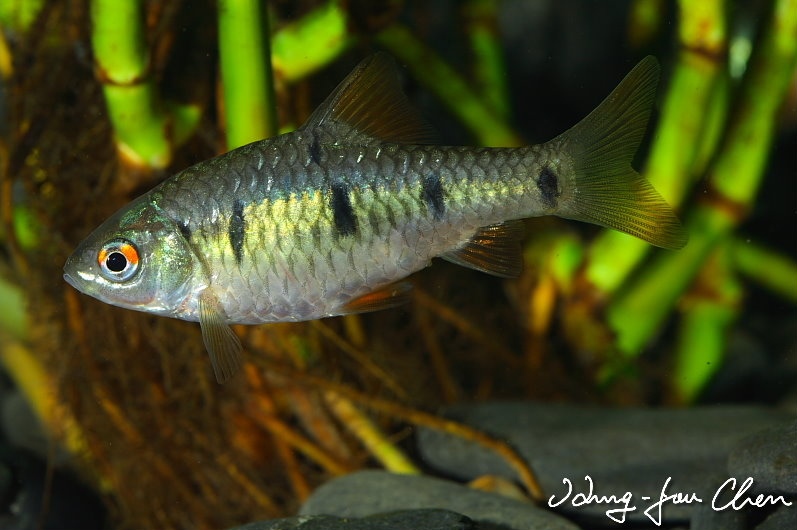
'Puntius' snyderi
Oshima, 1919
Max length75mm SL3.0in SLTank90 × 30cm36 × 12inTemp18–24°C64–75°FpH6.0–8.0This species is almost identical to the wild form of 'P.' semifasciolatus which is best known as the 'golden barb' in the aquarium hobby due to the popularity of a yellowish ornamental strain. The natural colour pattern is greenish in both species, however, and in terms of external characters they're only reliably distinguished by the fact that 'P.' semifasciolatus possesses a pair of prominent maxillary barbels wherea...
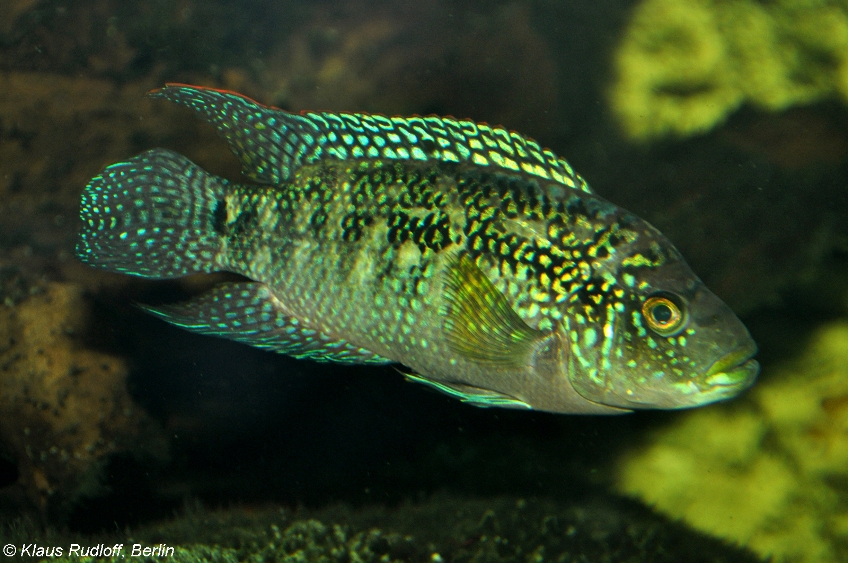
Rocio octofasciataJack Dempsey Cichlid
Regan, 1903
Max length200mm SL8in SLTank120 × 45cm48 × 18inTemp20–30°C68–86°FpH6.5–8.0A bright blue variant normally referred to as 'electric blue Jack Dempsey' or simply 'EBJD' is of unclear origin but it appears to be an ornamental strain fixed from a natural mutation. Care is as per the natural form although the blue fish tend to remain smaller and some reports suggest them to be less aggressive. R. octofasciata has a confusing taxono...
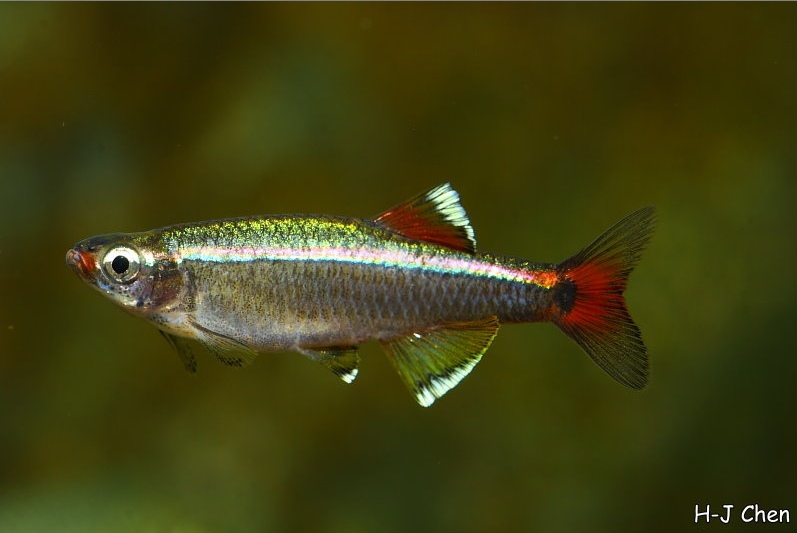
Tanichthys albonubesWhite Cloud Mountain Minnow
Lin, 1932
Max length40mm SL1.6in SLTank60 × 30cm24 × 12inTemp14–22°C57–72°FpH6.0–8.5One of the most ubiquitous species in the hobby and several ornamental strains are available including 'long-finned', 'golden', 'albino', and 'super red', for which care is identical to that of the 'standard' fish. Unfortunately the degree of inbreeding amongst farm-bred stock has resulted in a situation whereby many of the fish available today are genetically weak and prone to disease or develop physical deformities.
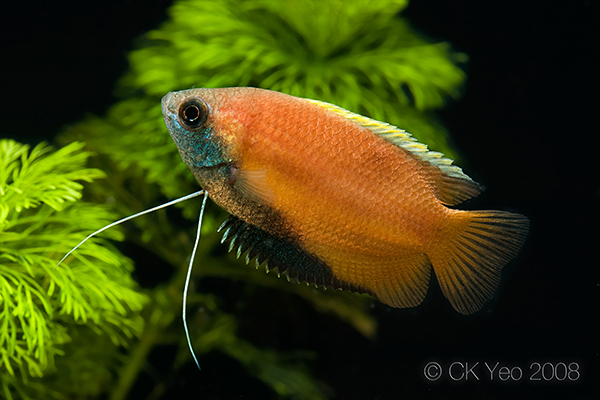
Trichogaster chunaHoney Gourami
Hamilton, 1822
Max length55mm SL2.2in SLTank60 × 30cm24 × 12inTemp22–27°C72–81°FpH6.0–7.5This species is readily available in the aquarium trade and is a good subject for those new to the hobby given its peaceable nature and relative adaptability in terms of water chemistry. It's sold under various names including A number of selectively-bred ornamental strains have also been produced including 'red', 'sunset', and 'golden', for which care is identical to the natural form.
Trichogaster labiosaThick-lipped Gourami
authority not recorded
Max length100mm SL3.9in SLTank74 × 30cm29 × 12inTemp22–27°C72–81°FpH6.0–7.5Despite its ease of keeping and peaceable nature, this species is not particularly popular in the hobby, although it is imported quite regularly. A gold or 'sunset' strain exists, in which the barred patterning is replaced by an overall orange/gold colouration. This is not a natural variation, but has been selectively bred for the trade. The female of this form is almost as colourful as the male. Like others in the suborder Anabantoidei, the species possesses an accessory breathing...
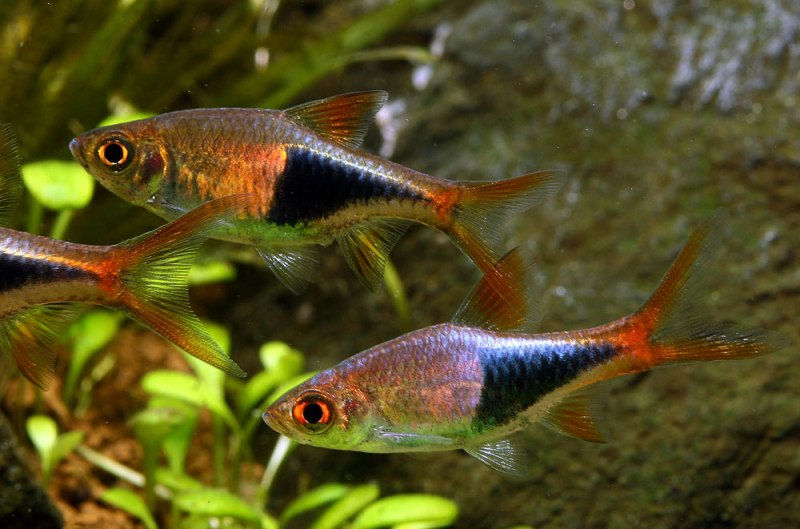
Trigonostigma heteromorphaHarlequin
Duncker, 1904
Max length45mm SL1.8in SLTank60 × 30cm24 × 12inTemp21–28°C70–82°FpH5.0–7.5T. heteromorpha was first exported for aquaria in the early 1900s and has gone on to become one of the most familiar, enduring species in the hobby. It has suffered as a result of its popularity to a certain extent with the mass-produced fish we see today lacking much of the colour seen in wild specimens and even exhibiting morphological deformities in some cases. Several selectively-bred ornamental strains have also...