Results for “subspecies”
Type a name: scientific, common, or one a species used to go by. Or narrow the catalogue with the filters.
Filters
Melanotaenia splendida splendidaEastern Rainbowfish
authority not recorded
Max length150mm SL6in SLTank120 × 30cm48 × 12inTemp20–30°C68–86°FpH5.0–8.0There are currently 4 described subspecies of Melanotaenia splendida. The principle differences are generally in colour, pattern and fin counts, although even these vary depending on the locality of the fish. M s. splendida in particular also exhibits a wide variation in colour and patterning depending on locality within the subspecies, and the species name is often suffixed with a place name when the fish are seen for sale. The different forms and subspecies should not be mixed in the aquarium,...
Pseudotropheus tropheops tropheops
authority not recorded
Max length200mm SL8in SLTank120 × 38cm48 × 15inTemp24–28°C75–82°FpH7.6–8.8This species has a confusing taxonomic past. There are currently 3 subspecies, Pseudotropheus tropheops tropheops, P. t. romandi and P. t. gracilior. P. macrophthalmus and P. microstoma were also once considered as subspecies of tropheops, but are now classed as distinct species. Furthermore, it is likely that the current subspecies and their various colour forms (of which there are many) will be themselves reclassifed into the currently invalid genus Tropheops! Incidentally, none of the subspec...
Melanotaenia splendida inornataCheckered Rainbowfish
authority not recorded
Max length150mm SL6in SLTank120 × 30cm48 × 12inTemp26–33°C79–91°FpH6.5–8.0There are currently 4 described subspecies of Melanotaenia splendida. The principle differences are generally in colour, pattern and fin counts, although even these vary depending on the locality of the fish. The different forms and subspecies should not be mixed in the aquarium, as they may hybridise. Adult specimens are rarely seen for sale, and it's the much drabber juvenile fish that are almost always offered in dealers tanks. However, exercise some patience (even on a good diet, full c...
Melanotaenia splendida rubrostriataRed-striped Rainbowfish
authority not recorded
Max length125mm SL5in SLTank120 × 30cm48 × 12inTemp24–30°C75–86°FpHnot recordedThere are currently 4 described subspecies of Melanotaenia splendida, of which this species is one of the most colourful. The principle differences are generally in colour, pattern and fin counts, although even these vary depending on the locality of the fish. The different forms and subspecies should not be mixed in the aquarium, as they may hybridise. Adult specimens are rarely seen for sale, and it's the much drabber juvenile fish that are almost always offered in dealers tanks. However,...
Pseudocrenilabrus multicolorDwarf Egyptian Mouth-brooder
authority not recorded
Max length80mm SL3.1in SLTanknot recordedTemp20–26°C68–79°FpH6.5–7.2This species was one of the first cichlid species to be spawned in captivity and has been in the hobby for over a century. It is less popular than it once was but remains a good choice for the beginner as it is tolerant of a wide range of water conditions and is easily bred. There currently exist 2 subspecies, Pseudocrenilabrus multicolor multicolor and P. m. victoriae. These are quite distinct in terms of colouration and patterning and exist as separate populations in nature. Both subspecie...
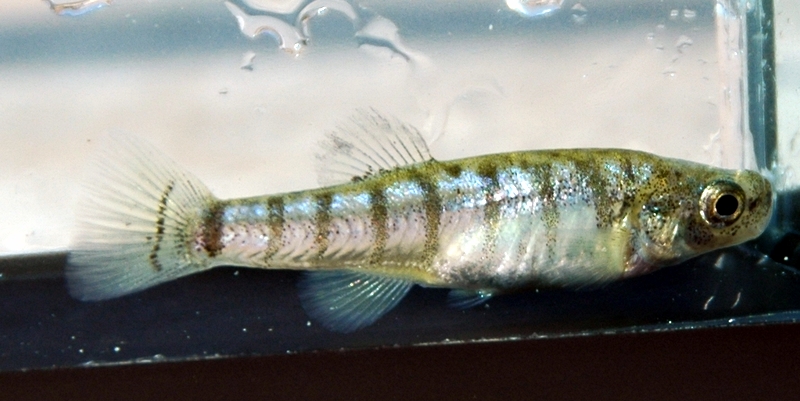
Anatolichthys saldaeSalda Toothcarp
Akşiray, 1955
Max length50mm SL2.0in SLTank120 × 30cm48 × 12inTemp6.5–22°C44–72°FpH8.0–10.0The elongated, slender body profile, angular lower jaw and reduced scalation exhibited by this little-known subspecies have seen it placed in the disused genera Anatolichthys and Kosswigichthys in the past and it's still inexplicably listed as a species of Lebias by some sources (for the record Lebias has long been considered a synonym of Cyprinodon by most authorities and an ICZN committee voted to suppress the name in favour of Aphanius as recently as 2003). You're unlikely to find i...
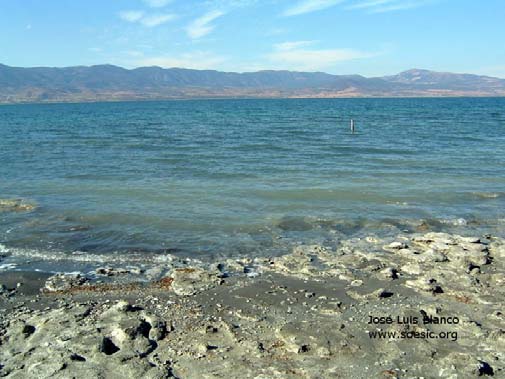
Anatolichthys sureyanusBurdur Toothcarp
Neu, 1937
Max length50mm SL2.0in SLTank120 × 30cm48 × 12inTemp5–22°C41–72°FpH8.0–10.0The elongated, slender body profile, angular lower jaw and reduced scalation exhibited by this little-known subspecies have seen it placed in the disused genera Anatolichthys and Kosswigichthys in the past. It has also been referred to, and still is in some cases, as A. transgrediens or more often A. burdurensis/burduricus. Some of these names were erected due to the differences in scalation that can be observed among the population in Lake Burdur but studies by Villwock and others revealed that...
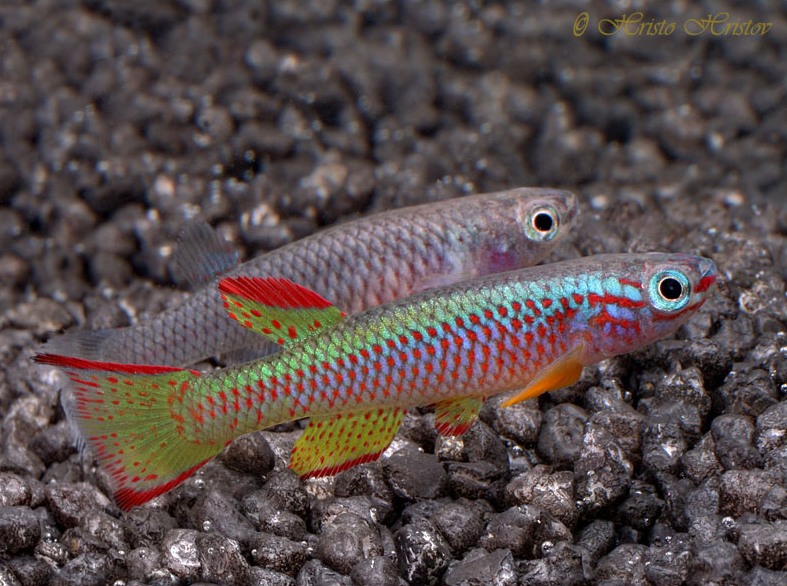
Aphyosemion gabunenseGabon Lyretail
Radda, 1975
Max length50mm SL2.0in SLTank45 × 25cm18 × 10inTemp22–28°C72–82°FpH6.5–7.2A. gabunense is a good beginner's killifish as it is not an annual species, being found in permanent bodies of water in nature. It exists in several geographical colour forms which are sometimes referred to the subspecies Aphyosemion gabunense gabunense, A. g. boehmi and A. g. marginatum. The latter two are slightly smaller with a maximum standard lenth around 45 mm, and all three can be told apart by differences in colour pattern.
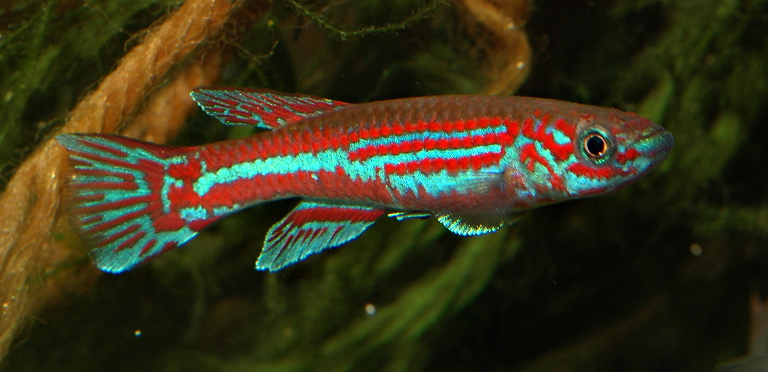
Aphyosemion ogoenseBroken-Line Lyretail
Pellegrin, 1930
Max length50mm SL2.0in SLTank45 × 25cm18 × 10inTemp18–22°C64–72°FpH5.0–6.5This species is not an annual fish, being found in permanent bodies of water in nature. Over 20 different forms of it have been discovered at different localities and a handful have been given subspecific names. The most popular in the aquarium hobby include A. o. ottogartneri and A. o. pyrophore, both of which were initially described as separate species.
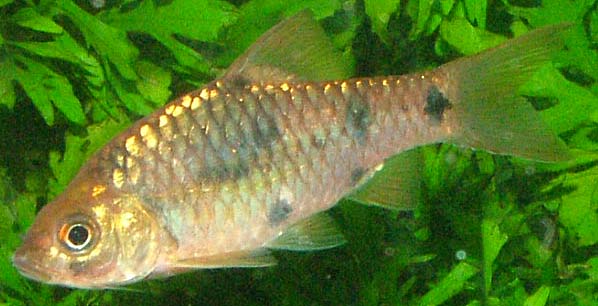
Barbodes banksi
Herre, 1940
Max length110mm SL4in SLTank120 × 45cm48 × 18inTemp22–28°C72–82°FpH6.0–7.5This species is not often seen in the aquarium hobby but occasionally exported as bycatch among shipments of other fishes. It was described as a subspecies of the closely-related 'P.' binotatus but is currently considered distinct on a tentative basis as per Ng and Tan (1999) who stated it is 'likely' that the two represent extreme colour forms of a single, variably-patterned species.
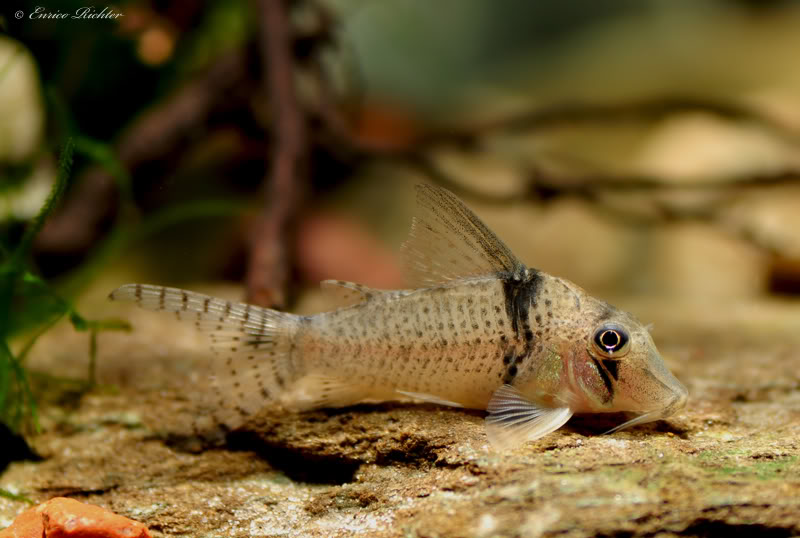
Corydoras pastazensisPastaza Cory
Weitzman, 1963
Max length70mm SL2.8in SLTank90 × 30cm36 × 12inTemp22–28°C72–82°FpH5.0–7.0The form from the Río Tigre, previously referred to as the subspecies C. p. orcesi (Weitzman & Nijssen, 1970) was raised to full species status as C. orcesi by Isbrücker (2001), but this decision does not appear to have been followed by all authorities some of which consider C. p. orcesi a synonym of C. pastazensis. The two species are relatively easy to tell apart by colour pattern; in C. pastazensis the dark vertical...
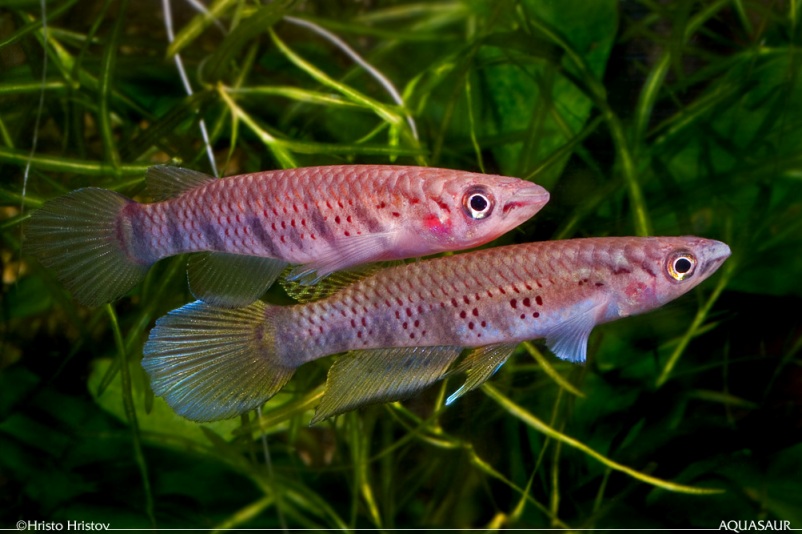
Epiplatys sexfasciatusSix-barred Panchax
Gill, 1862
Max length70mm SL2.8in SLTank80 × 30cm31 × 12inTemp20–27°C68–81°FpH5.0–7.0Distributed throughout coastal regions north and westwards from Gabon through Equatorial Guinea, Cameroon, Nigeria, Benin and Togo as far as Ghana although some consider it restricted to northwestern Gabon and Equatorial Guinea with the remaining populations representing various subspecies (see 'Notes'). Type locality is 'Gaboon River', which presumably refe...
Hemigrammus boesemaniBoesman's Tetra
authority not recorded
Max length45mm SL1.8in SLTank60 × 38cm24 × 15inTemp23–26°C73–79°FpH5.5–7.0This species is very rare in the hobby, and should be snapped up if seen on sale. In the past it was considered a subspecies of H. micropterus. Supposedly, it's not a particularly common species in any of its natural waters. Like all Hemigrammus, the taxonomic status of this species is currently Incertae Sedis, meaning uncertain. The genus is currently used as something of a catch-all for over 70 species of small characin. Most experts agree that a full revision is required, with the lik...
Hemigrammus ocelliferHead-and-tail light Tetra
authority not recorded
Max length45mm SL1.8in SLTank60 × 38cm24 × 15inTemp24–28°C75–82°FpH5.5–7.5Also known as the beacon tetra, this species is ubiquitous in most dealers' tanks and is one of the best choices for the newcomer to fishkeeping. It's both hardy and inexpensive. It has been popular in the hobby for several decades. There is a selectively bred albino form that has become popular in recent years, for which care is identical to the standard fish. There is possibly also a subspecies, H. ocellifer falsus that lacks the red spot at the caudal peduncle (the gold-coloured tai...
Hemigrammus pulcherPretty Tetra
authority not recorded
Max length45mm SL1.8in SLTank60 × 38cm24 × 15inTemp23–27°C73–81°FpH5.5–7.0Also known as the garnet or black wedge tetra, H. pulcher is deservedly popular in the hobby. It's both hardy and inexpensive, and is a good choice for the beginner. There was previously a subspecies, H. pulcher haraldi. This has now been reclassified as a distinct species, H. haraldi. Like all Hemigrammus, the taxonomic status of this species is currently Incertae Sedis, meaning uncertain. The genus is currently used as something of a catch-all for over 70 species of small characin. Mo...
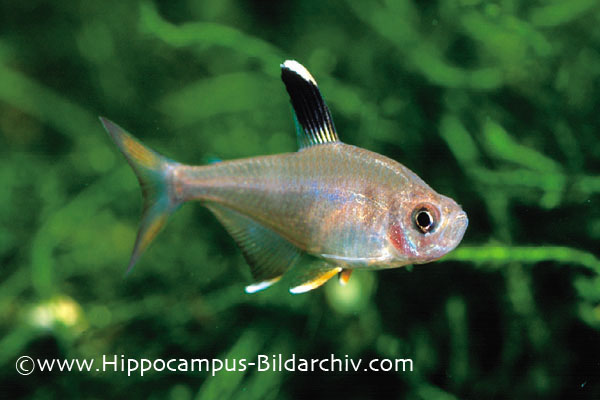
Hyphessobrycon rosaceusRosy Tetra
Durbin, 1909
Max length40mm SL1.6in SLTank60 × 38cm24 × 15inTemp24–28°C75–82°FpH5.5–7.5A beautiful species that is very similar to a host of others in the genus, some of which are undescribed. The most common of these in the hobby is H. bentosi. The two are so similar in appearance that H. rosaceus was once considered to be a subspecies of H. bentosi. The easiest way to distinguish them is by the presence of a dark marking just behind the operculum in H. bentosi, which is lacking in H. rosaceus. As with the closely related Hemigrammus, the taxonomic status of all species in the...
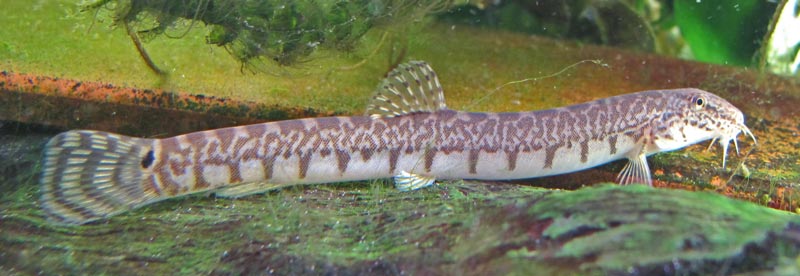
Iksookimia koreensis
Kim, 1975
Max length130mm SL5in SLTank100 × 30cm39 × 12inTemp20–24°C68–75°FpH7.0–8.0Among them it's most similar to I. pumila which was initially described as a subspecies but is now considered distinct. The two are most easily-separated by colour pattern; I. koreensis has 10 or...
Lestradea perspicax
authority not recorded
Max length135mm SL5in SLTank120 × 30cm48 × 12inTemp24–27°C75–81°FpH7.8–9.0There is some confusion regarding the taxonomy of this species and its congener L. stappersi. L. stappersi was originally regarded as a subspecies of perspicax but is now considered a distinct species. It is not often seen in the hobby....
Loricaria simillimaMarbled Whiptail
authority not recorded
Max length180mm SL7in SLTanknot recordedTemp24–27°C75–81°FpH5.6–7.8The pictures here show the fish that is most commonly referred to as L. simillima, but there is a great deal of uncertainty surrounding its true identity. As suggested above, it seems unlikely that its natural distribution is so wide, and we are probably dealing with several species or subspecies. This argument is strengthened by the fact that several differently coloured fish are imported as this species, with darker specimens being collected from acidic blackwaters and lighter fish hailing fro...
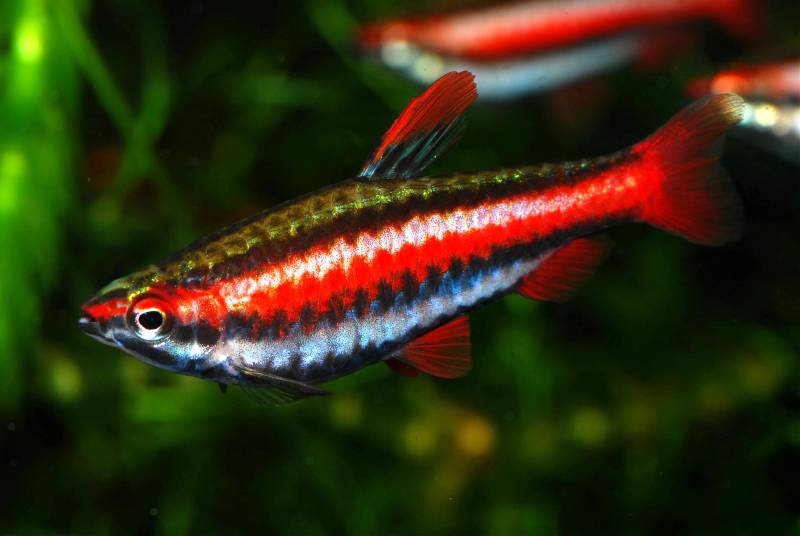
Nannostomus mortenthaleriCoral Red Pencilfish
Paepke & Arendt, 2001
Max length30mm SL1.2in SLTank90 × 30cm36 × 12inTemp24–28°C75–82°FpH4.0–7.0This species is traded under various other names including 'red arc pencilfish', 'Peruvian red pencilfish', 'ruby red pencilfish', 'red pencilfish', and Nannostomus cf. marginatus 'red'. It was initially described as a subspecies of N. marginatus but can be identified by the following combination of characters: pronounced sexual dimorphism with adult males exhibiting bright red pigmentation between the central...