Lestradea perspicax
Last revised 2026Edit this page
On this page11 sections
Quick factsEdit
Difficulty4 of 8 measures
- Space
- large tank
- Water
- needs alkaline water
- Temp
- needs a steady temperature
- Diet
- unknown
- Temperament
- peaceful
- Social
- unknown
- Compatibility
- unknown
Other demands
Each of these can raise the rating on its own, whatever the measures above say.
- Hardiness
- unknown
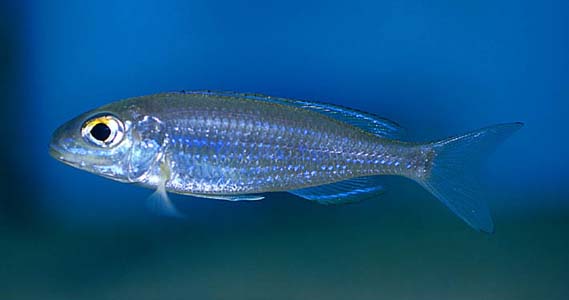
Lestradea perspicax is a cichlid endemic to the northern end of Lake Tanganyika, where it inhabits shallow water over sandy substrates. There is some confusion over the taxonomy of this species and its congener L. stappersi, which was originally regarded as a subspecies of perspicax and is now considered distinct. Very peaceful, and a maternal mouthbrooder in nature, it is not often seen in the hobby.
Distribution
EditEndemic to the northern end of Lake Tanganyika.
Habitat
Write a noteEditIt inhabits areas of shallow water with sandy substrates.
Aquarium size
Write a noteEdit120 ∗ 30 ∗ 30 cm48 ∗ 12 ∗ 12 in - ~108 litres~29 US gal.
Maintenance
Write a noteEditSet up the aquarium with large piles of rocks arranged to form caves, large areas of open water for swimming and a sandy substrate, as this species tends to sift through the substrate looking for food.
Water conditions
EditTemperature: 24 – 27 °C75 – 81 °F
pH: 7.8-9.0
Hardness: 8-25°H
These recommendations come from this profile’s own figures. They contain affiliate links, so we may earn a commission.
Diet
Write a noteEditL. perspicax will accept most foods offered but live and frozen varieties should form the bulk of the diet.
Behaviour and compatibility
Write a noteEditVery peaceful. Do not keep with boisterous species such as Mbuna. Good tankmates include Julidochromis, Neolamprologus and Xenotilapia species.
Sexual dimorphism
Write a noteEditTricky to sex. Males grow slightly larger than females and have two distinct lines on the dorsal fin. Females usually have only one line.
Reproduction
Write a noteEditNot achieved in aquaria but is known to be a maternal mouthbrooder in nature.
Notes
EditThere is some confusion regarding the taxonomy of this species and its congener L. stappersi. L. stappersi was originally regarded as a subspecies of perspicax but is now considered a distinct species. It is not often seen in the hobby.
Species images · 1
These photographs are used with each photographer's permission.
Send a photographDistribution
Profile completeness18 of 24
75% complete
Also missing: taxonomic authority, a common name, etymology.
Community
Questions about Lestradea perspicax?
Ask on Discord