Genus
Acanthocobitis
- Species
- 2
- Photographed
- 2 of 2
- Difficulty rated
- 2 of 2
Where the name comes fromEdit
from the Greek ákantha (Gr. ἄκανθα), meaning 'thorn', and kobitis (Gr. κωβῖτις), the ancient Greek name for small fishes that bury in the bottom and/or are like a gudgeon or goby (first applied to loaches by Rondelet in 1555).
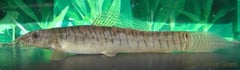
Acanthocobitis pavonaceaPeacock Loach
McClelland, 1839
The peacock loach, Acanthocobitis pavonacea, is a large nemacheilid loach from the Brahmaputra River drainage in Assam, northeastern India. At 120 to 156 mm SL it is one of the largest nemacheilids, and Singer and Page (2015) treat it as the only member of Acanthocobitis. It isn't common in the trade, but occasional specimens turn up among wild-caught shipments from northeast India, sometimes sold as 'panther' or 'puma' loach.
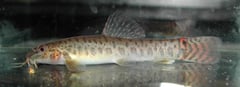
Acanthocobitis sinuata
Day, 1870
Acanthocobitis sinuata is a nemacheilid loach from peninsular India, described from Wayanad district in Kerala. It appears widespread in drainages south of the Krishna. Most authorities treat it as a synonym of A. mooreh, but the two differ in distribution, dorsal-fin ray count and colour pattern, and they are apparently being revalidated. Both have a reduced lateral line ending around the dorsal fin, which in the similar A. botia is complete or ends above the anal fin.