Genus
Acanthopsoides
- Species
- 4
- Photographed
- 4 of 4
- Difficulty rated
- 4 of 4
Where the name comes fromEdit
from the currently invalid generic name Acanthopsis, used here as a prefix, and Greek eí̄dos (Gr. εἶδος), meaning 'form, shape'.
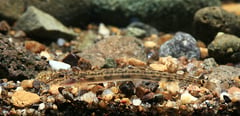
Acanthopsoides molobrion
Siebert, 1991
Acanthopsoides molobrion is a dwarf horse-faced loach from Borneo, Peninsular Malaysia and southern Thailand. Like others in the genus it lives in flowing, clear-water river channels over sand, fine gravel or mud, and needs a soft, sandy substrate because it spends some of its time completely buried. Several Acanthopsoides in the trade have proven very tricky to identify. This one has 10 to 15 mid-dorsal markings and three bands in the caudal fin.
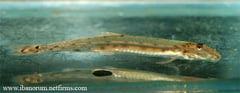
Acanthopsoides robertsi
Siebert, 1991
Acanthopsoides robertsi is a dwarf horse-face loach from the Kapuas River basin in West Kalimantan, Indonesian Borneo. Unlike most of its congeners it is quite easily identified, being the only species with a dark, triangular marking in the caudal fin. Very similar fish have been collected further north in the Kayan and Sambas basins. Highly gregarious, it needs soft sand to bury in and is best kept in a group of six or more.
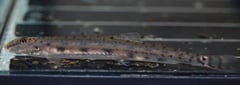
Acanthopsoides sp. 'A01'
authority not recorded
Acanthopsoides sp. 'A01' is an unidentified dwarf horse-face loach of unknown origin, likely to be collected in Thailand or Peninsular Malaysia. Like several of its congeners in the trade it has proven very tricky to identify. It spends some of its time completely buried, so it needs a soft, sandy substrate, and it is best kept in a group of six or more. SF member Mark Duffill has recovered fry from an adult pair kept on their own in a small tank.
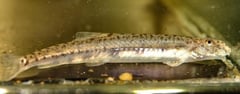
Acanthopsoides sp. 'A02'
authority not recorded
Acanthopsoides sp. 'A02' is an unidentified dwarf horse-face loach of unknown origin, likely to be collected in Thailand or Peninsular Malaysia. Like several of its congeners in the trade it has proven very tricky to identify. A soft, sandy substrate is essential because it spends some of its time completely buried, and it is highly gregarious and best kept in a group of six or more.