Genus
Anostomus
- Species
- 2
- Photographed
- 2 of 2
- Difficulty rated
- 2 of 2
Where the name comes fromEdit
from the Greek ano- (Gr. ἀνά-), meaning 'up, upward', and stóma (Gr. στόμα), meaning 'mouth', in reference to the upturned mouthparts possessed by members of this genus.
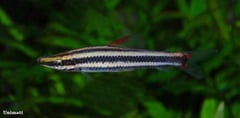
Anostomus anostomusStriped Headstander
Linnaeus, 1758
The striped headstander, Anostomus anostomus, is an anostomid from the Amazon and Orinoco river systems in Peru, Brazil, Venezuela and Guyana. It lives along rocky shores of fast-flowing rivers, grazing algae and small invertebrates from the rocks. Although it shoals in nature, it is very quarrelsome with conspecifics when only a few are kept, so it is best kept singly or in a group of 6 or more in a larger tank.
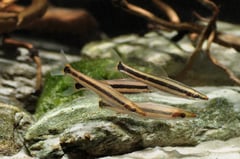
Anostomus ternetziGold-Striped Headstander
Fernández-Yépez, 1949
The gold-striped headstander, Anostomus ternetzi, is an anostomid from the Río Orinoco system and coastal Guyana, Suriname and French Guiana. It lives in rocky areas at the edge of fast-flowing rivers and streams, grazing algae and small invertebrates. Like A. anostomus, it is quarrelsome with conspecifics when only a few are kept. Its distribution in Brazil is unclear, with patchy records from the Araguaia and Xingu basins.