Genus
Cobitis
- Species
- 4
- Photographed
- 4 of 4
- Difficulty rated
- 4 of 4
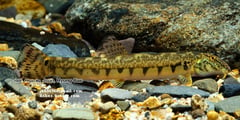
Cobitis hugowolfeldi
(Nalbant, 1993)
Iksookimia hugowolfeldi is a cobitid loach endemic to Korea, known from the Yeongsan and Tamjin river systems in the province of Jeollanam-do. It is most similar to I. longicorpus, of which it was first considered a geographical variant, and has narrow dark bars below the lateral line with densely arranged small spots above. It apparently prefers small, shallow rivers and streams with moderate to fast currents, and needs clean, well-oxygenated water.
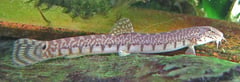
Cobitis koreensis
Kim, 1975
Iksookimia koreensis is a cobitid loach endemic to Korea, relatively common in river drainages of northern and western South Korea. It is most similar to I. pumila, formerly treated as a subspecies, but has 10 or more dark bars on each flank, saddle-like markings along the back and irregular spots over the upper body. It apparently prefers small, shallow rivers and streams with moderate to fast currents, and needs clean, well-oxygenated water.
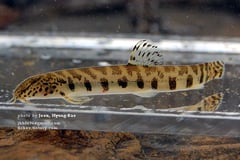
Cobitis pumila
Kim & Lee, 1987
Iksookimia pumila is a small cobitid loach endemic to Korea, known only from the Baek River drainage in the south-west of the country. A dam built in the middle reaches of the river in the late 1990s has undermined its presence at some localities. It is most similar to I. koreensis, of which it was formerly considered a subspecies, but has fewer than 10 bars on each flank and only a few larger, vertically orientated blotches on the upper body.
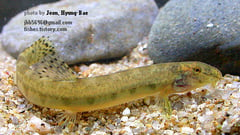
Cobitis yongdokensis
(Kim & Park, 1997)
Iksookimia yongdokensis is a cobitid loach endemic to Korea, known from four river drainages in the eastern province of Gyeongsangbuk-do. Most similar to I. longicorpus and I. hugowolfeldi, it has 9 to 13 dark vertical bars on the flanks, a small dark spot at the base of the upper caudal-fin lobe and a much smaller lamina circularis in males. It is most often seen in sluggish, shallow habitats with sand or pebble substrates in the mid-to-upper sections of rivers.