Genus
Discherodontus
- Species
- 3
- Photographed
- 3 of 3
- Difficulty rated
- 3 of 3
Where the name comes fromEdit
from the Ancient Greek δίς (dís), meaning 'twice', σειρά (seirá), meaning 'series, line', and ὀδών (odon), meaning 'tooth', since members of this genus possess two rows of pharyngeal teeth which sets them apart from related taxa.

Discherodontus ashmeadi
Fowler, 1937
Discherodontus ashmeadi is a cyprinid apparently native to the Mae Klong and Mekong river basins in Thailand, Laos and Cambodia. The type species of its genus, it inhabits clear, fast-flowing minor rivers and forest streams. Like its congeners it is notoriously delicate and difficult to ship: it goes into shock and loses scales very easily when removed from the water, and damaged areas tend to become infected.
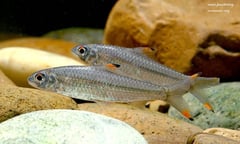
Discherodontus halei
Duncker, 1904
Discherodontus halei is a cyprinid with an apparently disjunct range: Pahang in Peninsular Malaysia, and the Mae Klong and Chao Phraya in Thailand. It inhabits clear, fast-flowing minor rivers and forest streams, and orange pigmentation in the dorsal and caudal fins helps separate it from congeners. Like others in the genus it is notoriously delicate and difficult to ship, losing scales very easily when removed from the water.
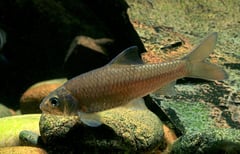
Discherodontus schroederi
Smith, 1945
Discherodontus schroederi is a cyprinid native to the Mae Klong and Chao Phraya river basins in Thailand. Said to be the hardiest member of the genus, it is rarely collected for the aquatic trade, presumably because it is the least colourful of the Thai species. Juveniles can be confused with D. ashmeadi, but its dark dorsal blotch fades to a thin distal band with age, and its barbels are noticeably longer than in other members of the genus.