Genus
Hydrolycus
- Species
- 3
- Photographed
- 3 of 3
- Difficulty rated
- 3 of 3
Where the name comes fromEdit
from the Greek hydro, meaning 'water', and lykos, meaning 'wolf'.
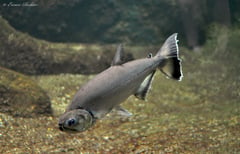
Hydrolycus armatusPayara
(Jardine, 1841)
The payara, Hydrolycus armatus, is a large, predatory dogtooth characin from the eastern Amazon, the Orinoco and the Essequibo in Guyana. Given its eventual size and natural behaviour it probably should not be considered a home aquarium subject at all, though juveniles are sometimes sold. It is regularly confused with the smaller H. scomberoides, and no other member of the genus has white margins to the anal and caudal fins.
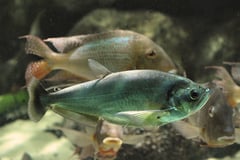
Hydrolycus scomberoidesVampire Tetra
(Cuvier, 1819)
The vampire tetra, Hydrolycus scomberoides, is a predatory dogtooth characin from the central and upper Amazon in Brazil, Bolivia, Peru and Ecuador. Also sold as 'scomb' and 'sabre tooth tetra', it is regularly confused with the much larger payara, H. armatus. At up to 300 mm it still needs a huge tank and specialist care, and newly-imported specimens often refuse anything but live food.
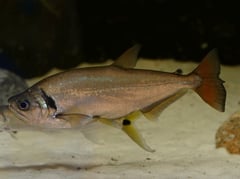
Hydrolycus tatauaia
Toledo-Piza, Menezes & Santos, 1999
Hydrolycus tatauaia is a large, predatory dogtooth characin from the lower and central Amazon, the upper Orinoco and coastal drainages of Guyana. A pelagic species of flowing main river channels, it performs long upstream migrations to spawn. Its adult size and natural behaviour mean only a handful of private aquarists have the facilities to house it long-term.