Genus
Leptobotia
- Species
- 6
- Photographed
- 6 of 6
- Difficulty rated
- 6 of 6
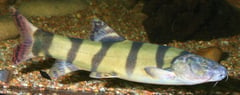
Leptobotia elongataImperial Flower Loach
(Bleeker, 1870)
The imperial flower loach, Leptobotia elongata, is a large botiid loach native to the middle and upper Yangtze River in China. Growing to 400 to 500 mm SL, it has declined drastically in the wild through damming, pollution and habitat degradation, and it is rare in the aquarium trade and prohibitively expensive when available. Also known as the 'royal clown' loach, a name since applied to the smaller L. pellegrini, it is a species for the specialist able to house it long term.
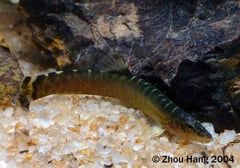
Leptobotia guilinensis
Chen, 1980
Leptobotia guilinensis is a botiid loach from southern China, described from Guangxi Province and also recorded from neighbouring Hunan. The species is rarely exported for the aquarium hobby, and fish labelled as such are usually Sinibotia pulchra or other related species. In the formal description Chen states that it is closely related to the fish now called Sinibotia zebra but lacks stripes on the head. Its habitat is unconfirmed but presumably clear, well-oxygenated running water over rocks and gravel.
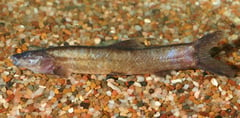
Leptobotia microphthalma
Fu & Ye, 1983
Leptobotia microphthalma is a botiid loach from the upper Yangtze basin in southwestern China, known from the Min and Jialing rivers. Its near-vestigial eyes and the variable hypopigmentation seen in many individuals suggest a deep water or even subterranean existence. Poorly known in the hobby, it is superficially similar to L. tientainensis and differs in a more deeply forked caudal-fin and a smaller eye, although eye size varies considerably between individuals.
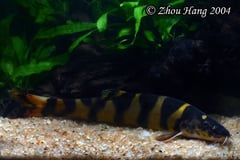
Leptobotia pellegrini
Fang, 1936
Leptobotia pellegrini is a botiid loach from southern China, described from Sichuan province and also known from the Pearl River (Zhu Jiang) basin. Often traded as 'royal clown loach', a name also applied to L. elongata, it differs from that species chiefly in adult size, reaching around 200 mm SL against 500 mm. It is also more slender with a darker head, and its relatively wide distribution probably explains why it is commoner in the hobby.

Leptobotia rubrilabris
(Dabry de Thiersant, 1872)
Leptobotia rubrilabris is a riverine botiid loach native to the middle and upper Yangtze River in China, with most records from Sichuan and Hunan. Fish labelled as this species in the trade are typically Sinibotia pulchra or other related species. In nature it favours clear, well-oxygenated running water over rocks and gravel, from boulder-filled headwater streams to larger, turbid river channels, and much of the Yangtze has been degraded by dam construction and pollution.
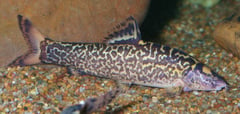
Leptobotia taeniops
(Sauvage, 1878)
Leptobotia taeniops is a botiid loach native to the middle and upper Yangtze River in China, recorded mostly from Hunan including Dongting Lake. Poorly known in the hobby, it is available occasionally and normally traded as 'honeycomb loach'. It exists in a number of colour forms from plain to reticulated and brown to pink, with reticulated populations towards the eastern end of its range, and it was previously included in the related genus Parabotia.