Genus
Peckoltia
- Species
- 5
- Photographed
- 5 of 5
- Difficulty rated
- 5 of 5
Where the name comes fromEdit
named for German botanist and pharmacist Gustavo Peckolt who was born in Brazil, became a member of the Natural History Commission of Rondon, and published important books about Brazilian plants in the late 1800s alongside his father Theodor.
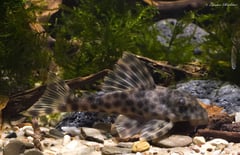
Peckoltia oligospilaL006
Günther, 1864
The brown dot peckoltia (Peckoltia oligospila), also known as L006, is a suckermouth catfish from the rios Tocantins and Capim in Brazil. Only faint spots and saddles mark its body, a pattern it shares among congeners with P. bachi and some specimens of P. furcata alone. Relatively peaceful but territorial with conspecifics, it is a cave-spawner and does best in a tank designed to simulate a flowing stream.
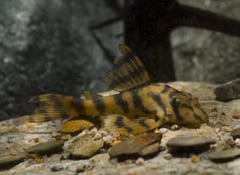
Peckoltia sp.L288
authority not recorded
L288 is a Peckoltia species, a suckermouth catfish from the rios Curuá Una and Uruará in Pará state, Brazil. The Curuá Una joins the main lower Amazon channel downstream of Santarém and carries a large hydroelectric power plant. The species spawns in caves with the male responsible for brood care.
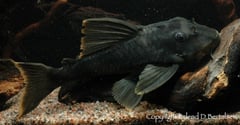
Peckoltia sp.L076
authority not recorded
L076 is a Peckoltia species, a suckermouth catfish apparently collected from the rio do Pará near Portel in Pará state, northern Brazil. L076 and L099 appear to be the same species, the former showing a darker colour pattern by day, though both look similar at night. It spawns in caves and the male is responsible for brood care.
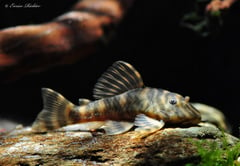
Peckoltia sp.L038
authority not recorded
L038 is an unidentified Peckoltia, a suckermouth catfish collected near Mocajuba on the lower rio Tocantins in Pará state, Brazil. It is relatively peaceful but territorial with conspecifics and similarly-shaped species, and spawns in caves with the male responsible for brood care.
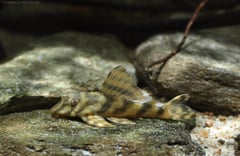
Peckoltia wernekeiL243
Armbruster & Lujan, 2016
Peckoltia wernekei, also known as L243 and LDA086, is a suckermouth catfish known only from parts of the upper Río Orinoco drainage in Amazonas state, southern Venezuela. Armbruster and Lujan described it in 2016 from the Ventuari drainage. It is sometimes confused with Peckoltia lineola, alongside which it is often exported for the aquarium trade.