Genus
Pygocentrus
- Species
- 3
- Photographed
- 3 of 3
- Difficulty rated
- 3 of 3
Where the name comes fromEdit
from the Ancient Greek πῡγή (pūgḗ), meaning 'rump', and κέντρον (kéntron), meaning 'sharp point, thorn, spine', in reference to the serrated abdomen in genus members.
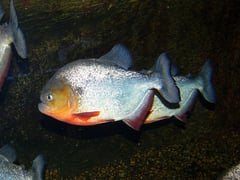
Pygocentrus caribaBlack Spot Piranha
Humboldt, 1821
The black spot piranha, Pygocentrus cariba, is restricted to the Río Orinoco basin in Colombia and Venezuela. Many of its habitats lie within the llanos, and it has been recorded from river channels, tributaries and floodplain lakes, many of them acidic blackwater environments. Specimens over 100 mm SL have a large humeral spot and few spots on the body, which separates it from P. nattereri. It is best maintained alone.
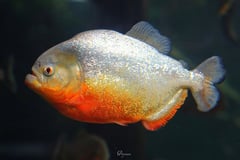
Pygocentrus nattereriRed Bellied Piranha
Kner, 1858
The red bellied piranha, Pygocentrus nattereri, occurs through much of the Amazon basin and south into the Paraná and Uruguay river systems. Famed as a rapacious predator, it is among the most notorious freshwater fishes in the world. According to Herbert Axelrod (1976), the myth began with a feeding frenzy staged for Theodore Roosevelt in Brazil in 1913. Usually only juveniles form aggregations, and the species is relatively easy to breed in the aquarium.
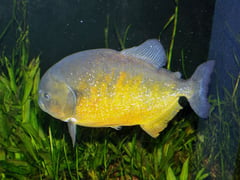
Pygocentrus pirayaPiraya
Cuvier, 1819
The piraya, Pygocentrus piraya, is a piranha restricted to the rio São Francisco watershed in eastern Brazil. It can be identified by bright yellow-orange pigmentation on the lower jaw, opercle and flanks in life, and larger specimens have rays in the adipose fin. It is best maintained alone because mature individuals are reported to be extremely aggressive towards one another when space is limited.