Hobbyist group · Other groups
Lepidosireniformes
Lepidosireniformes spans 2 families.
- Species
- 3
- Families
- 2
- Genera
- 2
- Photographed
- 1 of 3
- Difficulty rated
- 3 of 3
Protopterus dolloiSlender Lungfish
Protopteridae · authority not recorded
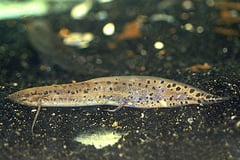
The slender lungfish, Protopterus dolloi, is a lungfish from Gabon, Angola, the Central African Republic and both Congo republics. It inhabits floodplains, rivers, swamps and backwaters, and survives the dry season in a mucus cocoon, though it aestivates more rarely than P. annectens annectens. It reaches 130 cm, lives for over 20 years and is best kept singly, since it can suddenly turn on tankmates.
Protopterus annectens annectensAfrican Lungfish
Protopteridae · authority not recorded
The African lungfish, Protopterus annectens annectens, is a lungfish found in 17 African countries, including Senegal, Nigeria, Kenya and Sudan. It inhabits temporary floodplains that dry out completely for part of the year and survives the dry season by aestivating in a mucus cocoon, for several years if need be. The most commonly seen lungfish in the hobby, it reaches 100 cm, bites hard and is best kept singly.
Lepidosiren paradoxaSouth American Lungfish
Lepidosirenidae · authority not recorded
The South American lungfish, Lepidosiren paradoxa, is found across the Amazon, Rio Paraguay and lower Paraná basins. The only lungfish known from South America, it is an obligatory air breather and survives the dry season by aestivating in a mucous cocoon inside a burrow in the mud. It can reach 125 cm and live for well over 20 years, so whether it should be considered an aquarium subject at all is debatable.