River
Kaoping
Only species with a profile on Seriously Fish are counted.
- Species
- 4
- Families
- 2
- Photographed
- 4 of 4
- Difficulty rated
- 4 of 4
Shares fishes withspecies recorded from both
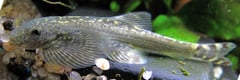
Hemimyzon formosanus
Balitoridae · Boulenger, 1894
Hemimyzon formosanus is a balitorid loach endemic to Taiwan, most abundant in rivers draining the western slopes of the Central Mountain Range. Current knowledge suggests it is the most widely distributed of the three Hemimyzon species endemic to the island. It lives in shallow, fast-flowing, highly oxygenated headwaters and needs clean, well-oxygenated water, a biologically mature tank with plenty of biofilm, and a tight cover since it can climb glass.
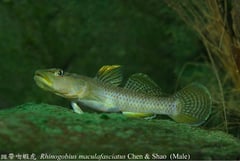
Rhinogobius maculafasciatus
Gobiidae · Chen & Shao, 1996
Rhinogobius maculafasciatus is a small goby known only from certain rivers in southern Taiwan, including the Tzengwen and Kaoping drainages. It has been collected by a few individuals. Fewer scale rows between the first dorsal-fin origin and upper pectoral-fin base than in related Taiwanese species give it a somewhat elongate appearance. Typical habitats are small brooks, tributaries and pools with slow flow over rocks and pebbles.
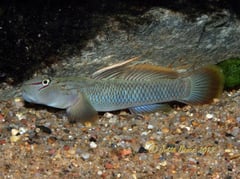
Rhinogobius nantaiensis
Gobiidae · Aonuma & Chen, 1996
Rhinogobius nantaiensis is a goby from Taiwan, officially known only from the Tzengwen and Kaoping river basins in the south of the island. It is normally imported in mixed batches with the near-identical R. candidianus, and is the commoner of the two in the aquarium trade. It does not grow as large, has a more rounded snout, and most specimens have spot-like markings on the sides of the head.
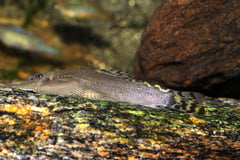
Sinogastromyzon puliensis
Balitoridae · Liang, 1974
Sinogastromyzon puliensis is a hillstream loach endemic to western river drainages of central and southern Taiwan. It is considered endangered across some of its range and has been protected by the Wildlife Conservation Act of Taiwan since 1989, and those in the trade appear to be collected and exported illegally. It lives in riffles and rapids with swift currents.