River
Ventauri
6 profiles across 3 families name the Ventauri as a locality.
- Species
- 6
- Families
- 3
- Photographed
- 6 of 6
- Difficulty rated
- 6 of 6
Shares fishes withspecies recorded from both
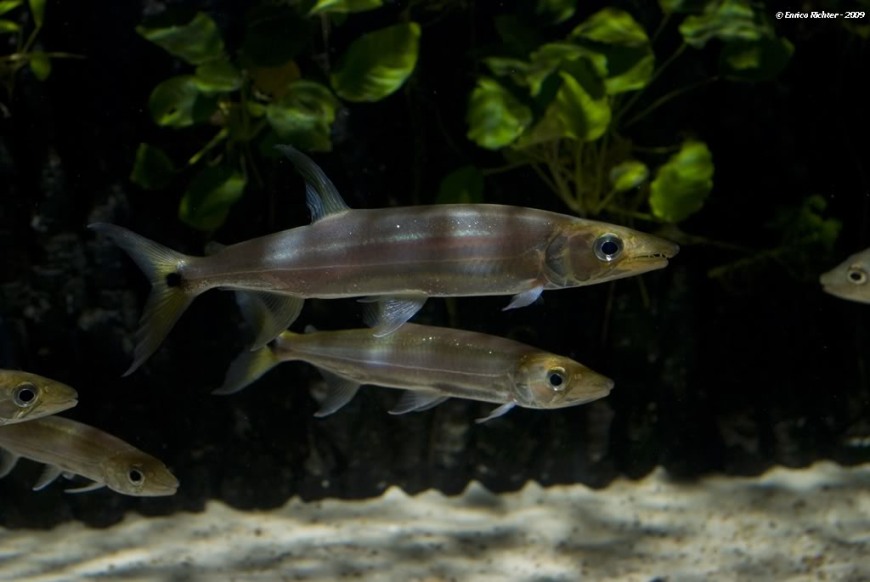
Acestrorhynchus falcirostrisBig-Eyed Cachorro
Acestrorhynchidae · Cuvier, 1819
This species is a member of the putative A. nasutus group of closely-related species within the genus alongside A. nasutus, A. maculipinna and A. isalineae. These are characterised by possession of two dark, longitudinal stripes, one running from the tip of the snout to the base and the other from the posterior edge of the lower maxilla to the underside of the caudal peduncle.
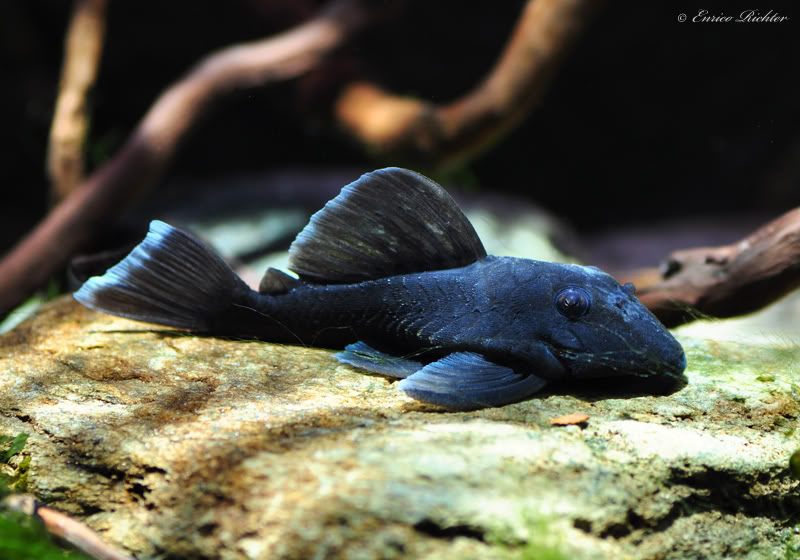
Baryancistrus begginiL239
Loricariidae · Lujan, Arce & Armbruster, 2009
Prior to description this species was traded under the DATZ code L239. It can be distinguished from other species in the genus and other hypostomines (see below for definition of this grouping) by its uniformly black to brownish body and fin colouration with a turquoise to bluish sheen, and the acutely bent shape of midventral body plates 3-5 which form a distinctive keel running along the body, above the pectoral fins...
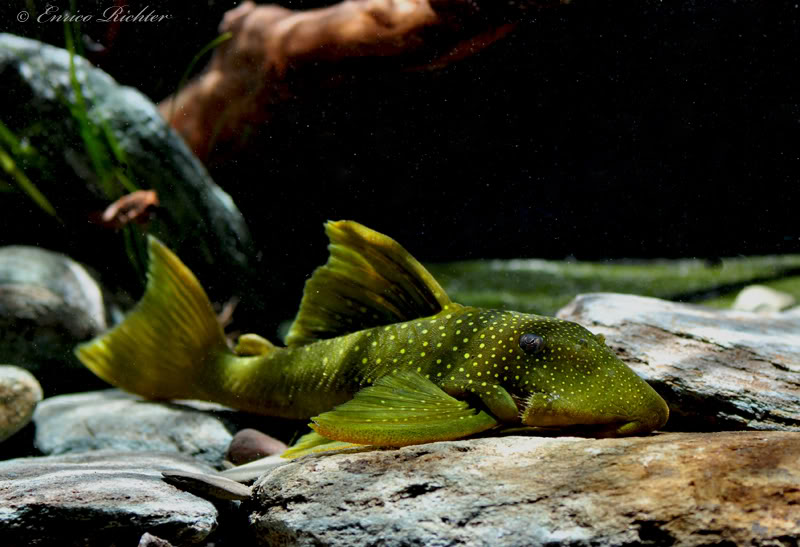
Baryancistrus demantoidesGreen Phantom Pleco
Loricariidae · Werneke, Sabaj Pérez, Lujan & Armbruster, 2005
This species is very similar to Hemiancistrus subviridis in appearance and the two occur sympatrically in nature, although B. demantoides is less common in the aquarium trade. Both have been marketed under the DATZ code L200 with B. demantoides sometimes referred to as 'L200 high-fin' or 'L200a', the former name in reference to its comparatively long dorsal-fin spine (average length in the type series 42.1 mm vs. 34.3 mm in H. subviridis).
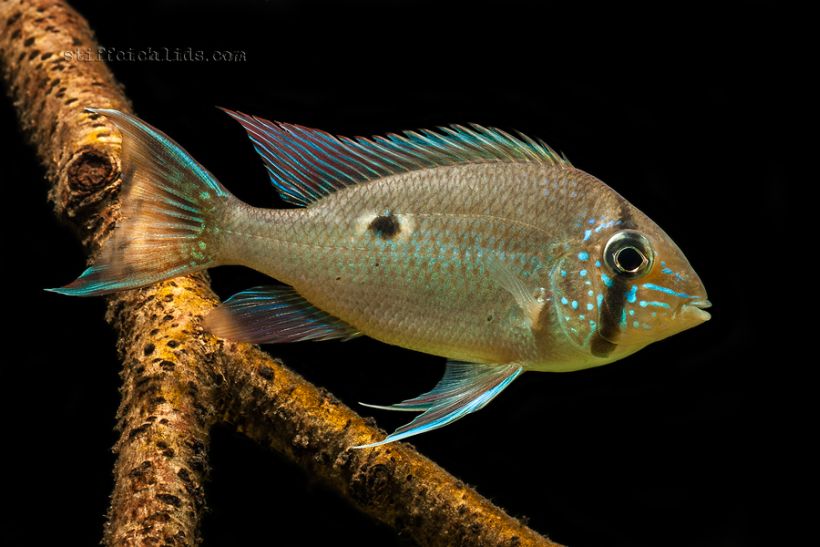
Biotodoma wavriniOrinoco Eartheater
Cichlidae · Gosse, 1963
Populations known in the aquarium trade include 'Cuao', 'Orinoco', 'San Antonio', and 'Sipapo Ventuari'. B. wavrini and its congener B. cupido can be separated by body shape and position of the dark blotch on the posterior portion of the flank. In B. cupido the body is relatively compact and the blotch located above the upper lateral line, whereas in B. wavrini the body is noticeably elongate and the blotch on or below the upper lateral line.
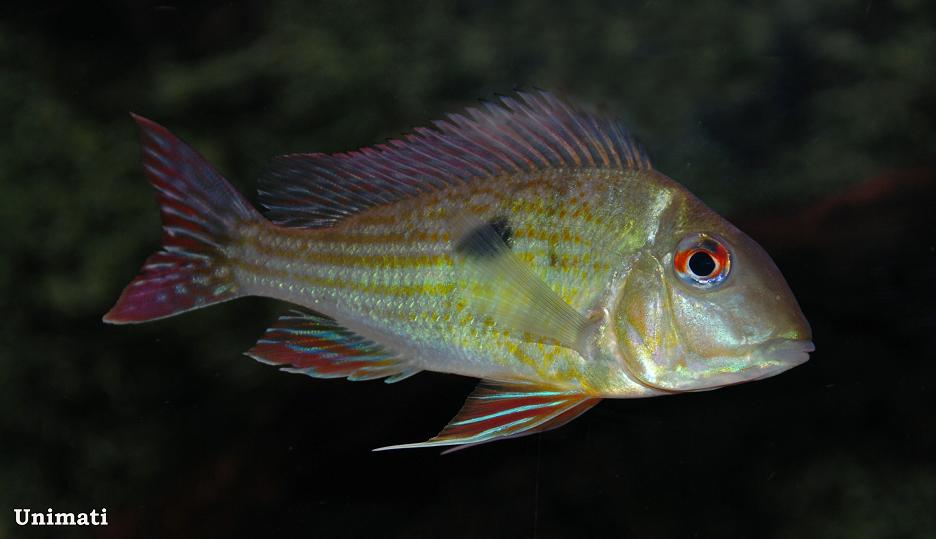
Geophagus abalios
Cichlidae · López-Fernández & Taphorn, 2004
It also occurs in the río Caura on the Guyana Shield plus the Ventauri and Mavaca drainages in the middle and upper Orinoco where it’s also known from some white water, referring to turbidity rather than turbulence, habitats. To the north its distribution appears limited by the Las Majaguas dam on the Río Cojedes, a tributary of the Apure where a probable introduced population inhabits the res...
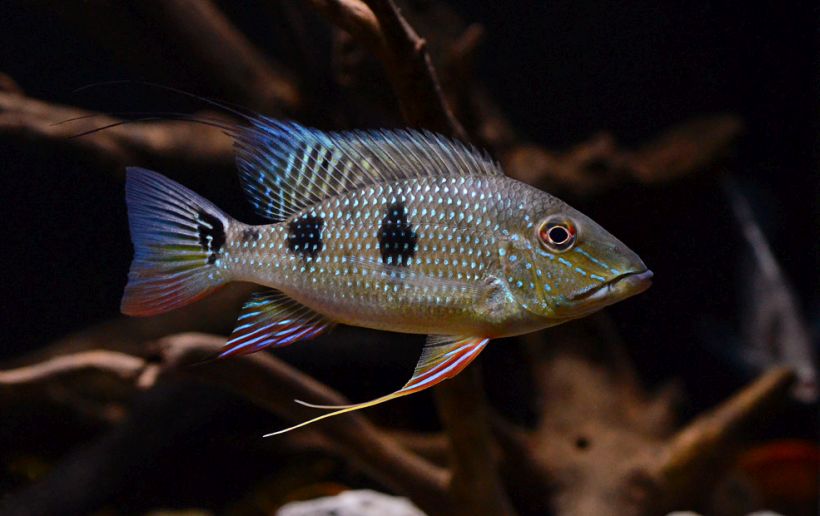
Satanoperca daemonThreespot Eartheater
Cichlidae · Heckel, 1840
S. daemon is relatively common in the aquarium trade but is by no means easy to maintain, with particular attention to space, diet, water quality, and chemistry required in order for it to thrive. It can be distinguished from other members of the genus by possessing two dark blotches on the flank and a prominent ocellus at the caudal-fin base. Among the named species it is most similar to...