Results for “pre-”
Type a name: scientific, common, or one a species used to go by. Or narrow the catalogue with the filters.
Filters
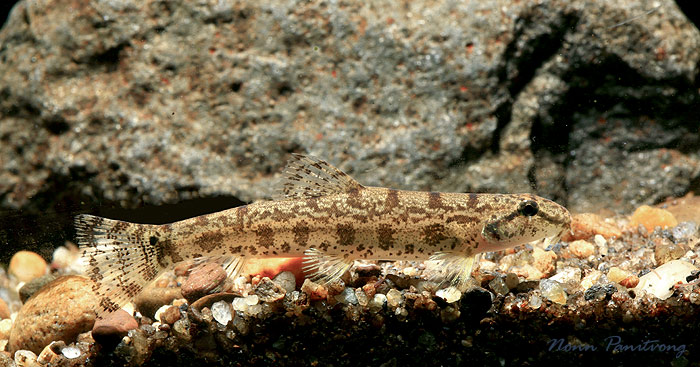
Lepidocephalichthys micropogon
Blyth, 1860
Max length55mm SL2.2in SLTank60 × 30cm24 × 12inTemp20–25°C68–77°FpH6.0–7.5According to Kottelat (2012) L. manipurensis Arunkumar, 2000, which was described from Moreh, Manipur state, northeastern India, close to the border with Myanmar, is a syonym of L. micropogon. Havird and Page (2010) differentiate the two based on caudal-fin patterning, predorsal length and ver...
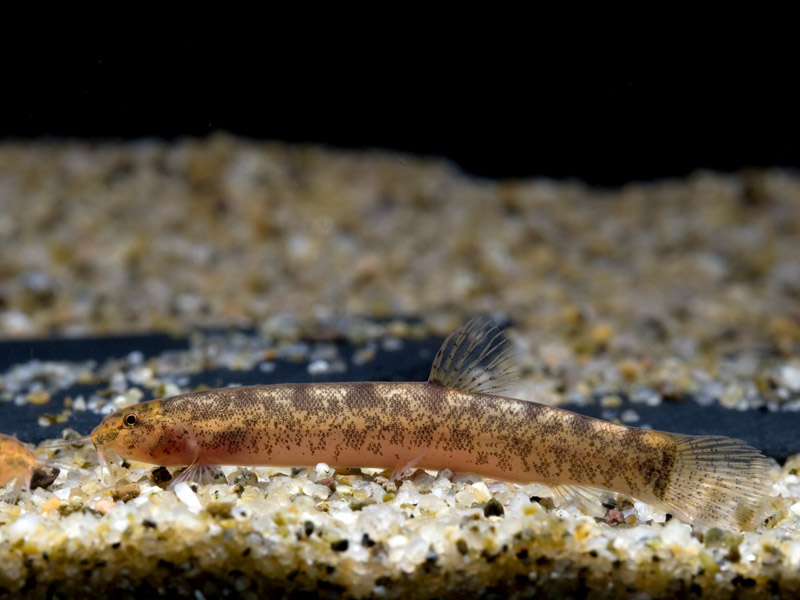
Lepidocephalichthys tomaculum
Kottelat & Lim, 1992
Max length39mm SL1.5in SLTank45 × 30cm18 × 12inTemp23–29°C73–84°FpH3.5–7.0This species is not traded often but may be available occasionally bycatch among shipments of other species. It can be told apart from congeners most easily by the following combination of characters: truncate caudal-fin; scaleless patch on top of head; caudal-fin with reticulated patterning, sometimes appearing as a series of thin vertical bars; body reddish brown with darker markings; 3-7 predorsal and 3-6 postdorsal thin, transverse dark bars running across the dorsal surface; relatively deep...
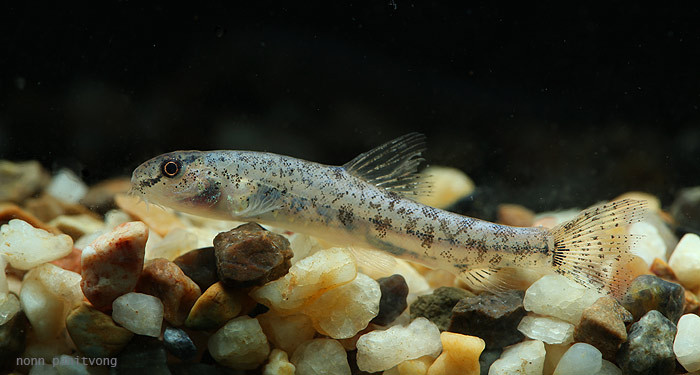
Lepidocephalichthys zeppelini
Havird & Tangjitjaroen, 2010
Max length26mm SL1.0in SLTank45 × 30cm18 × 12inTemp20–26°C68–79°FpH6.0–7.5The type locality consisted of remnant ephemeral pools in otherwise dry agricultural land, and many adults were collected from such habitats. Other species present included the congener L. hasselti plus members of Anabas, 'Puntius', Rasbora, Channa, and Hampala.
Leporacanthicus galaxiasGalaxy Plec
authority not recorded
Max length250mm SL10in SLTank120 × 45cm48 × 18inTemp22–26°C72–79°FpH5.6–7.0A very stylish looking plec, L. galaxias can also be seen for sale as the vampire or tusken plec. Both these names relate to features of morphology that are shared by all members of the genus. The latter arose from the presence of a characteristic growth on the head of the fish. The vampire moniker, meanwhile, is derived from the unique upper jaw dentition, consisting of, you guessed it, two large teeth or "fangs". The exact use for these is unknown, but they're probably utilised ...
Leporacanthicus heterodonGolden Vampire Plec
authority not recorded
Max length100mm SL3.9in SLTank120 × 30cm48 × 12inTemp22–26°C72–79°FpH6.0–7.0The vampire part of the common name is derived from the unique upper jaw dentition exhibited by members of this genus, consisting of, you guessed it, two large teeth or "fangs". The exact use for these is unknown, but they're probably utilised to grip prey items such as snails or other aquatic invertebrates in some way. When buying one of these (or any Loricariid), be sure to check the fish has a rounded belly and that its eyes aren't sunken, as these are classic signs of ema...
Leporacanthicus joselimaiSultan Plec
authority not recorded
Max length150mm SL6in SLTank120 × 30cm48 × 12inTemp25–27°C77–81°FpH6.0–7.5Leporacanthicus species are commonly referred to as "vampire plecs". This is derived from the unique upper jaw dentition exhibited by members of this genus, unsurprisingly consisting of two large teeth or "fangs". The exact use for these is unknown, but they're probably utilised to grip prey items such as snails or other aquatic invertebrates in some way. Another feature shared by all Leporacanthicus is a small bony growth of unknown use on top of the head. This particul...
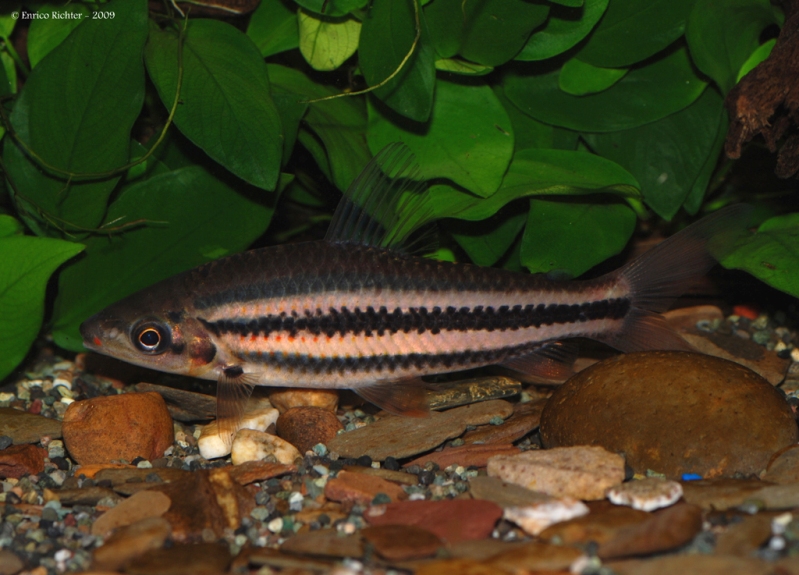
Leporinus arcusLipstick Leporinus
Eigenmann, 1912
Max length300mm SL12in SLTank210 × 60cm84 × 24inTemp20–28°C68–82°FpH6.0–7.5Type locality is 'Tukeit, Guyana', and this species is known from various river drainages of Venezuela, Guyana, Suriname and French Guiana including the Orinoco, Essequibo, and upper Courantyne (aka Corantijn) basins. Additional records exist from the upper Amazon basin in Guyana, these presumably corresponding to the Takutu river basin, itself part of the upper rio Branco.
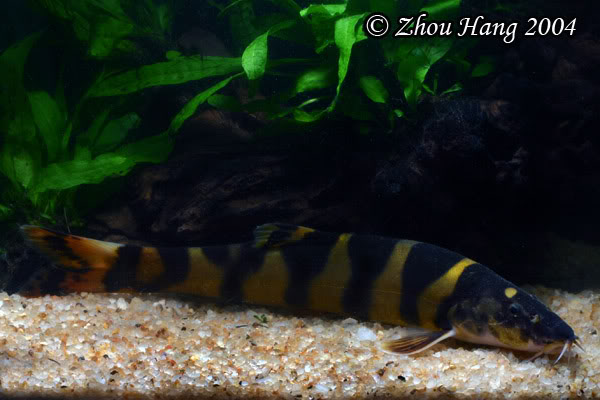
Leptobotia pellegrini
Fang, 1936
Max length200mm SL8in SLTank120 × 45cm48 × 18inTemp20–24°C68–75°FpH6.5–8.0Described from Sichuan province, southwestern China (presumably the upper Yangzte River, aka Chang Jiang, drainage) and also known from parts of the Pearl River (Zhu Jiang) basin in Guangxi Autonomous Region. The latter area is one of the most populous and industrialised in China meaning much of the main river channel is now highly polluted. Its relatively wide distribution probably explains why it's commoner in the aquarium hobby than the similar-looking...
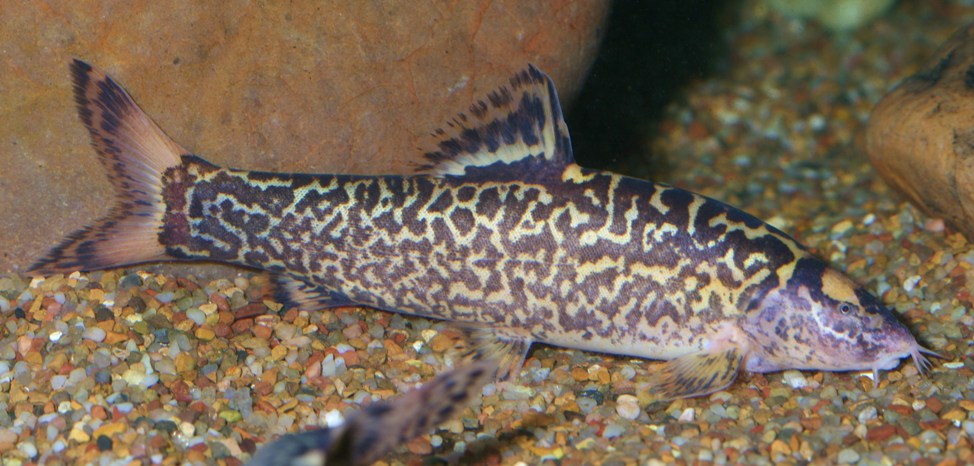
Leptobotia taeniops
Sauvage, 1878
Max length150mm SL6in SLTank120 × 45cm48 × 18inTemp15.5–21°C60–70°FpH6.5–7.5L. taeniops is almost unheard of in the aquarium trade although we know of one or two private collectors maintaining it. It was previously included in the related genus Parabotia. L. elongata is the type species of the genus but according to current thinking there exi...
Leptodoras linnelliElongate Mouse Catfish
authority not recorded
Max length230mm SL9in SLTank120 × 45cm48 × 18inTemp18–22°C64–72°FpH5.8–7.0The genus Leptodoras currently contains 10 species, none of which are particularly well known in the hobby. There is little published information regarding the genus, and its members are seldom exported for the aquatic trade. L. linnelli is no exception, usually only turning up as bycatch among shipments of other species such as Opsodoras leporhinus or Hassar orestis. According to Fishbase, it can be distinguished from all other members of the genus except L. acipenserinus by the presence of...
Liosomadoras oncinusJaguar Catfish
authority not recorded
Max length250mm SL10in SLTank120 × 45cm48 × 18inTemp20–28°C68–82°FpH4.8–7.2Often confused with its congener, L. morrowi, the jaguar cat can be distinguished by its more attractive, brighter patterning and larger adult size. It's an ideal and good looking bottom dweller for the larger community. Previously considered a member of the Doradidae, due to the opercular spines, it has now been reclassified. It occurs over a wide range in nature, hence its apparent tolerance to wildly different water chemistry. In reality, its requirements are determined by collection loc...
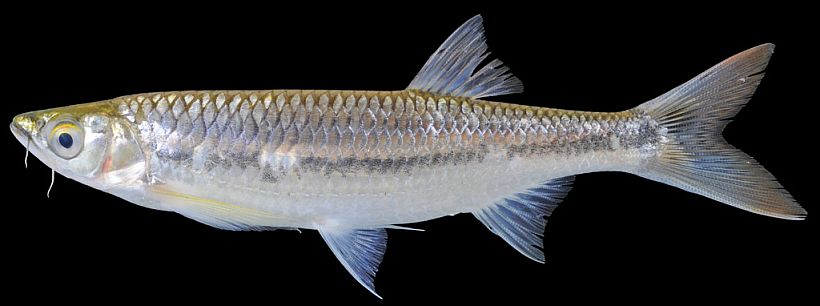
Luciosoma bleekeri
Steindachner, 1878
Max length210mm SL8in SLTank240 × 60cm96 × 24inTemp20–26°C68–79°FpH6.0–8.0L. bleekeri is most-easily distinguished from the congener L. setigerum, with which it is frequently confused, by absence (vs. presence) of a series of black spots on the lateral line scales.
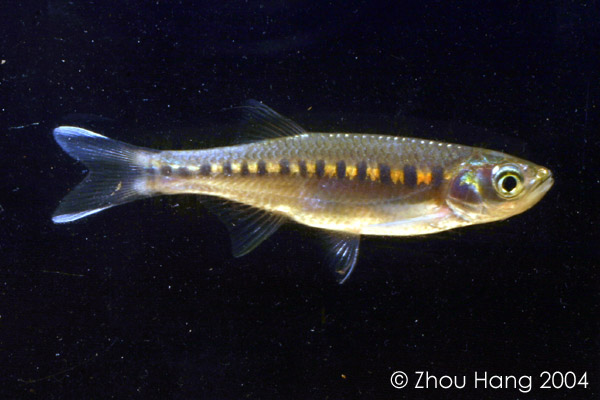
Luciosoma spilopleura
Bleeker, 1855
Max length82mm SL3.2in SLTanknot recordedTempnot recordedpHnot recordedThis species is poorly known in general and is not present in the ornamental trade, although its name is widely misapplied to other Luciosoma species. Its congeners are mostly marketed as 'apollo shark', 'shark minnow', or similar, and often labelled with incorrect scientific names. Identification of the fish pictured here is based on Bleeker (1855, 1860) and Roberts (1989), plus drawings by Bleeker, thus...
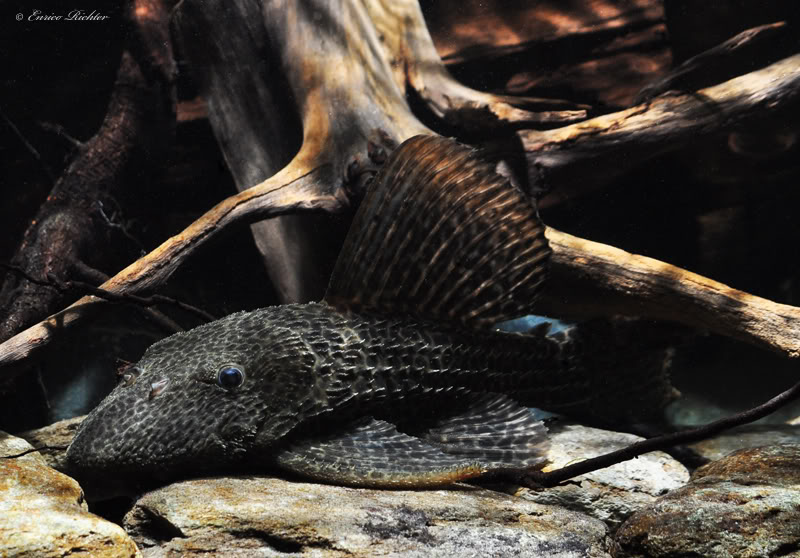
Megalancistrus sp.L234
authority not recorded
Max length600mm SL24in SLTanknot recordedTemp20–30°C68–86°FpH6.0–7.5L234 was previously applied to M. paranus, which has also has the L-number L113 assigned to it. However M. paranus is native to the Paraná, Paraguay and Uruguay drainages, whereas L234 is collected in the rio São Francisco so appears to represent an unidentified species. M. barrae and M. sp. 'LDA097' are also exported from the São Francisco system.
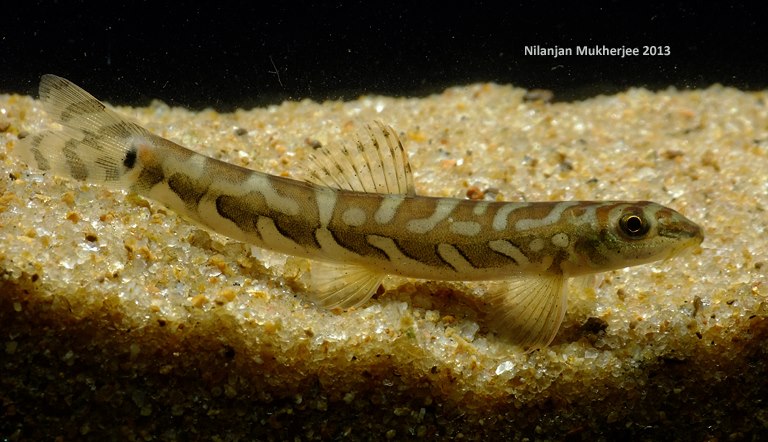
Mesonoemacheilus triangularisZodiac Loach
Day, 1865
Max length60mm SL2.4in SLTank75 × 30cm30 × 12inTemp18–25.5°C64–78°FpH6.0–7.5This species is also referred to by the alternative vernacular name 'Batik loach' and is the most-commonly traded member of the genus at present. It's easily-distinguished from congeners by body patterning which comprises a series of pale, oblique saddle-like markings edged in black and running along the dorsal surface, plus a similar set of bars originating from the otherwise plain ventral surface.
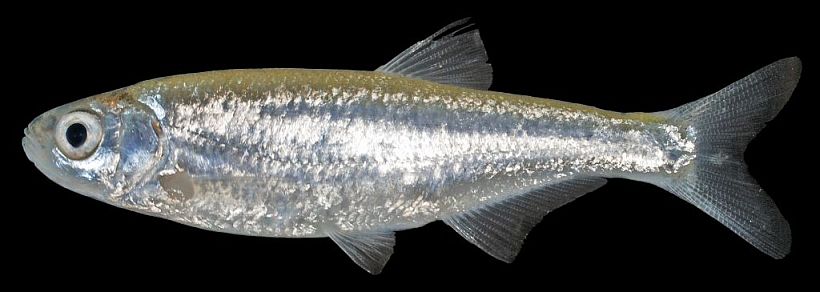
Metzia bounthobi
Shibukawa, Phousavanh, Phongsa & Iwata, 2012
Max length61mm SL2.4in SLTanknot recordedTempnot recordedpHnot recordedThis species can be distinguished from congeners by the following combination of characters: 18–20 (vs. 10-18) branched anal-fin rays; 49–55 (vs. 35-48) lateral-line scale rows; 33–36 (vs. 15-20) predorsal sca...
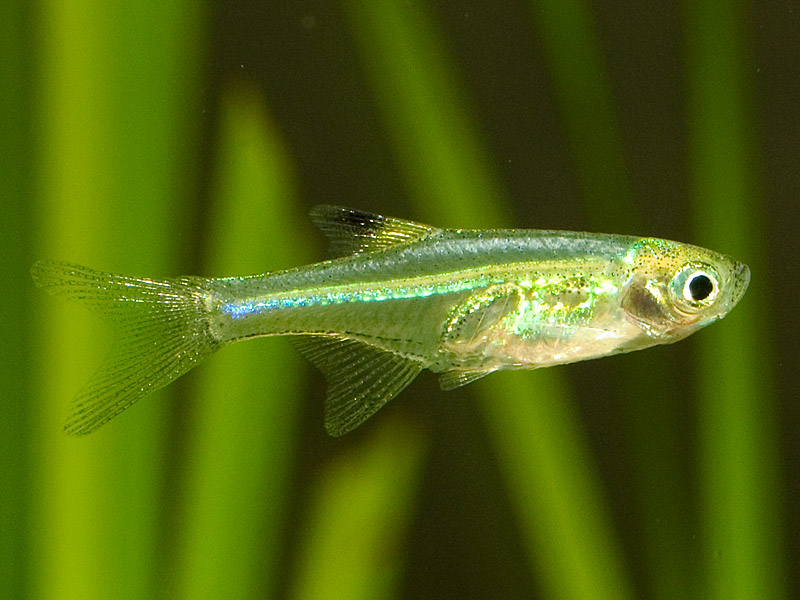
Microdevario nanus
Kottelat & Witte, 1999
Max length16mm SL0.6in SLTank45 × 30cm18 × 12inTemp20–27°C68–81°FpH6.0–7.5Towards the Andaman Sea the lower part of the delta gives way to brackish mangrove swamps. The climate is wet, with annual precipitati0n of 1500 - 2500 mm, up to 90% of which falls between mid May and mid November, and warm with average air temperatures of 22 - 37 °C over the course of the year. At one locality M. nanus was collected in less then 30cm of water from an oxbow lake among floating Pistia-like vegetation and gra...
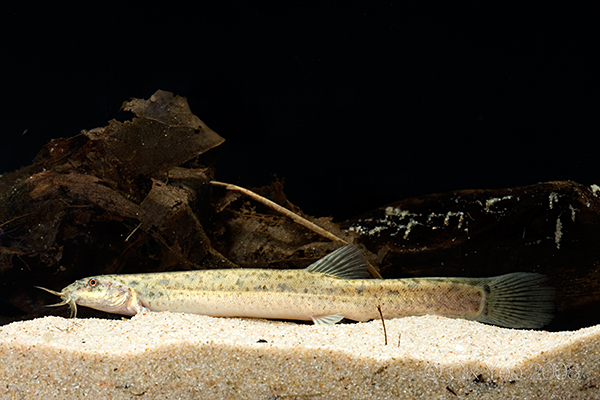
Misgurnus anguillicaudatusOriental Weather Loach
authority not recorded
Max length280mm SL11in SLTank120 × 45cm48 × 18inTempnot recordedpH6.0–8.0An exceptionally hardy and adaptable species tolerant of a wide range of physiological variables and flexible of diet, factors which have allowed it to become established as an alien species around the globe. Its high reproductive potential and low vulnerability to predation have made it a cause for concern to conservation scientists although as yet there remains no proof of it exerting a negative effect on native fishes in countries outside its natural range.
Mogurnda adspersaSouthern Purple Spotted Gudgeon
authority not recorded
Max length140mm SL6in SLTank120 × 30cm48 × 12inTemp16–24°C61–75°FpH7.0–7.5This species is considered endangered across its native range, but has recently begun to appear in the hobby a little more often as a result of commercial farming. It's still by no means common though. Superficially it looks very similar to the much commoner Northern purple spotted gudgeon (Mogurnda mogurnda), but can be distinguished by the presence of only 30-36 scales along its lateral line, (as opposed to 37-48 in M. mogurnda), and a higher degree of red spotting in the second dorsal fi...
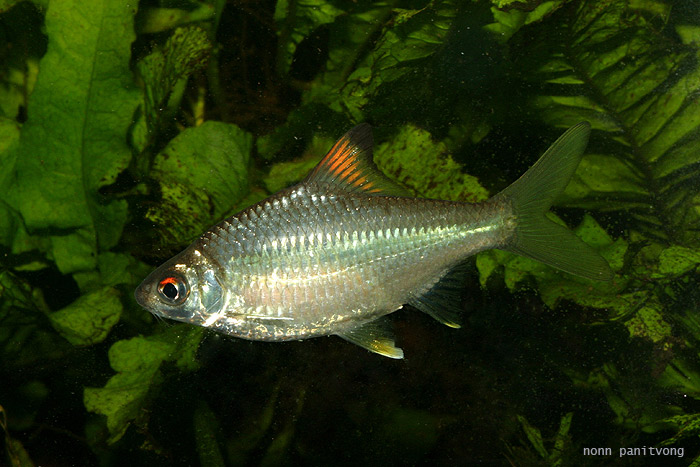
Mystacoleucus argenteus
Day, 1888
Max length140mm SL6in SLTank120 × 45cm48 × 18inTemp20–27°C68–81°FpH6.0–7.5All Mystacoleucus species possess a procumbent predorsal spine orientated towards the head, though it can be difficult to spot with the naked eye. This can become entangled in an aquarium net so care must be taken when handling the fish. The trait is shared by members of Tor, Spinibarbus and Paraspinibarbus although there exists no strong evidence to suggest that these genera form a monophyletic lineage and it is...