Results for “sp.”
Type a name: scientific, common, or one a species used to go by. Or narrow the catalogue with the filters.
Filters
Macrognathus zebrinusZebra Spiny Eel
authority not recorded
Matched on the common name Zebra Spiny Eel
Max length460mm SL18in SLTank120 × 45cm48 × 18inTemp23–26°C73–79°FpH6.5–7.5One of the newer and prettier spiny eels in the hobby, M. zebrinus was previously considered a member of the closely related Mastacembelus genus. Care should be exercised when handling spiny eels, as the common name is derived from the sharp dorsal rays that can easily puncture the skin of a human....
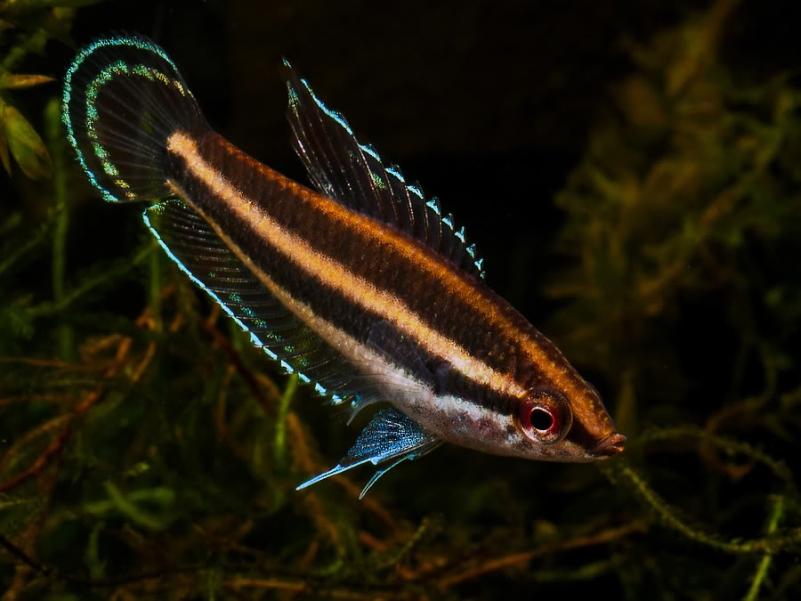
Parosphromenus sp. 'Sentang'
authority not recorded
Max length35mm SL1.4in SLTank40 × 20cm16 × 8inTemp22–28°C72–82°FpH3.0–6.5This fish has been widely available in the aquarium trade in recent years and is sometime referred to by the invented name P. 'sintangensis'. It displays a close resemblance to P. bintan and another unidentified fish known to aquarists as P. sp. 'blue line' although the inner bluish bands in the dorsal, anal and caudal fins are perhaps a little narrower in P. sp. 'Sentang' than the other two.
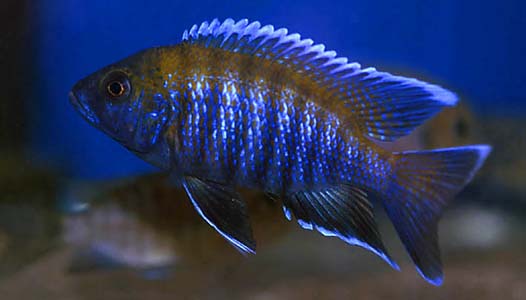
Aulonocara sp. 'walteri'Blue-faced Peacock
authority not recorded
Max length130mm SL5in SLTank120 × 45cm48 × 18inTemp25–29°C77–84°FpH7.5–9.0This fish has been known in the aquarium hobby for a number of years but remains undescribed to science despite the confusing trade name which has resulted in it often being referred to incorrectly as 'Aulonocara walteri'. It's known only from Chizumulu Island and Likoma Island in Lake Malawi, both located off the eastern shoreline of the central part of the lake (Mozambique). There is a similar-looking, potentially conspecific, fish which can be found between the coastal settlements of Meponda (Mozambique) and Ntekete (Malawi) further south, and has been referred to A. sp. 'trematocranus masinje'.
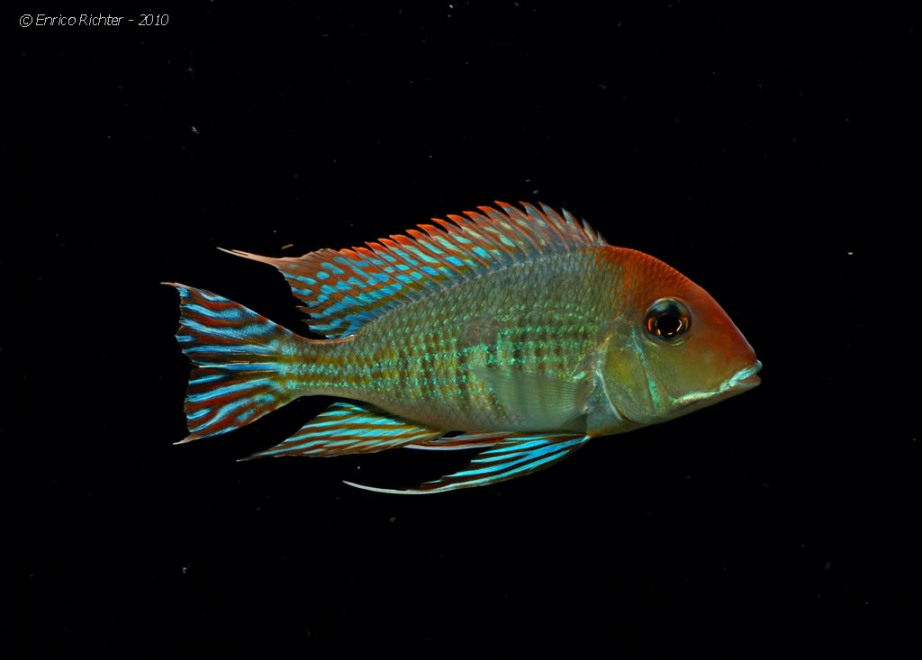
Geophagus sp. 'orange head'
authority not recorded
Max length250mm SL10in SLTank180 × 60cm72 × 24inTemp26–30°C79–86°FpH4.5–7.5There are at least two variants available one of which is often traded as G.sp. 'Araguaia orange head'. This is misleading since both are endemic to the Tapajós drainage (see 'Distribution'), and appears to date back to an error in collection locality when the fish were first exported. The two differ in the extent of orange colouration on the head which extends onto the opercle in G. sp. 'orange head (rio Arapiuns form) but is mostly restricted to the area above the ey...
Iodotropheus sprengeraeRusty Cichlid
authority not recorded
Max length100mm SL3.9in SLTank90 × 30cm36 × 12inTemp25–29°C77–84°FpH7.5–8.8This lovely dwarf mbuna makes a great choice for newcomers to Mbuna due to its temperament, subdued but unique colouration and the fact it can be kept in smaller tanks. Iodotropheus is the only genus of Mbuna which has a very limited distribution within Lake Malawi, with its three (possibly two; the validity of I. declivitas is disputed by some experts) members being restricted to the south eastern arm of the lake. I. sprengerae is sometimes confused with certain populations of the similar looki...
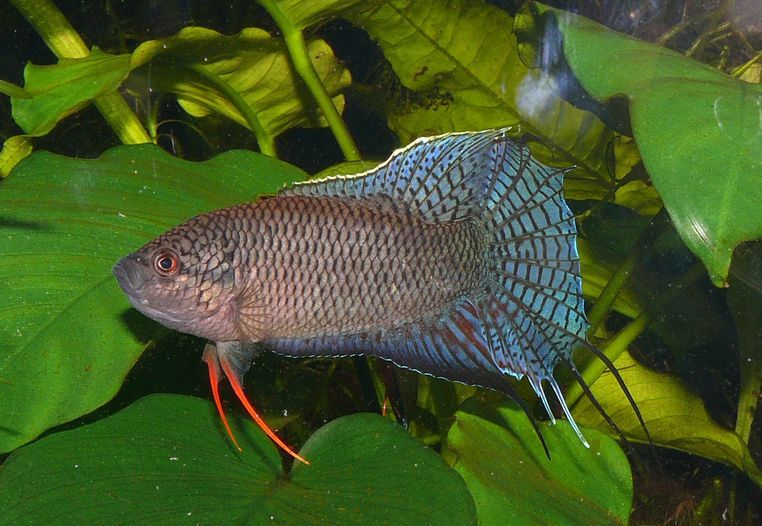
Macropodus spechtiBlack Paradise Fish
Schreitmüller, 1936
Matched on Macropodus opercularis var. spechti, a name it was formerly known by
Max length80mm SL3.1in SLTank80 × 30cm31 × 12inTemp20–30°C68–86°FpH6.0–8.0M. spechti is also sometimes referred to as M. concolor, particularly in older literature. A dispute regarding conservation of that name was resolved by the ICZN in 2006, however, since M. concolor Ahl, 1937 is a junior primary homonym of M. concolor Schreitmüller, 1936 and thus permanently invalid.
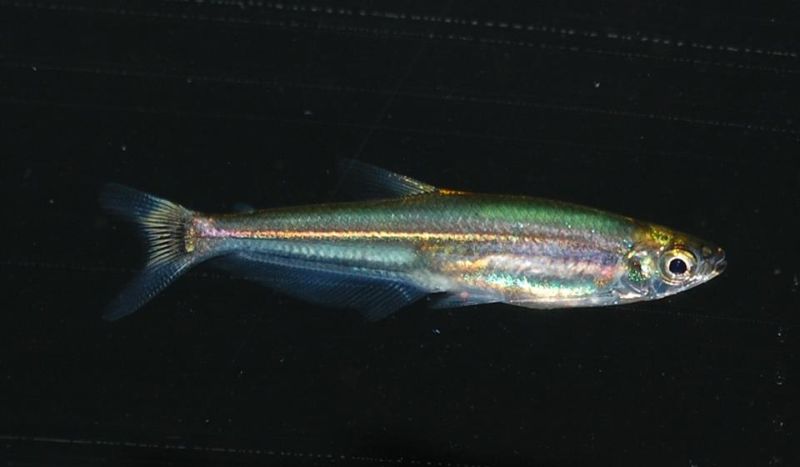
Iguanodectes spilurusGreen Line Lizard Tetra
Günther, 1864
Matched on Piabuca spilurus, a name it was formerly known by
Max length102mm SL4in SLTank120 × 45cm48 × 18inTemp20–28°C68–82°FpH5.0–7.5Widely-distributed throughout the Amazon, Orinoco, Essequibo, and Tocantins river systems in Brazil, Peru, Bolivia, Ecuador, Colombia, Venezuela, and Guyana. Type locality is 'Rio Cupai [= Rio Cupari], Rio Tapajós basin, Amazon River drainage, Pará State, Brazil'.
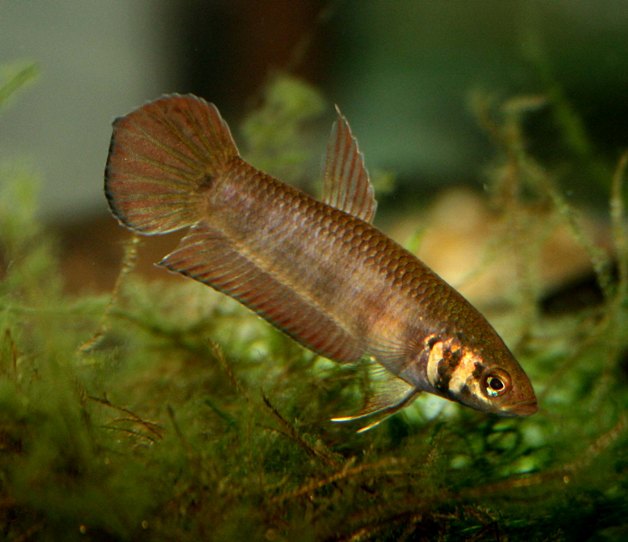
Betta mandor
Tan & Ng, 2006
Max length60mm SL2.4in SLTank60 × 30cm24 × 12inTemp22–27°C72–81°FpH4.0–6.5This species was known as B. sp. 'Mandor' or B. sp. 'ninja' prior to official description. It belongs to the Betta foerschi group/complex of closely-related species within the genus, of which members share the following set of characters: possession of iridescent blue or green unpaired fins; rays and interradial membranes in unpaired fins not contrasting; dorsal fin with thin, bright white distal band; opercle with two, reddish-yellow, vertical bars. Members are regarded as being closely-related to bubble-nesting Betta species since they share exhibit certain similarities in morp...
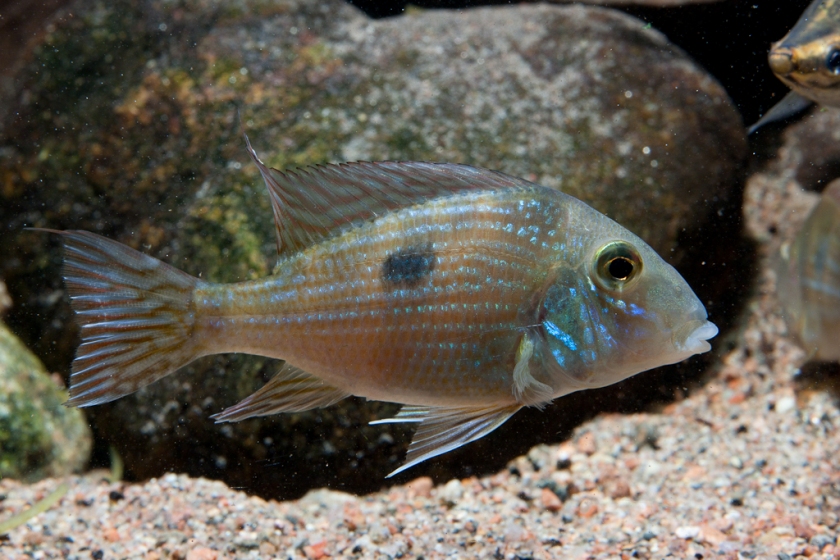
Geophagus parnaibae
Staeck & Schindler, 2006
Max length120mm SL5in SLTank100 × 45cm39 × 18inTemp24–31°C75–88°FpH6.5–7.6Although only described in 2006 this species has been known in the hobby since at least 1988 when it was imported to Germany and traded as G. sp. 'Parnaíba'. An undescribed species from the rio Pindaré in Maranhão state usually sold as G. sp. 'Pindaré' is sometimes labelled G. sp. 'Pindaré' (Parnaíba) which has resulted in some confusion but the two do not occur sympatrically and are totally distinct from one another.
Melanotaenia australisWestern rainbowfish
authority not recorded
Max length120mm SL5in SLTank120 × 30cm48 × 12inTemp22–27°C72–81°FpH6.5–8.0This species was formerly classified as part of the Melanotaenia splendida complex, but more recent research into the genetics of the species has shown that not only is M. australis genetically dissimilar to the splendida group, but also that there are 2 clear lineages within australis This may yet result in another official member of the genus. M. australis exhibits a wide variation in colour and patterning depending on locality, and is probably the commonest rainbowfish species in Australi...
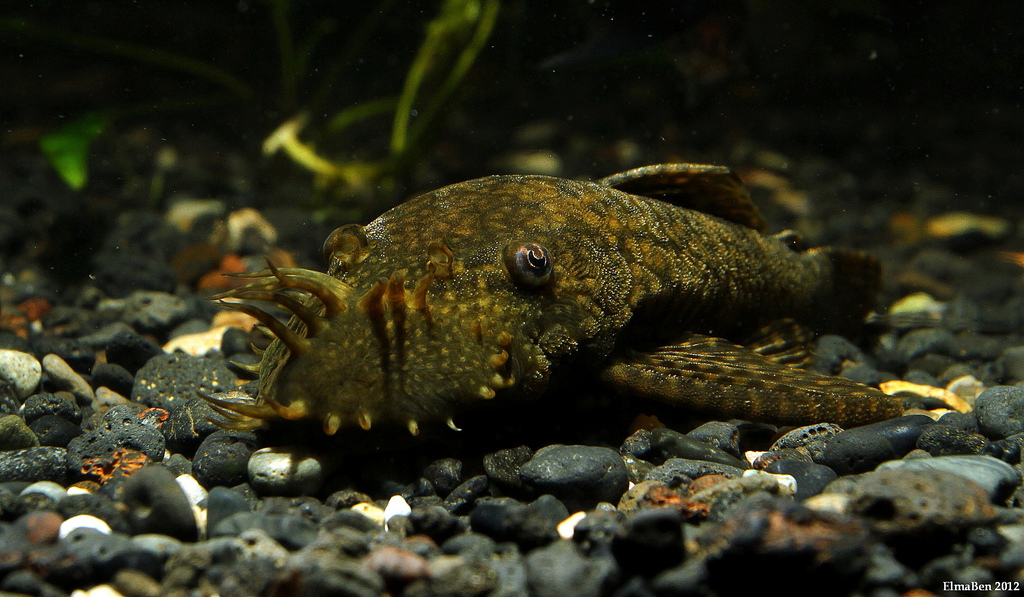
Ancistrus sp. '3'Common Bristlenose Catfish
authority not recorded
Max length125mm SL5in SLTank60 × 30cm24 × 12inTemp21–26°C70–79°FpH5.5–7.5This is the ubiquitous 'bristlenose' catfish in the aquarium hobby and is bred commerically on a large scale although it's precise origin is unknown with some of the opinion that it may be a hybrid. Several line-bred ornamental varieties exist, including piebald, albino and long-finned forms of both the standard and albino fish, of which long-finned fish are sometimes sold as 'butterfly' or 'veiltail' catfish.
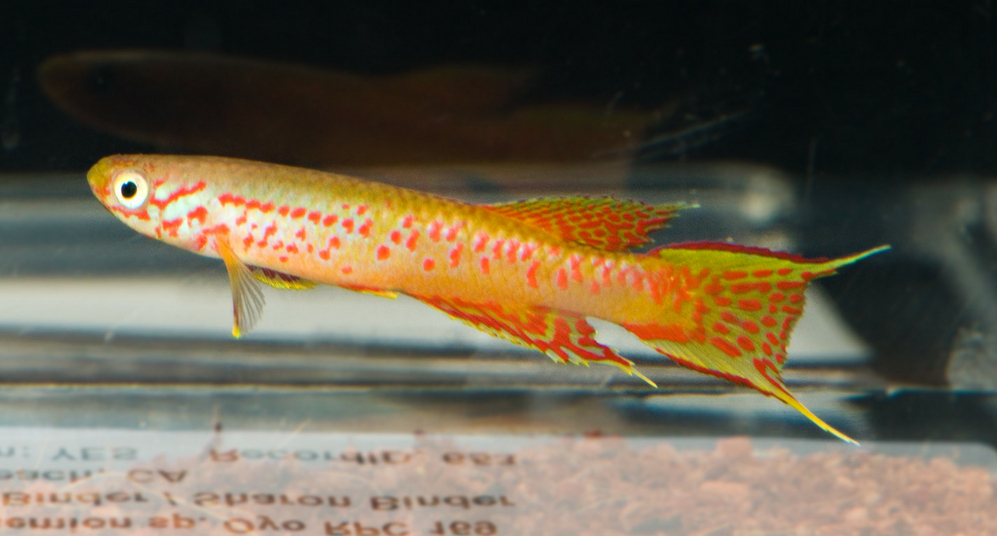
Aphyosemion sp. 'Oyo' RPC 91/8
authority not recorded
Max length50mm SL2.0in SLTank45 × 30cm18 × 12inTemp18–23°C64–73°FpH5.5–7.0This fish may be synonymous with the congener A. castaneum. Collected for the aquarium hobby in 1991 from close to the town of Oyo, Cuvette department, Republic of the Congo. The town lies on the Alima River, a right bank tributary of the middle Congo system.
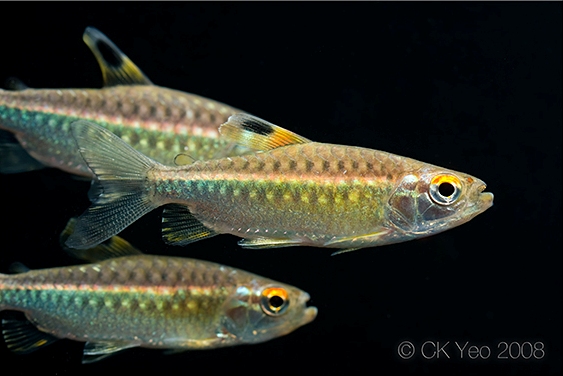
Arnoldichthys spilopterusAfrican Red-eyed Tetra
Boulenger, 1909
Max length100mm SL3.9in SLTank120 × 30cm48 × 12inTemp24–27°C75–81°FpH6.0–7.5Endemic to Nigeria, where it occurs in the Ogun and lower Niger river systems. Despite its popularity in the aquarium hobby it's relatively scarce in the wild and is known from less than 10 localities, all lying in an area where deforestation and pollution are uncontrolled and continue to occur extensively.
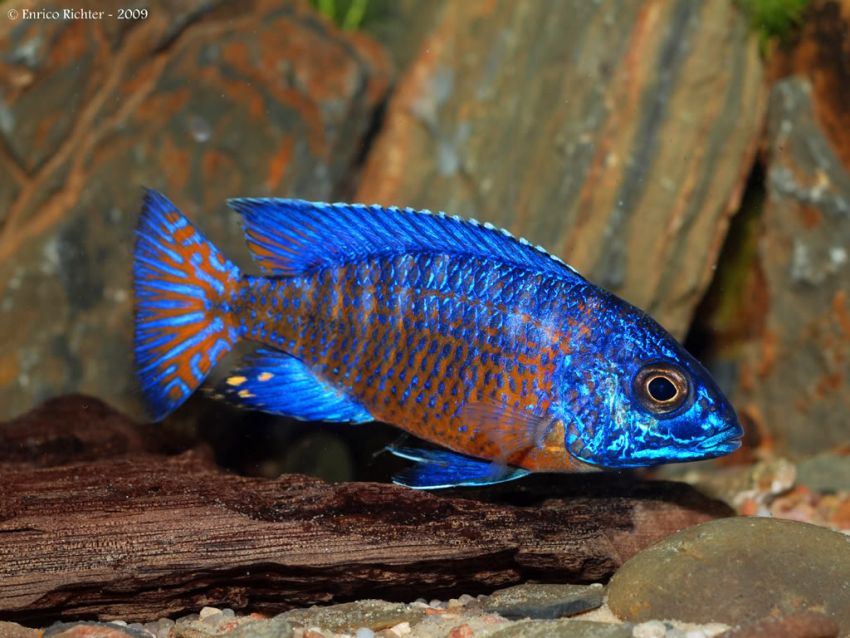
Aulonocara stuartgrantiGrant's Peacock
Meyer & Riehl, 1985
Max length130mm SL5in SLTank120 × 45cm48 × 18inTemp23–29°C73–84°FpH7.5–9.0Males of this species occur in a wide range of colour forms depending on locality, with blue variants being found predominantly (but not exclusively) towards the north of the lake and yellow in the south. This variation, alongside its relatively extensive distribution, has resulted in some taxonomical issues, several of which have not yet been resolved. For example, two forms from the southwest of the lake are referred to as A. sp. "stuartgranti maleri" and A. sp. "stuartgranti mbenji", respectively, and may turn out to be distinct species given their colour patterns an...
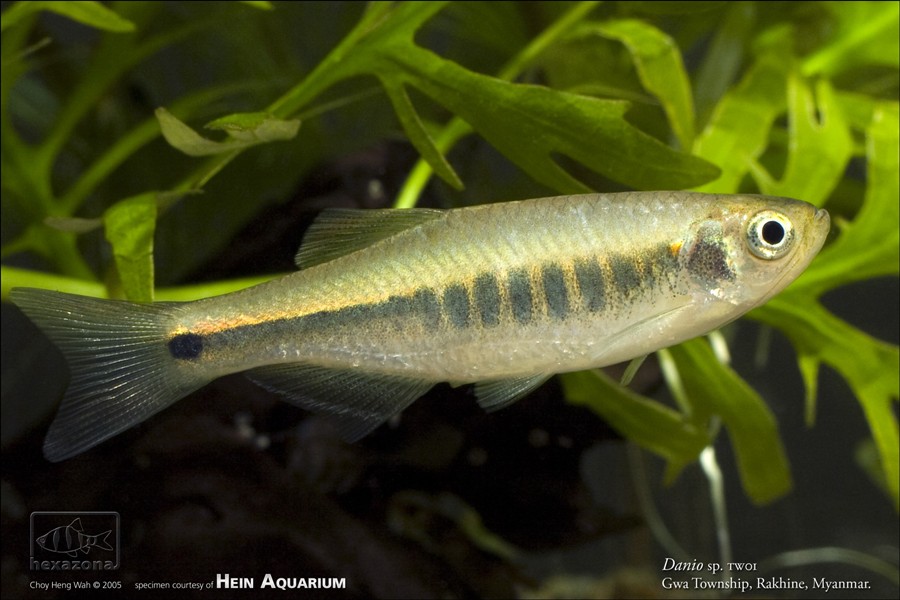
Brachydanio sp. 'TW01'Black-barred 'Danio'
authority not recorded
Max length65mm SL2.6in SLTank120 × 30cm48 × 12inTemp18–26°C64–79°FpH6.0–7.5Apparently discovered close to the coastal town of Gwa in Rakhine State, western Myanmar. Rakhine is largely cut off from the rest of the country by the Rakhine Yoma/Arakan mountains which form a natural barrier along its eastern side. Rakhine is located within a tropical monsoon region and has a pronounced rainy season between May and October, while at other times it can be quite dry. The streams thus swell in depth by a metre or mo...
Caecomastacembelus albomaculatus
authority not recorded
Max length220mm SL9in SLTank120 × 30cm48 × 12inTemp23–27°C73–81°FpH8.0–9.5This is a great oddball species for the Tanganyikan community tank, although it is not as attractive as the closely related Aethiomastacembelus ellipsifer. It is rarely seen in the hobby. The species in the family Mastacembelidae are known as "spiny" eels because the dorsal rays are stiffened. Care must therefore be exercised when handling them to avoid injuries. Spiny eels also have no swim bladder, an adaptation to their benthic lifestyle....
Caecomastacembelus plagiostomus
authority not recorded
Max length300mm SL12in SLTank120 × 45cm48 × 18inTemp23–27°C73–81°FpH8.0–9.5Very rarely seen in the hobby, this species makes an interesting oddball addition to the Tanganyikan community tank. The species in the family Mastacembelidae are known as "spiny" eels because the dorsal rays are stiffened. Care must therefore be exercised when handling them to avoid injuries. Spiny eels also have no swim bladder, an adaptation to their benthic lifestyle.....
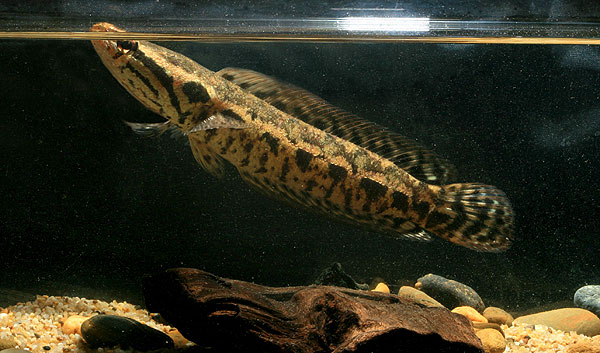
Channa luciusForest Snakehead
Cuvier, 1831
Matched on Ophicephalus spiritalis, a name it was formerly known by
Max length400mm SL16in SLTank150 × 60cm60 × 24inTemp20–30°C68–86°FpH5.0–7.5Prefers a dimly-lit aquarium with plenty of cover in the form of live plants, driftwood branches, terracotta pipes, plant pots, etc., arranged to form a network of nooks, crannies, and shaded spots. Surface vegetation such as Ceratopteris spp. is also appreciated and makes the fish less inclined to conceal themselves.
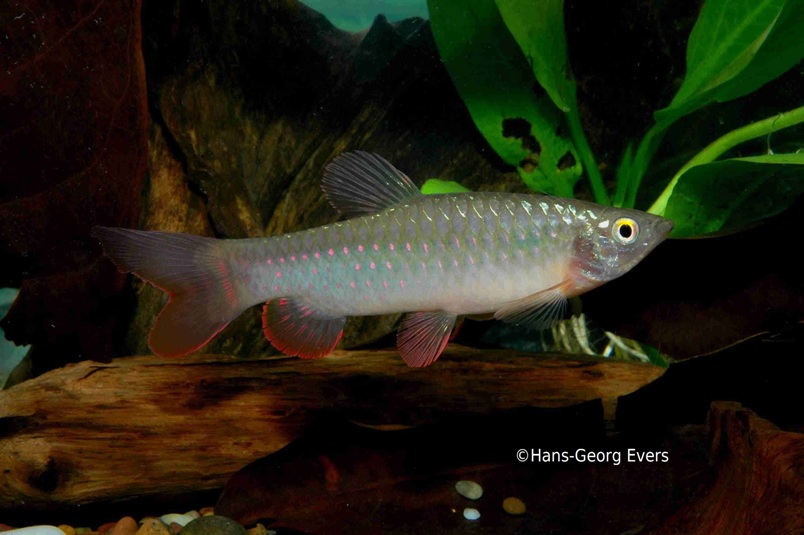
Copeina guttataRed-spotted Tetra
Steindachner, 1876
Matched on the common name Red-spotted Tetra
Max length76mm SL3.0in SLTank120 × 30cm48 × 12inTemp20–28°C68–82°FpH4.0–7.5Known from the middle and upper Amazon river basins in Brazil, Peru, Ecuador and Colombia. Type locality is 'Amazon River at Obidos, Cudajas, and Tabatinga; Rio Negro, Brazil.' It apparently practises an interesting reproductive strategy in which the eggs are deposited in a shallow depression excavated from the substrate and guarded by the male.
Crenicichla albopunctataWhite-spotted Pike Cichlid
authority not recorded
Matched on the common name White-spotted Pike Cichlid
Max length200mm SL8in SLTank120 × 38cm48 × 15inTemp24–27°C75–81°FpH6.0–7.0Crenicichla albopunctata