Results for “fin”
Type a name: scientific, common, or one a species used to go by. Or narrow the catalogue with the filters.
Filters
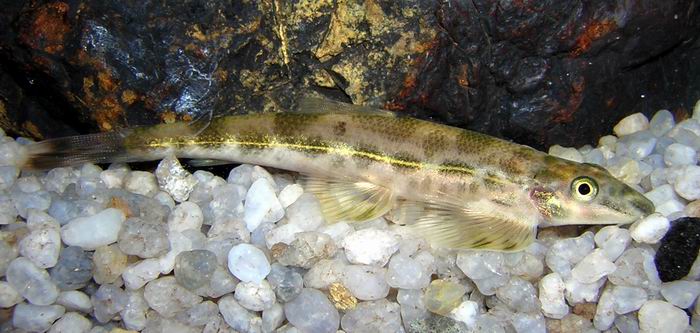
Homalopteroides stephensoni
Hora, 1932
Max length65mm SL2.6in SLTank60 × 30cm24 × 12inTemp20–25.5°C68–78°FpH6.0–7.5Tan (2009) redescribed H. stephensoni and it possesses the following unique character set: sub-inferior mouth with thin barbels; five principle, 12-13 secondary pectoral fin rays (usually 12); scaleless belly; pattern of keeled scales on anterior, dorsal portion of body consisting of a single central keel in the posterior third of each scale; 43-50 lateral line...
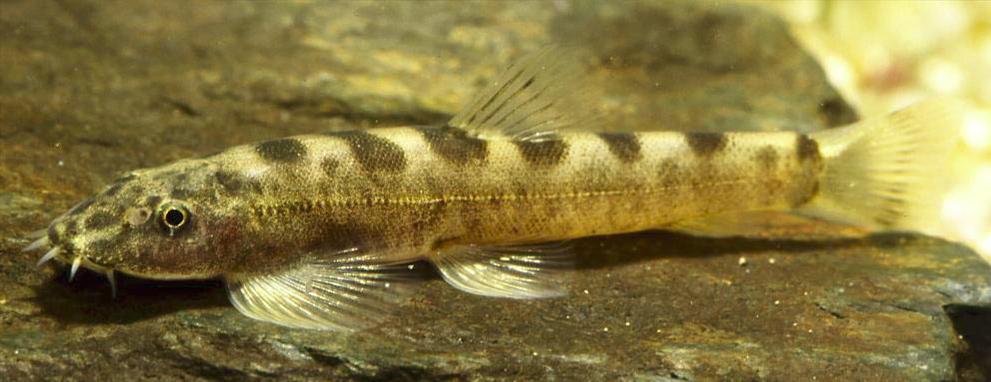
Homalopterula ripleyi
Fowler, 1940
Max length59mm SL2.3in SLTank80 × 30cm31 × 12inTemp20–25.5°C68–78°FpH6.0–7.5Fowler (1940) described this species as the unique member of his new genus Homalopterula on the basis of a single specimen, separated from related genera by the curved shape of the jaws, truncate caudal-fin and scaleless ventral surface.
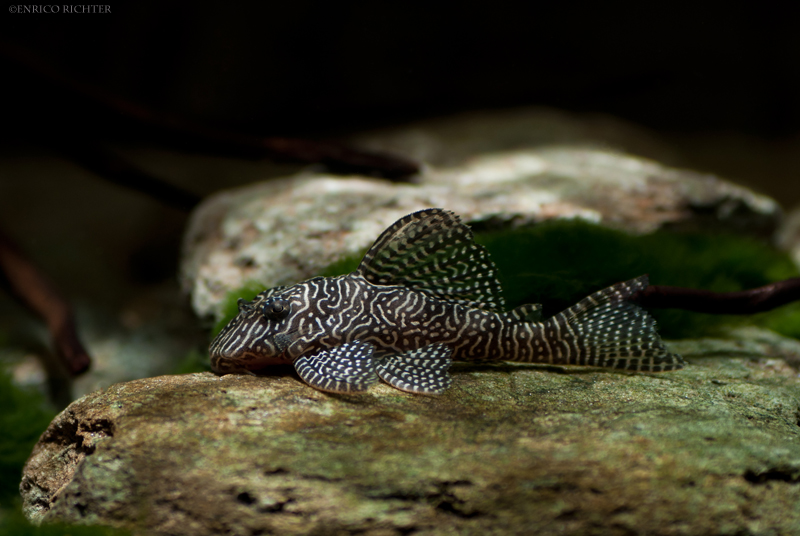
Hypancistrus sp.L260
authority not recorded
Max length90mm SL3.5in SLTank90 × 30cm36 × 12inTemp24–30°C75–86°FpH5.5–7.5A similar-looking, larger form from the rio Jarí, which enters the Amazon from the opposite bank a few hundred kilometres downstream from the Tapajós has been assigned the code L411. The two can be told apart relatively easily since in L260 the white vermiculations on the body are significantly finer than in L411, in which the black and white components of the colour pattern are of more-or-less equivalent width.
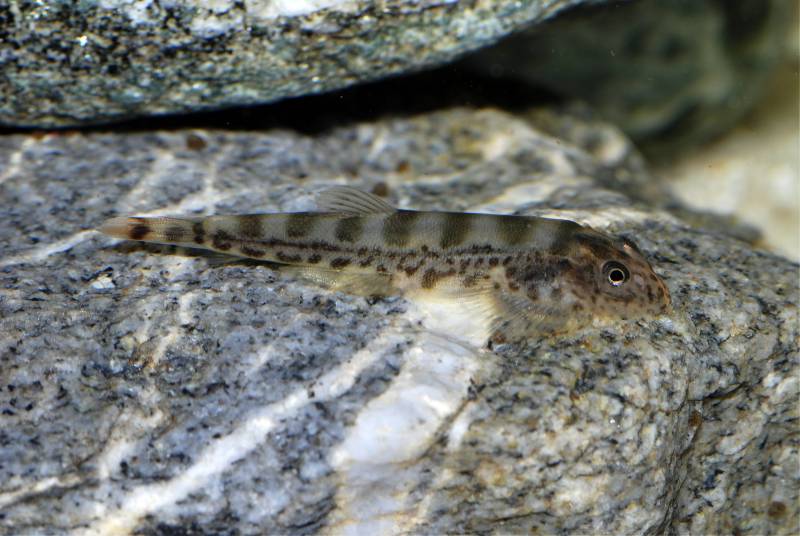
Hypergastromyzon humilis
Roberts, 1989
Max length35mm SL1.4in SLTank45 × 30cm18 × 12inTemp20–24°C68–75°FpH6.0–7.5The differences in pelvic-fin structure and gill openings led Roberts to redefine the genus when describing H. eubranchus, whereas Tan (2006) expressed doubts that the two are even congeneric but was unable to reach a definitive conclusion in the absence of fresh material. At any rate both species can be easily differentiated from Gastromyzon and Neogastromyzon spp. by observing the mo...
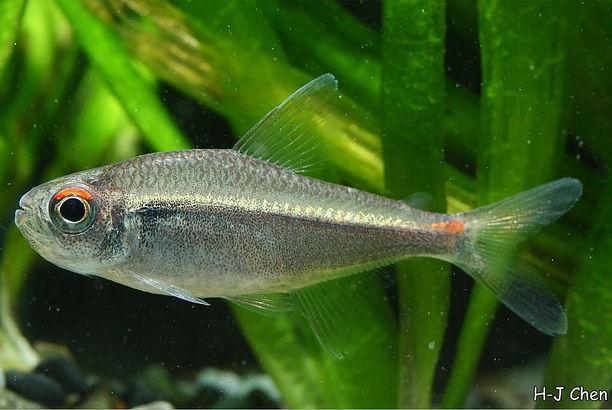
Hyphessobrycon agulha
Fowler, 1913
Max length42mm SL1.7in SLTank80 × 30cm31 × 12inTemp20–28°C68–82°FpH5.5–7.5This species is relatively rare in the aquarium hobby but is occasionally traded as 'red-tailed flag tetra'. It lends its name to the H. aghula group of closely-related species within the genus as proposed by Géry (1977, see below) of which members share the following characters which set them apart from other characids: lower half of the body dark, especially above the anal-fin; usually possessing a laterally-elongate humeral spot, more-or-less united wit...
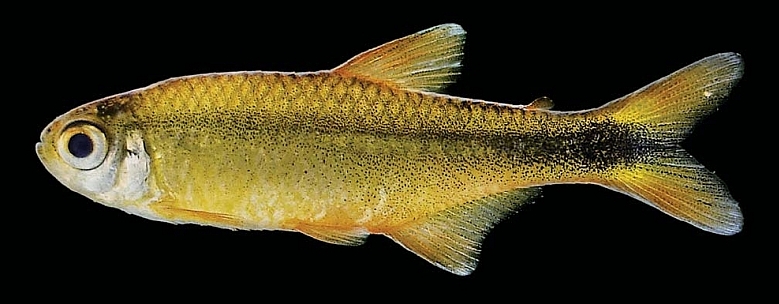
Hyphessobrycon brumado
Zanata & Camelier, 2010
Max length32mm SL1.3in SLTanknot recordedTempnot recordedpHnot recordedThis species superficially resembles the popular silver-tipped tetra, Hasemania nana, but can easily be told apart by presence (vs. absence) of an adipose-fin. It can be told apart from other Hyphessobrycon sp...
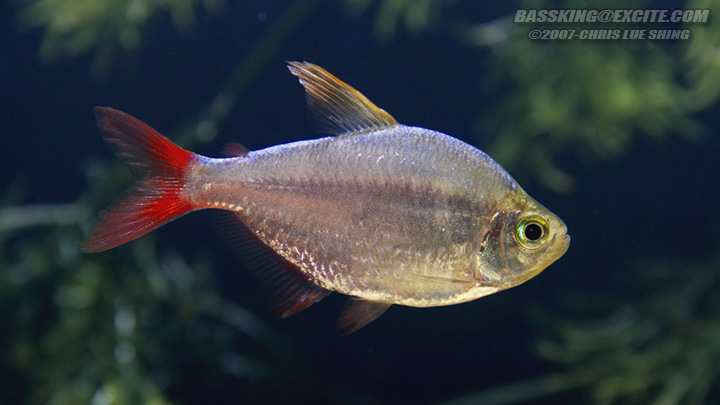
Hyphessobrycon columbianusColombian Tetra
Zarske & Géry, 2002
Max length65mm SL2.6in SLTank90 × 30cm36 × 12inTemp20–28°C68–82°FpH5.0–7.5This species is also traded as 'blue flame', 'blue-red', and 'Colombian red fin' tetra, and was misidentified as H. ecuadorensis for several years prior to its description. Within the genus it appears to be most closely related to the Costa Rica endemic H. savagei Bussing, 1967 but differs in a number of characters as fol...
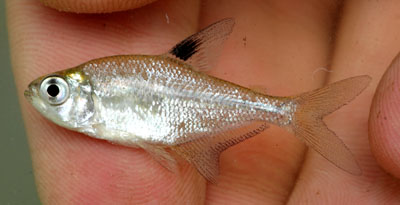
Hyphessobrycon compressusMayan Tetra
Meek, 1904
Max length45mm SL1.8in SLTanknot recordedTemp20–26°C68–79°FpH6.5–8.0H. compressus is the type species of the genus Hyphessobrycon but is not well-known in the ornamental trade. Hyphessobrycon was raised by Durbin in Eigenmann (1908) as a subgenus of Hemigrammus, differing from the latter by the absence of scales on the caudal-fin.
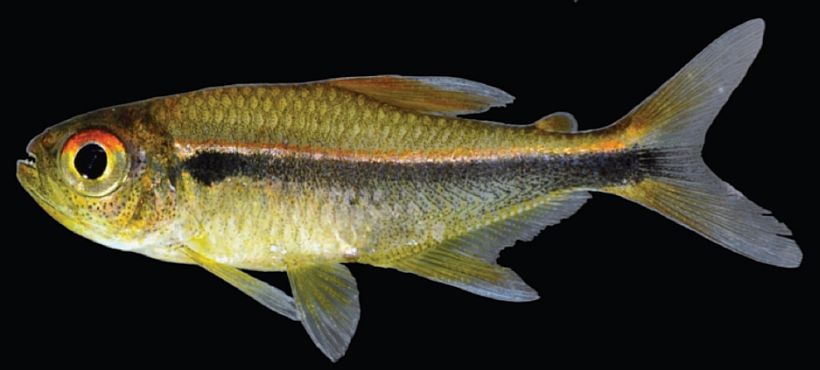
Hyphessobrycon eschwartzae
Román-Valencia & Ortega, 2013
Max lengthnot recordedTanknot recordedTempnot recordedpHnot recordedH. eschwartzae is told apart from other laterally-striped Hyphessobrycon species from the Madre de Dios watershed by the following characters: 4 simple anal-fin rays (vs. 3 in other species listed); 13-15 dentary teeth (vs. 5-11); 6 teeth in the internal premaxillary ro...
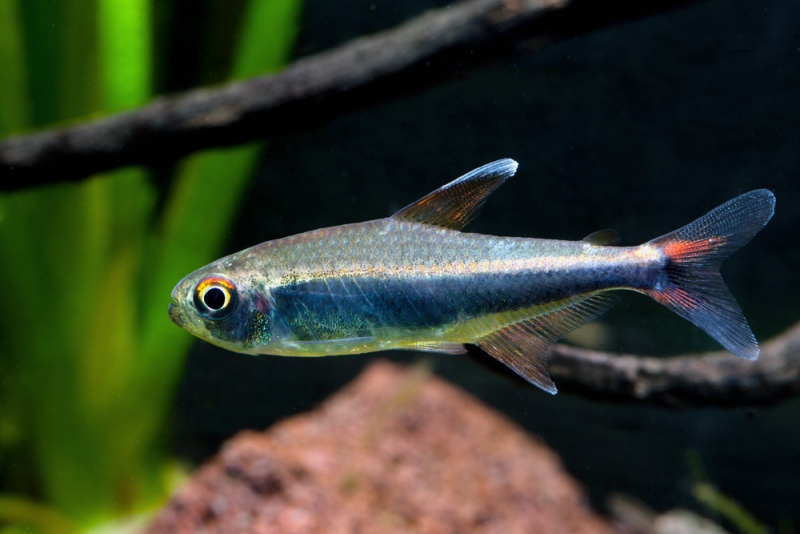
Hyphessobrycon peruvianusPeruvian Tetra
Ladiges, 1938
Max length40mm SL1.6in SLTank60 × 30cm24 × 12inTemp22–27°C72–81°FpH5.0–7.0This species is available on a relatively regular basis, although it's sometimes confused with the similar-looking congeners H. loretoensis and H. metae. It can be identified via the following combination of characters as per Géry (1977): elongate in shape with body depth fitting 3.8-3.9 times in its standard length; caudal peduncle narrow, its depth fitting 1.8 times in its length; head short, interorbital broad, snout short and rounded; dorsal-fin insertion an...
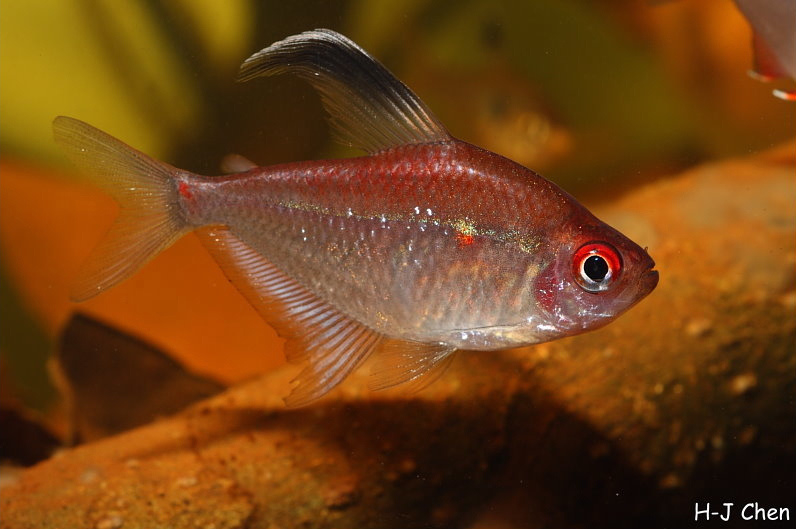
Hyphessobrycon pyrrhonotusFlame-back Bleeding Heart Tetra
Burgess, 1993
Max length45mm SL1.8in SLTank75 × 30cm30 × 12inTemp20–28°C68–82°FpH4.0–7.0This is the smallest of three similar-looking species most commonly-referred to as the 'bleeding heart' subgroup, the other two being H. erythrostigma and H. socolofi. All possess a reddish humeral spot which is not present in any other characid with other shared characters including possession of 6 -14 maxillary teeth, 7-9 scales above the lateral line, 5-7 scales below the lateral line and 26-33 anal fin rays.
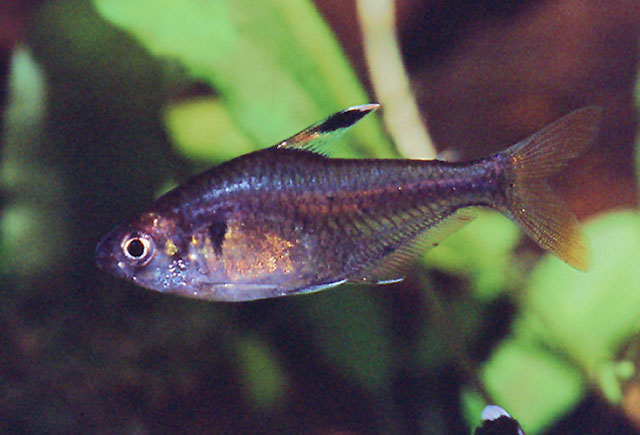
Hyphessobrycon simulatusFalse X-ray Tetra
Géry, 1960
Max length35mm SL1.4in SLTank80 × 30cm31 × 12inTemp20–28°C68–82°FpH5.0–7.0This species is uncommon in the aquarium trade although its name is sometimes applied to other species. It was originally described in the monotypic genus Pseudopristella, and can be distinguished from the vaguely similar Pristella maxillaris by possession of a relatively large (vs. relatively small) humeral spot and having black pigmentation in the anal-fin restricted to the first ray (vs. a prominent distal blotch).
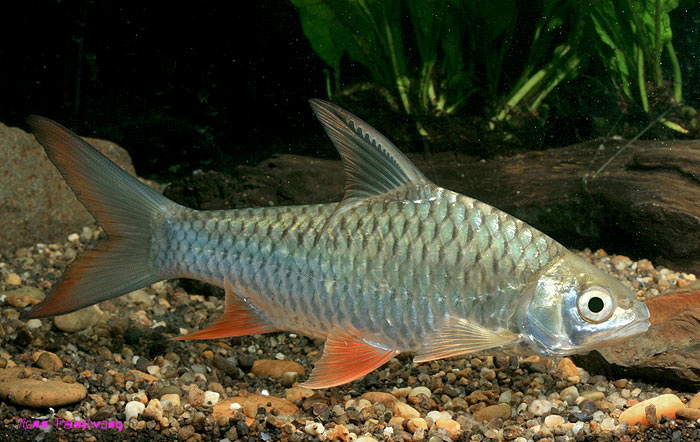
Hypsibarbus malcolmiGoldfin Tinfoil Barb
Smith, 1945
Max length500mm SL20in SLTanknot recordedTemp20–26°C68–79°FpH6.0–8.0H. malcolmi is distinguished from congeners by the following combination of characters: 12-17 (usually 14-15) rakers on first gill arch; usually 16 circumpeduncular scale rows; less than 30 lateral line scales; some branched lateral line canals, but branching not extensive, median portion of dorsal-fin dark.
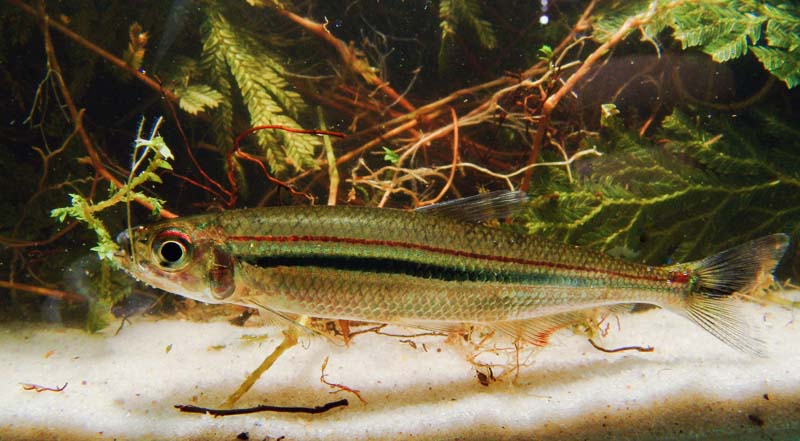
Iguanodectes geisleri
Géry, 1970
Max length55mm SL2.2in SLTank120 × 30cm48 × 12inTemp20–26°C68–79°FpH5.0–7.0I. geisleri is typically exported for the aquarium trade alongside the similar-looking congener I. adujai (Géry, 1970) but can be identified by presence (vs. absence in I. adujai) of a black lateral stripe on the body beneath the red stripe, and possession of 20-25 (vs. 28-34) anal-fin rays.
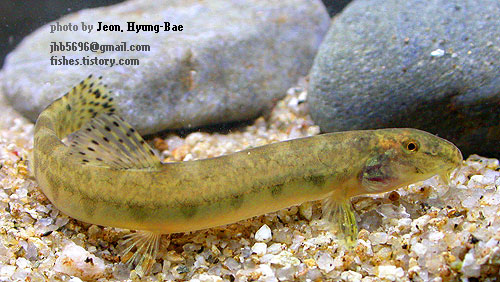
Iksookimia yongdokensis
Kim & Park, 1997
Max length160mm SL6in SLTank100 × 30cm39 × 12inTemp20–24°C68–75°FpH7.0–8.0Among them it's most similar to I. longicorpus and I. hugowolfeldi but can be distinguished by the following combination of characters: body patterning consisting of 9-13 dark vertical bars along the flanks plus a small dark spot at the base of the upper caudal-fin lobe; no black blotch or markings posterior to the operculum; reduced lamina circularis in males; interorbital width measures 14.7-17.8% o...
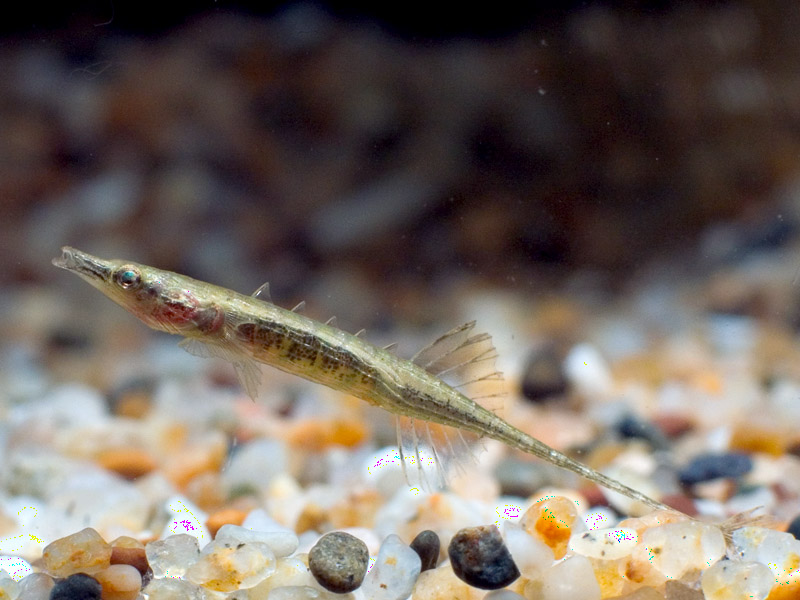
Indostomus paradoxusArmoured Stickleback
Prashad & Mukerji, 1929
Max length30mm SL1.2in SLTank40 × 20cm16 × 8inTemp22–27°C72–81°FpH6.5–7.5This species is rare in the aquarium hobby though its name is often misapplied to the closely-related I. crocodilus. It can be told apart from congeners by the following characters: dorsal and anal fins without dark markings, with a light brown bar in breeding males; ventral surface light brown; throat white, occasionally with a few brown spots; ridges of head bones weakly serrated or not serrated, depending on the bone. The family Indostomidae currently contains just a single genus with three species of which I. paradoxus is the type. It was raised alongside both family...
Inpaichthys kerriPurple Emperor Tetra
authority not recorded
Max length35mm SL1.4in SLTank60 × 38cm24 × 15inTemp24–27°C75–81°FpH5.5–7.0This pretty little species can be seen for sale with various common names, including the 'blue emperor', 'regal' or 'royal' tetra. It's sometimes confused with the emperor tetra, Nematobrycon palmeri but can be easily distinguished as it possesses an adipose fin, whilst Nematobrycon species do not. The genus Inpaichthys is currently monotypic (contains only one species), and like other related genera such as Hyphessobrycon its taxonomic status is Incertae s...
Jinshaia sinensis
Sauvage & Dabry de Thiersant, 1874
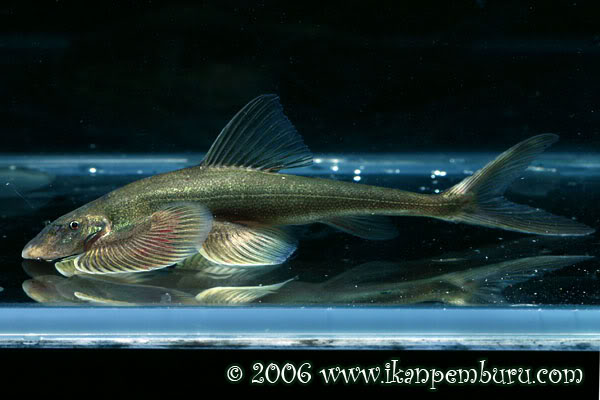
Max length75mm SL3.0in SLTank90 × 30cm36 × 12inTemp20–24°C68–75°FpH6.0–7.5This species may not yet have been seen in the aquarium trade outside its native country but has been maintained by a few private collectors. There are currently three species recognised in the genus, all endemic to the Yangtze river drainage, and they're separated from other balitorids by a combination of characters including: relatively long, deeply-forked caudal-fin; roun...
Julidochromis dickfeldiBrown Julie
authority not recorded
Max length80mm SL3.1in SLTank75 × 30cm30 × 12inTemp23–27°C73–81°FpH8.0–9.2Julidochromis are commonly known as "Julies" in the hobby. As with other Julies, large water changes should be avoided as this can cause mated pairs to turn on one another. There is some speculation as to whether this species has been placed in the correct genus. It has a different shape to other Julidochromis, having a pointed snout. It also exhibits different patterning, with blue edging to the dorsal and anal fins, and the horizontal stripes are very dark in colour. Furthermore i...
Kottelatlimia hipporhynchos
Kottelat & Tan, 2008
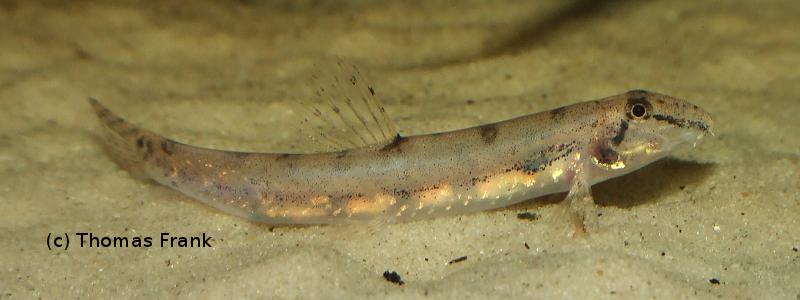
Max length52mm SL2.0in SLTank60 × 30cm24 × 12inTemp23–26°C73–79°FpH4.0–6.5This species differs from congeners in the presence of papillae covering the mouthparts (lips, barbels, and lobes) which are absent in other species. It's also the largest species in the genus and the serrae on the second pectoral fin rays in males form a broa...