Results for “genus”
Type a name: scientific, common, or one a species used to go by. Or narrow the catalogue with the filters.
Filters
Nannocharax brevisAfrican Darter Characin
authority not recorded
Max length45mm SL1.8in SLTank45 × 30cm18 × 12inTemp23–27°C73–81°FpH6.0–7.5There are currently 25 described species in the genus Nannocharax, these forming a monophyletic group with members of the very similar Hemigrammocharax. None can be described as particularly common in the hobby but N. brevis and N. fasciatus are the most often seen. They are notoriously tricky to identify though, and it's quite possible that more than two species are being sold under these names. In nature these fish occupy a similar ecological niche to the South American darter characi...
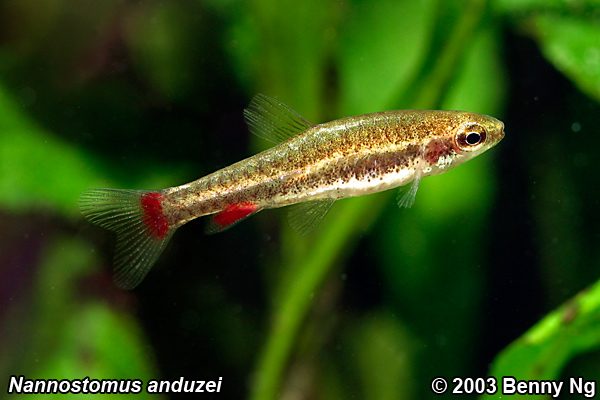
Nannostomus anduzei
Fernandez & Weitzman, 1987
Max length16mm SL0.6in SLTank45 × 30cm18 × 12inTemp22–28°C72–82°FpH5.0–7.0This is the smallest member of the genus and rarely traded in numbers, though it's a relatively common contaminant among shipments of wild fishes from Manaus. Unlike other Nannostomus spp. it does not exhibit a specific colour pattern of spots or bars at night-time, rather displaying an overall paleness. The family Lebiasinidae is included in the order Characiformes and sometimes split into the nominal subfamilies Lebiasininae a...
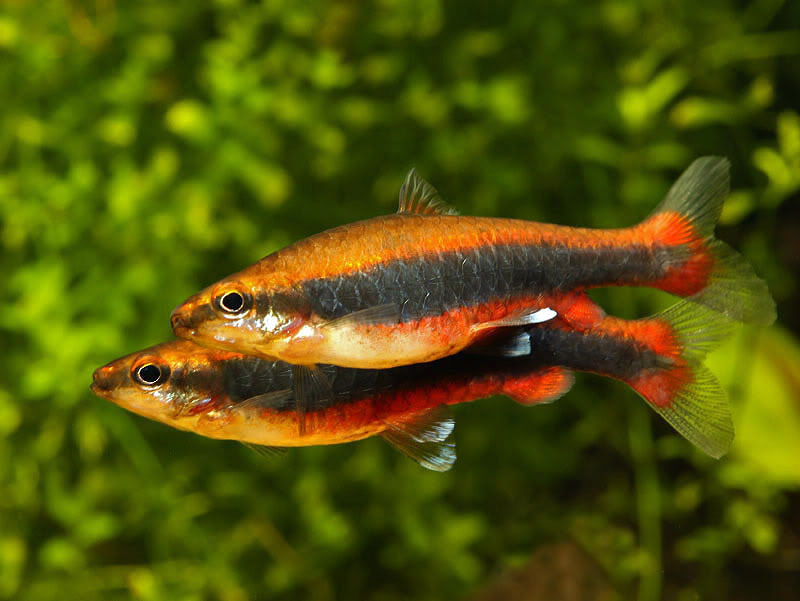
Nannostomus beckfordiGolden Pencilfish
Günther, 1872
Max length65mm SL2.6in SLTank45 × 30cm18 × 12inTemp21–27°C70–81°FpH5.0–8.0This is the type species of the genus, fairly ubiquitous in the aquarium trade, and represents an excellent choice for the newcomer to fishkeeping since it's less demanding than most congeners. It's sometimes referred to as 'Beckford's pencil fish' or 'brown pencilfish'. Don't worry if your fish look different when you switch on the aquarium lights after dark or in the morning as like most Nannostomus species it assumes a cryptic, vertically-barred colour pattern at ni...
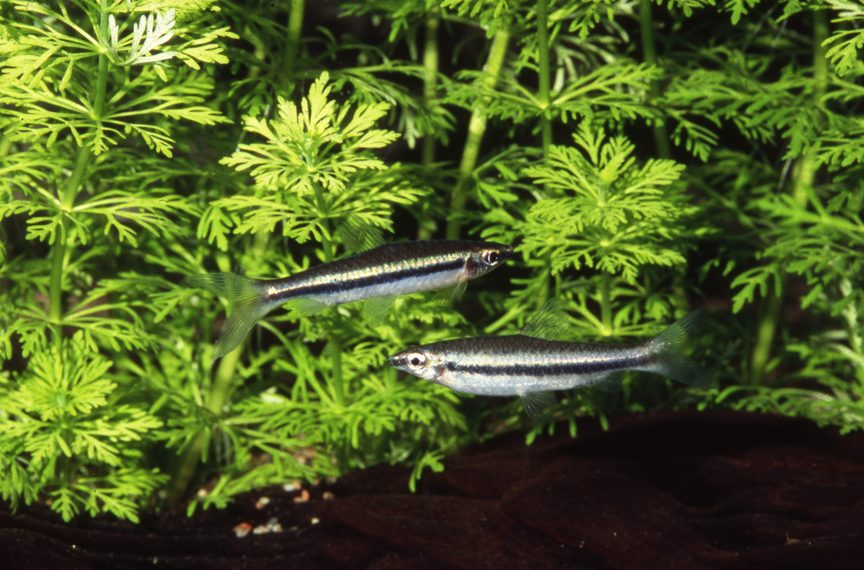
Nannostomus grandis
Zarske, 2011
Max length46mm SL1.8in SLTank60 × 30cm24 × 12inTemp22–28°C72–82°FpH5.0–7.0This species is poorly-known in the aquarium hobby but is sometimes exported as bycatch among shipments of other species, especially Nannostomus beckfordi to which it appears quite similar. The easiest way to tell the two apart is that N. grandis lacks pale white or bluish tips to the ventral fins. It can be further distinguished from all congeners by the following combination of characters: body size up to 46.2 mm, the largest in the genus; bo...
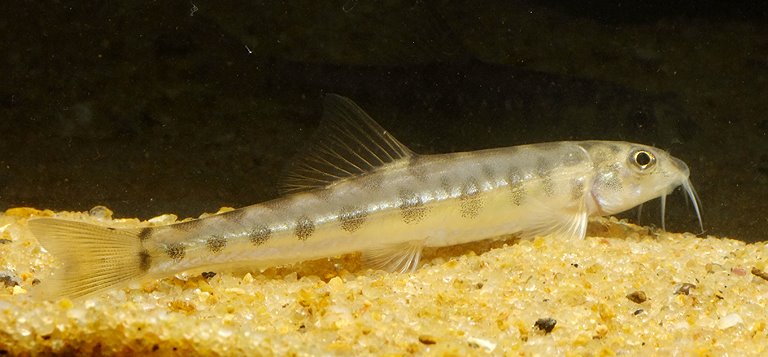
'Nemacheilus' corica
Hamilton, 1822
Max length45mm SL1.8in SLTank60 × 30cm24 × 12inTemp15–24°C59–75°FpH6.0–8.0This species has been widely regarded as a member of the genus Nemacheilus since the late 1970s with the vast majority of subsequent authors considering it as such, although in the aquarium hobby it's more commonly referred to Schistura.
Nemacheilus spiniferus
Kottelat, 1984
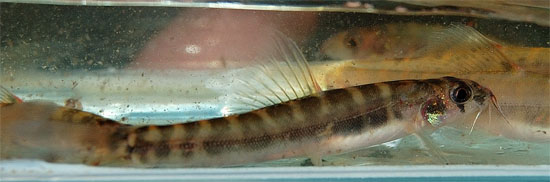
Max length55mm SL2.2in SLTank60 × 30cm24 × 12inTemp23–26°C73–79°FpH5.0–7.0It's a member of the N. selangoricus group of species within the genus, an assemblage first recognised by Hadiaty and Kottelat (2009) and characterised by possession of two rows of horizontally-arran...
Nematabramis alestes
Seale & Bean, 1907
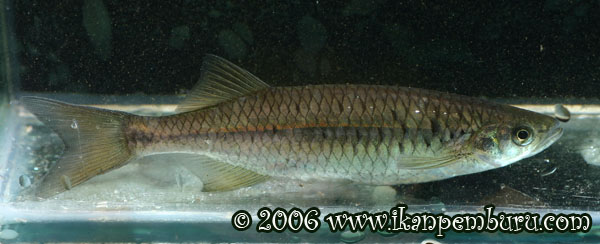
Max length105mm SL4in SLTanknot recordedTempnot recordedpHnot recordedN. alestes is the only member of the genus in which the barbels are shorter than the head, with additional diagnostic characters as follows: 8-9 branched dorsal-fin rays; 12-14 branched anal-fin rays; 22-23 predorsal scales; body with a pronounced ventral keel.
Nematobrycon palmeriEmperor Tetra
Eigenmann, 1911
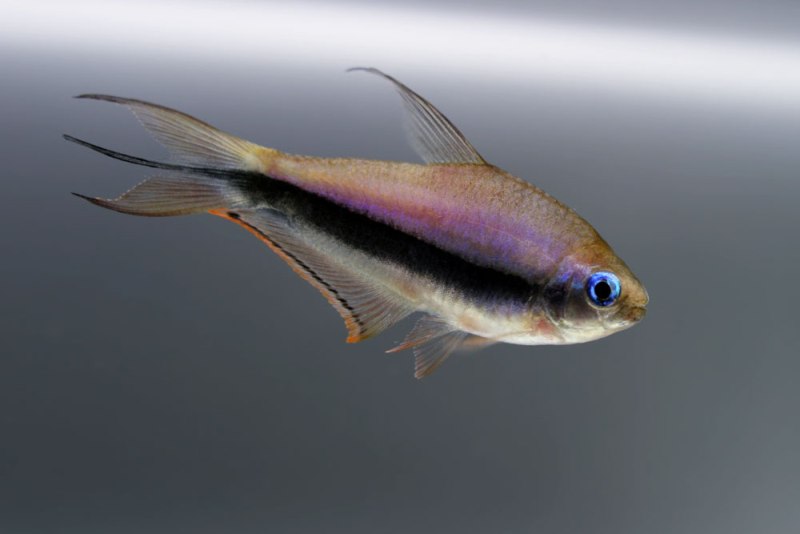
Max length42mm SL1.7in SLTank90 × 30cm36 × 12inTemp23–27°C73–81°FpH5.0–7.5This species can be found in most dealers' tanks and is one of the best choices for the newcomer to fishkeeping, being attractive, hardy and inexpensive. As virtually all the fish sold in the trade have been captive bred they tend to be relatively unfussy regarding water chemistry and diet. It's occasionally confused with N. lacortei, which is currently the only other species in the genus. They can easily be told apart by looking at the eye of the fish in question, as the male N. l...
Oliotius oligolepisCheckered Barb
Bleeker, 1853
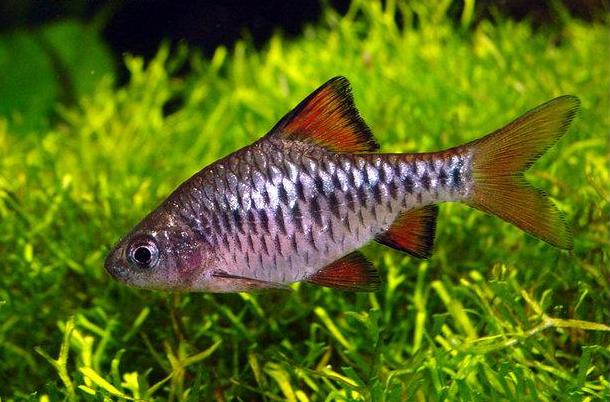
Max length45mm SL1.8in SLTank75 × 30cm30 × 12inTemp18–25°C64–77°FpH5.5–7.5This species is also traded as 'checker barb', 'checkerboard barb', or 'island barb', and is among the most ubiquitous species available in the aquarium trade. It is farmed commercially in enormous numbers with wild examples rarely, if ever, available. It was formerly included in the polyphyletic catch-all genus Puntius which contained over 100 species, but this situation has been largely resolved since the turn of the century.
Ophthalmotilapia boops
authority not recorded
Max length150mm SL6in SLTank120 × 38cm48 × 15inTemp23–27°C73–81°FpH7.5–9.0This was the first species to be placed into the genus Ophthalmotilapia.
Ophthalmotilapia nasuta
authority not recorded
Max length200mm SL8in SLTank150 × 45cm60 × 18inTemp23–27°C73–81°FpH7.5–9.0O. nasuta can be distinguished from other members of the genus primarily by the fleshy proboscis-like growth that extends beyond the upper lip. It exists in several different geographical morphs including "Kachese", "Mpimbwe", "Cape Tembwe" and "Chamba", among others. These should not be mixed in aquaria as they will hybridise freely....
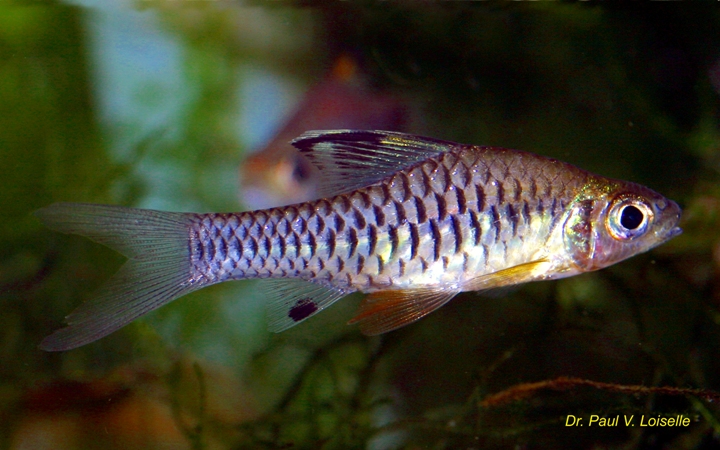
Oreichthys cosuatis
Hamilton, 1822
Max length43mm SL1.7in SLTank60 × 30cm24 × 12inTemp24–28°C75–82°FpH6.5–7.5An assortment of undescribed Oreichthys spp. from India, Myanmar and Thailand are currently traded as O. cosuatis. It can be distinguished from other described members of the genus by lacking a black blotch on the caudal peduncle, plus the following combination of characters: 2-3 perforated scales in lateral line; ½6½ between pelvic-fin origin and dorsal midline; presence of dark stripe in centre of anal-fin, forming a triangular blotch in adult individuals; dorsal-fin with whitish tip and broad, black, subdistal margin in the upper portion of the fin; 11-13 rows...
Osphronemus exodonElephant Ear Gourami
authority not recorded
Max length600mm SL24in SLTank180 × 60cm72 × 24inTemp20–30°C68–86°FpH6.5–8.0A bizarre and very recent addition to the genus, O. exodon is infrequently imported to the hobby, but has been seen occasionally. It has specially adapted mouthparts whereby it has greatly enlarged teeth. An extra set of teeth can also be seen growing in concentric bands on the outer lips! These are used in nature to literally 'pick' fruit from overhanging branches, with the fish often leaping from the water to grab a particularly juicy fig or other fruit. When the mouth of the fish is...
Osteochilus hasseltiiHard-lipped Barb
authority not recorded
Max length320mm SL13in SLTank180 × 60cm72 × 24inTemp22–25°C72–77°FpHnot recordedThere are currently 34 described species of Osteochilus although none can be considered popular in the aquarium hobby. According to Rainboth's 'Fishes of the Cambodian Mekong' members of the genus are characterised by lack of aspine, presence of 11-18rays, large rostral and maxillary barbels, papillae on both upper and lower lips, darkened but not black median fins and the fact that the lower lip is not separated from the isthmus by a deep post-labial groove. O. hasseltii can be f...
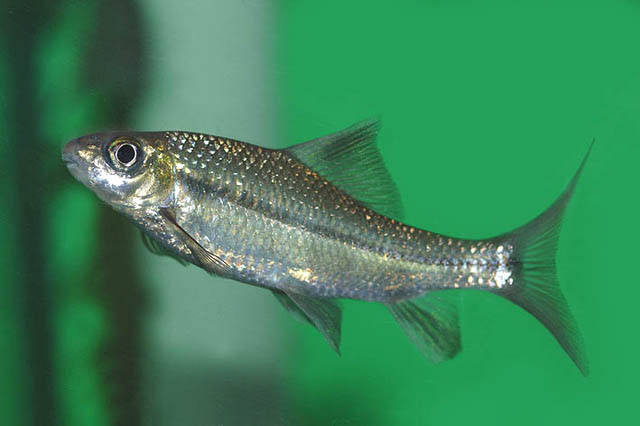
Osteochilus nashii
authority not recorded
Max length180mm SL7in SLTank120 × 45cm48 × 18inTemp22–25°C72–77°FpH6.5–7.5This species is very scarce in the trade indeed and you're most likely to see it on sale as a contaminant among import of other Indian species. There are currently 34 described species of Osteochilus although none can be considered popular in the aquarium hobby. According to Rainboth's 'Fishes of the Cambodian Mekong' members of the genus are characterised by lack of aspine, presence of 11-18rays, large rostral and maxillary barbels, papillae on both upper and lower lips,...
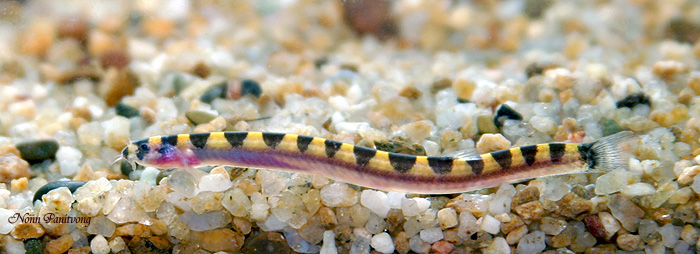
Pangio cuneovirgata
Raut, 1957
Max length40mm SL1.6in SLTank45 × 30cm18 × 12inTemp21–26°C70–79°FpH3.5–7.0Infrequently encountered in the aquarium trade, most often as bycatch among shipments of similar-looking congeners. It's included in the P. kuhlii group of closely-related species within the genus, and can be distinguished from other members by...
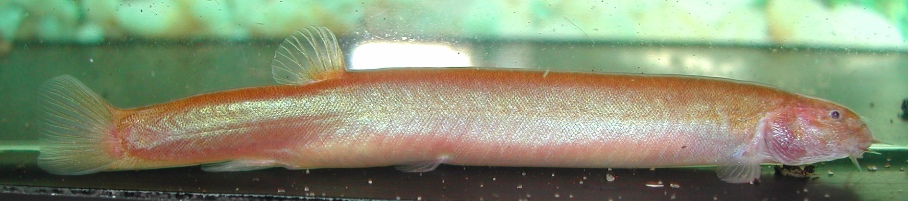
Pangio filinaris
Kottelat & Lim, 1993
Max length50mm SL2.0in SLTank45 × 30cm18 × 12inTemp21–26°C70–79°FpH5.0–7.0It's included in the P. kuhlii-oblonga group of closely-related species within the genus as per Bohlen et al. (2011) and can be...
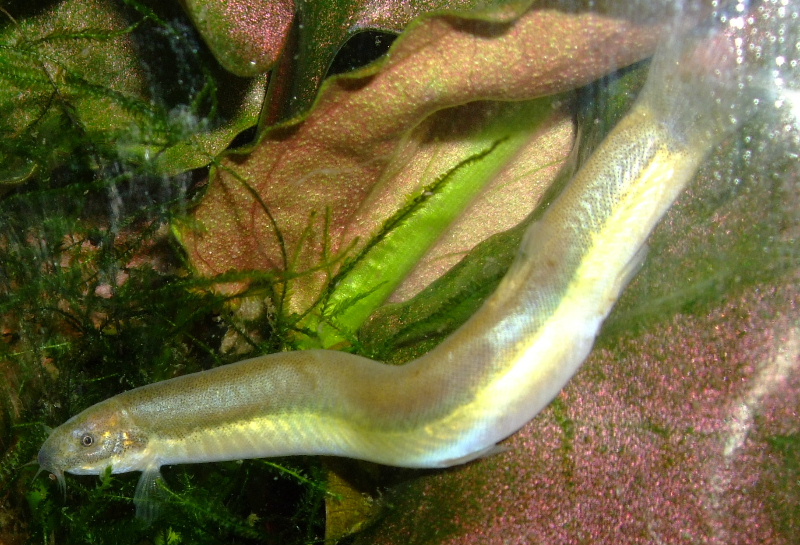
Pangio sp. 'PAN02'
authority not recorded
Max length50mm SL2.0in SLTank60 × 30cm24 × 12inTemp21–26°C70–79°FpH3.5–7.0The fish in our images don't correspond to any of the described members of the genus but can be assigned to the P. oblonga species group with a degree of certainty. It's apparently exported as a contaminant among shipments of a uniformly brown-coloured fish with unpublished genetic analyses suggesting the two might be variants of the same species (J. Bohlen, pers. comm.). Among congeners it may be related to P. alcoides Kottela...
Papyrocranus aferArowana Knifefish
authority not recorded
Max length800mm SL31in SLTank210 × 90cm84 × 36inTemp24–28°C75–82°FpH6.5–7.5Like other members of the family Notopteridae this species differs from Gymnotiform knifefish in that its anal and caudal fins are fused together into one long, undulating fin running along the underside of the fish. There is only one other species in the genus. P. congoensis is a smaller, plain brown coloured fish found only in the Democratic Republic of Congo and is very rare in the hobby. P. afer is also infrequently imported and is one of the rarer knifefish species in the hobby. It can dev...
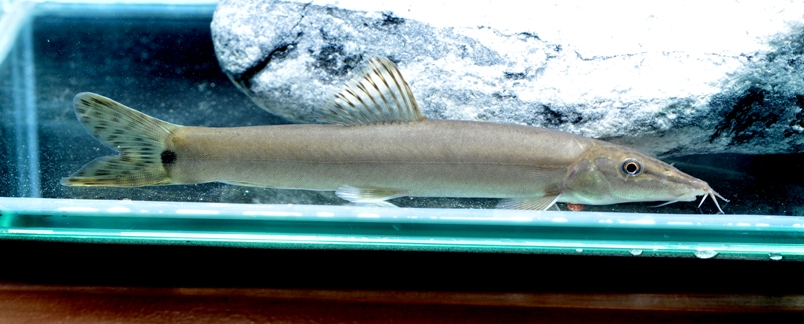
Parabotia sp. 'PB01'
authority not recorded
Max length100mm SL3.9in SLTank120 × 45cm48 × 18inTemp20–24°C68–75°FpH6.0–7.5The name of this fish is unclear with the fact that diagnoses for several members of this genus do not appear to exist in the English language making identification even trickier. It's not common in the aquarium trade, either.