Results for “pre-”
Type a name: scientific, common, or one a species used to go by. Or narrow the catalogue with the filters.
Filters
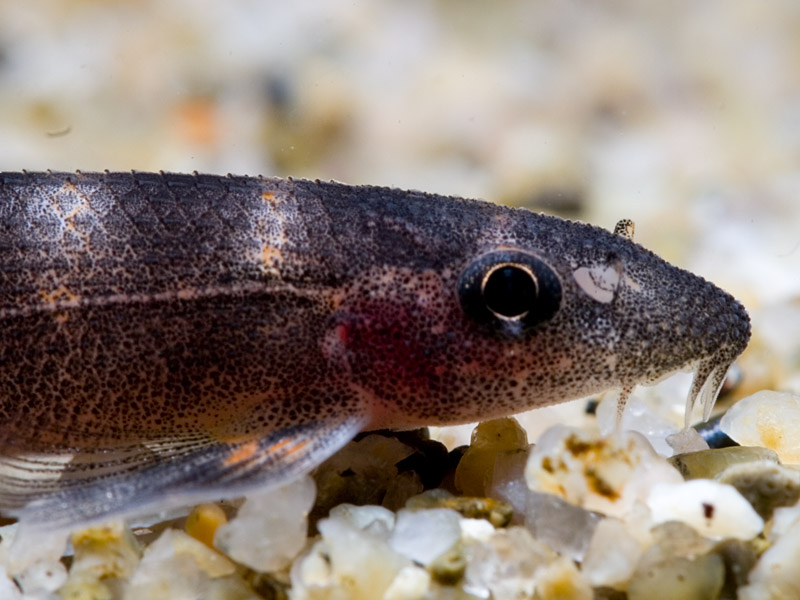
Balitoropsis zollingeri
Bleeker, 1853
Max length70mm SL2.8in SLTank60 × 30cm24 × 12inTemp20–25.5°C68–78°FpH6.0–7.5An obligate dweller of swiftly-flowing streams and headwaters containing clear, oxygen-saturated water. It often inhabits riffles and runs and is likely to show a preference for shallower zones. Substrates are generally composed of gravel, rocks, boulders or bedrock carpeted with a rich biofilm formed by algae and other micro-organisms. Juveniles are often found in slower-moving stretches with gravel substrate and submerged tree roots. In both cases patches of aquatic plants are only occasionally pres...
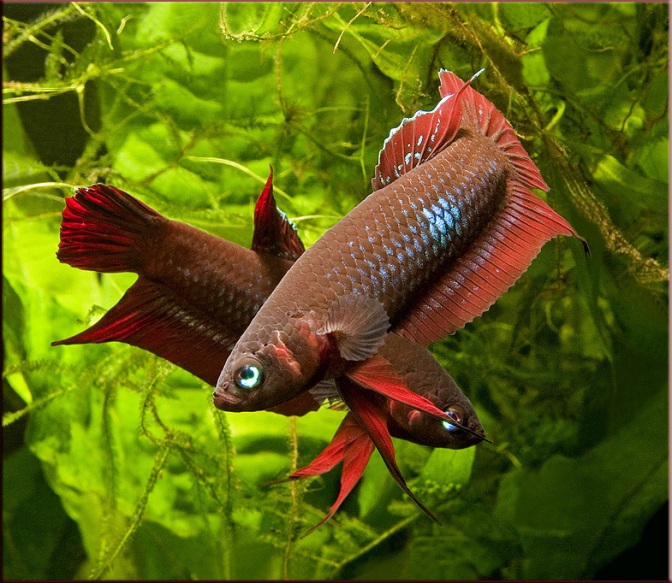
Betta coccinaScarlet Betta
Vierke, 1979
Max length40mm SL1.6in SLTank45 × 30cm18 × 12inTemp22–30°C72–86°FpH4.0–6.0B. coccina can be told apart from other members by the following combination of characters: iridescent green lateral blotch present in male, absent in female; body dark red in colour; no parallel vertical iridescent gold opercle bars; pelvic fin falcate with black filamentous tip, remainder red; median fins with discrete iridescent green spots; dorsal fin-rays 9-12; anal-fin rays 27-29; subdorsal scales 7-8; lateral scales 31-32; predorsal scales 18-21. The genus Betta is the most speciose within the family Osphronemidae with almost 70 reco...
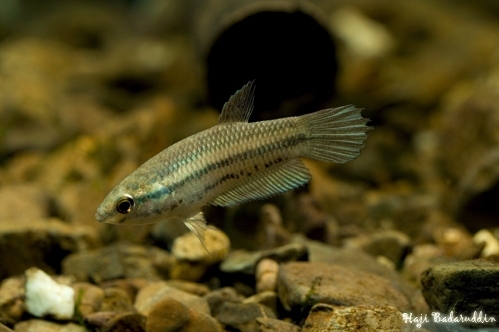
Betta prima
Kottelat, 1994
Max length50mm SL2.0in SLTank60 × 30cm24 × 12inTemp23–27°C73–81°FpH4.0–7.0It can be told apart from other members of the B. pugnax group by the following characters: second postorbital stripe on opercle complete; no transverse bars in caudal-fin; 20-22 predorsal scales; preanal length 50.6-54.8 % SL. Not all authors consider it a member of this group, however, with some placing it in the B. picta complex, e.g., Schindler and Schmidt (2006). The genus is th...
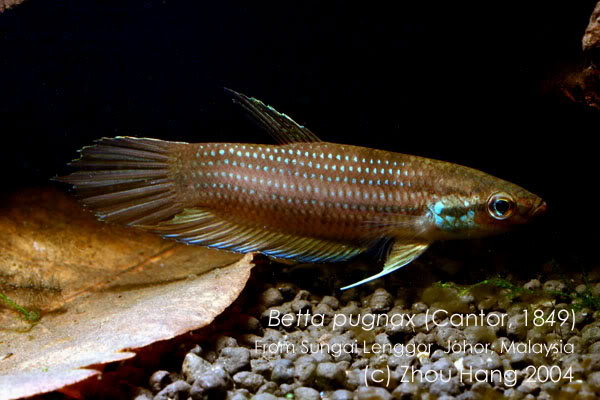
Betta pugnax
Cantor, 1849
Max length70mm SL2.8in SLTank80 × 30cm31 × 12inTemp22–28°C72–82°FpH4.0–7.5It can be told apart from other members of the B. pugnax group by the following characters: chin bar present; no complete second postorbital stripe on opercle; presence of transverse bars in caudal-fin of males; caudal-fin in males broadly lanceolate; opercle scales iridescent blue; anal-fin with reddish subdistal band and black margin; caudal-fin without dark margin; 25-28 anal-fin rays; 28-31 lateral scales; 11-12 postdorsal scales; length of pelvic fins 26.6-43.8 % SL; length of head 27.5-35.2 % SL; inter-orbital width 32.4-53.0 % HL.
Betta stigmosa
Tan & Ng, 2005
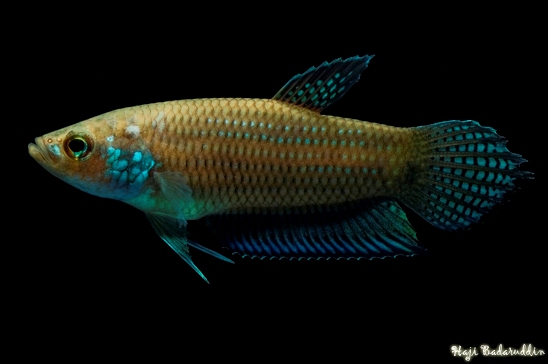
Max length50mm SL2.0in SLTank60 × 30cm24 × 12inTemp22–28°C72–82°FpH5.0–7.0Known only forest hill streams with flowing, clear water. These are typically shaded from the sun by dense riparian vegetation. The substrate is composed of rocks or gravel, fallen leaves, branches and submerged tree roots, and presumably the fish show a preference for quieter marginal zones as with related congeners. The type locality was described as a 'swampy stream' and sympatric species incl...
Champsochromis spilorhynchus
authority not recorded
Max length350mm SL14in SLTank180 × 60cm72 × 24inTemp24–27°C75–81°FpH7.5–8.5This species is only occasionally offered for sale, as it is difficult to collect, living a predominantly solitary lifestyle. As a result, it is much sought after by enthusiasts. It may be confused with the other species in the genus, C. caerulus, but can be distinguished by its deeper body shape and very distinctive black markings on its snout. Champsochromis have widely spaced teeth compared to some other pelagic predatory cichlids found in Lake Malawi, such as Buccochromis species....
Corydoras delphax
Nijssen & Isbrücker, 1983
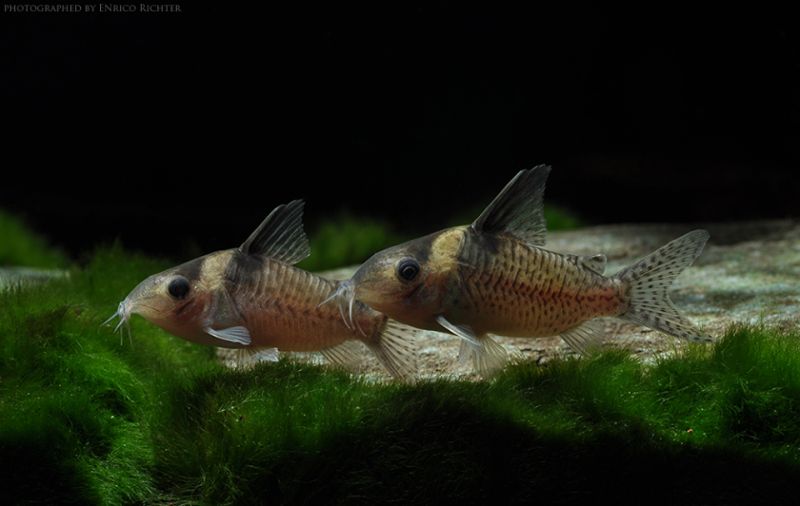
Max length60mm SL2.4in SLTank90 × 30cm36 × 12inTemp22–27°C72–81°FpH5.5–7.5Unfortunately, precise diagnostic characters cannot currently be provided since we’ve been unable to obtain the type description, and little has been Characters said to separate it from species such as C. ambiacus, C. agassizii, C. brevirostris, C. ephippifer, and C. melanistius include a combination of relatively elongated snout, dark spots on body fading in adults, dark anterior dorsal-fin patch extending to upper extremity of fin, and presence of spots in the caudal-fin.
Crenicichla compressicepsCompressiceps Dwarf Pike Cichlid
authority not recorded
Max length76mm SL3.0in SLTank90 × 38cm36 × 15inTemp24–27°C75–81°FpH5.0–6.8Crenicichla compressiceps are an excellent little fish. They are small, but they swim a great deal (and can be incredibly quick) so require larger aquaria than other, similar sized fish. In the wild, Compressiceps are insect feeders. They will wait quietly then quickly sweep down and prey on any nearby insects. They have good vision in the night and will often feed in the dark. Be careful when choosing tankmates, though as previously mentioned it may be mandatory to include some fish to e...
Devario affinis
Blyth, 1860
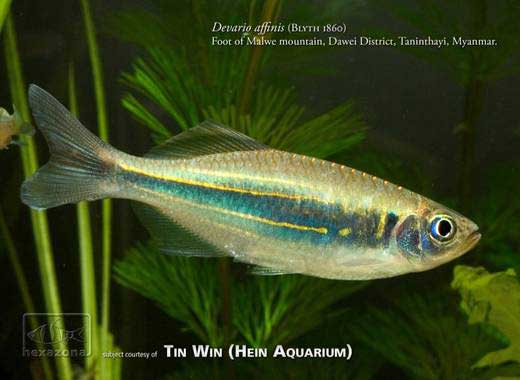
Max length80mm SL3.1in SLTank120 × 45cm48 × 18inTemp20–26°C68–79°FpHnot recordedType locality is 'Tenasserim, Myanmar' which at time of description was used to refer to the portion of Myanmar lying to the south and east of the Ayeyarwaddy/Irrawaddy river delta, including present-day Kayah, Kayin, and Mon states, Bago Division, and possibly the southern Tanintharyi Region. Blyth's description paper covered fishes collected from the Sittaung River (plus a few Gangetic species) in what is currently Bago Division, but we've been unable to locate any modern records of D. affinis fro...
Eirmotus octozona
Schultz, 1959
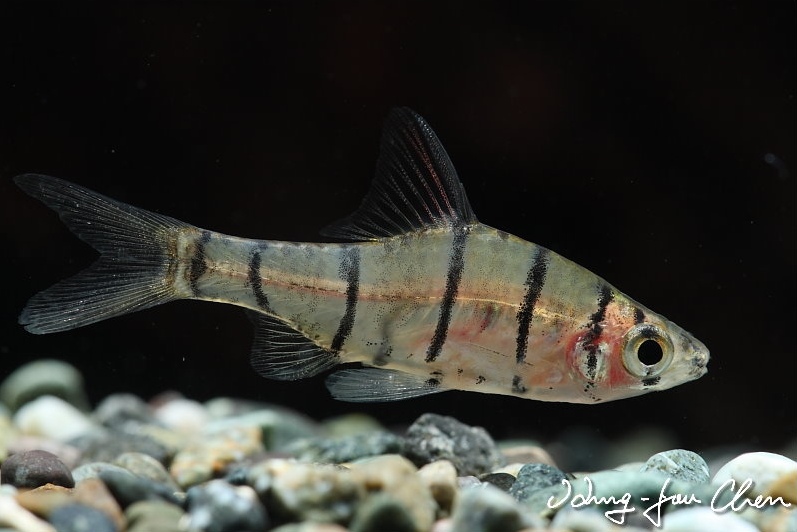
Max length36mm SL1.4in SLTank60 × 30cm24 × 12inTemp22–26°C72–79°FpH5.0–7.0E. octozona can be told apart from congeners by the following combination of characters: bar 1 present; presence of a large and distinct black mark anterior to anus, visible in lateral and ventral views; simple dorsal-fin rays black, sometimes extending onto first branched ray; other rays hyaline or with diffused chromatophores on last dorsal-fin ray, adjacent to upper extremity of bar 6; 25-31 serrae on last simple dorsal-fin ray; uppermost ray of pectoral-fin with faint black margin; width of bar 5 equal to 1-1½ lat...
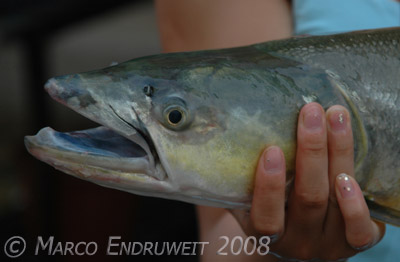
Elopichthys bambusa
Richardson, 1845
Max length2000mm SL79in SLTanknot recordedTempnot recordedpHnot recordedThe adult size and power of this impressive predator preclude it from consideration as an aquarium species, but young individuals are nevertheless available in the ornamental trade on an irregular basis therefore it is included here. It is an entirely unsuitable choice for the home aquarium and the majority of zoos and public aquaria would probably struggle to maintain it in adequate conditions.
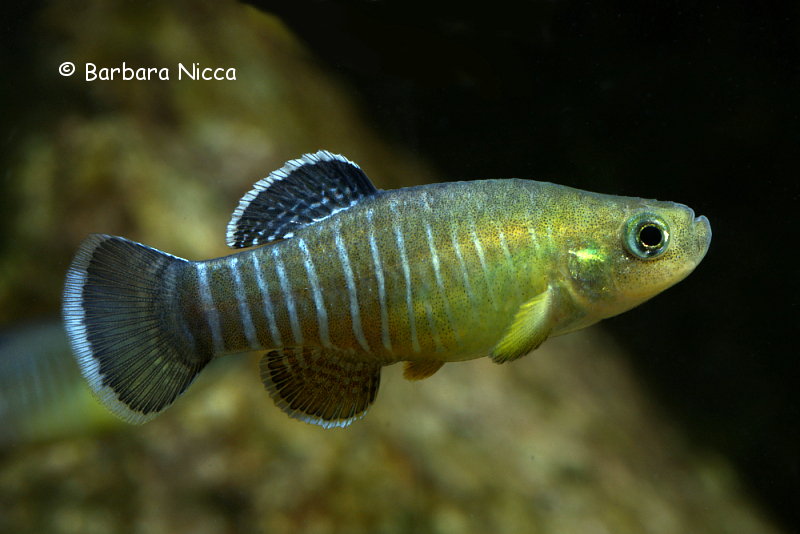
Esmaeilius persicusFarsi Toothcarp
Jenkins, 1910
Max length60mm SL2.4in SLTank120 × 30cm48 × 12inTemp8–32°C46–90°FpH6.5–8.0This species is still sometimes listed as a species of Lebias by some sources although that name has long been considered a synonym of Cyprinodon by most authorities and an ICZN committee voted to suppress the name in favour of Aphanius as recently as 2003. It was known as A. persicus until late 2011 when it was reclassified due to that name being preoccupied by a Late Miocene fossil species previously referred to as Brachylebias persicus Priem 1908. This change was necessary because Gau...
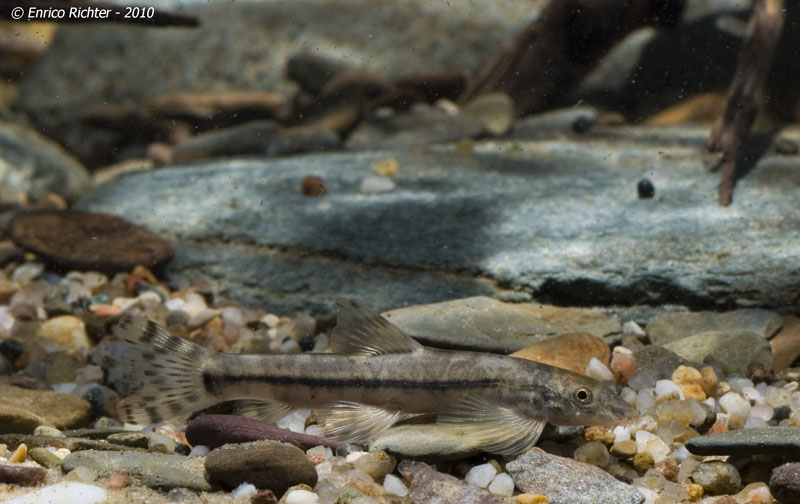
Formosania lacustrisTasseled-mouth Loach
Steindachner, 1908
Max length120mm SL5in SLTank120 × 30cm48 × 12inTemp20–24°C68–75°FpH6.0–7.5An obligate dwellers of swiftly-flowing streams and headwaters containing clear, oxygen-saturated water. It inhabits riffles and runs and according to studies shows a preference for shallower zones. Substrates are generally composed of gravel, rocks, boulders or bedrock carpeted with a rich biofilm formed by algae and other micro-organisms. Aquatic plants are uncommon and while riparian/streamside vegetation may be present...
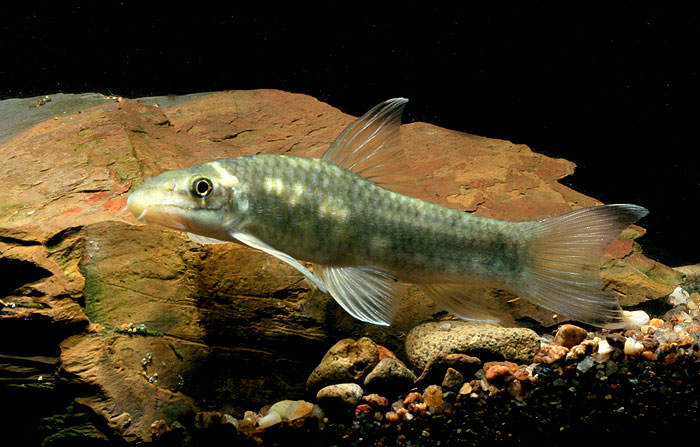
Garra rakhinica
Kullander & Fang, 2004
Max length60mm SL2.4in SLTanknot recordedTempnot recordedpHnot recordedG. rakhinica can be distinguished from other members of the genus by the following combination of characters: rostral furrow shallow and snout tip smoothly rounded; rostral lobe present, proboscis absent; scaled predorsal region, chest, and abdomen; two pairs of barbels; 28 lateral line scales; 16 circumpeduncular scale rows; colour pattern almost uniform greyish on body and caudal-fin; a dark spot immediately posterior to the upper extremity of the...
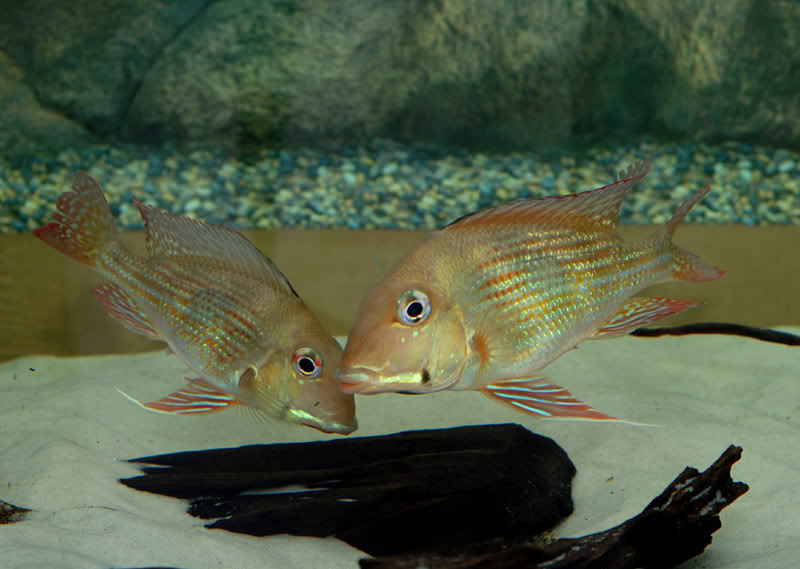
Geophagus brachybranchus
Kullander & Nijssen, 1989
Max length200mm SL8in SLTank180 × 60cm72 × 24inTemp26–30°C79–86°FpH5.0–7.0This species is generally rare in the aquarium hobby though oddly appears to be one of the commoner species in Australia where it's often referred to by the vernacular name 'black-throated eartheater'. It's a member of the nominal G. surinamensis 'group' of closely-related species within the genus and can be identified by a combination of characters including: presence of dark preopercular markings; no vertical bars on the flanks even when stressed/preserved; base of filaments on the first gill arch mostly covered by a flap of skin; exposed part of bra...
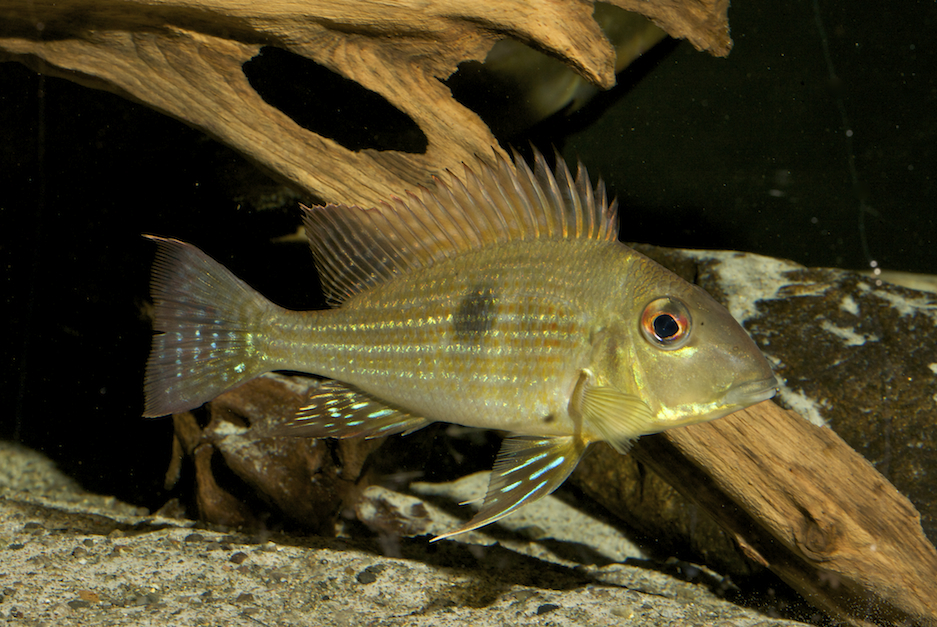
Geophagus brokopondo
Kullander & Nijssen, 1989
Max length150mm SL6in SLTank150 × 60cm60 × 24inTemp25–33°C77–91°FpH5.0–7.0This species is very rarely-traded since collections of fishes for commercial purposes aren't common in Suriname. It's a member of the nominal G. surinamensis 'group' of closely-related species within the genus and can be identified by a combination of characters including: no dark preopercular marking; six vertical/parallel bars on each flank (normally visible only when the fish are stressed, spawning or preserved); dark, squarish lateral spot positioned within the third vertical bar; sixth (posterior) bar elongate an...
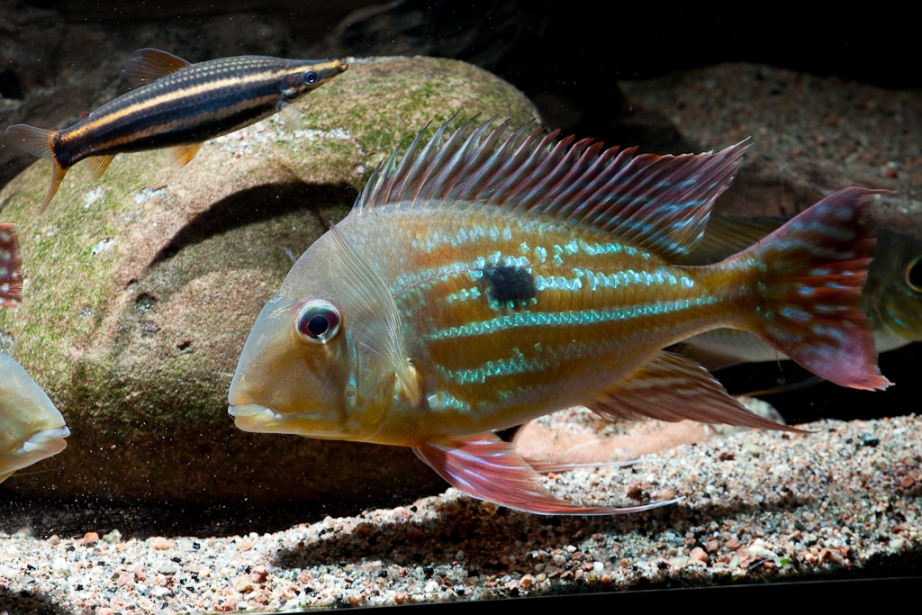
Geophagus winemilleri
López-Fernández & Taphorn, 2004
Max length200mm SL8in SLTank180 × 60cm72 × 24inTemp26–30°C79–86°FpH4.0–7.0This species is rare in the hobby although other species are sometimes sold under the name. It's a member of the nominal G. surinamensis 'group' of closely-related species within the genus and can be identified by a combination of characters including: possession of dark preopercular marking; four parallel, ventrally-inclined bars on each flank (normally visible only when the fish are stressed, spawning or preserved); dark lateral spot positioned within the second vertical bar; caudal fin red with variable pattern of large, iridescent blue to white spo...
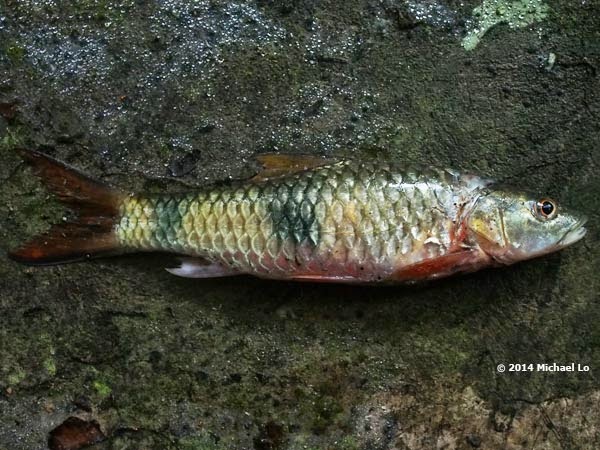
Hampala bimaculata
Popta, 1905
Max length500mm SL20in SLTanknot recordedTempnot recordedpHnot recordedPredominantly a riverine fish preferring clear, well-oxygenated, running waters with substrates of sand, gravel, rock or mud, typically flowing through tropical forest. In the habitat seen in our images sympatric fish species included Barbonymus balleroides, B. collingwoodi, Cyclocheilichthys repasson, C. apogon, Diplocheilichthys pleurotaenia, Garra borneensis, Leptobarbus hosii, and an unidentified Gastromyzon sp.
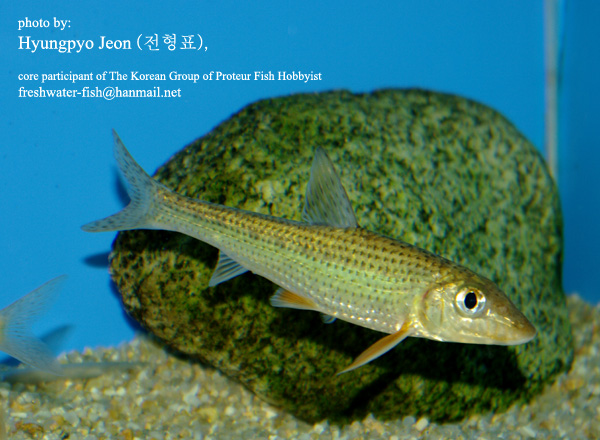
Hemibarbus longirostris
Regan, 1908
Max length250mm SL10in SLTanknot recordedTempnot recordedpHnot recordedA predominantly riverine fish preferring clear, well-oxygenated, running waters with substrates of sand, gravel, rock or mud, where adults tend to form schools just above the substrate in slower-moving sections.
Lamprologus lemairiiLemaire's Lamprologus
authority not recorded
Max length250mm SL10in SLTank120 × 45cm48 × 18inTemp23–27°C73–81°FpH7.5–9.0A highly piscivorous, predatory species unsuited to the general aquarium. It is an ambush predator in nature, often being seen hanging motionless around rocky structures or on the floor of the lake. It is a sedentary species and does not move around a lot. This is a behavioural adaptation known as thanatosis, or 'playing dead'. This strategy is usually used as a defensive means in other animals, but in L. lemairii it is adapted for offensive means. The fish has a mottled colour pattern...