Results for “pre-”
Type a name: scientific, common, or one a species used to go by. Or narrow the catalogue with the filters.
Filters
Hemigrammus pulcherPretty Tetra
authority not recorded
Matched on the common name Pretty Tetra
Max length45mm SL1.8in SLTank60 × 38cm24 × 15inTemp23–27°C73–81°FpH5.5–7.0Also known as the garnet or black wedge tetra, H. pulcher is deservedly popular in the hobby. It's both hardy and inexpensive, and is a good choice for the beginner. There was previously a subspecies, H. pulcher haraldi. This has now been reclassified as a distinct species, H. haraldi. Like all Hemigrammus, the taxonomic status of this species is currently Incertae Sedis, meaning uncertain. The genus is currently used as something of a catch-all for over 70 species of small characin. Mo...
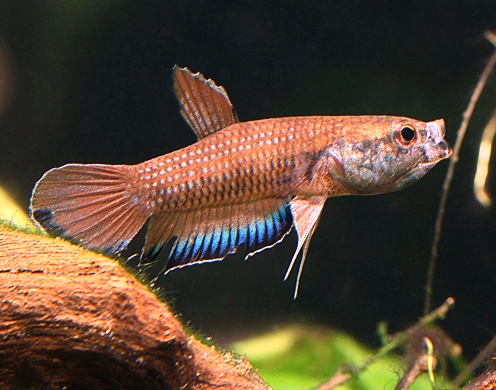
Betta falx
Tan & Kottelat, 1998
Max length50mm SL2.0in SLTank60 × 30cm24 × 12inTemp22–27°C72–81°FpH4.7–6.8B. falx is included in the Betta picta group/complex of closely-related species within the genus, an assemblage comprising species with the following shared characters: unpaired fins rounded (anal-fin sometimes tapering to a blunt point); anal-fin rays I-III, 18-24; dark marginal band on anal and caudal fins, more pronounced in mature males; presence of pre-orbital and post-orbital stripes; presence of chin bar on throat; iridescent green, gold, or blue scales on opercle.
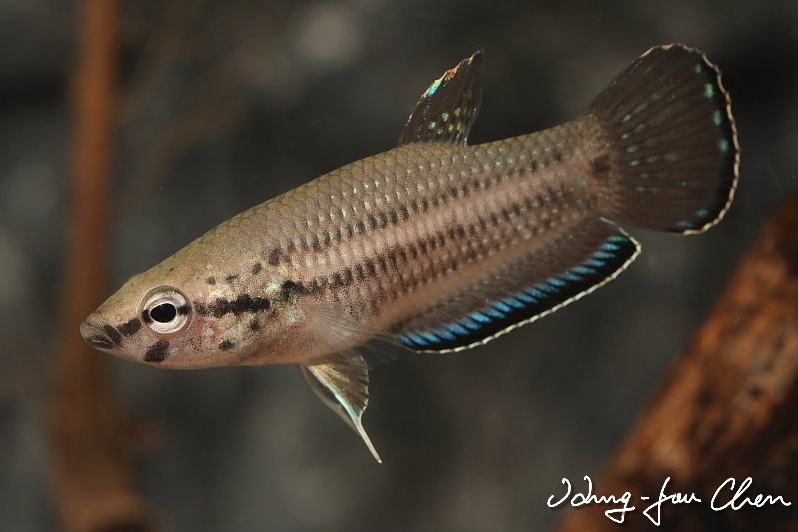
Betta simplex
Kottelat, 1994
Max length60mm SL2.4in SLTank60 × 30cm24 × 12inTemp20–28°C68–82°FpH7.0–8.0B. simplex is included in the Betta picta group/complex of closely-related species within the genus, an assemblage comprising species with the following shared characters: unpaired fins rounded (anal-fin sometimes tapering to a blunt point); anal-fin rays I-III, 18-24; dark marginal band on anal and caudal fins, more pronounced in mature males; presence of pre-orbital and post-orbital stripes; presence of chin bar on throat; iridescent green, gold, or blue scales on opercle.
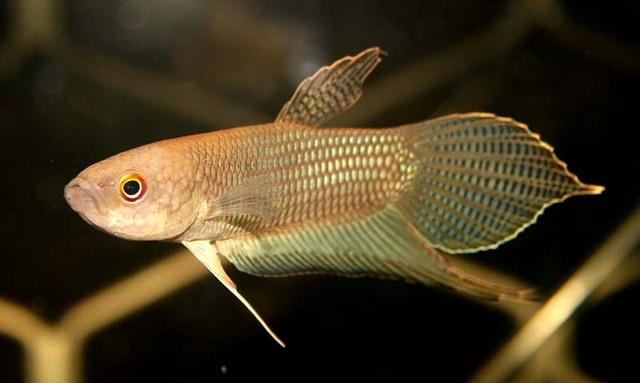
Betta ibanorum
Tan & Ng, 2004
Max length85mm SL3.3in SLTank80 × 30cm31 × 12inTemp24–28°C75–82°FpH4.0–7.0B. ibanorum is uncommon in the hobby and is apparently more frequently fished for food than the aquarium trade. It's included in the Betta akarensis group/complex of closely-related species within the genus, of which members share the following set of characters: possession of pre-orbital and post-orbital stripes (the post-orbital stripe is faint or interrupted in some species); chin bar present; caudal-fin lance...
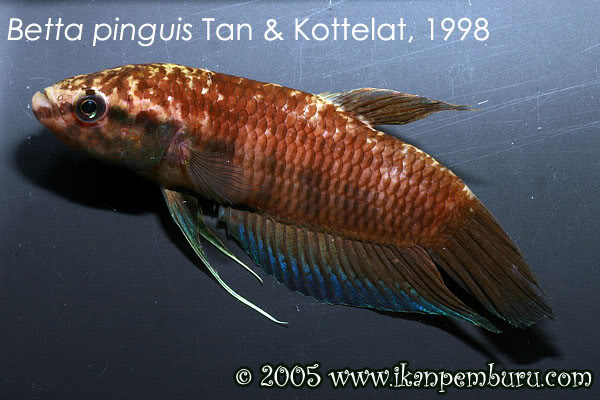
Betta pinguis
Tan & Kottelat, 1998
Max length80mm SL3.1in SLTank80 × 30cm31 × 12inTemp22–27°C72–81°FpH5.0–7.0B. pinguis is included in the Betta akarensis group/complex of closely-related species within the genus, of which members share the following set of characters: possession of pre-orbital and post-orbital stripes (the post-orbital stripe is faint or interrupted in some species); chin bar present; caudal-fin lanceolate with highly extended median rays in mature males; caudal fin usually with transverse bars; greenish or bluish iridescent scales on body of males in some species; opercle without iridescent scales except in juveniles.
Dimidiochromis compressicepsMalawi Eye-Biter
authority not recorded
Max length250mm SL10in SLTank150 × 38cm60 × 15inTemp23–28°C73–82°FpH7.5–8.8D. compressiceps is an ambush predator in nature, its laterally compressed shape and head-down hunting position allowing it to remain hidden among Vallisneria beds and making it tricky to spot in open water. It has a dark stripe running from the snout along the back to the tail which serves to provide further camouflage. Despite its common name, it does not prey solely on the eyes of other species, preferring to hunt small fish (particularly juvenile Copadichromis sp.). It swallows these tai...
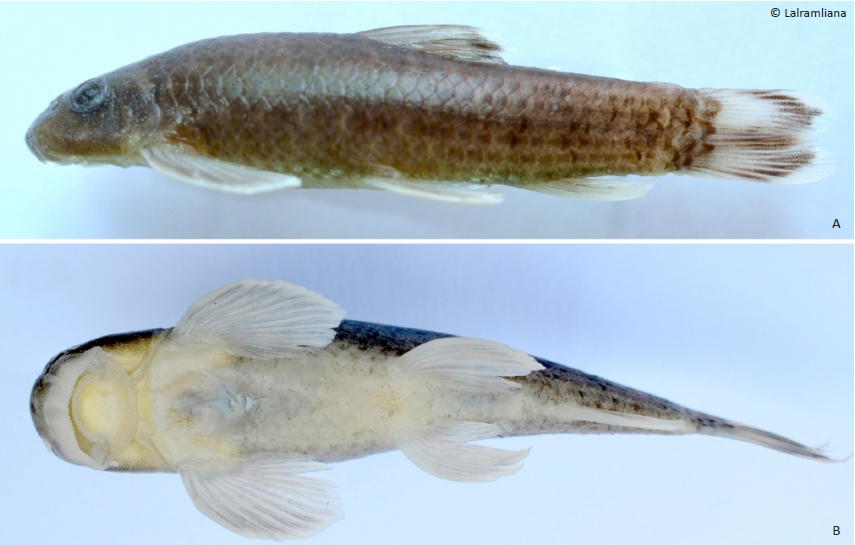
Garra dampaensis
Laironunga, Lainuntluanga & Lairamliana, 2013
Max length55mm SL2.2in SLTanknot recordedTempnot recordedpHnot recordedThis species can be told apart from Indian congeners by the following combination of characters: no transverse groove or proboscis on the snout; tip of dorsal fin falcate; long axillary scale present at the base of pelvic fin, reaching base of last pelvic fin ray; 27–29 lateral-line scales, 10–11 regularly arranged predorsal scales; W-shaped black band across middle of caudal fin; presence of scales on the abdomen.
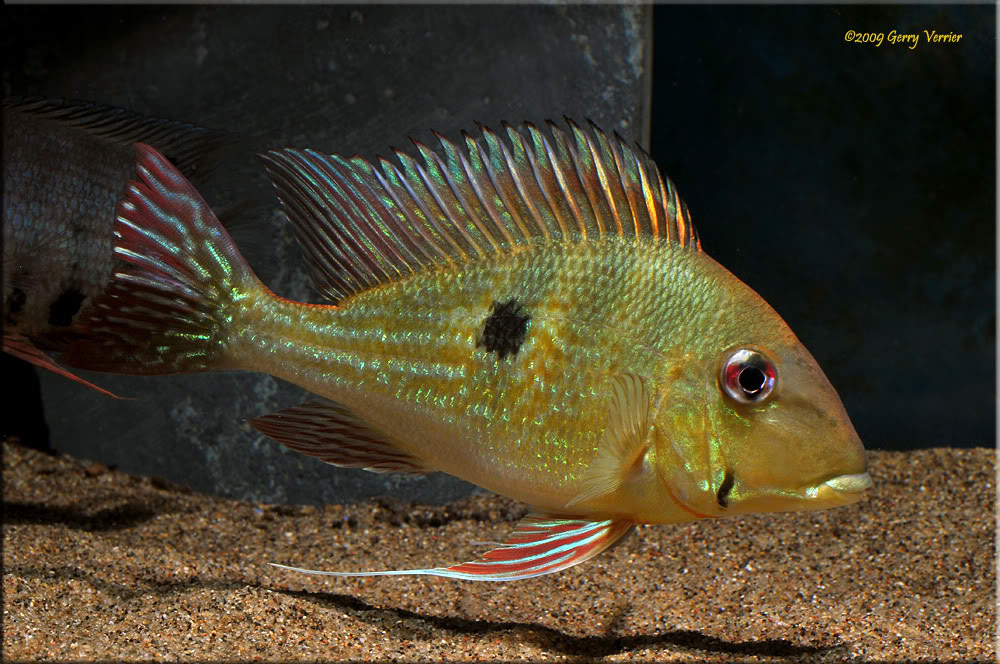
Geophagus dicrozoster
López-Fernández & Taphorn, 2004
Max length202mm SL8in SLTank180 × 60cm72 × 24inTemp26–30°C79–86°FpH4.0–7.0It's a member of the nominal G. surinamensis 'group' of closely-related species within the genus and can be identified by a combination of characters including: presence of dark preopercular markings; seven parallel vertical bars on each flank (normally visible only when the fish are stressed, spawning or preserved); vertical bars four and five meet in such a way that they form a 'Y' shape; dark lateral spot positioned within the third vertical bar; caudal fin reddish with variable pattern of iridescent blue spots and stripes.
Wallago leeriiStriped Wallago Catfish
authority not recorded
Max length2032mm SL80in SLTanknot recordedTemp22–26°C72–79°FpH6.0–7.0Wallago are fearsome predatory catfish that are fairly widespread in southeast Asia. There are currently five recognised species, W. attu, W. leerii, W. hexanema, W. maculatus and W. micropogon. The latter was described to science in 2004 by renowned catfish expert Heok Hee Ng and was previously considered to be a geographic variant of W. leerii. All members of the genus possess an enormous mouth full of backward pointing teeth, which are used to rip chunks from their prey. Smaller fish or amphi...
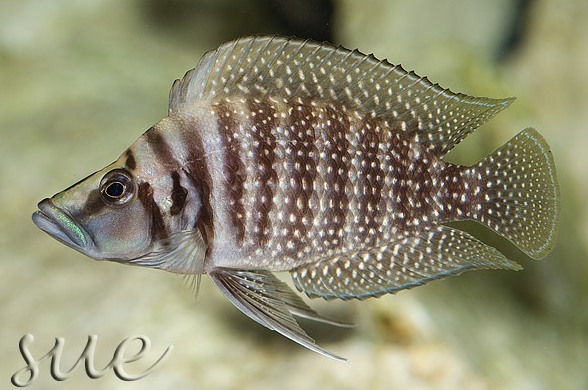
Altolamprologus calvusCalvus Cichlid
Poll, 1978
Max length138mm SL5in SLTanknot recordedTemp24–27°C75–81°FpH7.5–9.0A. calvus is a predator by nature and its body shape has been adapted to allow it to enter small crevices and gaps in the rockwork of Lake Tanganyika to prey on eggs, fry and small fish. Its laterally compressed shape makes the fish hard to spot head on, giving it an advantage over would be predators and prey alike. It is also quite well-armoured, possessing thick scales which can be turned towards potential attackers. These can cause real damage with their serrated edges. Several colour form...
Neolamprologus fasciatusBarred Lamprologus
authority not recorded
Max length150mm SL6in SLTank90 × 38cm36 × 15inTemp23–27°C73–81°FpH7.5–9.0N. fasciatus is a predator by nature and its body shape has been adapted to allow it to enter small crevices and gaps in the rockwork of Lake Tanganyika to prey on invertebrates, eggs, fry and small fish. The lateral compression exhibited by this fish also makes the fish hard to spot head on, giving it an advantage over both its predators and prey. It hunts in a head down position a few feet above the substrate, moving its body in sinuous motions to counteract the water currents. It is sometimes...
Thalassophryne amazonicaPrehistoric Monster Fish
authority not recorded
Matched on the common name Prehistoric Monster Fish
Max length150mm SL6in SLTank75 × 30cm30 × 12inTemp24–28°C75–82°FpHnot recordedThere are currently six described species in the genus Thalassophryne, of which T. amazonica is the only freshwater representative. The others (T. nattereri, T. maculosa, T. megalops, T. montevidensis and T. punctata) are all estuarine animals distributed along the western Atlantic coastlines of Central and South America and inhabit brackish-to-marine waters. They are members of the family Batrachoididae or toadfishes, of which most are exclusively marine species. All batrachoidids are ambush pr...
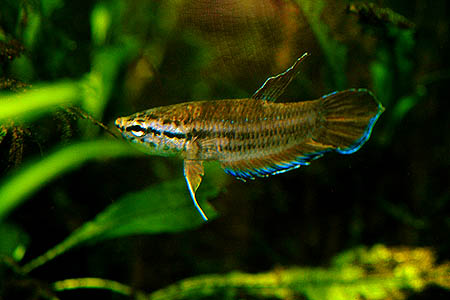
Betta pictaSpotted Betta
Valenciennes, 1846
Max length50mm SL2.0in SLTank60 × 30cm24 × 12inTemp22–28°C72–82°FpH5.5–7.5This species lends its name to the Betta picta complex of closely-related species, an assemblage of which members share the following combination of characters: unpaired fins rounded (anal fin sometimes pointed): I-III, 18-24 anal-fin rays; anal and caudal fins with dark distal margins, most pronounced in mature males; pre- and post-orbital stripes present; chin bar present; opercle with iridescent blue, green, or gold scales.
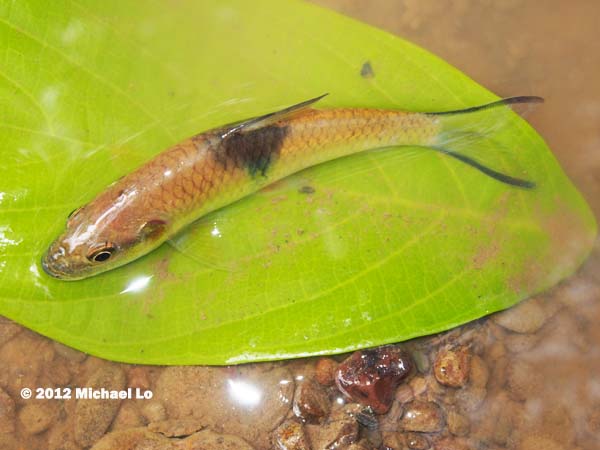
Hampala sabana
Inger & Chin, 1962
Max length410mm SL16in SLTanknot recordedTempnot recordedpHnot recordedPredominantly a riverine fish preferring clear, well-oxygenated, running waters with substrates of sand, gravel, rock or mud, and apparently displays a preference for deeper, slower-moving stretches. In Sabah such habitats typically flow through tropical forest, although in recent years freshwater habitats throughout much of the state have been extensively modified by human activity such as conversion to palm or rubber plantations.
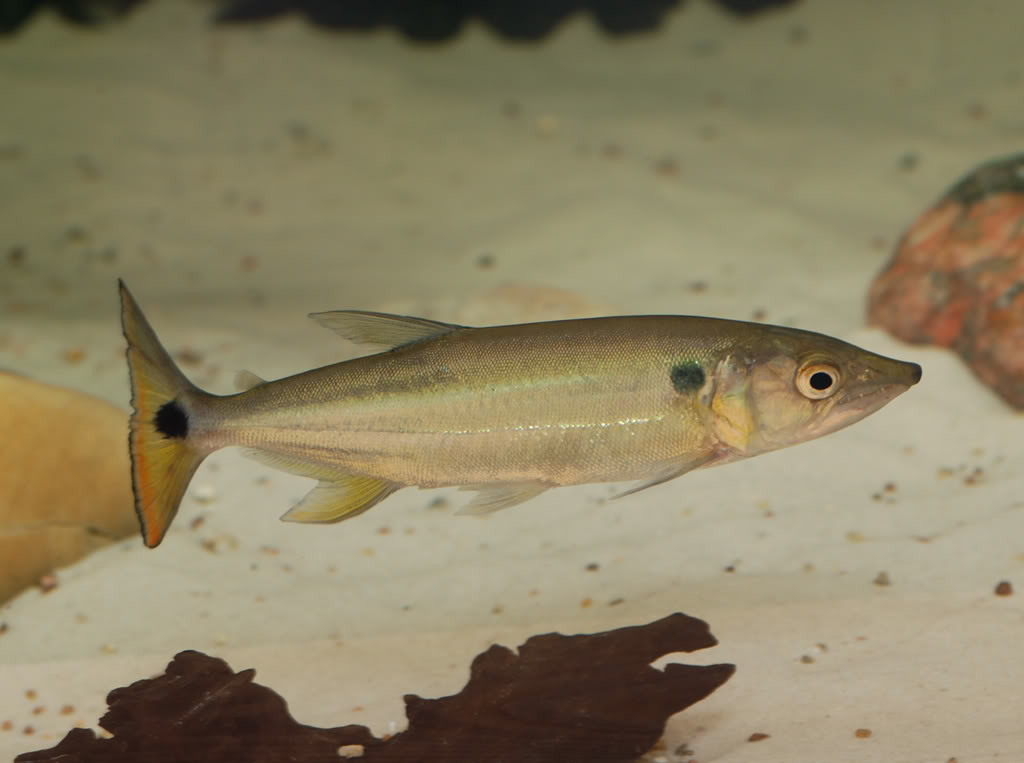
Acestrorhynchus pantaneiroPantanal Barracuda Tetra
Menezes, 1992
Max length240mm SL9in SLTank250 × 90cm98 × 36inTemp22–28°C72–82°FpH6.0–7.5An obligate piscivore capable of consuming surprisingly surprisingly large prey. Newly-imported specimens may refuse to accept anything but live fishes although most can be weaned onto dead alternatives once they recognise them as edible, and some even learn to accept dried foods- Like the vast majority of predatory fishes this specie...
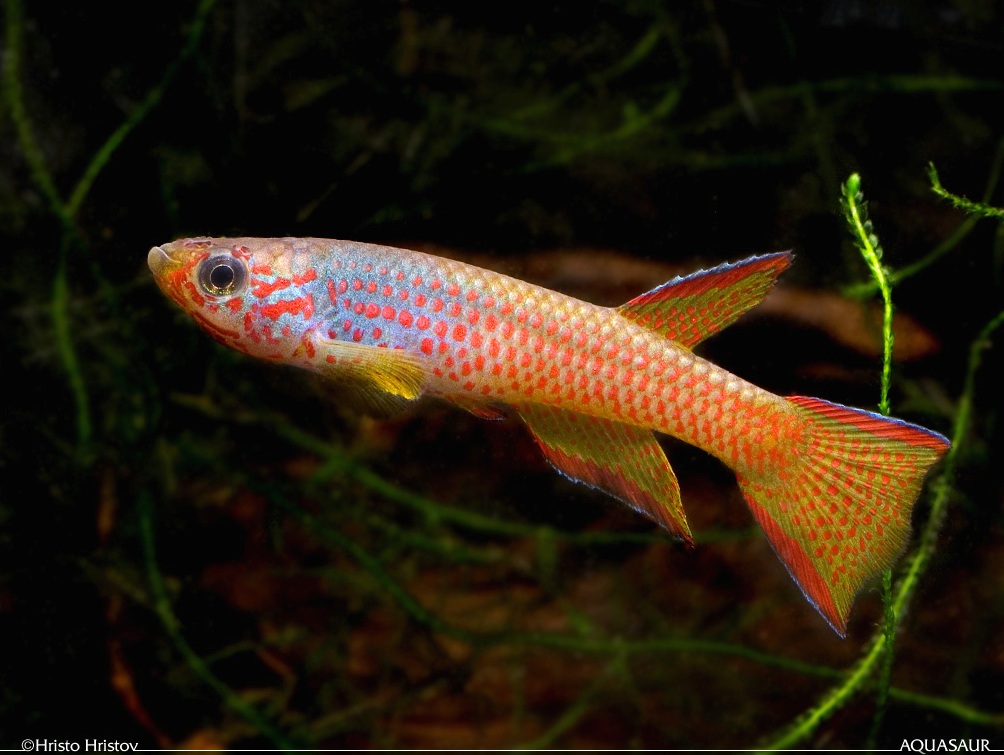
Aphyosemion cognatumRed-Spotted Lyretail
Meinken, 1951
Max length50mm SL2.0in SLTanknot recordedTempnot recordedpHnot recordedThe type material was derived from a commercial shipment of fishes from Leopoldville, now Kinshasa, Democratic Republic of Congo, and presumed to have been collected in the vicinity. The precise extent of its distribution unknown but appears extensive in the middle and lower Congo regions, with specimen collected from Lac Fwa (Sankuru River drainage, a Congo River tributary), many hundreds of kilometres west of Kinshasa, identified as belonging to this species.
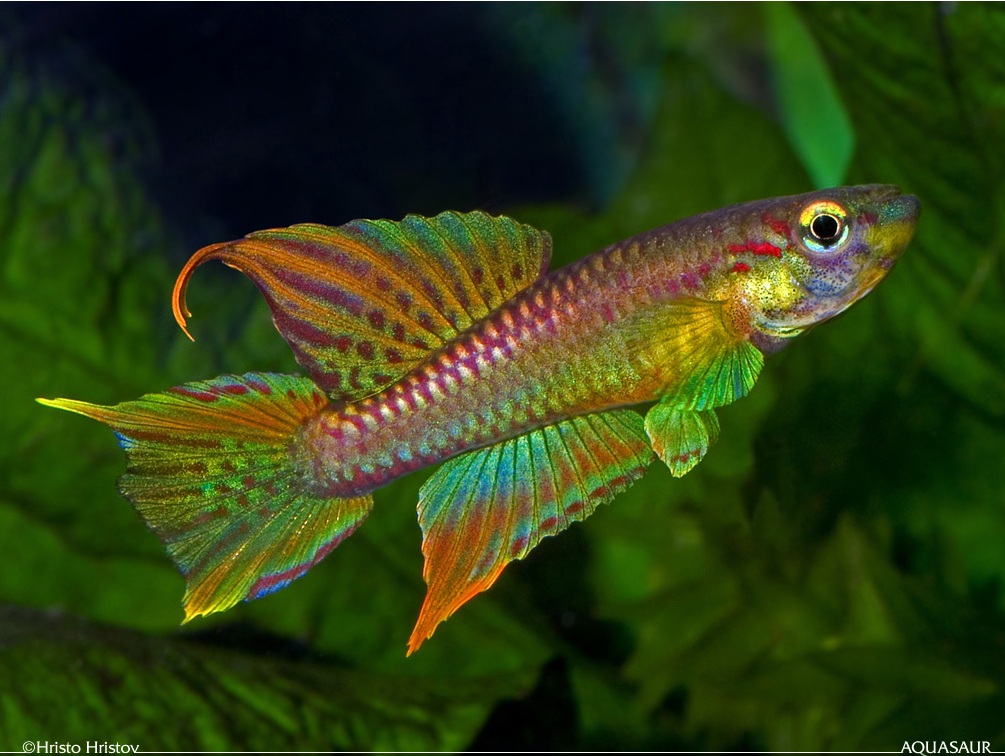
Aphyosemion splendopleureSplendid Lyretail
Brüning, 1929
Max length60mm SL2.4in SLTank45 × 25cm18 × 10inTemp22–26°C72–79°FpH6.0–7.2There exist several different colour forms of this species depending on collection locality, and these should not be kept together in order to prevent hybridisation and preserve bloodlines. It has been classified in the subgenus Chromaphyosemion by some authors who consider that nominal grouping to represent a monophyletic branch of a paraphyletic Aphyosemion.
Apistogramma alacrinaRedspot Dwarf Cichlid
Kullander, 2004
Max length♂ 55 · ♀ 37mm SL♂ 2.2 · ♀ 1.5in SLTank45 × 30cm18 × 12inTemp23–29°C73–84°FpH4.0–7.0This species differs from all other described members of the genus by the presence of dark blotches at the dorsal and ventral base of the pectoral fins. Three very similar-looking fishes have been assigned the codes A106, A107 and A108 under the DATZ system and are also known in the aquarium hobby as A. sp. 'rotpunkt' (this form has been in the hobby for decades with its precise origin unclear), A. sp. 'rotpunkt Orteguazas' (the paratype form of A. alacrina) and A. sp. 'rotpunkt Guayas', respectively. It remains to be seen whether they're conspecific with A. alacrina or not since they exhibit some differences in colour pattern and morphology.
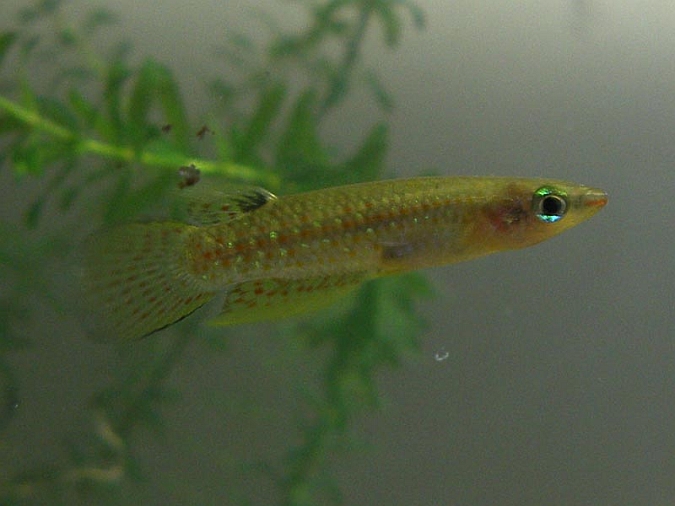
Aplocheilus parvusDwarf Panchax
Sundara Raj, 1916
Max length40mm SL1.6in SLTank45 × 30cm18 × 12inTemp20–28°C68–82°FpH6.0–8.5Aplocheilus spp. are surface-dwelling predators preying on both aquatic and terrestrial invertebrates. In the aquarium they will learn to accept dried foods in most cases but should also be offered regular meals of small live or frozen fare such as Artemia, Daphnia, chironomid larvae (bloodworm), etc.
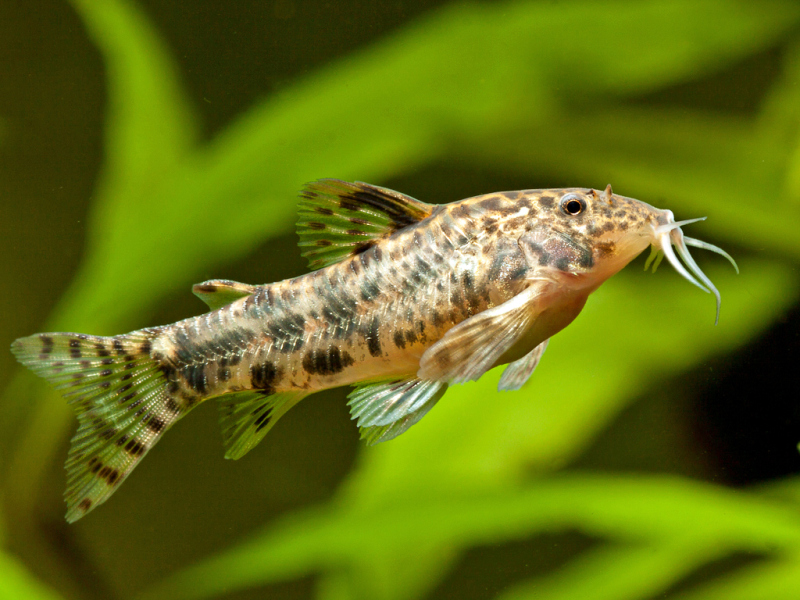
Aspidoras taurus
Lima & Britto, 2001
Max length55mm SL2.2in SLTank75 × 30cm30 × 12inTemp20–25°C68–77°FpH6.0–7.5A. taurus can be told apart from congeners by the following combination of characters: infraorbitals and preopercle covered by thick skin and not visible externally (vs. covered by thin skin and externally visible in other Aspidoras); nuchal plate reduced, covered by thick skin and not visible externally (vs. well developed, covered by thin skin and visible externally); lateral line absent posterior to two small lateral line ossicles (vs. lateral line present on at least first body plate).