Results for “sp.”
Type a name: scientific, common, or one a species used to go by. Or narrow the catalogue with the filters.
Filters
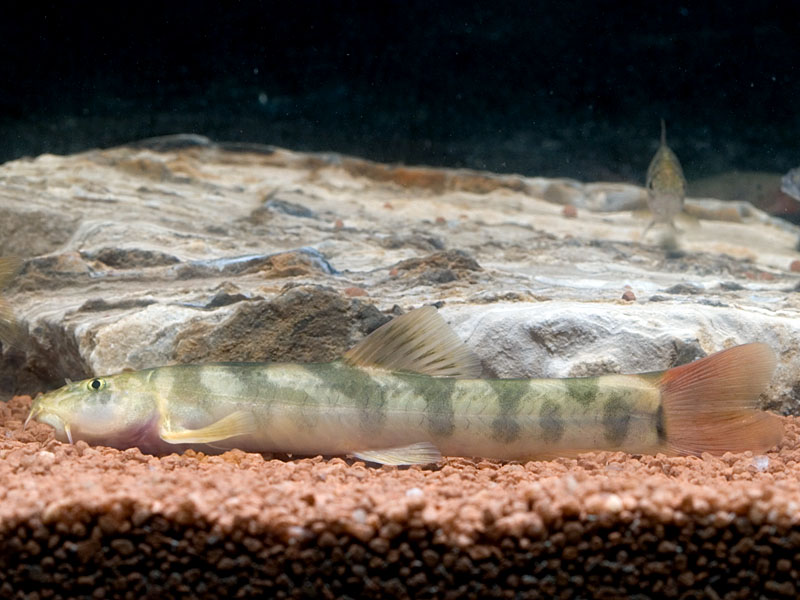
Schistura spilota
Fowler, 1934
Matched on Nemacheilus spilotus, a name it was formerly known by
Max length100mm SL3.9in SLTank120 × 30cm48 × 12inTemp20–26°C68–79°FpH6.0–7.5Not a commonly species in the aquarium hobby but sporadically available in shipments of wild fishes from Thailand. Following Kottelat (1990) it's a member of a group of species possessing a complete or near-complete lateral line, 8 ½ branched dorsal-fin rays, 17 branched caudal-fin rays and lacking sexual dimorphism (the latter is not strictly true - see above). Its colour pattern is quite distinctive, howe...
Protomelas sp. steveni "Taiwan reef"
authority not recorded
Max length140mm SL6in SLTank120 × 45cm48 × 18inTemp24–28°C75–82°FpH7.6–8.8Protomelas sp. "steveni taiwan reef" is often sold as a subspecies of P. fenestratus, but is actually thought not to be synonymous and is currently undescribed. It can be distinguished from similar species such as P. fenestratus and P. taeniolatus by the bright redof adult males. None of these related species or morphs should be kept together in aquaria as they may hybridise. Some captive spawns of this species have resulted in albino fry. It is one of the more popular and readily a...
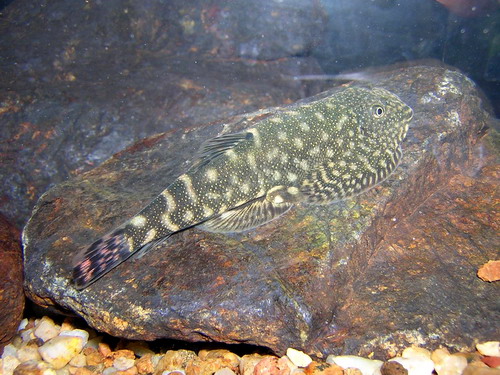
Gastromyzon sp. 'SK01'
authority not recorded
Max length50mm SL2.0in SLTank60 × 30cm24 × 12inTemp20–24°C68–75°FpH6.5–8.0This undescribed species has probably not been seen in the aquarium trade yet but is occasionally maintained private collectors. The 'SK' numbering system used here refers to 'South Kalimantan', home to several unidentified members of the genus. Gastromyzon spp. are placed into various 'species groups' (artificial assemblages of species which may or may not be monophyletic) for ease of reference, and based on colour and patterning G. sp. 'SK01' appears similar to members of the G. ridens group which also includes G. crenastus, G. stellatus and G. zebrinus.
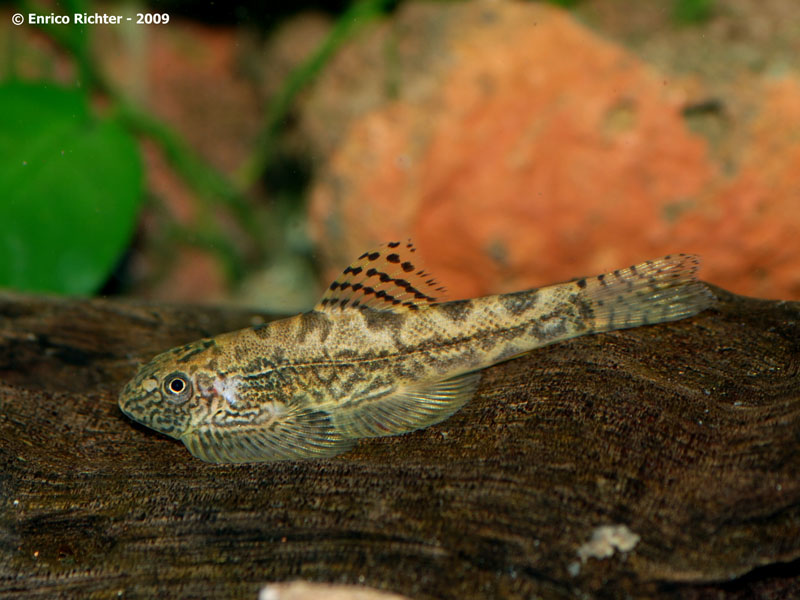
Sewellia sp. 'SEW02'
authority not recorded
Max length65mm SL2.6in SLTank75 × 30cm30 × 12inTemp18–24°C64–75°FpH6.0–7.5This species first became available in early 2009 and was initially identified as S. breviventralis (Freyhof and Serov, 2000) because there is a clear space between the pelvic and anal fins and body patterning is vaguely similar to that species, and also appears quite similar to S. elongata (Roberts, 1998) and S. sp. 'SEW03'. It does not fully match the original descriptions of either, however, and therefore remains in need of identification.
Champsochromis spilorhynchus
authority not recorded
Max length350mm SL14in SLTank180 × 60cm72 × 24inTemp24–27°C75–81°FpH7.5–8.5This species is only occasionally offered for sale, as it is difficult to collect, living a predominantly solitary lifestyle. As a result, it is much sought after by enthusiasts. It may be confused with the other species in the genus, C. caerulus, but can be distinguished by its deeper body shape and very distinctive black markings on its snout. Champsochromis have widely spaced teeth compared to some other pelagic predatory cichlids found in Lake Malawi, such as Buccochromis species....
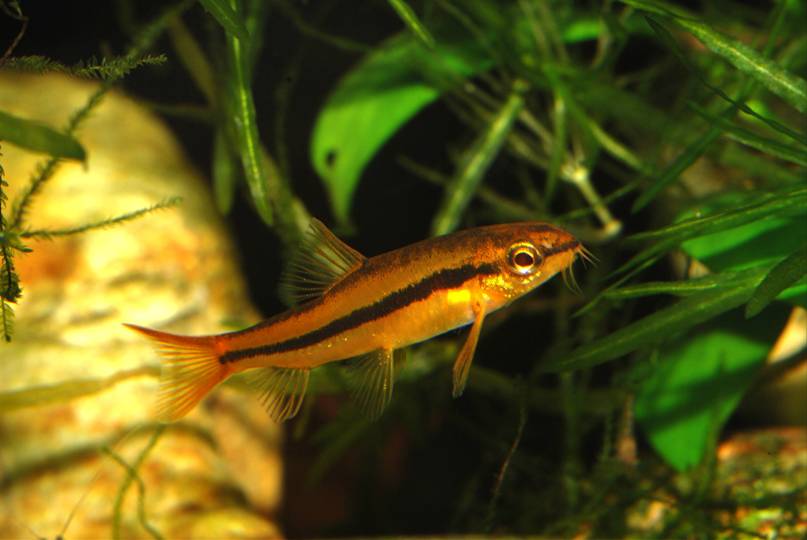
Petruichthys sp. 'rosy'Rosy Loach
authority not recorded
Max length30mm SL1.2in SLTank60 × 30cm24 × 12inTemp20–26°C68–79°FpH6.5–8.0This species continues to be referred to by the fictitious scientific name 'Tuberoschistura arakensis' but actually appears to be an undescribed Yunnanilus sp. and is also sometimes traded as Y. sp. 'orange' or 'Burmese pink loach' but appears to be a member of the genus Petruichthys as per Kottelat (2012). There exist more than 30 described Yunnanilus spp., the...
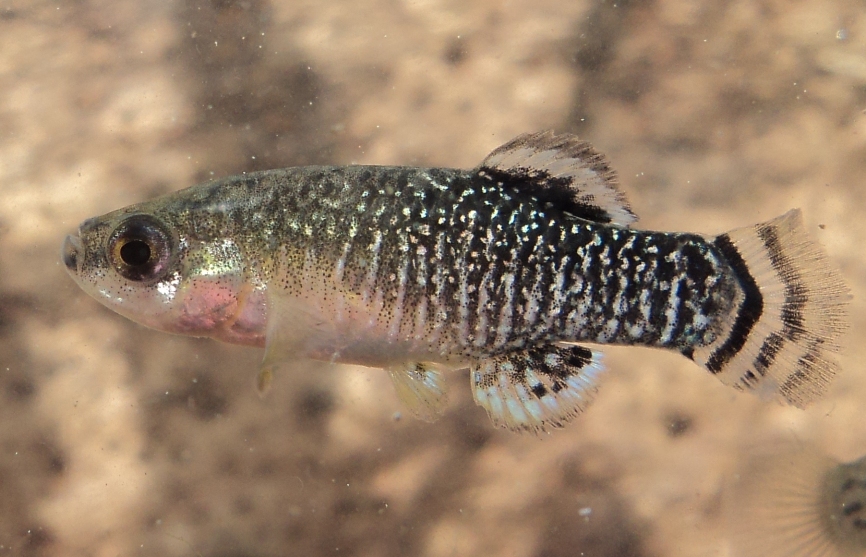
Apricaphanius iberusSpanish Toothcarp
Valenciennes, 1846
Matched on the common name Spanish Toothcarp
Max length50mm SL2.0in SLTank120 × 30cm48 × 12inTemp2–30°C36–86°FpH7.0–9.0Populations of Aphanius from Spain's southern, Atlantic coastline and Algeria previously considered representative of A. iberus have now been elevated to full species status with the names A. baeticus (Doadrio, Carmona & Fernández-Delgado, 2002) and A. saourensis (Blanco, Hrbek & Doadrio, 2006), respectively. All three species look broadly similar although A. saourensis can be easily identified as the patterning in males is mottled and does not form vertical bars, while femal...
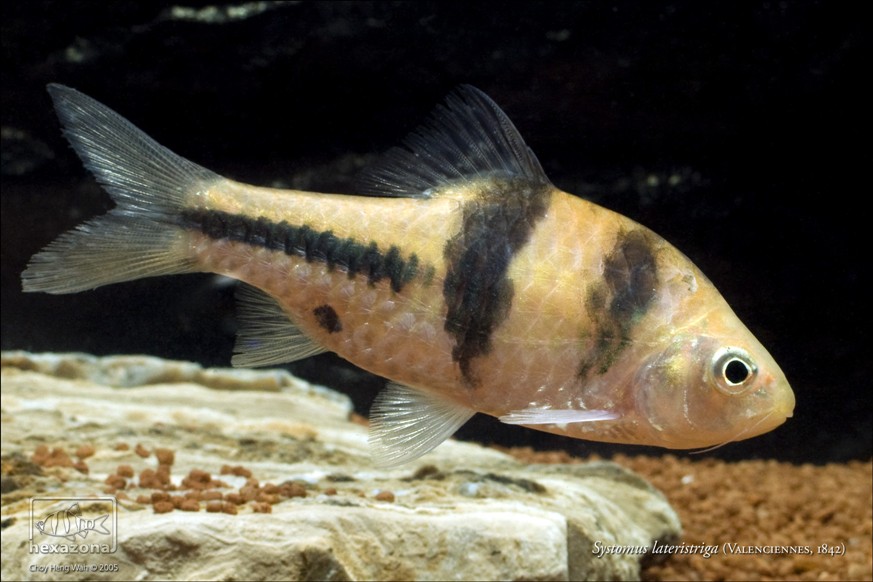
Barbodes lateristrigaSpanner Barb
Valenciennes, 1842
Matched on the common name Spanner Barb
Max length150mm SL6in SLTank150 × 45cm60 × 18inTemp20–28°C68–82°FpH6.0–8.0This species is commonly-referred to as 'T-barb' in some countries. It's closely-affiliated with and sometimes traded as the congener B. kuchingensis but that species can be told apart by colour pattern comprising a prominent row of dark spots along the lateral line, plus a short, horizontally-orientated streak extending from the upper part of the operculum. In B. lateristriga the lateral markings usually form a solid stripe and there is no streak extending from the operculum.
Corydoras melanistiusSpotted Cory
authority not recorded
Matched on the common name Spotted Cory
Max length55mm SL2.2in SLTank45 × 30cm18 × 12inTemp22–26°C72–79°FpH6.0–7.0There are currently over 180 described species of Corydoras (commonly shortened to "cory"), making it one of the most speciose of all South American fish genera. There are also loads of undescribed species, many of which have been assigned a "C number" for identification purposes. This is a very simple system of numbering and is similar to the L number scheme used to identify undescribed Loricariids. Both systems were implemented by the German aquarium magazine DATZ (Die Aqua...
Corydoras similisSmudge Spot Cory
authority not recorded
Matched on the common name Smudge Spot Cory
Max length60mm SL2.4in SLTank45 × 30cm18 × 12inTemp21–27°C70–81°FpH5.6–7.0There are currently over 180 described species of Corydoras (commonly shortened to "cory"), making it one of the most speciose of all South American fish genera. There are also loads of undescribed species, many of which have been assigned a "C number" for identification purposes. This is a very simple system of numbering and is similar to the L number scheme used to identify undescribed Loricariids. Both systems were implemented by the German aquarium magazine DATZ (Die Aqua...
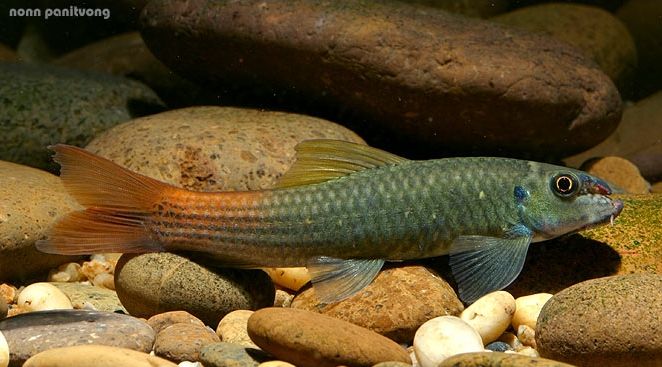
Garra sp. 'redtail'Burmese Red-tailed Garra
authority not recorded
Max length75mm SL3.0in SLTank120 × 30cm48 × 12inTemp20–27°C68–81°FpH6.0–7.5A putatively undescribed species often imported and sold as G. sp. 'burmanicus'. It first appeared in the trade during 2005 and has since been available on a sporadic basis, usually with a relatively high price tag. As well as its unique colour pattern, a primary diagnostic character is the presence of a proboscis-like rostral process between the eyes.
Melanotaenia splendida rubrostriataRed-striped Rainbowfish
authority not recorded
Max length125mm SL5in SLTank120 × 30cm48 × 12inTemp24–30°C75–86°FpHnot recordedThere are currently 4 described subspecies of Melanotaenia splendida, of which this species is one of the most colourful. The principle differences are generally in colour, pattern and fin counts, although even these vary depending on the locality of the fish. The different forms and subspecies should not be mixed in the aquarium, as they may hybridise. Adult specimens are rarely seen for sale, and it's the much drabber juvenile fish that are almost always offered in dealers tanks. However,...
Mogurnda mogurndaNorthern Purple Spotted Gudgeon
authority not recorded
Matched on the common name Northern Purple Spotted Gudgeon
Max length170mm SL7in SLTank120 × 30cm48 × 12inTemp24–26°C75–79°FpH6.0–8.0A good species of gudgeon for the beginner, being tolerant of a wide range of water conditions, hardy and easily bred. We've even seen them spawning in dealer's tanks on more than one occasion. It's easily confused with the similar looking, but rarer Southern purple spotted gudgeon, Mogurnda adspersa, a fish which is now being farmed for the trade despite being endangered in nature....
Potamotrygon sp. "pearl"Pearl Ray
authority not recorded
Max length600mm SL24in SLTank240 × 90cm96 × 36inTemp23–29°C73–84°FpHnot recordedThis undescribed species must rank among the most jaw-dropping freshwater fish yet seen in the hobby. A good-sized adult makes a truly incredible sight. Unfortunately due to the current ban on ray exports from Brazil it is almost unobtainable and correspondingly expensive when it is. The handful of captive-bred specimens released each year can cost up to £1000 each, and we know of only a single breeder in the UK. The patterning of this "species" is highly variable, with...
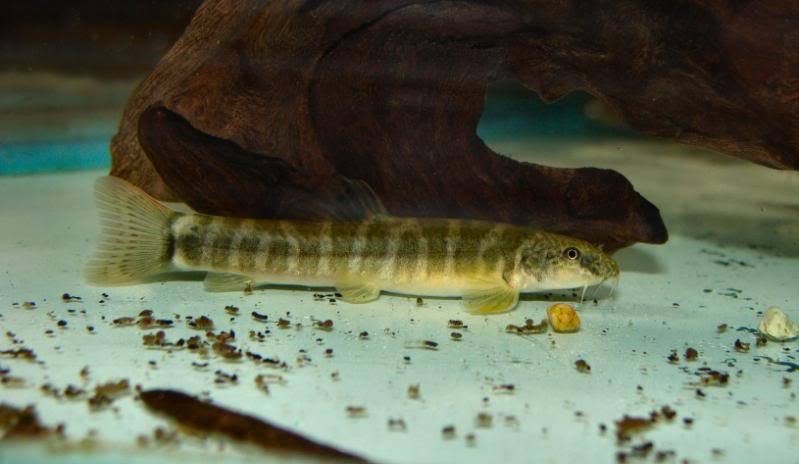
Schistura sp. 2Laos Redtail Loach
authority not recorded
Max length45mm SL1.8in SLTank80 × 30cm31 × 12inTemp20–26°C68–79°FpH6.0–7.5The identity of this fish is unclear but it has been traded as S. sp. 'Laos redtail'. Schistura is the most species-rich genus among nemacheilid loaches with some 190 members and it continues to grow with over 100 having been described since 1990. It may repre...
Sperata aorIndian Shovelnose Catfish
authority not recorded
Max length1800mm SL71in SLTank720 × 180cm283 × 72inTemp20–25°C68–77°FpH6.0–7.0This "shovelnose" is unique amongst bagrids, but superficially resembles several unrelated South American catfish species. It's common name is derived from it's flattened, extended head. We cannot stress strongly enough that this is a species totally unsuited to aquarium life. Alarmingly, it is can sometimes be spotted in dealer's tanks. When small, it makes an interesting and undeniably impressive addition to a large aquarium but bearing in mind its enormous adult size,...
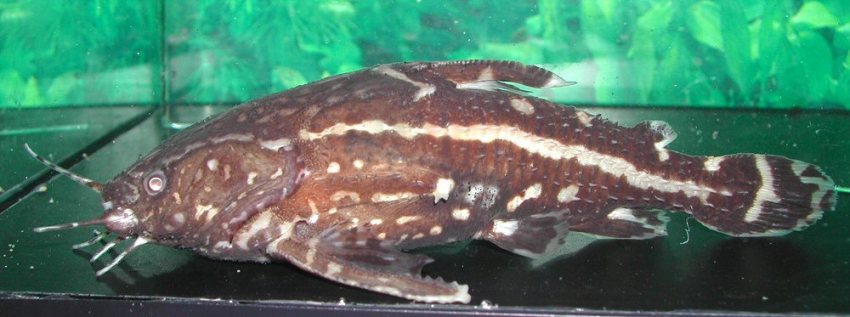
Acanthodoras spinosissimusChocolate Talking Catfish
Eigenmann & Eigenmann, 1888
Matched on Doras spinosissimus, a name it was formerly known by
Max length137mm SL5in SLTank120 × 30cm48 × 12inTemp22–26°C72–79°FpH6.0–7.5This species, which may also be referred to by the alternative vernacular names 'spiny catfish', 'painted talking catfish' or 'chocolate raphael', isn't particularly common in the trade and most often exported only as bycatch among shipments of Platydoras armatulus. It appears very similar to A. cataphractus with the most useful external distinguishing character being the presence of pale blotches on the dorsal surface, between the dorsal and caudal fins, in....
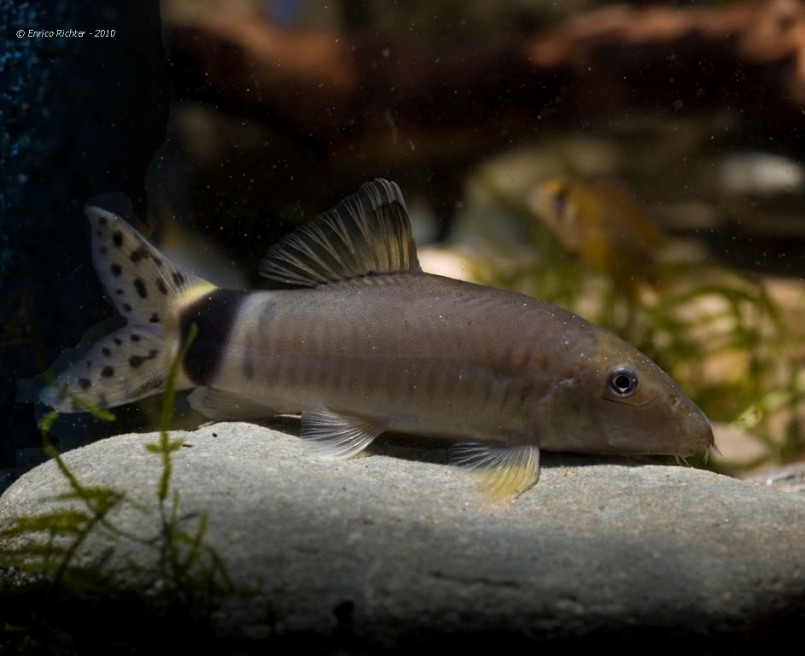
Yasuhikotakia splendida
Roberts, 1995
Matched on Botia splendida, a name it was formerly known by
Max length100mm SL3.9in SLTank120 × 30cm48 × 12inTemp20–28°C68–82°FpH6.0–7.5This species first appeared in the trade during 2009 with prices initially variable but in the main prohibitively expensive, and it remains expensive when available. We've seen it on sale under various names including 'jaguar loach', 'splendid loach' and 'yellow-tail polka dot loach'. It appears superficially similar to Y. caudipunctata, Y. longidorsalis and Y. morleti but can be distinguished from all by a combination of characters of which the most immedia...
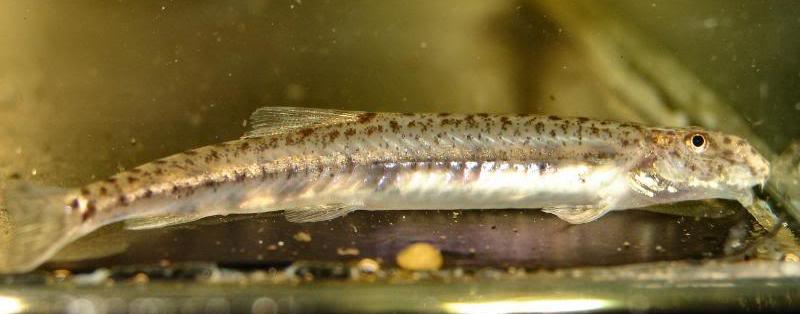
Acanthopsoides sp. 'A02'
authority not recorded
Max length55mm SL2.2in SLTank60 × 30cm24 × 12inTemp20–24°C68–75°FpH5.5–7.0Acanthopsoides spp. are most closely related to the horse-faced loaches of the genus Acantopsis with which they often co-occur in nature, and thus commonly referred to as 'dwarf horse-face loaches'. The genus currently comprises five species of which four were described by Siebert (1991);...
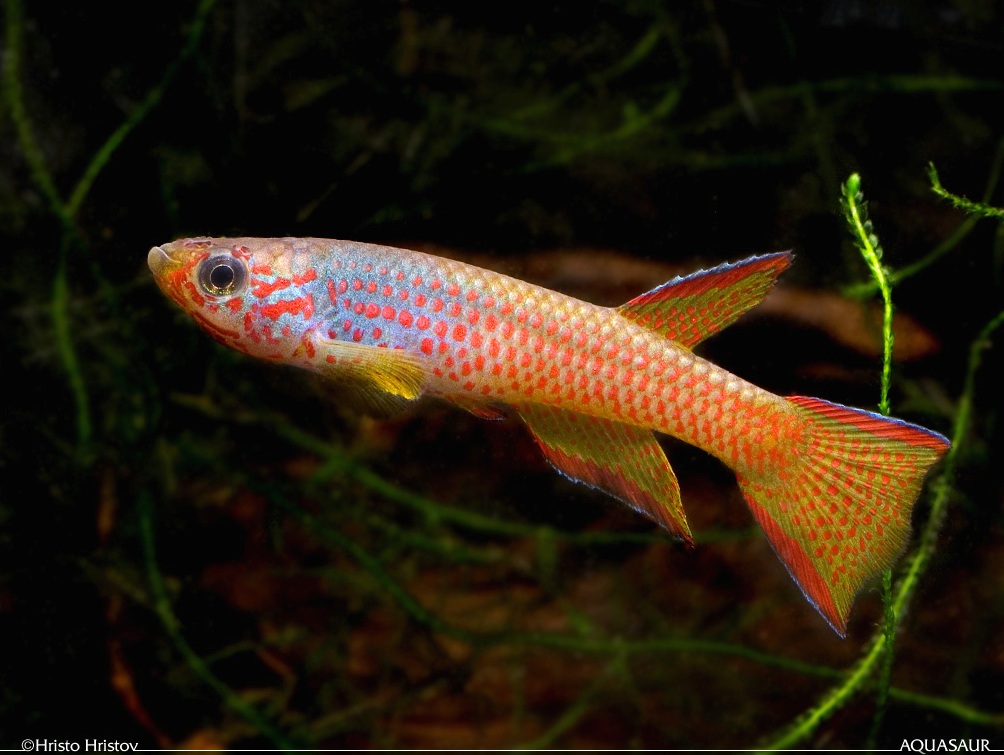
Aphyosemion cognatumRed-Spotted Lyretail
Meinken, 1951
Matched on the common name Red-Spotted Lyretail
Max length50mm SL2.0in SLTanknot recordedTempnot recordedpHnot recordedThe type material was derived from a commercial shipment of fishes from Leopoldville, now Kinshasa, Democratic Republic of Congo, and presumed to have been collected in the vicinity. The precise extent of its distribution unknown but appears extensive in the middle and lower Congo regions, with specimen collected from Lac Fwa (Sankuru River drainage, a Congo River tributary), many hundreds of kilometres west of Kinshasa, identified as belonging to this species.