Results for “sp.”
Type a name: scientific, common, or one a species used to go by. Or narrow the catalogue with the filters.
Filters
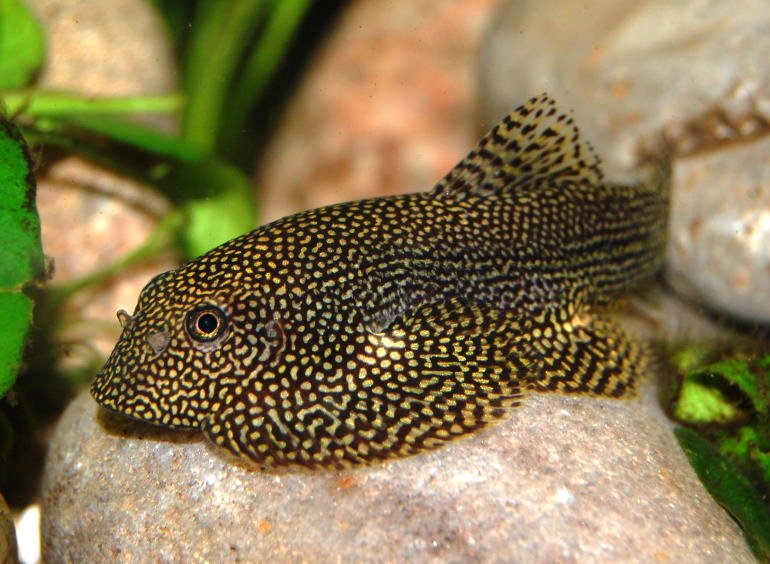
Sewellia sp. 'SEW01'Spotted Butterfly Loach
authority not recorded
Matched on the common name Spotted Butterfly Loach
Max length80mm SL3.1in SLTank90 × 30cm36 × 12inTemp20–24°C68–75°FpH6.0–7.5This is one of the more readily-available members of the genus and popularly referred to as S. sp. 'spotted' or S. sp. 'special'. It's superficially similar in appearance to S. albisuera but in that species body patterning consists of a network of irregular dark lines forming a complicated series of reticulations vs. many small, light spots on a dark background in S. sp. 'SEW01'. It's been suggested that these two may represent the same species but this...
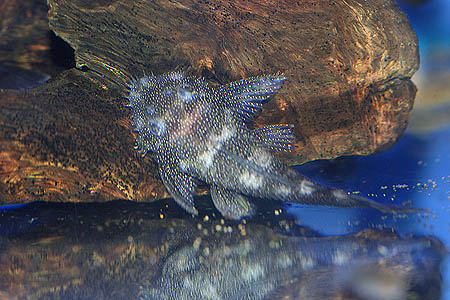
Ancistrus sp.L255
authority not recorded
Matched on the common name Spotted Medusa Plec
Max length130mm SL5in SLTank80 × 30cm31 × 12inTemp25–30°C77–86°FpH6.0–7.0A somewhat odd-looking species with a distinctive wide head and overall flattened profile. Unfortunately this fish is not the easiest fish to keep alive in the aquarium since it requires rather specialised conditions and is often in poor condition post-import.
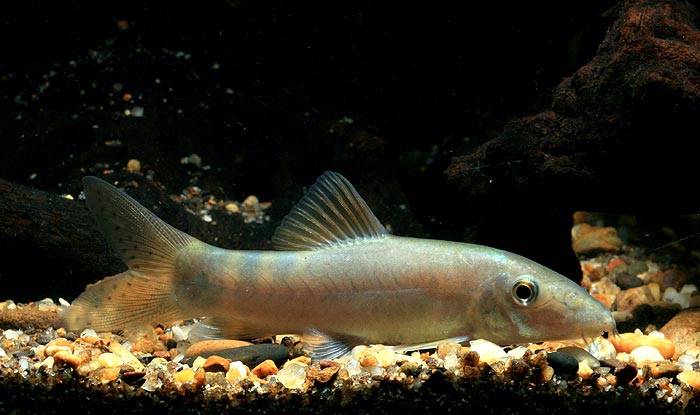
Yasuhikotakia caudipunctataSpeckle-tailed Loach
Taki & Doi, 1995
Matched on the common name Speckle-tailed Loach
Max length100mm SL3.9in SLTank120 × 30cm48 × 12inTemp23–30°C73–86°FpH6.0–7.5This specie is relatively rare in the aquarium trade and much sought after by enthusiasts as a result. It looks relatively similar to Y. splendida but can be told apart from it, and indeed all other members of the genus, by the following combination of characters: possession of 8 branched dorsal-fin rays; 32-33 vertebrae; one or two small, brownish, vertically-orientated markings on the dorsal part of the body posterior to the dorsal fi...
Peckoltia sp.Big Spot Peckoltia
authority not recorded
Matched on the common name Big Spot Peckoltia
Max length110mm SL4in SLTank75 × 30cm30 × 12inTemp23–26°C73–79°FpH6.5–7.2Commonly known as the big spot peckoltia, there is ongoing argument that this species should be included in the genus Hemiancistrus. As things stand, there has not yet been any scientific confirmation of this and the species remains undescribed. It's also often confused with the very similar-looking L013, another undescribed fish. These two species can only easily be distinguished as they mature, as L163 retains its spotted patterning, while L013 tends to become somewhat duller. When b...
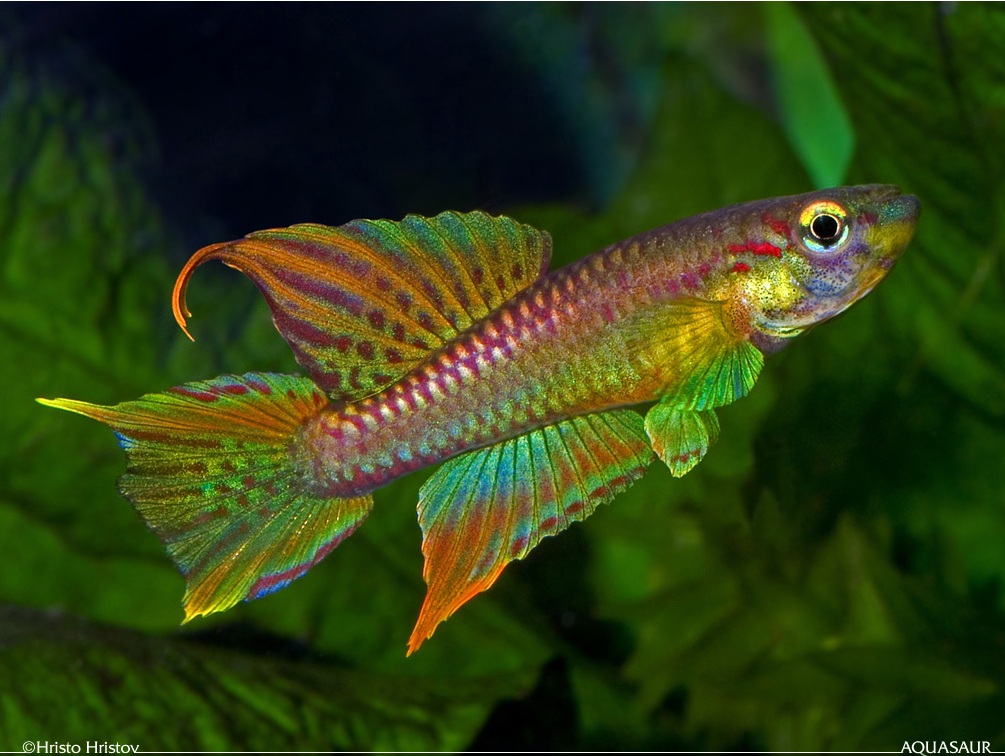
Aphyosemion splendopleureSplendid Lyretail
Brüning, 1929
Matched on Fundulopanchax splendopleuris, a name it was formerly known by
Max length60mm SL2.4in SLTank45 × 25cm18 × 10inTemp22–26°C72–79°FpH6.0–7.2There exist several different colour forms of this species depending on collection locality, and these should not be kept together in order to prevent hybridisation and preserve bloodlines. It has been classified in the subgenus Chromaphyosemion by some authors who consider that nominal grouping to represent a monophyletic branch of a paraphyletic Aphyosemion.
Chaetostoma sp.Spotted Bulldog Plec
authority not recorded
Matched on the common name Spotted Bulldog Plec
Max length120mm SL5in SLTanknot recordedTemp20–22.8°C68–73°FpH6.8–7.8Also known popularly as the rubbernose plecs, Chaetostoma species are seen for sale quite often these days. This is one of the more commonly seen, and provided its needs are adequately met, is a very hardy little fish. There's a bit of mystery surrounding its true identity, hence the species name, and it's sometimes misidentified in shops. The true L187 is currently known as Chaetostoma pearsei, and is a white-spotted fish. When buying Loricariids such as this always check the fish ...
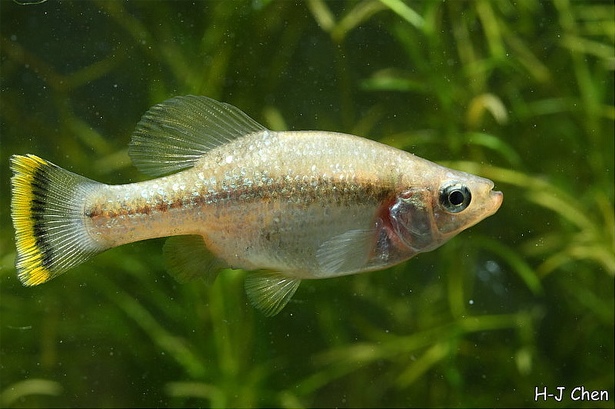
Ameca splendensButterfly Goodeid
Miller & Fitzsimons, 1971
Matched on Ameca splendens, a name it was formerly known by
Max length90mm SL3.5in SLTank90 × 30cm36 × 12inTemp24°C75°FpH7.0–8.0Despite often being referred to as extinct in the wild this monotypic species is still surviving at a few localities. It's not particularly scarce in the hobby with strong captive populations existing, some of which have been selectively bred to produce variations in colour and patterning. As with other goodeids, there is less of a size difference between the sexes than in many other livebearers. This is thought to be related to the relatively primitive...
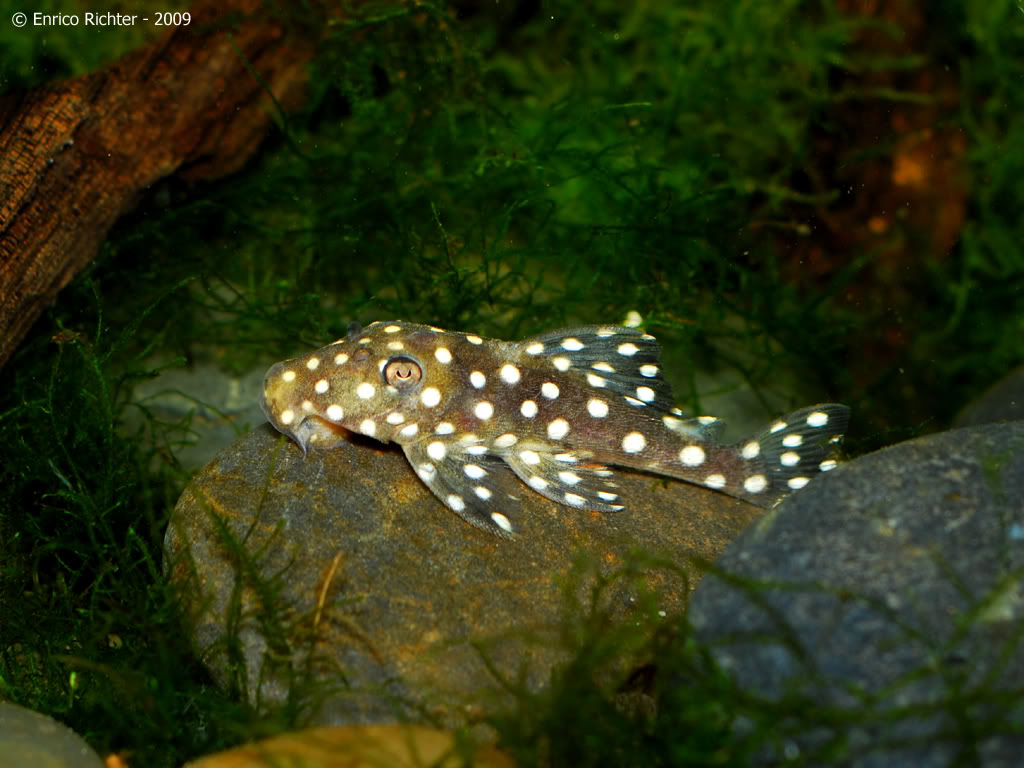
Baryancistrus sp. L142Big White Spot Pleco
authority not recorded
Matched on the common name Big White Spot Pleco
Max length250mm SL10in SLTank120 × 45cm48 × 18inTemp27–32°C81–90°FpH6.0–7.5The genus Baryancistrus can be distinguished from all other loricariids by possession of an enlarged membrane located posteriorly to the last branched dorsal-fin ray. This membrane may or may not reach the supporting structure of the adipose fin and in this way members can be told apart from the genera Oligancistrus, Parancistrus, and Spectracanthicus, in which the dorsal and adipose fins are completely connected, and Hemiancistrus...
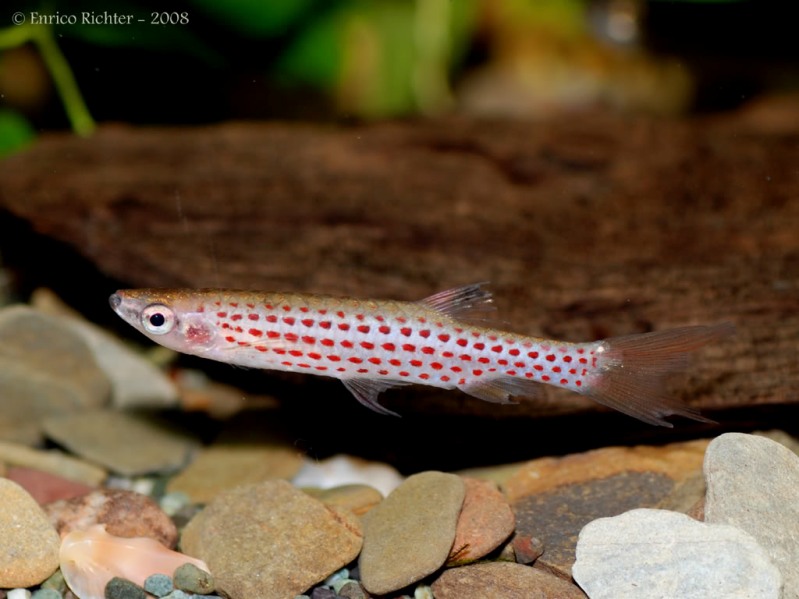
Copella meinkeniSpotted Splashing Tetra
Zarske & Géry, 2006
Matched on the common name Spotted Splashing Tetra
Max length45mm SL1.8in SLTank60 × 30cm24 × 12inTemp20–28°C68–82°FpH4.0–7.0This species has been widely referred to as the congener C. nattereri in aquarium literature both prior to and post-publication of its official description in 2006. The two can be told apart quite easily by the fact that C. nattereri possesses a dark lateral stripe while C. meinkeni does not. C. meinkeni can be distinguished from all congeners by the followi...
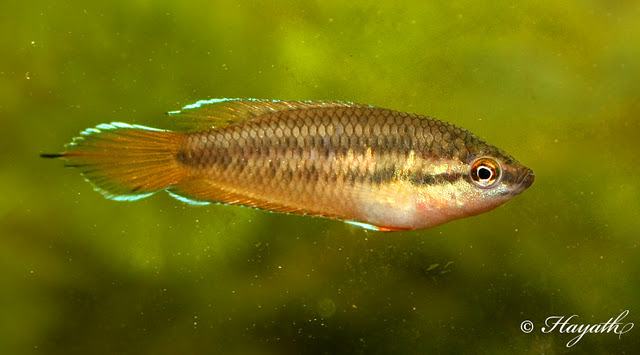
Pseudosphromenus dayiBrown Spike-tailed Paradise Fish
Engman, 1909
Matched on the common name Brown Spike-tailed Paradise Fish
Max length65mm SL2.6in SLTank60 × 30cm24 × 12inTemp20–28°C68–82°FpH6.0–7.5Engmann (1909) mentions that the type series was collected from 'Malakka' but this is considered an error which probably should have read 'Kerala' since this species is known only from coastal drainages of the Western Ghats mountains in southern Kerala state, India.
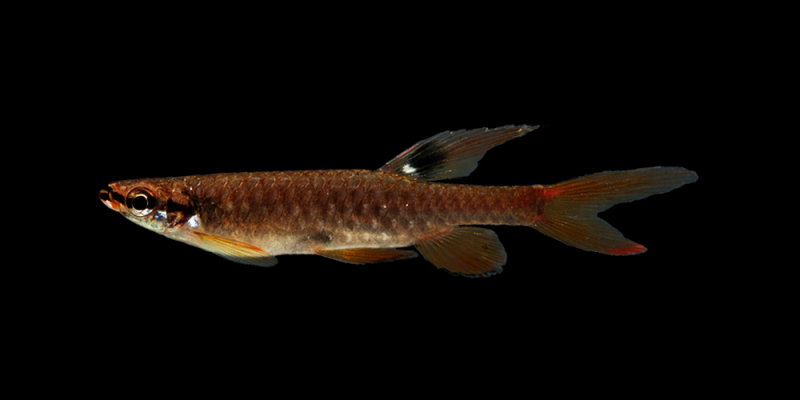
Copella arnoldiSplash Tetra
Regan, 1912
Matched on the common name Splash Tetra
Max length55mm SL2.2in SLTank90 × 30cm36 × 12inTemp20–28°C68–82°FpH4.0–7.5This species is also known as the 'spraying', 'splashing' or 'jumping' tetra and these names are also sometimes applied to its congeners although none of them exhibit a comparable spawning strategy, simply depositing their eggs among vegetation at or around the water surface.
Hypostomus sp.
authority not recorded
Max length200mm SL8in SLTanknot recordedTemp23–27°C73–81°FpH6.0–7.5This undescribed species is part of the Hypostomus cochliodon species complex, all members of which were previously included in the genus Cochliodon, now considered a synonym of Hypostomus. Members of this group can be distinguished from congeners by several differences in morphology, most notably the hump-backed profile of mature fish and spoon-shaped dentition. These features, along with the fishes tendency to eat wood, are shared with the Panaque genus of the Ancistrinae subfamily, but the tw...
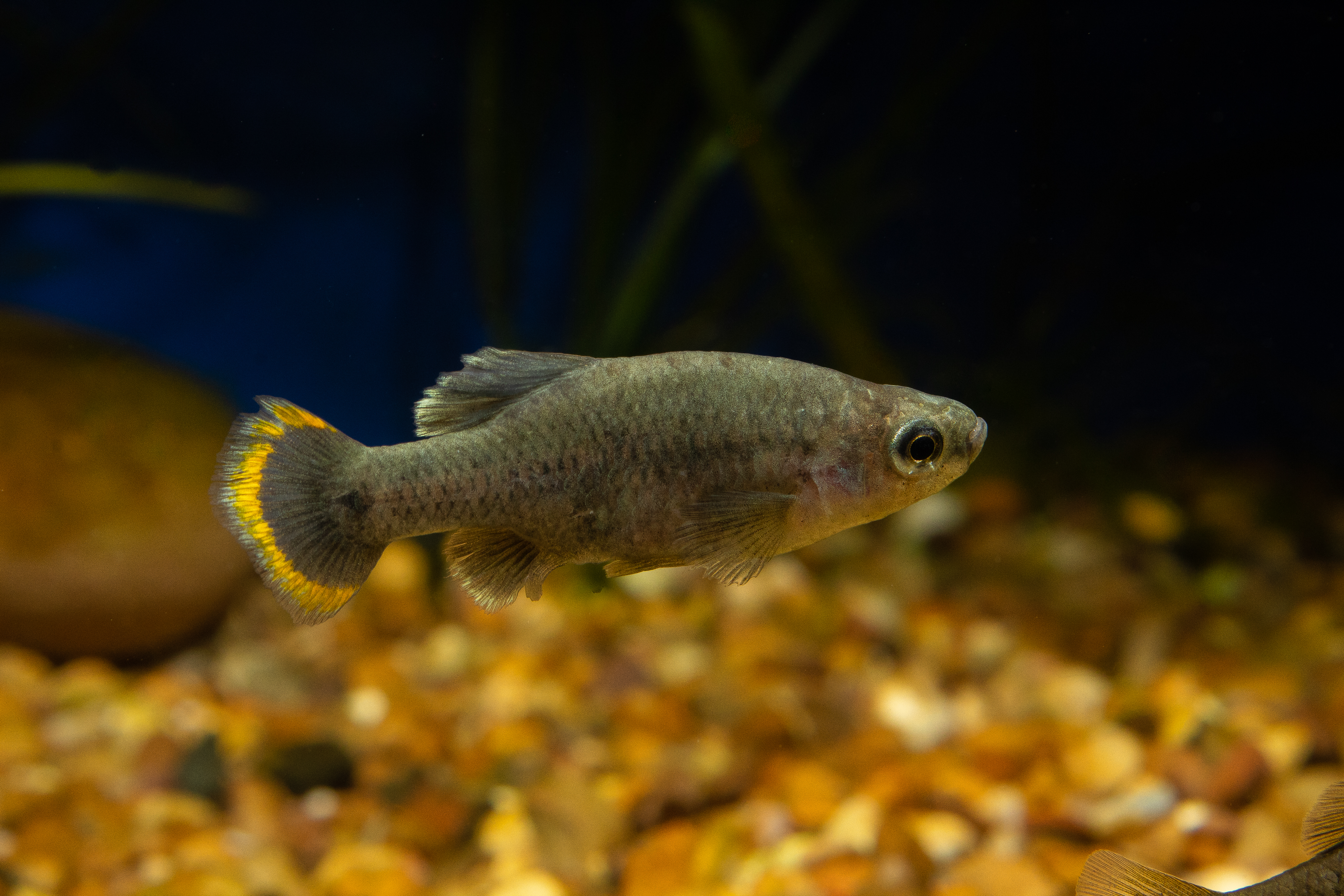
Zoogoneticus tequilaTequila Splitfin
Webb & Miller, 1998
Matched on Zoogoneticus sp, a name it was formerly known by
Max length♂ 30 · ♀ 50mm SL♂ 1.2 · ♀ 2.0in SLTank90 × 30cm36 × 12inTemp17–27°C63–81°FpH6.8–7.6A single male of the Tequila Splitfin was sampled in 1955 by Miller and Greenbank, but identified erroneously as Zoogoneticus quitzeoensis, with which species it was collected and found sympatrically . Many years later, the mistake was detected, the fish identified as a new species and finally, 43 years after the first capture, described by Webb and Miller. In 2001, a wild population of this species was rediscovered in a very small spring pool (3 x 4m in diameter). The population there was composed of only a handful of adult fish and a few tens of juveniles (De la Vega-Salazar et al., 2003). In 2007, N. W. Bailey et al showed, that the allelic richness of this population (though it was comparable in size to an aquatic stock) was higher than in any aquatic stock. In 2013 the loss of this population was reported (pers. comm. Domínguez), so there is not much hope that this species is still persisting in the wild.
Corydoras ourastigmaLong-nosed Smudge Spot Cory
authority not recorded
Matched on the common name Long-nosed Smudge Spot Cory
Max length65mm SL2.6in SLTank60 × 38cm24 × 15inTemp24–26°C75–79°FpH6.0–7.2There are 4 other species of cory that may be confused with C. ourastigma at first glance. These are C. guapore, C. caudimaculatus, C. similis and C. spectabilis. They can be distinguished quite easily upon close examination, however. C. guapore, whilst exhibiting similar patterning, has a completely different body shape to ourastigma, having a much more rounded overall appearance. It also tends to spend a lot of time away from the aquarium floor, unlike ourastigma. C. caudimaculatus also has a ...
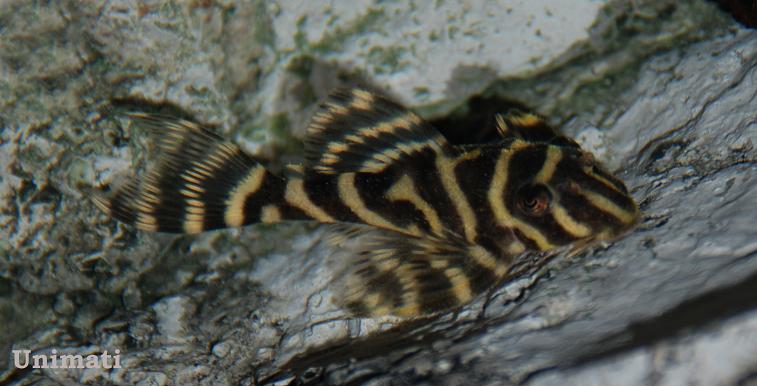
Hypancistrus sp.L333
authority not recorded
Max length150mm SL6in SLTank120 × 45cm48 × 18inTemp26–30°C79–86°FpH5.5–7.5This unidentified species possesses a highly variable colour pattern with the pale, randomly-arranged spots and blotches on the body ranging in colour from whitish to yellowish to rusty orange depending on the specimen. It's regularly confused with similar-looking relativ...
Hypostomus cf. cochliodonSpotted Cochliodon
authority not recorded
Matched on the common name Spotted Cochliodon
Max length230mm SL9in SLTank120 × 45cm48 × 18inTemp21–24°C70–75°FpH6.3–7.2This undescribed species is part of the Hypostomus cochliodon complex, all of which were previously included in the genus Cochliodon. This is now considered a synonym of Hypostomus. Members of this group can be distinguished from congeners by several differences in morphology, most notably the hump-backed profile of mature fish and spoon-shaped dentition. These features, along with the fishes tendency to eat wood, are shared with the Panaque genus of the Ancistrinae subfamily, but the two genera...
Hypostomus sp.L229
authority not recorded
Max length250mm SL10in SLTank120 × 45cm48 × 18inTemp21–27°C70–81°FpH6.0–7.5This undescribed species is part of the Hypostomus cochliodon complex, all of which were previously included in the genus Cochliodon, which is now considered a synonym of Hypostomus. Members of this group can be distinguished from congeners by several differences in morphology, most notably the hump-backed profile of mature fish and spoon-shaped dentition. These features, along with the fishes tendency to eat wood, are shared with the Panaque genus of the Ancistrinae subfamily, but the two gener...
Potamotrygon sp. "itaituba"P14
authority not recorded
Max length400mm SL16in SLTank210 × 90cm84 × 36inTemp23–29°C73–84°FpH6.0–7.5This stunning fish is one of the more sought after rays in the hobby. Taxonomically it remains unclear whether it is a geographical variant of P. leopoldi or a distinct species. It has a smaller adult size and both pups (see section above) and adults exhibit different patterning than it's relative. In P. leopoldi the light spotted markings tend to be quite large, spaced out and do not extend to the edge of the disc. In P14 they are typically much smaller, more randomly distributed and prese...
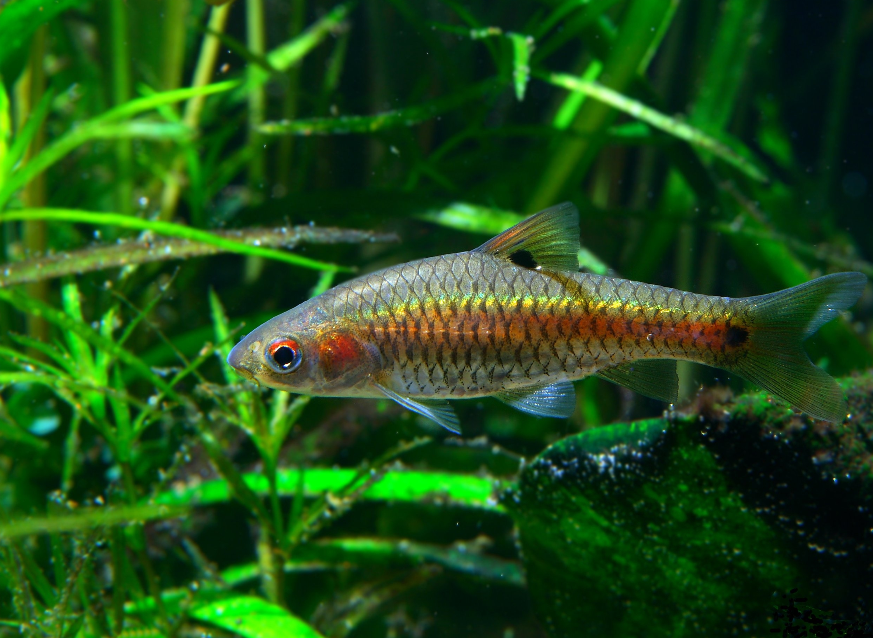
Puntius bimaculatusTwo-spotted Barb
Bleeker, 1863
Matched on the common name Two-spotted Barb
Max length50mm SL2.0in SLTank60 × 30cm24 × 12inTemp18–24°C64–75°FpH6.0–7.5Generally very peaceful making it an ideal resident of the well-researched community tank. As it places no special demands in terms of water chemistry it can be combined with many of the most popular fish in the hobby including other small cyprinids as well as tetras, livebearers, rainbowfishes, anabantoids, catfishes and loaches. It's a schooling species by nature, and at least 6-10 specimens should be purchased. Maintaining it in such...
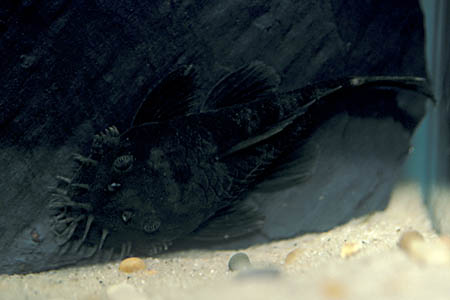
Ancistrus ranunculusL034
Muller, Rapp Py-Daniel & Zuanon, 1994
Max length130mm SL5in SLTank80 × 30cm31 × 12inTemp25–30°C77–86°FpH6.0–7.0A somehwhat odd-looking species with a distinctive wide head and overall flattened profile. Unfortunately this fish is not the easiest fish to keep alive in the aquarium since it requires rather specialised conditions and is often in poor condition post-import. As a juvenile, it often sports a pattern of light spots on the body, leading to confusion with the similarly shaped L255 species.In A. ranunculus, these spots fade as the fish mature,...