Results for “spot”
Type a name: scientific, common, or one a species used to go by. Or narrow the catalogue with the filters.
Filters
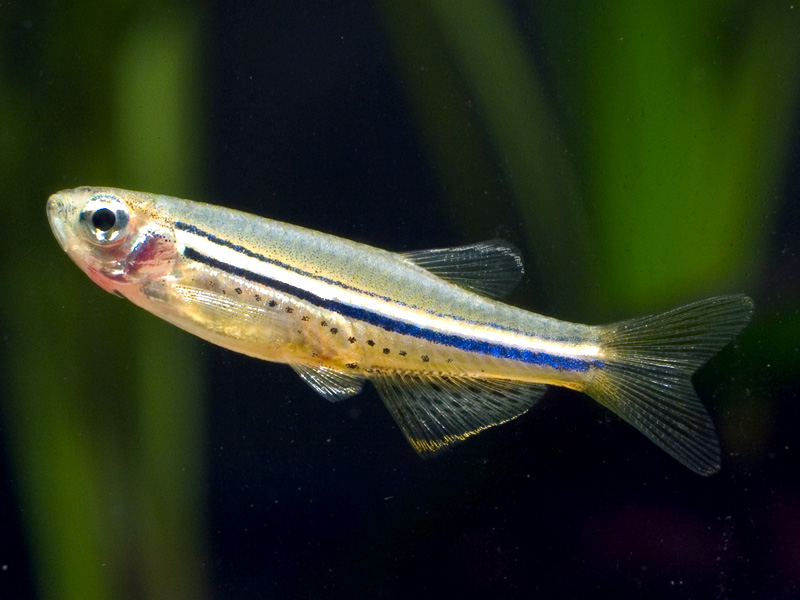
Brachydanio nigrofasciataDwarf Spotted 'Danio'
Day, 1870
Matched on the common name Dwarf Spotted 'Danio'
Max length40mm SL1.6in SLTank60 × 30cm24 × 12inTemp18–26°C64–79°FpH6.0–7.5The genus Danio contains only the type species, D. dangila, separated on the basis of its larger size and the shape of the caudal-fin, which in adults is only slightly emarginate or even truncate in shape, a feature it shares only with Tinca tinca (the common tench) among other cyprinids. The remaining species, of which B. rerio is thought to be the most ancient, are included in the revalidated genus Brachydanio Weber & de Beaufort, 1916.
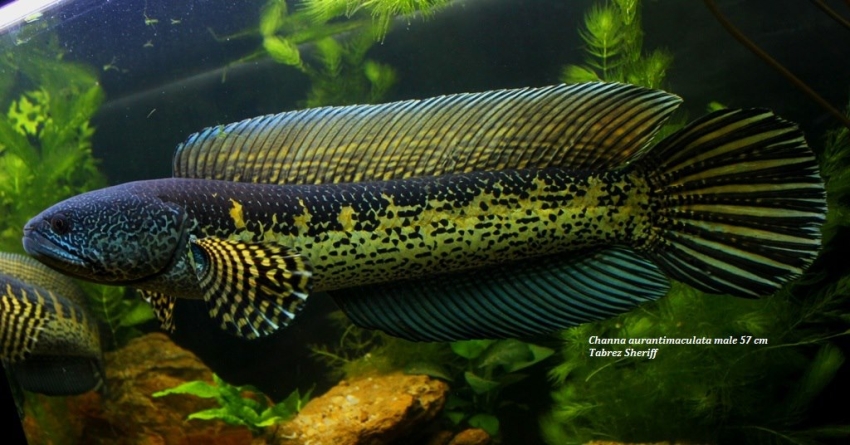
Channa aurantimaculataOrange-spotted Snakehead
Musikasinthorn, 2000
Matched on the common name Orange-spotted Snakehead
Max length400mm SL16in SLTank150 × 60cm60 × 24inTemp10–28°C50–82°FpH6.0–8.0This species is also traded as 'golden cobra snakehead' and is available in the aquarium trade on a regular basis. It can be distinguished from other Channa species by the following combination of characters: 51-54 lateral line scales; 45-47 dorsal-fin rays; 28-30 anal-fin rays; 8-12 cheek scales; 50-52 total verte...
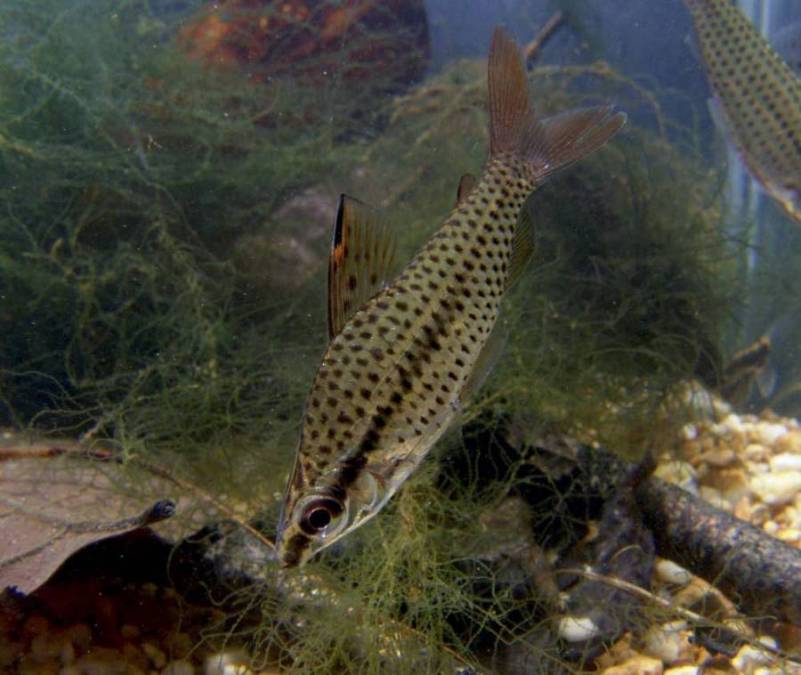
Chilodus punctatusSpotted Headstander
Müller & Troschel, 1844
Matched on the common name Spotted Headstander
Max length80mm SL3.1in SLTank90 × 30cm36 × 12inTemp20–28°C68–82°FpH5.0–7.5Omnivorous and will accept most foods offered, with the stomach contents of wild specimens varying on a seasonal basis but mostly comprising insects and insect larvae (orders Trichoptera, Hemiptera, Homoptera) plus some terrestrial fruits and even scales of other fishes (Sánchez et al., 2003). In the aquarium offer live Daphnia, Artemia, Moina, bloodowrm, etc., vegetable matter in the form of blanched spinach, lettuce, cucumber, fruit, algae wafers, etc., and good quality, sinking dried foods.
Cichlasoma trimaculatumThree Spot Cichlid
authority not recorded
Matched on the common name Three Spot Cichlid
Max length400mm SL16in SLTank122 × 38cm48 × 15inTemp23–30°C73–86°FpH7.0Cichlasoma Trimaculatus is a large colourful cichlid, if a little aggressive. It is believed to be one of the fish that was used to create the hybrid Flowerhorn cichlid. We prefer it in its natural state. As with most large cichlids they can be fairly messy eaters so ensure decent filtration is provided. It is recommended to use a spraybar to disperse the water returning to the tank as trimacs will not appreciate strong flow....
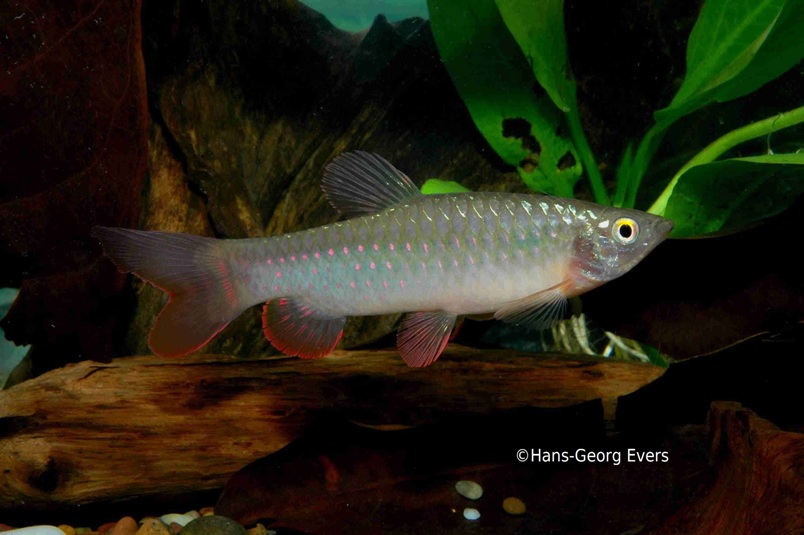
Copeina guttataRed-spotted Tetra
Steindachner, 1876
Matched on the common name Red-spotted Tetra
Max length76mm SL3.0in SLTank120 × 30cm48 × 12inTemp20–28°C68–82°FpH4.0–7.5Known from the middle and upper Amazon river basins in Brazil, Peru, Ecuador and Colombia. Type locality is 'Amazon River at Obidos, Cudajas, and Tabatinga; Rio Negro, Brazil.' It apparently practises an interesting reproductive strategy in which the eggs are deposited in a shallow depression excavated from the substrate and guarded by the male.
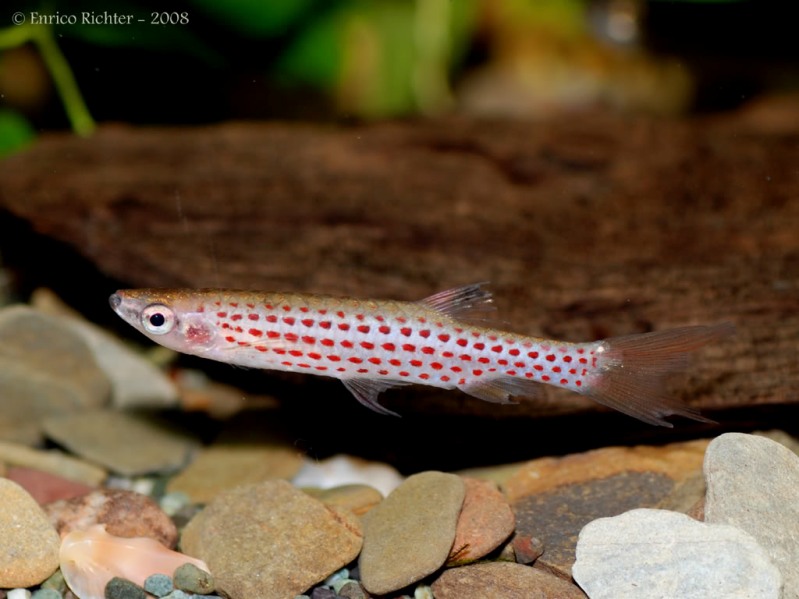
Copella meinkeniSpotted Splashing Tetra
Zarske & Géry, 2006
Matched on the common name Spotted Splashing Tetra
Max length45mm SL1.8in SLTank60 × 30cm24 × 12inTemp20–28°C68–82°FpH4.0–7.0This species has been widely referred to as the congener C. nattereri in aquarium literature both prior to and post-publication of its official description in 2006. The two can be told apart quite easily by the fact that C. nattereri possesses a dark lateral stripe while C. meinkeni does not. C. meinkeni can be distinguished from all congeners by the followi...
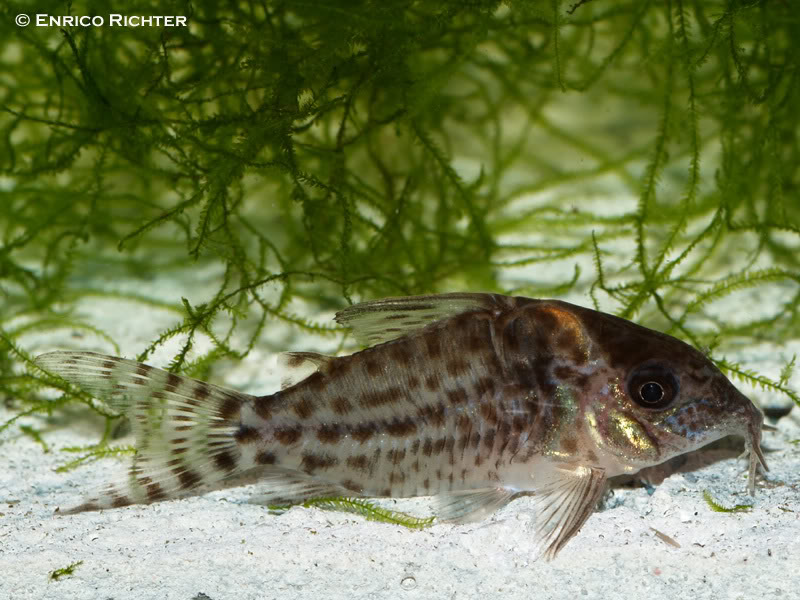
Corydoras agassiziiSpotted Cory
Steindachner, 1876
Matched on the common name Spotted Cory
Max length70mm SL2.8in SLTanknot recordedTemp22–27°C72–81°FpH6.0–8.0This species' name is commonly misapplied to a number of similar-looking fishes and it can be difficult to identify if collection locality is unknown. In addition, colour pattern is variable and it's not clear whether this occurs between, within, or both between and within populations. In the original description, Steindachner did note that the first three dorsal-fin rays are completely black while the remainder is whi...
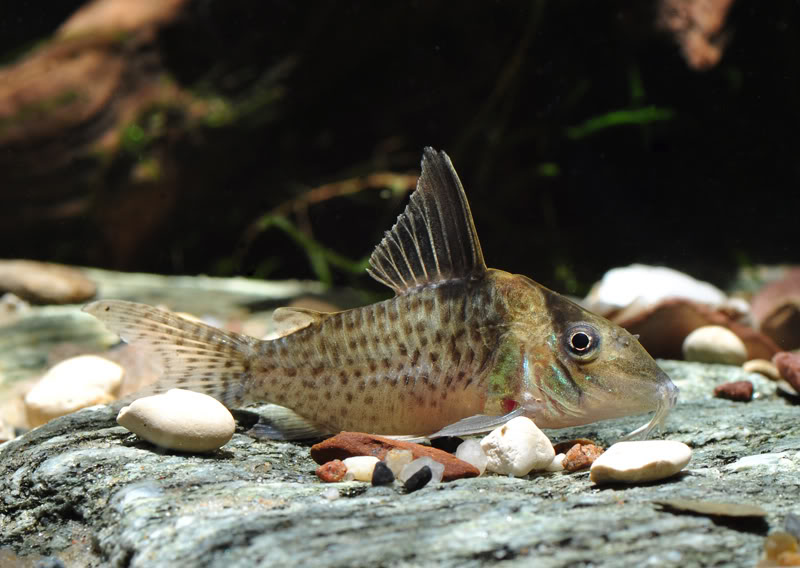
Corydoras brevirostrisSpotted Cory
Fraser-Brunner, 1947
Matched on the common name Spotted Cory
Max length60mm SL2.4in SLTanknot recordedTemp20–26°C68–79°FpH6.0–7.5C. brevirostris was described from an aquarium specimen apparently exported from the Río Orinoco drainage in Venezuela, and its wider distribution is somewhat vague, usually being given as the Orinoco system plus unnamed coastal rivers in Suriname. This represents a somewhat disjunct pattern of distribution and if correct the species is also likely to occur in Guyana.
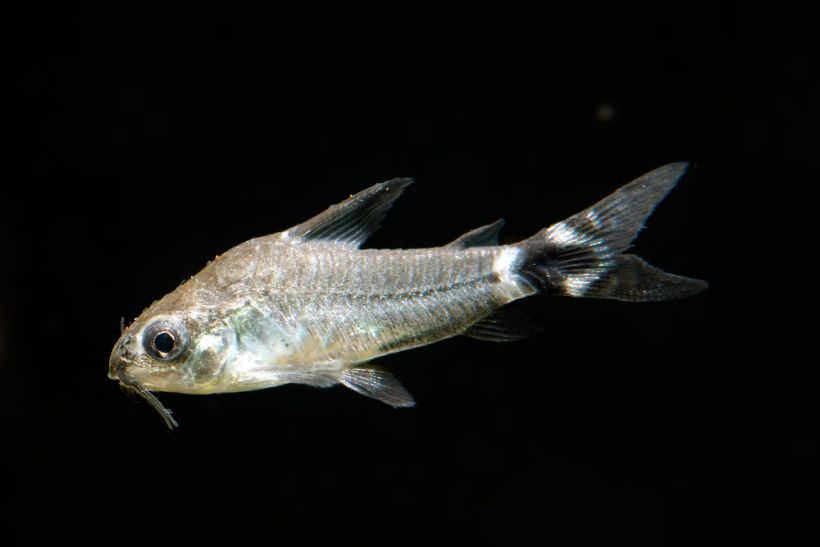
Corydoras hastatusTail-spot Pygmy Cory
Eigenmann & Eigenmann, 1888
Matched on the common name Tail-spot Pygmy Cory
Max length32mm SL1.3in SLTank60 × 30cm24 × 12inTemp20–26°C68–79°FpH6.0–7.5It exhibits slightly different behaviour to the majority of congeners in that it tends to swim in midwater and spends a large proportion of its time away from the substrate. Its morphology exhibits corresponding adaptations towards a pelagic existence with a relatively large eye, a more terminal mouth position, more strongly-forked caudal-fin, and more symmetrical body shape than most other Corydoras species.
Corydoras melanistiusSpotted Cory
authority not recorded
Matched on the common name Spotted Cory
Max length55mm SL2.2in SLTank45 × 30cm18 × 12inTemp22–26°C72–79°FpH6.0–7.0There are currently over 180 described species of Corydoras (commonly shortened to "cory"), making it one of the most speciose of all South American fish genera. There are also loads of undescribed species, many of which have been assigned a "C number" for identification purposes. This is a very simple system of numbering and is similar to the L number scheme used to identify undescribed Loricariids. Both systems were implemented by the German aquarium magazine DATZ (Die Aqua...
Corydoras ourastigmaLong-nosed Smudge Spot Cory
authority not recorded
Matched on the common name Long-nosed Smudge Spot Cory
Max length65mm SL2.6in SLTank60 × 38cm24 × 15inTemp24–26°C75–79°FpH6.0–7.2There are 4 other species of cory that may be confused with C. ourastigma at first glance. These are C. guapore, C. caudimaculatus, C. similis and C. spectabilis. They can be distinguished quite easily upon close examination, however. C. guapore, whilst exhibiting similar patterning, has a completely different body shape to ourastigma, having a much more rounded overall appearance. It also tends to spend a lot of time away from the aquarium floor, unlike ourastigma. C. caudimaculatus also has a ...
Corydoras similisSmudge Spot Cory
authority not recorded
Matched on the common name Smudge Spot Cory
Max length60mm SL2.4in SLTank45 × 30cm18 × 12inTemp21–27°C70–81°FpH5.6–7.0There are currently over 180 described species of Corydoras (commonly shortened to "cory"), making it one of the most speciose of all South American fish genera. There are also loads of undescribed species, many of which have been assigned a "C number" for identification purposes. This is a very simple system of numbering and is similar to the L number scheme used to identify undescribed Loricariids. Both systems were implemented by the German aquarium magazine DATZ (Die Aqua...
Crenicichla albopunctataWhite-spotted Pike Cichlid
authority not recorded
Matched on the common name White-spotted Pike Cichlid
Max length200mm SL8in SLTank120 × 38cm48 × 15inTemp24–27°C75–81°FpH6.0–7.0Crenicichla albopunctata
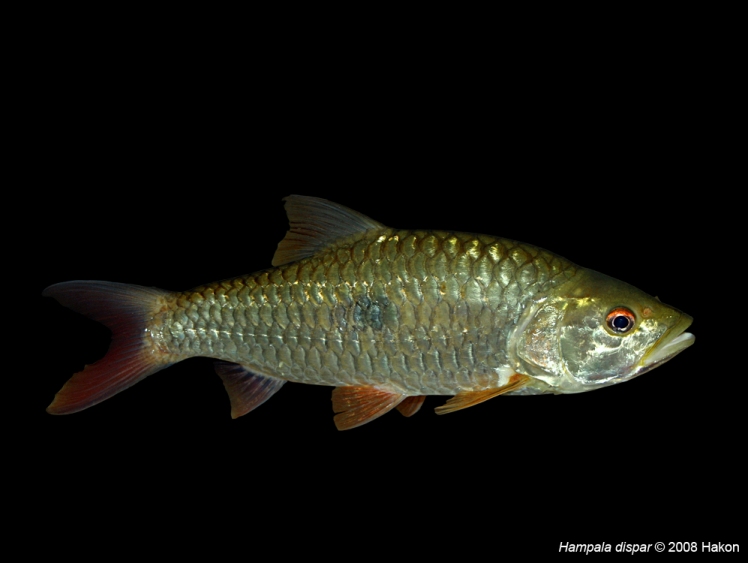
Hampala disparSpotted Hampala Barb
Smith, 1934
Matched on the common name Spotted Hampala Barb
Max length350mm SL14in SLTank240 × 60cm96 × 24inTemp20–25°C68–77°FpH6.0–8.0The genus currently contains seven species of which H. macrolepidota and, to a lesser extent, H. dispar are the only ones seen with any regularity in the aquarium trade. As well as having the widest distribution H. macrolepidota is also the largest member of the group. All representatives can appear superficially similar at first glance, the exception being H. lopezi which is endemic to a single island in The Philippines and displays a unique lateral band-like marking on the flanks.
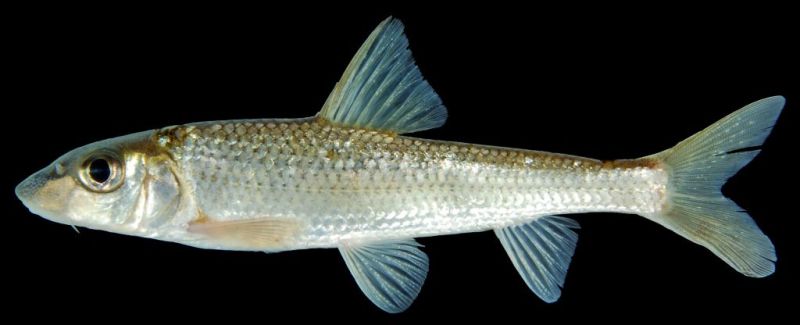
Hemibarbus maculatusSpotted Steed
Bleeker, 1871
Matched on the common name Spotted Steed
Max length400mm SL16in SLTanknot recordedTempnot recordedpHnot recordedWidepread in eastern Asia between the Yangtze and Amur river basins, including China (mainland and islands of Taiwan and Hainan), Korea, Mongolia, Russia, and Japan. It probably been introduced to Vietnam and Laos, or records from these countries represent another species.
Heros notatusSpotted Severum
authority not recorded
Matched on the common name Spotted Severum
Max length300mm SL12in SLTank120 × 38cm48 × 15inTemp22.2–28.9°C72–84°FpH6.0–7.0A rarely seen, although attractive member of the severum family. This species is occasionally offered for sale through specialist cichild or South American dealers.
Hypostomus cf. cochliodonSpotted Cochliodon
authority not recorded
Matched on the common name Spotted Cochliodon
Max length230mm SL9in SLTank120 × 45cm48 × 18inTemp21–24°C70–75°FpH6.3–7.2This undescribed species is part of the Hypostomus cochliodon complex, all of which were previously included in the genus Cochliodon. This is now considered a synonym of Hypostomus. Members of this group can be distinguished from congeners by several differences in morphology, most notably the hump-backed profile of mature fish and spoon-shaped dentition. These features, along with the fishes tendency to eat wood, are shared with the Panaque genus of the Ancistrinae subfamily, but the two genera...
Hypostomus reganiGiant White Spot Plec
authority not recorded
Matched on the common name Giant White Spot Plec
Max length400mm SL16in SLTanknot recordedTemp24–28°C75–82°FpH6.0–7.0An attractive and very hardy larger plec.
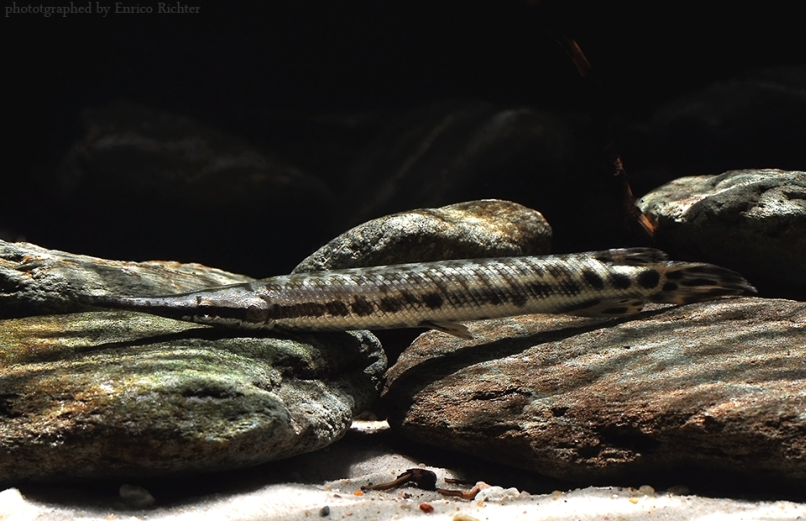
Lepisosteus oculatusSpotted Gar
Winchell, 1864
Matched on the common name Spotted Gar
Max length1250mm SL49in SLTanknot recordedTemp12–20°C54–68°FpH6.0–8.0Known from Great Lakes Erie and Michigan with distribution extending south through the Mississippi River basin to the Gulf of Mexico drainages where it's said to occur between the lower Apalachicola River in Florida and the Nueces River in Texas. It may also be found in the Rio Grande which forms the border between Mexico and the United States further south where records include Falcon International Reservoir, for example.
Megalechis thoracataSpotted Hoplo
authority not recorded
Matched on the common name Spotted Hoplo
Max length150mm SL6in SLTank120 × 38cm48 × 15inTemp18–28°C64–82°FpH6.0–8.0Still widely referred to as hoplosternum thoracatum the hoplo cat is a popular and hardy fish. These fish have the ability to breathe atmospheric air by gulping down mouthfuls of air and the oxygen is then absorbed into the bloodstream through the intestine. This allows the fish to endure poor conditions in the wild but it can still be observed exhibiting this behaviour in captivity. The hoplo is also eaten as a food fish in parts of South America....