Results for “pH”
Type a name: scientific, common, or one a species used to go by. Or narrow the catalogue with the filters.
Filters
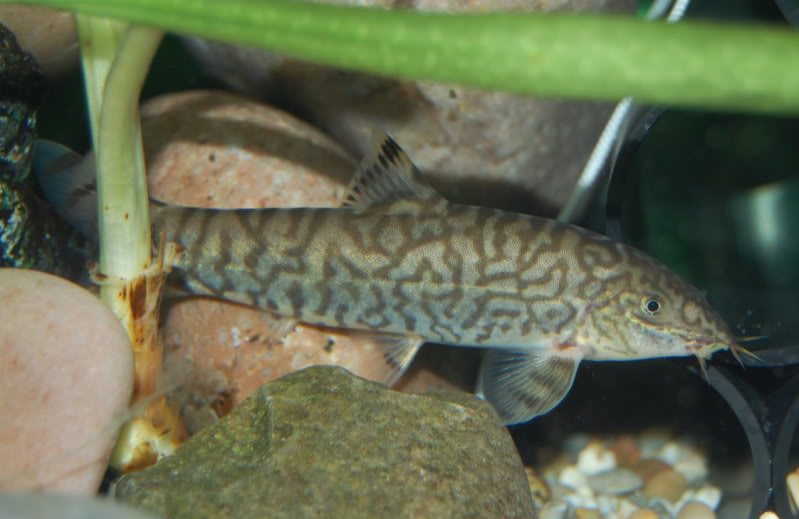
Botia almorhaeYo-Yo Loach
Gray, 1831
Max length160mm SL6in SLTank120 × 45cm48 × 18inTemp19–27.5°C66–82°FpH6.0–7.5The physical appearance of B. almorhae sensu stricto is something of a mystery. No pictures of live specimens appear in any scientific publications we've read and we've been unable to find a certified image of one anywhere meaning it's possibly never been seen in the aquarium trade. Instead the most commonly available members of the nominal species grouping seem to be B. lohachata, B. sp. 'Kosi' and B. sp. 'Teesta' (see individual notes below), plus the assorted hybrids that have appeared since the turn of the century (Grant, 2007).
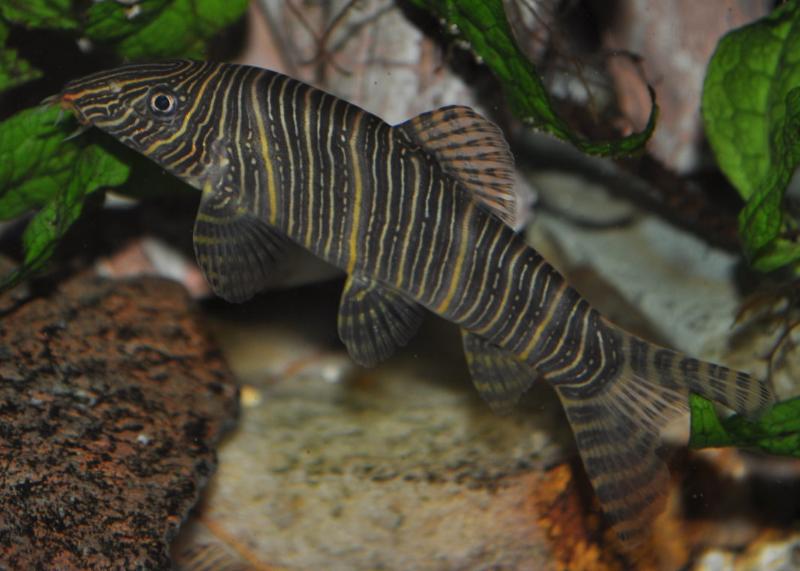
Botia striataZebra Loach
Narayan Rao, 1920
Max length90mm SL3.5in SLTank120 × 30cm48 × 12inTemp21–26°C70–79°FpH6.0–7.5In a survey of fish diversity in the Bhadra River (which joins the Tunga to form the Tungabhadra) it was recorded alongside numerous other species including Puntius chola, Balitora mysorensis, and Mystus armatus. Dry season water paramaters were temperature 69.8°F/21°C, pH 7.0, hardness ~ 2.5°. The substrate was composed of bedrock, boulders, cobbles, gravel, sand and leaf litter in descending order of abundance with a maximum depth of around...
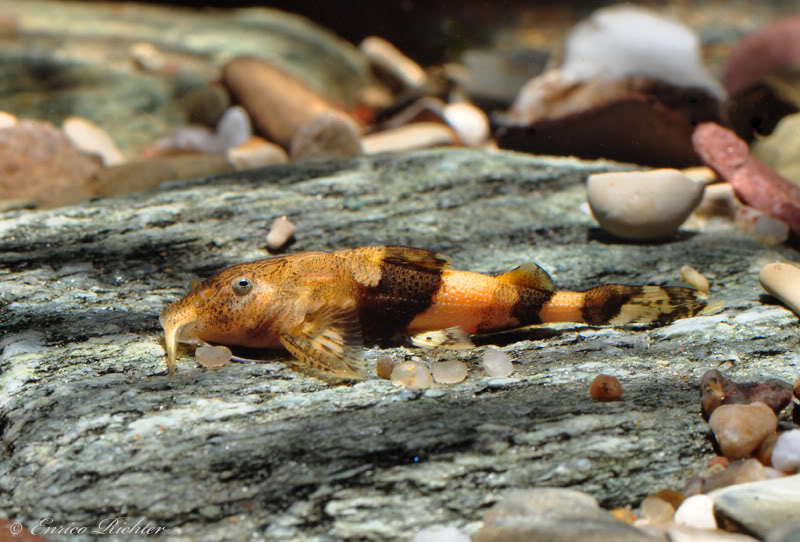
Caelatoglanis zonatus
Ng & Kottelat, 2005
Max lengthnot recordedTanknot recordedTempnot recordedpHnot recordedKnown only from the Ataran River system in Kayin state, Myanmar. The Ataran forms the headwaters of part of the larger Salween drainage, and some of its tributaries extend across the nearby border into Thailand, where it’s known as the Kasat. Type locality is 'Stream ''Chon Son' between Kyondaw and Phadaw, about 20 kilometers north...
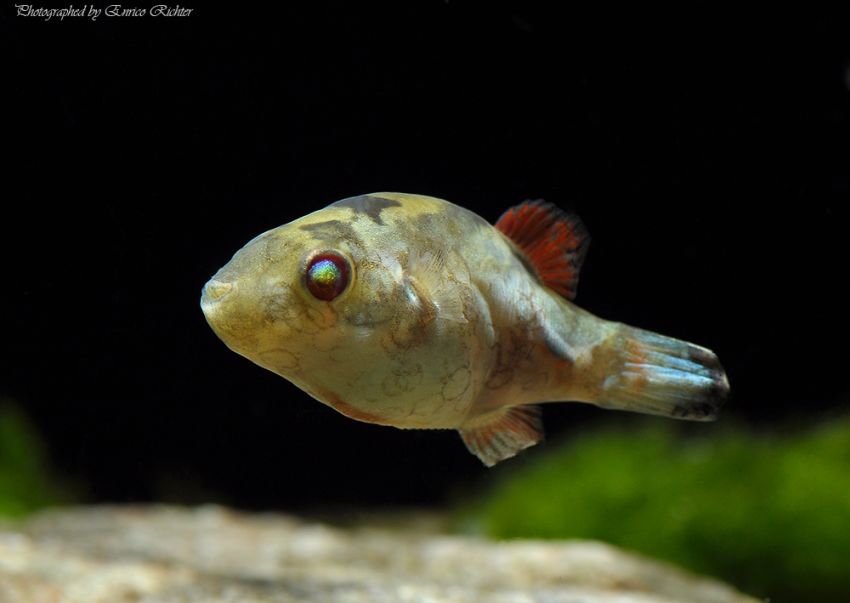
Carinotetraodon lortetiRedeye Puffer
Tirant, 1885
Max length60mm SL2.4in SLTank60 × 30cm24 × 12inTemp20–28°C68–82°FpH5.0–7.5Known from the lower Mekong basin in Thailand, Vietnam, and Cambodia, the Chao Phraya watershed in central Thailand, and may occur in smaller river systems between. Type locality is 'Thu-dâu-môt, Vietnam'.
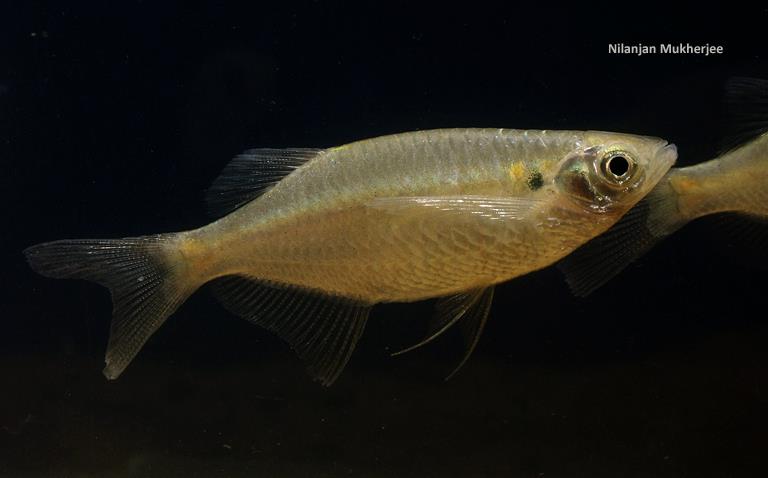
Chela cachiusNeon Hatchet Fish
Hamilton, 1822
Max length50mm SL2.0in SLTank90 × 30cm36 × 12inTemp18–24°C64–75°FpH6.0–8.0It is currently the only valid member of the genus but it is possible that additional taxa exist, particularly in Myanmar, while a number of former species are contained within the Laubuka assemblage, to which C. cachius is closely related. Phylogenetic studies suggest the existence of a monophyletic clade consisting of the genera Devario, Chela, Laubuca, Microdevario and Microrasbora plus the genus Betadevario.
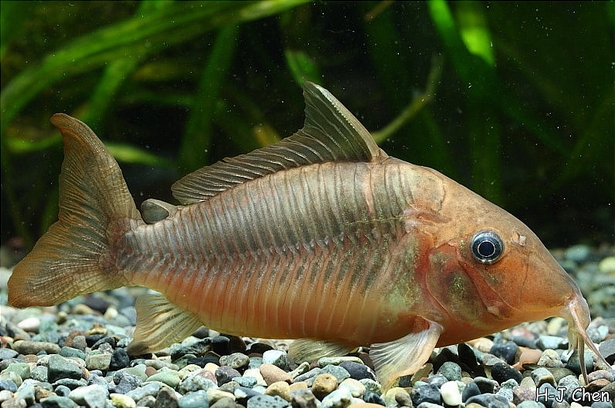
Corydoras britskiiGiant Brochis
Nijssen & Isbrücker, 1983
Max length90mm SL3.5in SLTank120 × 45cm48 × 18inTemp20–26°C68–79°FpH6.0–7.0Brochis was first synonymised with Corydoras by Britto (2003), since the latter genus cannot be considered monophyletic if the former is accepted as valid. This decision has been supported in subsequent phylogenetic studies by Shimabukuro-Dias et al. (2004) and Alexandrou et al. (2011), although the name Brochis is still common in aquarium literature. It is likely that the genus will be revalidated and expanded in the future following a required taxonomic review of the subfamily Corydoradinae as suggested by Alexandrou and Taylor (2011).
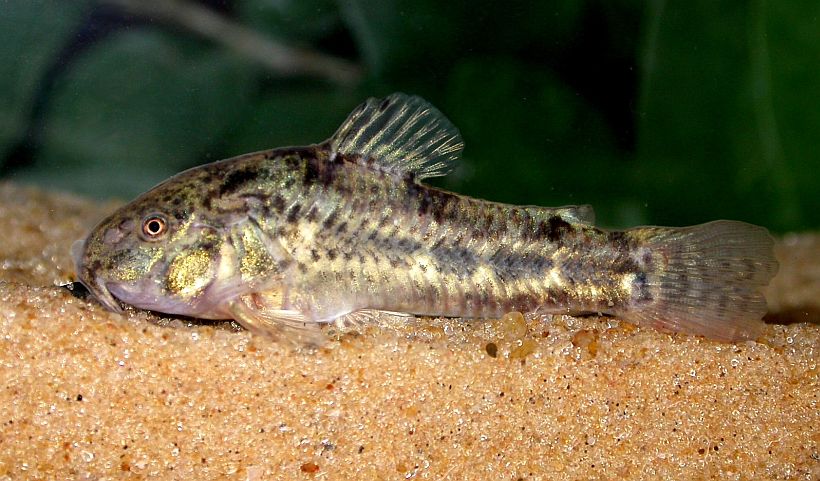
Corydoras gladysae
Calviño & Alonso, 2010
Max length38mm SL1.5in SLTank60 × 30cm24 × 12inTemp8–16°C46–61°FpH7.5–8.5The Río Calchaquí rises at almost 6000 m AMSL and flows swiftly through a mountainous valley where it is largely fed by snow melt. The climate is semi-arid and cool with an air temperature of 12-18°C, while rainfall is largely concentrated during summer when the flow can be torrential. The water is hard and rich in salts, with pH measured at 8.04 during the month of August. Aquatic vegetation and filamentous algae grow around the margins and in tributaries.
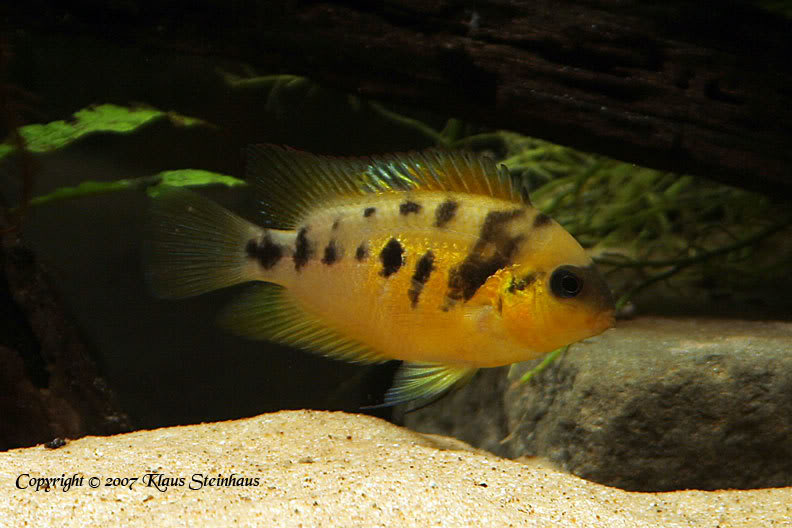
Cryptoheros nanoluteus
Allgayer, 1994
Max length65mm SL2.6in SLTank90 × 30cm36 × 12inTemp23–26°C73–79°FpH5.0–7.5Inhabits moderate to fast-flowing, well-oxygenated, lowland streams and rivers with pH measured to range between 5.4 and 8.0 and temperature 22-31°C/71.6-87.8°F, while conductivity at one habitat was 600 µS. Substrates may be composed of open mud or sand, or strewn with variably-sized boulders depending on locality, while aquatic plants have not been observed. It occurs sympatrically with the convict cichlid, Amatitlania nigrofasciata with oth...
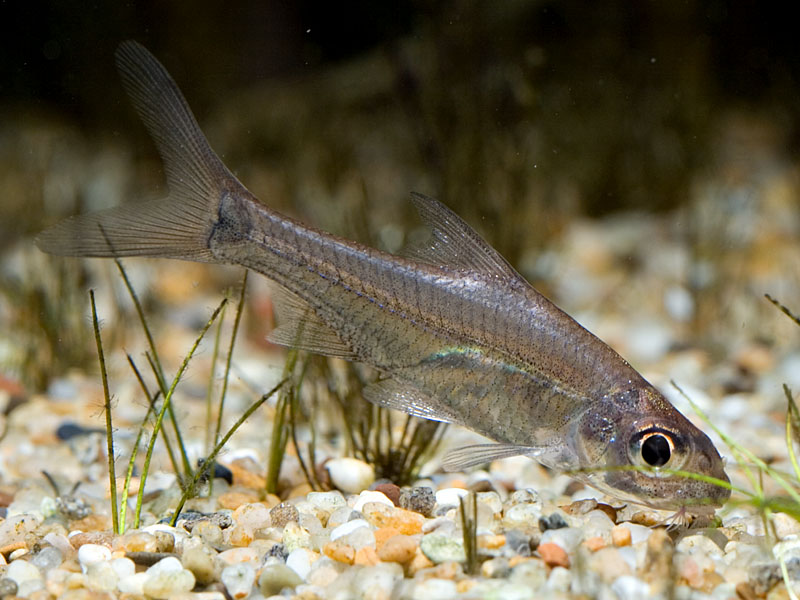
Cyclocheilichthys heteronema
Bleeker, 1854
Max length120mm SL5in SLTank120 × 45cm48 × 18inTemp21–26°C70–79°FpH6.0–7.5This species is currently understood to have a considerable natural range extending eastwards from Myanmar via Thailand, Laos, Cambodia as far as Vietnam and to the south through Peninsular Malaysia and into the Greater Sunda Islands of Borneo and Sumatra. It thus occurs in the Mekong, Mae Klong and Chao Phraya drainages as well as a host of other river basins, lakes and reservoirs including the Tonlé Sap river...
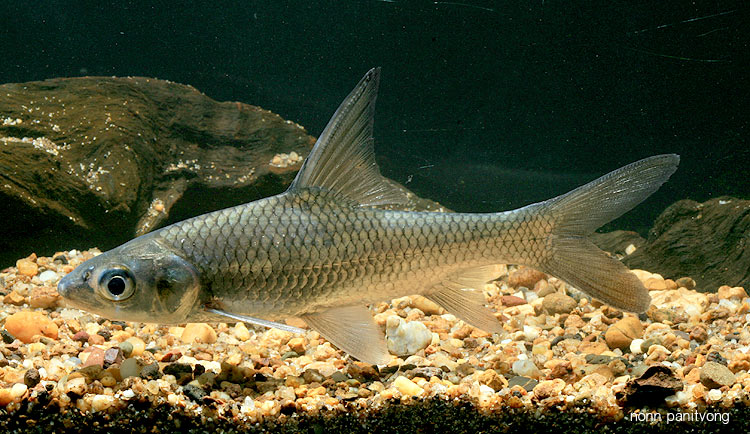
Cyclocheilos enoplos
Bleeker, 1849
Max length750mm SL30in SLTanknot recordedTemp20–26°C68–79°FpH6.0–8.0In the Mekong, it has been observed to migrate upstream from Phnom Penh to Khone Falls between November and February, returning downstream between May and August. The downstream migration ends in the Mekong delta area in Vietnam, where the fish remain until the floods reach their peak in October and November. These lower Mekong migrations mostly comprise juveniles and sub-adults, whereas above Khone Falls...
Cyprichromis microlepidotusSmallscale Cyprichromis
authority not recorded
Max length110mm SL4in SLTank120 × 45cm48 × 18inTemp24–27°C75–81°FpH7.8–9.0Quite a rarity in the hobby, but when available it is much sought after by enthusiasts. It can be found living in huge mixed species groups with other Cyprichromis species and the similar Paracyprichromis. There are a few geographical variants known, each of which has both a yellow and blue tailed form. Individual populations can also contain males with different colour and patterning, a phenomenon known as polychromatism. The different forms should never be mixed in the aquarium, as they will i...
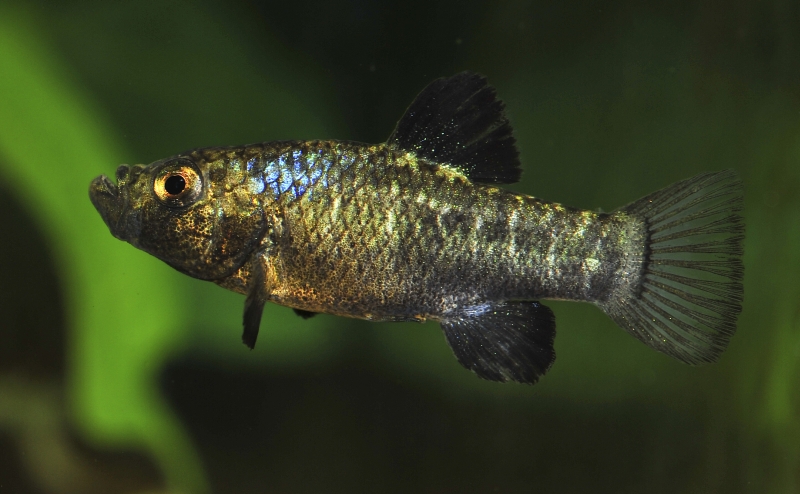
Cyprinodon desquamatorScale-eating pupfish
Martin & Wainwright, 2013
Max length31mm SL1.2in SLTanknot recordedTempnot recordedpHnot recordedThis species is a specialised lepidophage with approximately 50 % of the diet comprising the scales of other fishes. Physical adaptations to this behaviour include its elongate body and jaw mechanism permitting a fast biting action.
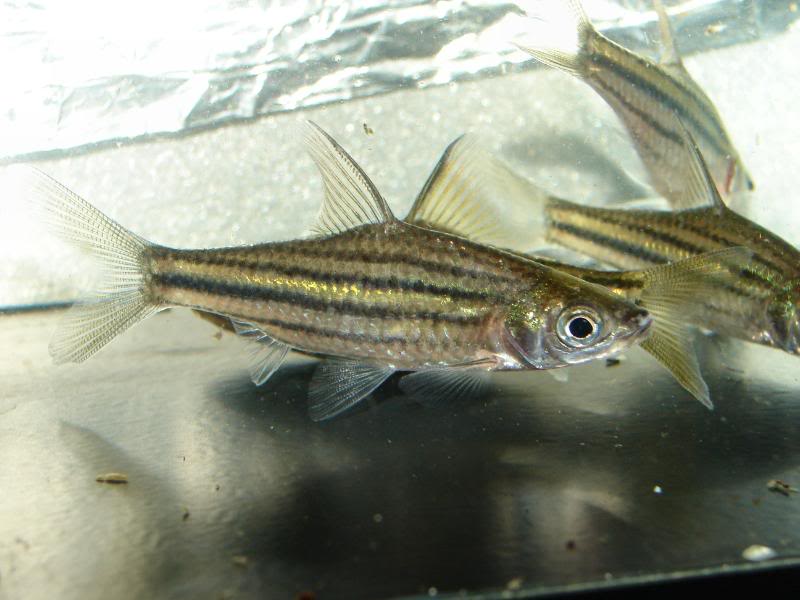
Desmopuntius gemellus
Kottelat, 1996
Max length100mm SL3.9in SLTank120 × 45cm48 × 18inTemp22–25°C72–77°FpH4.0–7.0The type series was purchased from a market in Jambi province, eastern Sumatra, Indonesia and this species is also known from neighbouring Riau province plus the island province of Bangka. On Sumatra it may be restricted to the Indragiri and Batang Hari river systems. Inhabits peat swamp forests and associated black water streams in which the water is typically stained brown with humic acids and other chemicals released by decaying organic material. The dissolved mineral content is generally negligible and the pH can be as...
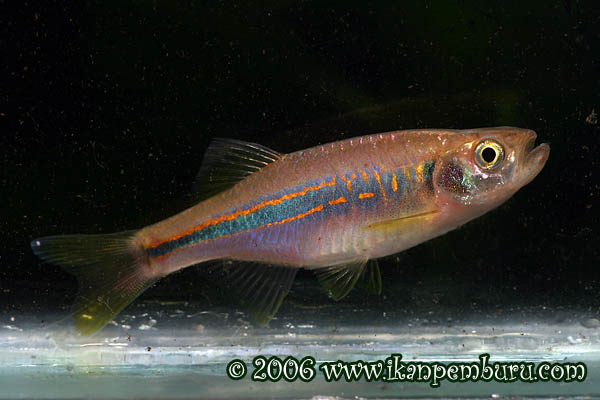
Devario laoensis
Pellegrin & Fang, 1940
Max length65mm SL2.6in SLTank90 × 30cm36 × 12inTemp23–26°C73–79°FpH6.0–7.5It can be further distinguished from other species in the genus by colour pattern consisting of a dark, horizontal P stripe originating around mid-body, where it's relatively faint, this becoming thicker and darker in the posterior portion of the body and terminating at the base of the caudal-fin. Among congeners it's most similar to D. chrysotaeniatus but that species lacks the infraorbital process, has three rows of pharyngeal teeth and the P stripe extends to the end of the caudal-fin rays.
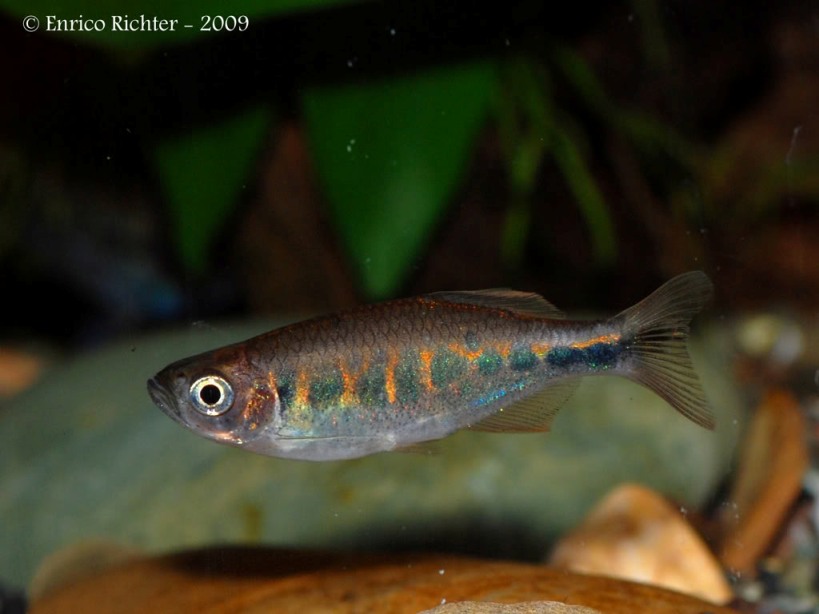
Devario pathiranaBarred 'Danio'
Kottelat & Pethiyagoda, 1990
Max length80mm SL3.1in SLTank120 × 45cm48 × 18inTemp23–26°C73–79°FpH6.0–7.5This species is diagnosable from other members of the genus primarily by its unique colour pattern which consists of 7-11 dark blue, irregularly-shaped, parallel vertical bars on the anterior portion of each flank plus a short horizontal stripe on the caudal peduncle which extends into the central caudal fin rays. Phylogenetic analyses suggest it's most closely-related to Indian Devario spp. plus D. xyrops from the western slope of the Rakhine Yoma mountains in Myanmar (Fang et al., 2009; Fang and Kullander, 2009).
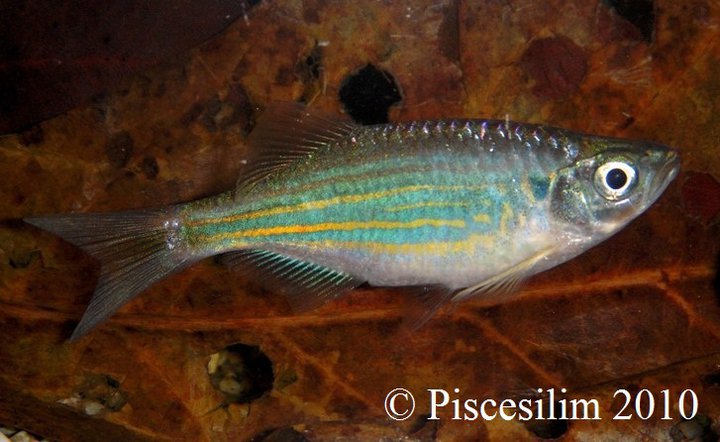
Devario reginaQueen 'Danio'
Fowler, 1934
Max length80mm SL3.1in SLTank120 × 45cm48 × 18inTemp20–26°C68–79°FpH5.5–7.5Probably restricted to western and southern Thailand and northern Peninsular Malaysia plus some small surrounding islands. In Thailand records exist from Surat Thani (Ko Samui island), Nakhon Si Thammarat, Ranong, Trang, Phuket, Ratchaburi, Kanchanaburi, and Mae Hong Son provinces while in Peninsular Malaysia it's been collected from Perak and Kedah states, including th...
Dicrossus maculatusSpadetailed Checkerboard Cichlid
authority not recorded
Max length53mm SL2.1in SLTank60 × 30cm24 × 12inTemp26–30°C79–86°FpH3.4–5.4Dicrossus Maculatus are not commonly available in the trade. Sometimes they are mistaken for the more common and popular Dicrossus Filamentosa. The Spadetailed Checkerboards are an absolutely fascinating species to keep. They are a challenge to breed, requiring such acidic and soft water, but when it does happen it is a very rewarding experience. Reports maintain that the pH and temperature of the water when conceived, eggs laid, eggs hatched and in the first month of the fry's life c...
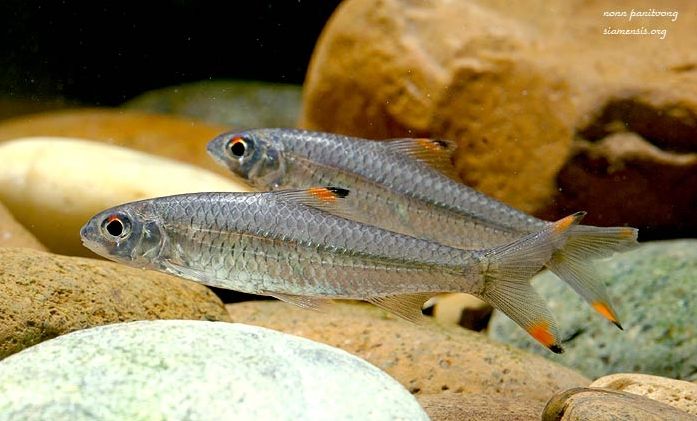
Discherodontus halei
Duncker, 1904
Max length100mm SL3.9in SLTank120 × 45cm48 × 18inTemp21–26°C70–79°FpH6.0–7.5Appears to have a disjunct range with records from Pahang state in central Peninsular Malaysia, plus the Mae Klong and Chao Phraya river systems in Thailand, but it has not been recorded in Peninsular Thailand. Type locality is 'Pahang River, Kuala Tembeling, eastern slope of Sangka Dua Pass, Malaysia, elevation about 2000 feet'.
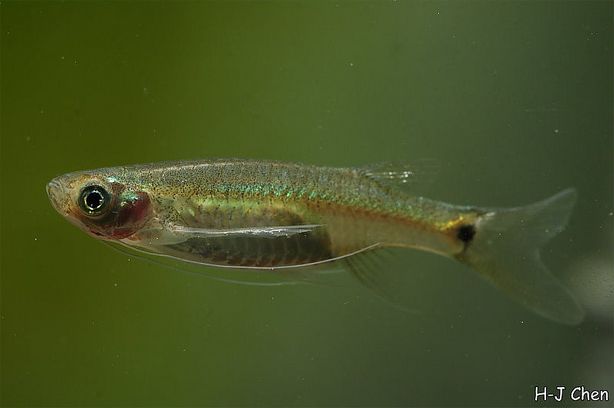
Esomus caudiocellatus
Ahl, 1924
Max length40mm SL1.6in SLTank120 × 30cm48 × 12inTemp20–26°C68–79°FpHnot recordedE. caudiocellatus can be told apart from congeners by lacking a dark lateral stripe and possessing a prominent dark marking on the caudal peduncle. In recent years a number of phylogenetic studies involving Esomus and its near relatives have been conducted and conflicting results published. For example a 2003 study by Fang et al. concluded that the genus is the sister group, i.e., most closely-related to...
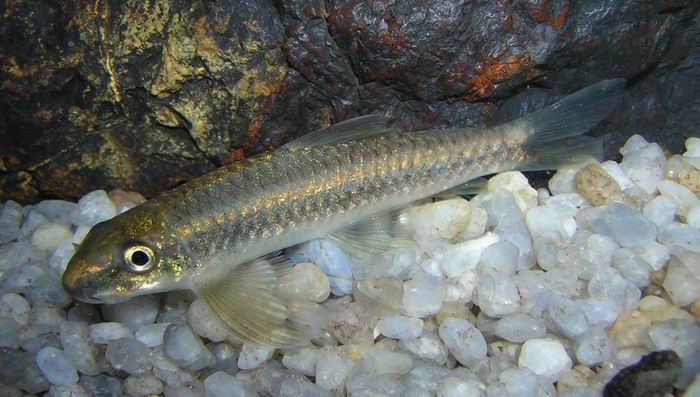
Garra borneensis
Vaillant, 1902
Max length115mm SL5in SLTanknot recordedTempnot recordedpHnot recordedSubstrates are generally composed of gravel, rocks, boulders or bedrock carpeted with a rich biofilm formed by algae and other micro-organisms. At a habitat in the Mendawai river basin in central Kalimantan, H. borneensis was collected from a foothill stream running swiftly over a rock and gravel substrate with clear water of pH 6.4.