Caelatoglanis zonatus
Last revised 2026Edit this page
On this page4 sections
Quick factsEdit
Difficulty2 of 8 measures
Not enough data to rate
- Space
- unknown
- Water
- unknown
- Temp
- unknown
- Diet
- unknown
- Temperament
- unknown
- Social
- needs to be in a group
- Compatibility
- choose tankmates carefully
Other demands
Each of these can raise the rating on its own, whatever the measures above say.
- Hardiness
- unknown
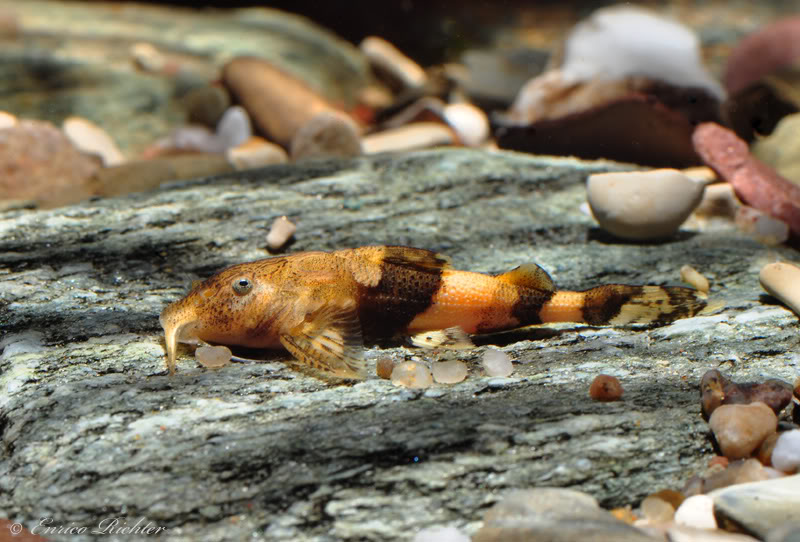
Caelatoglanis zonatus is an erethistid catfish known only from the Ataran River system in Kayin state, Myanmar, part of the Salween drainage. Images of the Ataran show flowing, forest-shaded headwaters with clear water, a mixed sand and rock substrate and plenty of submerged driftwood and leaf litter. The name zonatus refers to its barred colour pattern.
Etymology
EditCaelatoglanis: from the Latin caelum, meaning 'chisel', and glanis, meaning 'catfish'.
zonatus: from the Latin zonatus, menaing 'belted, girdled', in reference to this species' barred colour pattern.
Distribution
EditKnown only from the Ataran River system in Kayin state, Myanmar.
The Ataran forms the headwaters of part of the larger Salween drainage, and some of its tributaries extend across the nearby border into Thailand, where it’s known as the Kasat.
Type locality is 'Stream ''Chon Son' between Kyondaw and Phadaw, about 20 kilometers northwest of Payathouzu (at border with Thailand), 15°25'N, 98°15'E, Kayin State, Myanmar'.
Habitat
Write a noteEditImages of the Ataran correspondingly depict flowing sections of forest-shaded, seemingly well-oxygenated headwaters containing clear water, a mixed sand/rock substrate and lots of submerged driftwood/leaf litter.
Other fish species inhabiting the Ataran include Acanthocobitis pictilis, Botia kubotai, Schistura vinciguerrae, S. robertsi, Garra sp. ‘redtail’, and Mastacembelus armatus plus unidentified Devario, Scaphiodonichthys, Tor, Neolissochilus, Garra and Schistura spp.
Species images · 2
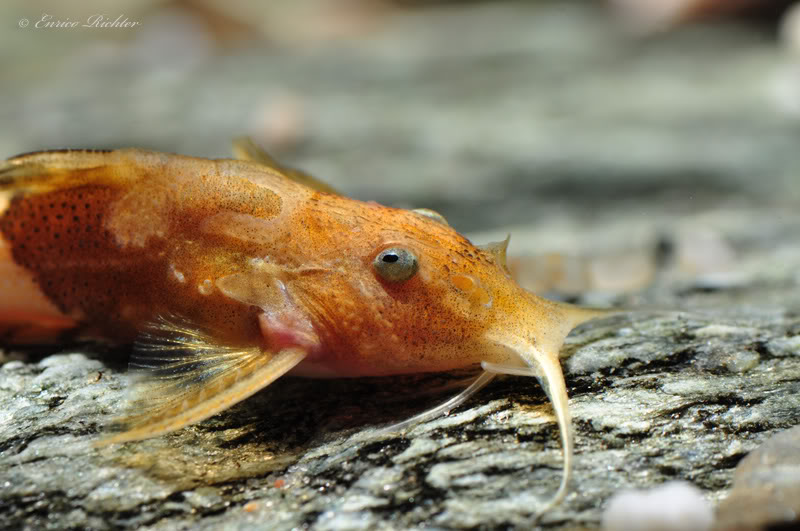
These photographs are used with each photographer's permission.
Send a photographDistribution
Profile completeness9 of 24
Community
Questions about Caelatoglanis zonatus?
Ask on Discord