Results for “specimen”
Type a name: scientific, common, or one a species used to go by. Or narrow the catalogue with the filters.
Filters
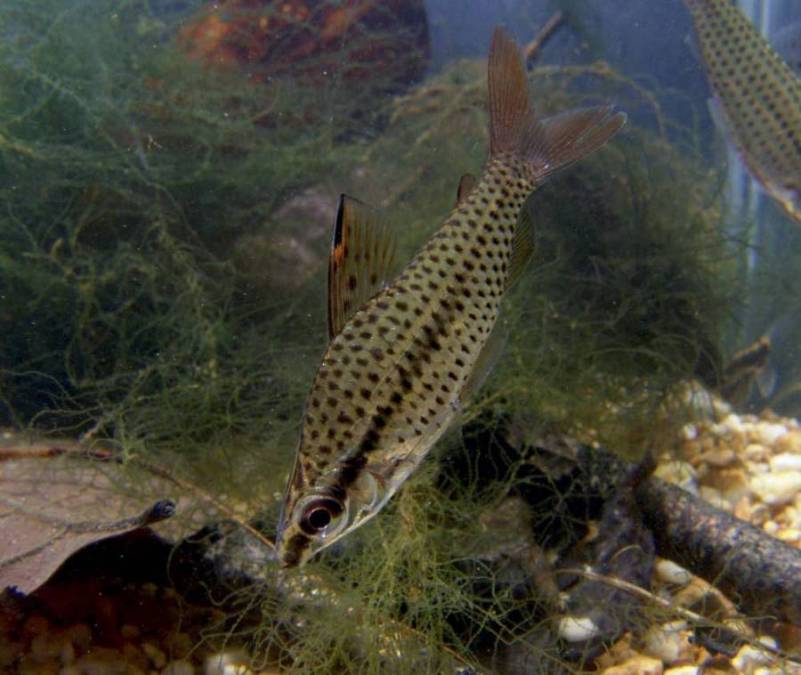
Chilodus punctatusSpotted Headstander
Müller & Troschel, 1844
Max length80mm SL3.1in SLTank90 × 30cm36 × 12inTemp20–28°C68–82°FpH5.0–7.5Omnivorous and will accept most foods offered, with the stomach contents of wild specimens varying on a seasonal basis but mostly comprising insects and insect larvae (orders Trichoptera, Hemiptera, Homoptera) plus some terrestrial fruits and even scales of other fishes (Sánchez et al., 2003). In the aquarium offer live Daphnia, Artemia, Moina, bloodowrm, etc., vegetable matter in the form of blanched spinach, lettuce, cucumber, fruit, algae wafers, etc., and good quality, sinking dried foods.
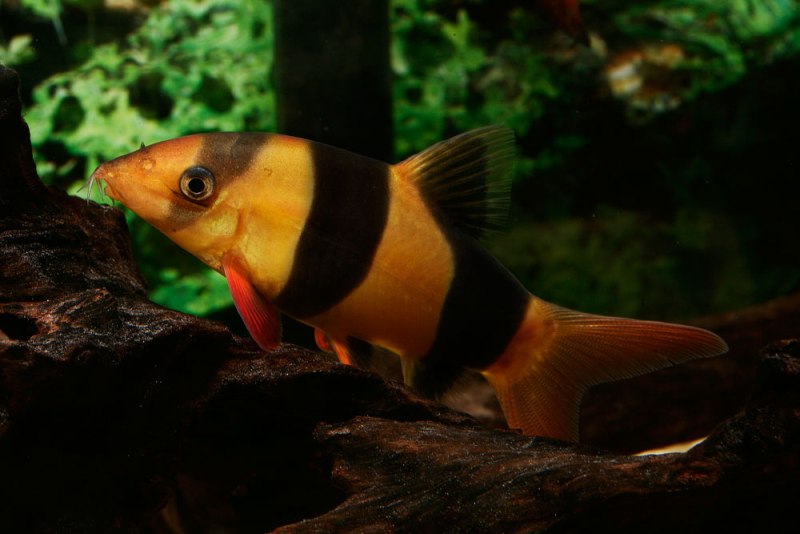
Chromobotia macracanthusClown Loach
Bleeker, 1852
Max length400mm SL16in SLTank180 × 60cm72 × 24inTemp24–30°C75–86°FpH5.0–7.0This species is arguably one of the most misunderstood in the hobby since it's wholly unsuitable for smaller aquaria despite its ubiquitous availability. Most retailers sell it without providing what should be considered essential information regarding long-term care and most specimens undoubtedly fail to reach their potential in captivity. The purchase of a group is also a considerable investment given that if properly cared for typical life span is in excess...
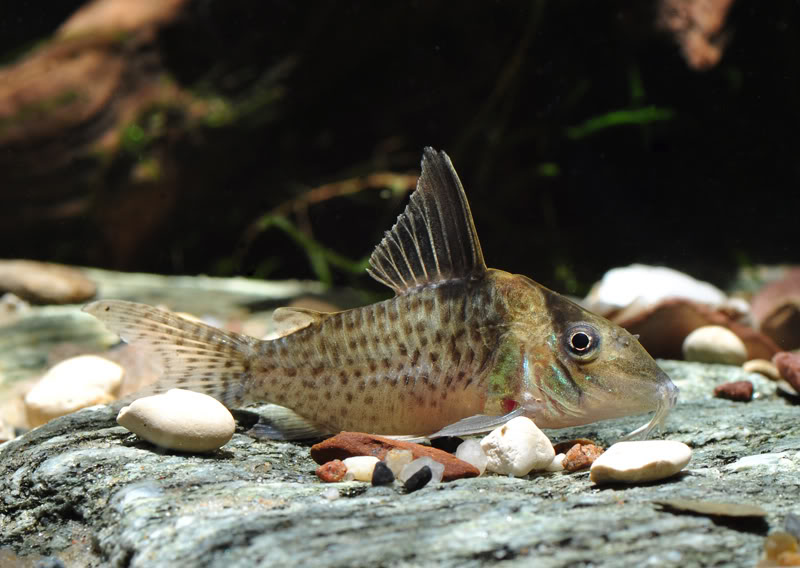
Corydoras brevirostrisSpotted Cory
Fraser-Brunner, 1947
Max length60mm SL2.4in SLTanknot recordedTemp20–26°C68–79°FpH6.0–7.5C. brevirostris was described from an aquarium specimen apparently exported from the Río Orinoco drainage in Venezuela, and its wider distribution is somewhat vague, usually being given as the Orinoco system plus unnamed coastal rivers in Suriname. This represents a somewhat disjunct pattern of distribution and if correct the species is also likely to occur in Guyana.
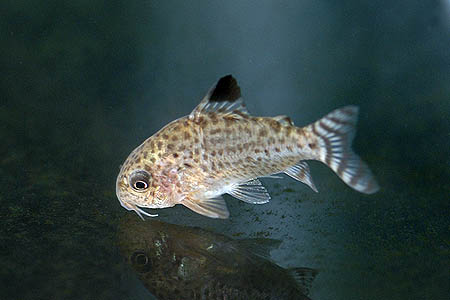
Corydoras cruziensisSanta Cruz Cory
Knaack, 2002
Max length50mm SL2.0in SLTank80 × 30cm31 × 12inTemp20–28°C68–82°FpH6.0–8.5This species is not well-documented but is said to differ from the comparable C. punctatus by possessing larger dark markings on the body which may form an irregular midlateral stripe in some specimens. Unfortunately diagnostic characters cannot be provided since we’ve been unable to obtain the type description, and little has been written about the species since it was published.
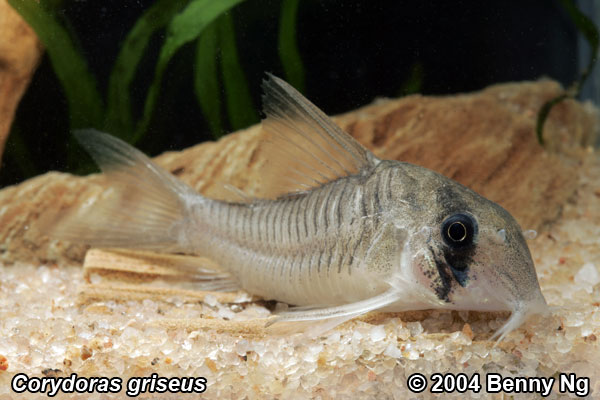
Corydoras griseus
Holly, 1940
Max length50mm SL2.0in SLTank90 × 30cm36 × 12inTemp20–26°C68–79°FpH6.0–7.5Native to Guyana, where it may be restricted to the Potaro River, a major tributary within the Essequibo watershed. It was described from aquarium specimens which were said to have been collected in 'very small water courses of the Amazon', but the type locality was corrected to 'Guyana-Essequibo, Potaro River, Kuribong trail' by Nijssen and Isbrücker (1980).
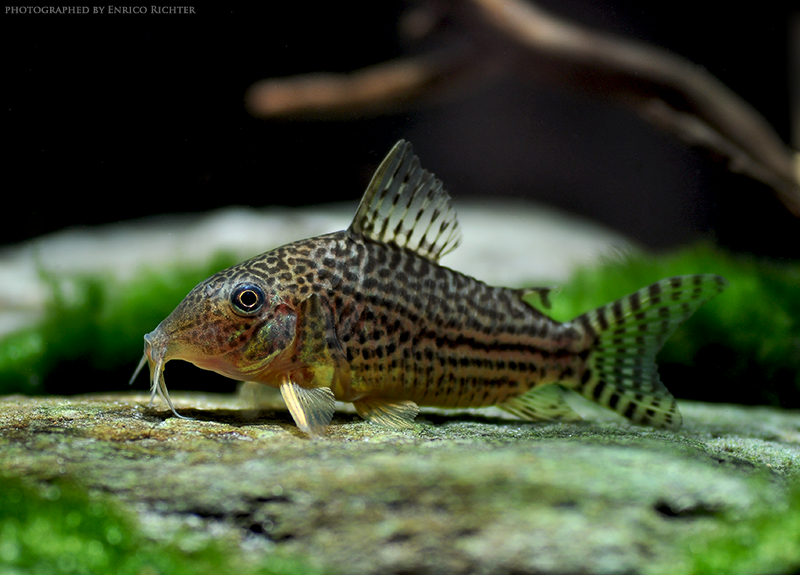
Corydoras haraldschultziMosaic Cory
Knaack, 1962
Max length85mm SL3.3in SLTank120 × 30cm48 × 12inTemp24–28°C75–82°FpH5.5–7.5The original type locality is 'Rio Guaporé, Brazil', supposedly in the vicinity of Pontes e Lacerda in Mato Grosso state. However, this was modified by Nijssen and Isbrücker (1980) to 'Brazil-Goias, Rio Tocantins, road between Pedro-Afonso (08°59'S 48°12'W) and Itacajá (08°18'S 47°45'W)'. This is confusing since the distance between these two localities is well over 1000 km, although it appears that the former is correct as per our image of specimens with locality details.
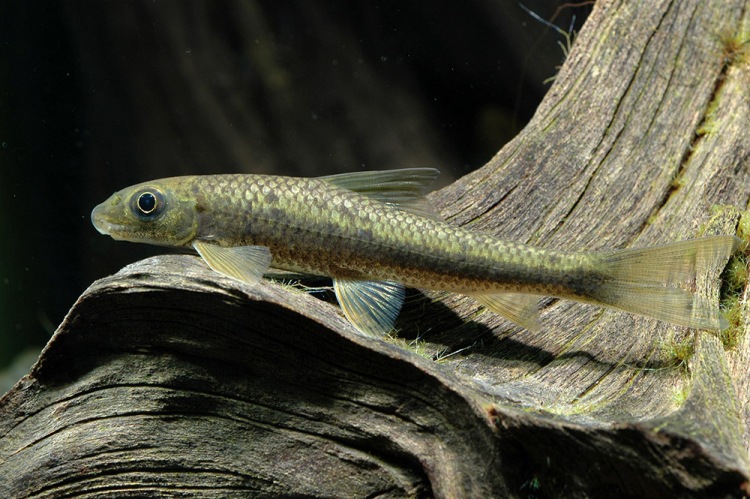
Crossocheilus latius
Hamilton, 1822
Max length150mm SL6in SLTank150 × 45cm60 × 18inTemp18–24°C64–75°FpH6.0–7.5C. latius isn't often available in the trade but makes an excellent alternative to more commonly-offered members of the genus should you be lucky enough to find some. Shipments of similar-looking Indian Garra species such as G. mullya or G. gotyla sometimes contain the odd specimen. It exhibits morphological differences when compared with other members of the genus and may be assigned to a separate taxon at some point in the future.
Ctenopoma kingsleyaeTailspot Ctenopoma
authority not recorded
Max length250mm SL10in SLTanknot recordedTemp25–28°C77–82°FpH6.0–8.0This species can be exceptionally long-lived and there are reports of specimens surviving in aquaria for over 30 years. It is named after the explorer Mary Kingsley, and often goes by the common name of Kingsley's climbing perch. While Ctenopoma are closely related to the Asian climbing perch (Anabas sp.), they are not known to have the ability to cross areas of land like this species. Like others in the suborder Anabantoidei, the species possesses an accessory breathing organ known as t...
Dianema longibarbisPorthole Catfish
authority not recorded
Max length100mm SL3.9in SLTank90 × 38cm36 × 15inTemp24–28°C75–82°FpH5.5–7.5So named because of the row of spots running along the lateral line, the porthole cat is a good community species. Newly imported fish tend to be a little delicate and are susceptible to disease. This is at least in part because all specimens sold for the trade are wild caught. Once acclimatised, it usually proves very hardy and can be exceptionally long-lived for a fish of this size, having the potential to survive for over 10 years....
Dianema urostriatumFlagtail Catfish
authority not recorded
Max length125mm SL5in SLTank120 × 38cm48 × 15inTemp25–28°C77–82°FpH6.0–8.0A good choice for the larger community tank. Newly imported fish tend to be a little delicate and can be susceptible to disease. This is at least in part because all specimens sold for the trade are wild caught. Once acclimatised it usually proves very hardy and adaptable....
Distichodus affinisSilver Distichodus
authority not recorded
Max length200mm SL8in SLTank120 × 30cm48 × 12inTemp23–27°C73–81°FpH6.0–8.0This species has become more common in the trade in recent years, and makes an interesting addition to larger communities. It develops bright red fins as it matures. Some specimens develop a pink sheen on the underside. These variations may indicate different species, as there are several in the genus that superficially resemble D. affinis....
Dormitator lebretonisClay Goby
authority not recorded
Max length120mm SL5in SLTanknot recordedTemp22–26°C72–79°FpH7.0–8.5Not often seen for sale, but if you can find it, it makes a peaceful addition to the brackish or hardwater community of medium-sized fish. It was previously considered a member of the now defunct genus Batanga. The fish in our picture is a young specimen. Adults develop a pleasing pattern of reds and blues and are most attractive....
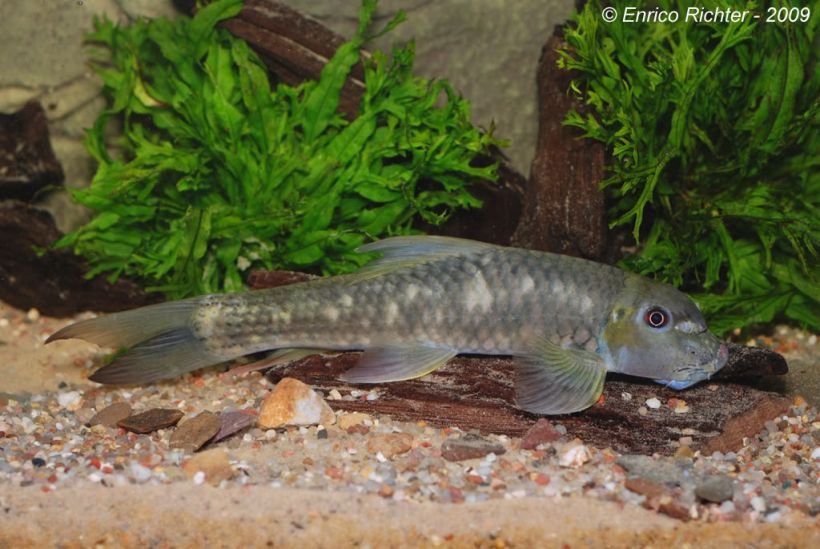
Garra salweenica
Hora & Mukerji, 1934
Max length175mm SL7in SLTanknot recordedTempnot recordedpHnot recordedG. salweenica can be distinguished from other congeners inhabiting the Salween watershed by the following combinatuion of characters: body brownish; presence of a trilobed proboscis on the snout; snout blunt; a series of black spots at the base of the central dorsal-fin rays; presence of longitudinal stripes on the posterior portion of the body; a dark marking at the tip of the upper (and lower in some specimens) caudal-fin lobe; body depth 22.4-25.3 % SL.
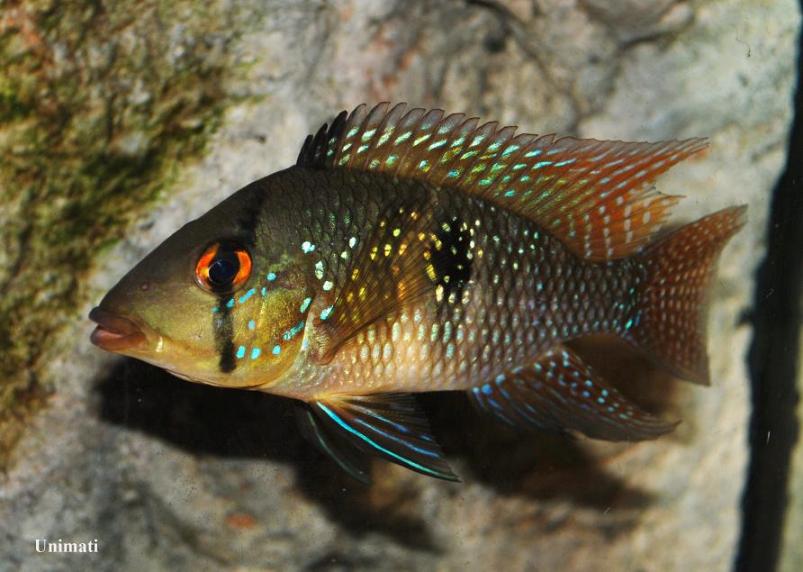
'Geophagus' brasiliensisPearl Cichlid
Quoy & Gaimard, 1824
Max length250mm SL10in SLTank150 × 45cm60 × 18inTemp18–28°C64–82°FpH6.0–8.0This species is also known as the 'pearlscale' or 'mother-of-pearl' cichlid in deference to the iridescent body scaling. It's also worth noting that fishes sold as Gymnogeophagus australis in Europe are 'G.' brasiliens is more often than not. Wild specimens exhibits significant dissimilarities in body colour and patterning depending on locality with basic colouration being dominated by varying shades of blue, green or yellow, for example. Some populations al...
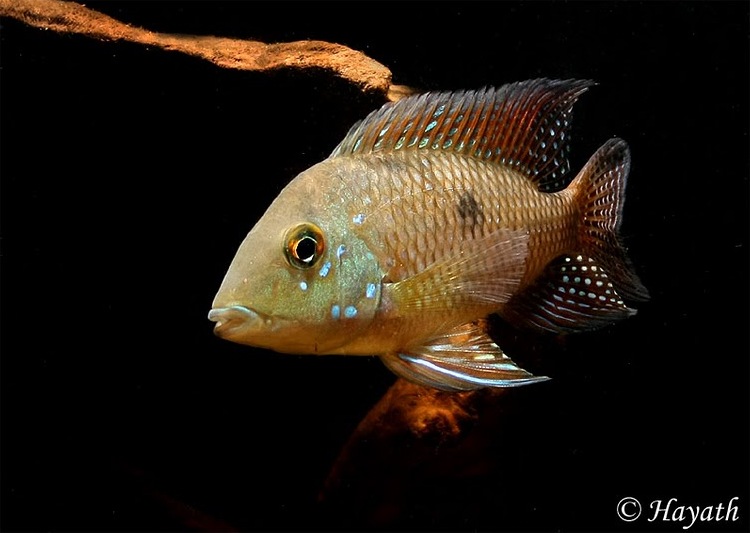
'Geophagus' iporangensis
Haseman, 1911
Max length100mm SL3.9in SLTank120 × 30cm48 × 12inTemp20–26°C68–79°FpH6.0–7.0Juvenile specimens of this species are readily confused with those of other members of the 'G.' brasiliensis species group, but adults are easily-distinguished by their relatively smaller adult size and comparative lack of reflective blue scales on the body and head. The genus Geophagus was rediagnosed by Kullander (1986) who restricted it to include only those species with paired caudal extensions to the swi...
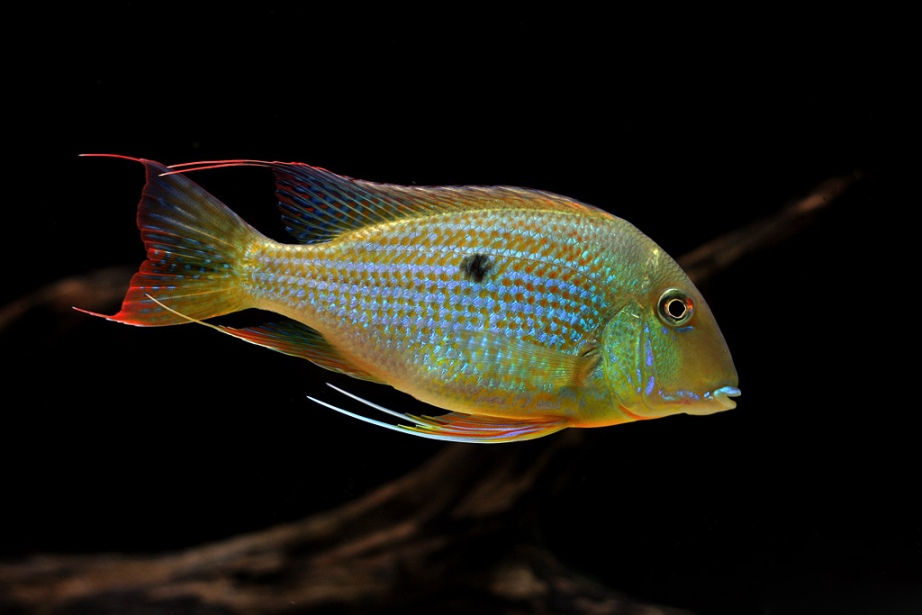
Geophagus neambi
Lucinda, Lucena & Assis, 2010
Max length200mm SL8in SLTank180 × 60cm72 × 24inTemp24–32°C75–90°FpH5.5–7.5This species was available in the hobby several years prior to being described, invariably traded as G. sp. aff. altifrons 'Tocantins', G. sp. 'Tocantins' or G. sp. 'rio Areoes'. The latter of these names refers to an Indian reserve named 'Areões' in the rio Das Mortes drainage, a tributary of the Araguaia which itself drains into the Tocantins, and the aquarium specimens in our images have been identified as G. neambi by Dr. Paulo Lucinda, co-describer of the species.
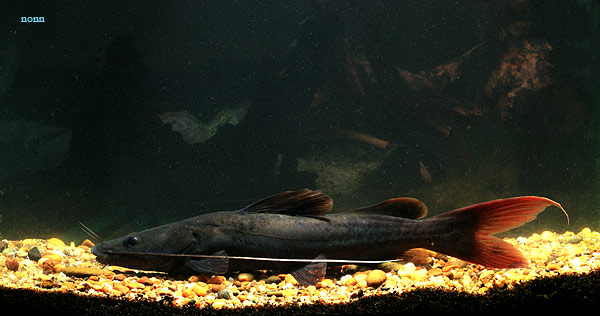
Hemibagrus wyckioidesAsian Red Tailed Catfish
Fang & Chaux, 1949
Max length1300mm SL51in SLTanknot recordedTemp19–29°C66–84°FpH6.0–8.0Juvenile specimens are sometimes available in the aquarium trade although their purchase is strongly discouraged, and this species probably shouldn't be considered a home aquarium subject at all given its eventual size plus the fact it can live for several decades. H. wyckioides can be told apart from mos...
Hemigrammus belottiiDash-dot Tetra
authority not recorded
Max length40mm SL1.6in SLTank60 × 38cm24 × 15inTemp23–27°C73–81°FpH6.0–7.0Not a common fish in the trade, most of the specimens imported come in as contaminants among batches of more popular species. Like all Hemigrammus, the taxonomic status of this species is currently Incertae Sedis, meaning uncertain. The genus is currently used as something of a catch-all for over 70 species of small characin. Most experts agree that a full revision is required, with the likely outcome that many species will be placed into new or different genera....
Hepsetus odoeAfrican Pike Characin
authority not recorded
Max length700mm SL28in SLTank180 × 60cm72 × 24inTemp25–28°C77–82°FpH6.0–7.5The only species in the genus, and a popular game fish in its native range, H. odoe superficially resembles our native European Pike. It is an ambush predator with a fearsome set of teeth, and should be handled very carefully, particularly when maintaining its tank. Although juvenile specimens have become relatively common in the trade in the last few years, this is strictly a species for the specialist who is able to provide it with a suitably large aquarium and the correct conditions. In sm...
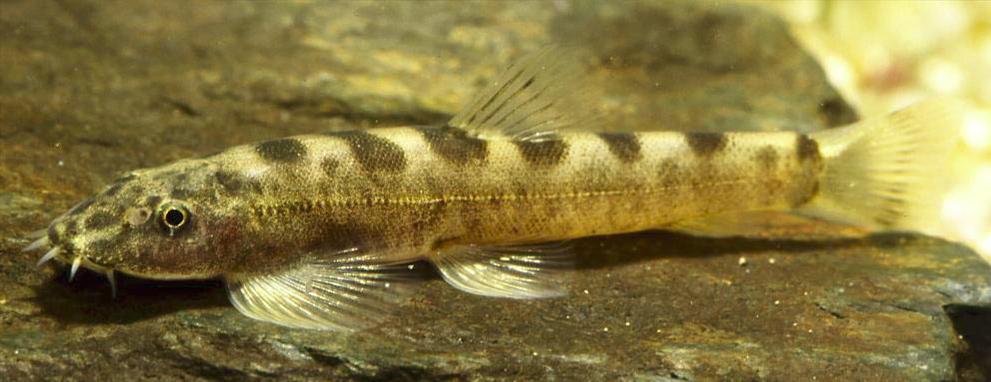
Homalopterula ripleyi
Fowler, 1940
Max length59mm SL2.3in SLTank80 × 30cm31 × 12inTemp20–25.5°C68–78°FpH6.0–7.5Fowler (1940) described this species as the unique member of his new genus Homalopterula on the basis of a single specimen, separated from related genera by the curved shape of the jaws, truncate caudal-fin and scaleless ventral surface.