Dormitator lebretonis
Clay Goby
On this page11 sections
Quick facts
Difficulty4 of 8 measures
More bars, more demanding. Hardiness is not averaged with the rest.
- Space
- large tank
- Water
- tap water
- Temp
- steady heat
- Diet
- unknown
- Temperament
- predatory
- Social
- unknown
- Compatibility
- unknown
Hardiness on its own can raise the rating, whatever the measures above say.
- Hardiness
- unknown
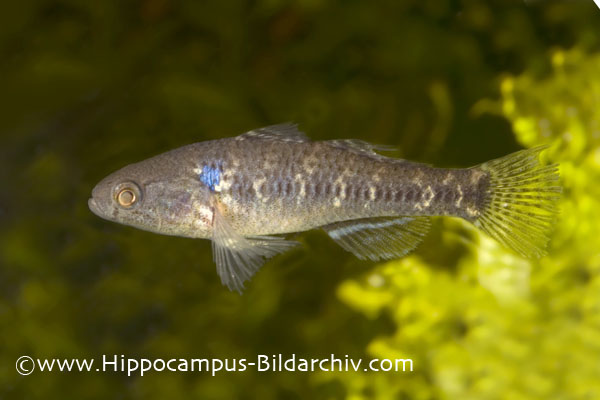
Not often seen for sale, but if you can find it, it makes a peaceful addition to the brackish or hardwater community of medium-sized fish. It was previously considered a member of the now defunct genus Batanga. The fish in our picture is a young specimen. Adults develop a pleasing pattern of reds and blues and are most attractive....
Distribution
Habitat
Aquarium size
Not a particularly active species. A tank measuring 30" x 12" x 12" (75cm x 30cm x 30cm) - 70 litres is big enough for a pair.
Maintenance
A soft, sandy substrate is best, along with lots caves, nooks and crannies where it can lurk and form territories. Although it's sometimes found in freshwater in nature, it will do better with the addition of salt to around 1/4 marine strength (1.005sg) in the aquarium, although it has also been kept successfully in hard, alkaline freshwater. It will be more active and visible during daylight hours if you provide dim lighting.
Water conditions
Temperature: 22 – 26 °C72 – 79 °F
pH: 7.0-8.5
Hardness: 10-20°H
Diet
An unfussy goby that will accept most dried, frozen and live foods. It also enjoys some vegetable matter in its diet and will often browse on green algae if it is present in the tank. Try it on blanched spinach or nori (dried seaweed).
These recommendations come from this profile’s own figures. They contain affiliate links, so we may earn a commission.
Behaviour and compatibility
Peaceful enough, but don't attempt to keep it with much smaller species, as it will eat anything it can fit in its mouth. It may also nip the fins of slow-moving or long-finned species. Ideal tankmates are other hardwater or brackish species that inhabit different levels of the aquarium, such as archer fish, chromides, rainbowfish, Monos and Chanda species.
It can be kept in groups provided there is enough space, as it can be a little territorial with its own kind, especially rival males.
Sexual dimorphism
Males develop extended rays in the anal and second dorsal fins and often develop a nuchal hump as they mature.
Reproduction
Has been achieved in the hobby but unfortunately it's not very well-documented. Apparently, it spawns in caves or plant leaves if no caves are available. There are conflicting views as to whether it requires fresh or brackish water in which to breed.
Notes
Not often seen for sale, but if you can find it, it makes a peaceful addition to the brackish or hardwater community of medium-sized fish. It was previously considered a member of the now defunct genus Batanga. The fish in our picture is a young specimen. Adults develop a pleasing pattern of reds and blues and are most attractive.
Species images · 1
Used with the photographer’s permission. Not licensed for reuse.
Profile completeness17 of 24
71% complete
Also missing: aquarium size, a recorded distribution, taxonomic authority, etymology.
Community
Questions about Dormitator lebretonis?
Ask on Discord