Results for “várzea”
Type a name: scientific, common, or one a species used to go by. Or narrow the catalogue with the filters.
Filters
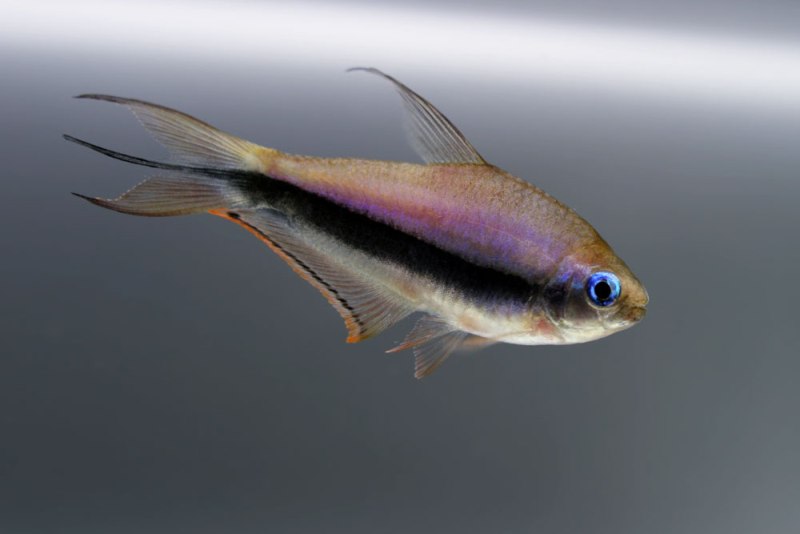
Nematobrycon palmeriEmperor Tetra
Eigenmann, 1911
Max length42mm SL1.7in SLTank90 × 30cm36 × 12inTemp23–27°C73–81°FpH5.0–7.5This species can be found in most dealers' tanks and is one of the best choices for the newcomer to fishkeeping, being attractive, hardy and inexpensive. As virtually all the fish sold in the trade have been captive bred they tend to be relatively unfussy regarding water chemistry and diet. It's occasionally confused with N. lacortei, which is currently the only other species in the genus. They can easily be told apart by looking at the eye of the fish in question, as the male N. l...
Neolamprologus multifasciatus
authority not recorded
Max length45mm SL1.8in SLTanknot recordedTemp24–27°C75–81°FpH7.5–9.0This is probably the smallest known cichlid species and exhibits truly fascinating behaviour. The territories it establishes are very small, usually measuring no more than 6" across, but they are defended vigorously. The tiny fish will even bite hands or fingers that invade their 'personal space'! Highly recommended to anyone wishing to observe some unique behaviour on a small scale....
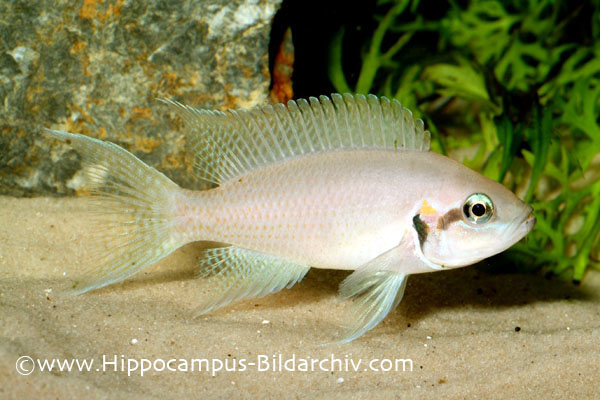
Neolamprologus pulcherBrichardi
Trewavas & Poll, 1952
Max length90mm SL3.5in SLTank120 × 30cm48 × 12inTemp23–27°C73–81°FpH8.0–9.0Deservedly one of the most popular Tanganyikan species available in the hobby, N. brichardi is ideal for newcomers to both Rift Lake cichlids and cichlids in general, being beautiful and easy to keep and breed. It is seen for sale under several common names including "Fairy Cichlid", "Lyretail Cichlid" and "Princess of Burundi". There are several colour morphs available, although these do not vary much in patterning, and an albino form is also occasionally available...
Neolamprologus savoryiStriped Brichardi
authority not recorded
Max length80mm SL3.1in SLTanknot recordedTemp23–27°C73–81°FpH7.5–9.0This species is included in the so-called "Brichardi complex", which also includes N. brichardi, crassus, falcicula, gracilis, helianthus, olivaceous, pulcher, and splendens. These should not be mixed in aquaria as they will hybridise freely. N. savoryi can be distinguished from others in the complex by it's distinctive patterning of vertical bars....
Neolamprologus sexfasciatusSix-barred Lamprologus
authority not recorded
Max length150mm SL6in SLTanknot recordedTemp23–27°C73–81°FpH7.5–9.0Several geographical morphs of this species are available, including "Sambia" and "Kipili". These vary in base colour from blue to yellow to white. It is not recommended for the general Tanganyikan community due to its aggressive and predatory nature....
Neolamprologus similis
authority not recorded
Max length45mm SL1.8in SLTanknot recordedTemp24–27°C75–81°FpH7.5–9.0N. similis is one of the less frequently seen shelldwellers in the hobby but has no less personality than its cousins. The territories it establishes are very small, usually measuring no more than 6" across, but they are defended vigorously. The tiny fish will even bite hands or fingers that invade their 'personal space'! It can be distinguished from the similar N. multifasciatus by the presence of additional barring on the head and neck and also in this species the stripes appear...
Neolamprologus tretocephalusFive-barred Lamprologus
authority not recorded
Max length150mm SL6in SLTank120 × 30cm48 × 12inTemp23–27°C73–81°FpH7.5–9.0It can be distinguished from the similar N. sexfasciatus by the presence of only five, rather than six, vertical bars on it's flanks. It is not recommended for the general Tanganyikan community due to it's aggressive nature, particularly when breeding....
Nimbochromis livingstonii
authority not recorded
Max length250mm SL10in SLTank120 × 45cm48 × 18inTemp24–28°C75–82°FpH7.6–8.8Not a fish for the general Malawi cichlid community, N. livingstonii is an ambush predator in nature, often being seen hanging motionless around rocky structures, in Vallisneria thickets or on the floor of the lake. It is a sedentary species and does not move around a lot. This is a behavioural adaptation known as thanatosis, or 'playing dead'. This strategy is usually used as for defensive means in other animals but in N. livingstonii is adapted for offensive means. The fish has a mot...
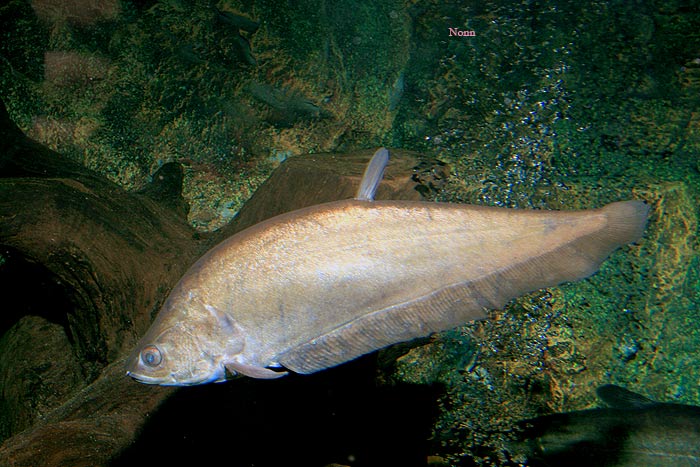
Notopterus notopterusBronze Featherback
Pallas, 1769
Max length600mm SL24in SLTanknot recordedTemp20–28°C68–82°FpH6.0–8.0This species is also referred to as 'Asian knifefish' or 'ghost knifefish' in the aquarium trade in the aquarium trade but arguably has no place in the ornamental hobby given its adult size and specialised requirements. It is sometimes confused with the African species Xenomystus nigri but is easily told apart by its larger adult size and presence (vs. absence) of a dorsal fin.
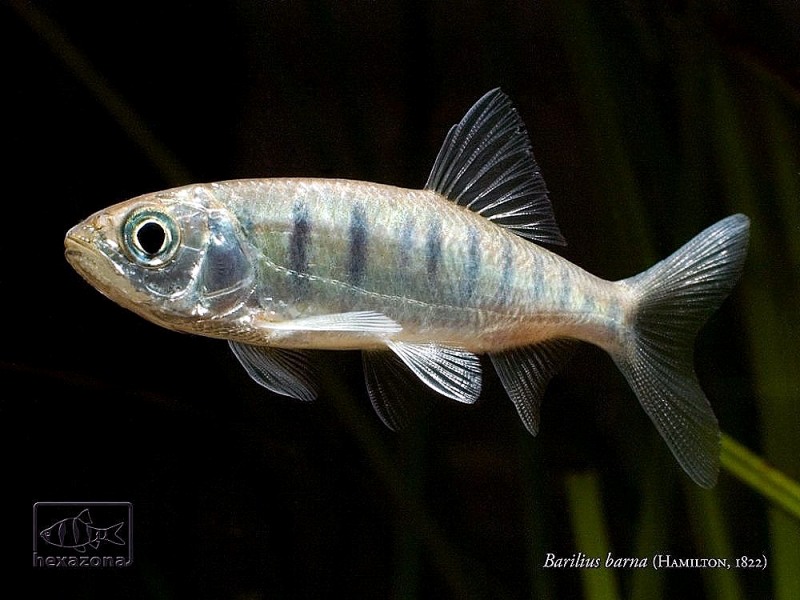
Opsarius barna
Hamilton, 1822
Max length130mm SL5in SLTank150 × 60cm60 × 24inTemp16–24°C61–75°FpH6.0–8.0This species occasionally appears in the ornamental trade, usually as 'striped hill trout' or 'banded hill trout'. It can be distinguished from congeners by the following combination of characters: lateral line complete with 40-42 scales; barbels absent; 10-13 anal-fin rays; body with 9-11 dark blue vertical bars; last dorsal-fin ray extending to caudal-fin base.
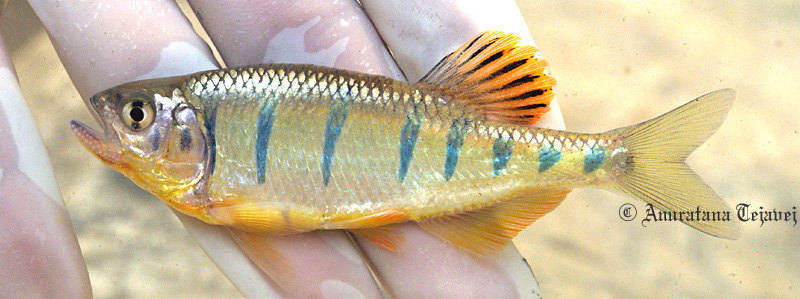
Opsarius pulchellus
Smith, 1931
Max length110mm SL4in SLTank120 × 45cm48 × 18inTemp18–26°C64–79°FpH6.0–7.5This species is traded for aquaria under various names including 'butterfly barb', 'mackerel barb', 'green-barred danio', and 'royal opsarius'. It can be told apart from other memb...
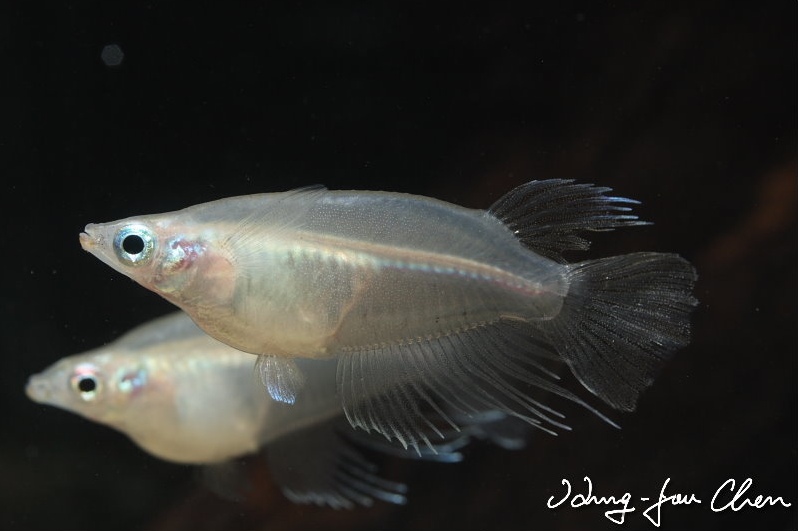
Oryzias dancenaIndian Ricefish
Hamilton, 1822
Max length35mm SL1.4in SLTank45 × 30cm18 × 12inTemp23–27°C73–81°FpH6.5–8.5This species continues to be mislabelled as O. melastigma, a name currently considered invalid by the majority of recent workers, or O. javanicus, a valid but distinct taxon. Roberts (1998) demonstrated that MClelland's description of Aplocheilus melastigmus, later renamed O. melastigma, does not correspond with any known Oryzias species from the Indian subcontinent or Myanmar since it's said to have a dark spot in the dorsal-fin and an excessively slim body, among other anomalies.
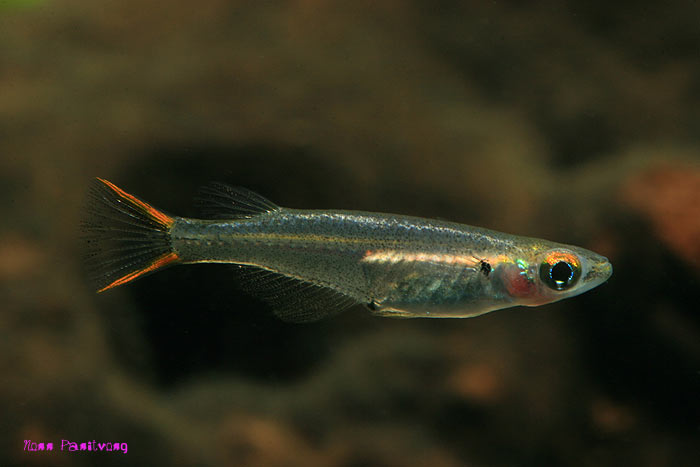
Oryzias songkhramensis
Magtoon, 2010
Max length20mm SL0.8in SLTank40 × 20cm16 × 8inTemp23–30°C73–86°FpH6.0–7.5An exclusive inhabitant of fresh, normally standing, waters including shallow pools, ditches, rice paddies and clear water swamps. The type locality is a small ditch measuring just 3 - 6 metres in width and 0.5 - 2 metres deep. The water was clear and the substrate composed of sand, detritus and mud with growths of the macrophytes Nymphaea lotus, Jussiaea repens and Hydrilla verticillata.
Osphronemus goramyGiant Gourami
authority not recorded
Max length700mm SL28in SLTank183 × 61cm72 × 24inTemp20–30°C68–86°FpH6.5–8.0An incredibly hardy, long-lived fish which can survive for over 20 years in captivity. These fish develop real personality and can learn to recognise their owner. They are often sold as cute juveniles in aquatic shops with no information provided as to their adult size. The young have an attractive barred patterning which fades as the fish grow, which they do very quickly. A golden variety also exists in aquaria. O. goramy is cultured commercially for food on a large scale in several countrie...
Osphronemus laticlaviusGiant Red Tail Gourami
authority not recorded
Max length500mm SL20in SLTank180 × 60cm72 × 24inTemp20–30°C68–86°FpH6.5–8.0Still relatively rare in the hobby, this fish was only described to science in the early 1990s. It's not yet being mass-produced in any great numbers, and demand is high, so it's quite pricey when it is available. It's a stunning fish when adult, developing bright red fin edges with filamentous extensions, and a body colour varying between blue-green and almost black. It makes a great pet as it can develop real personality and learn to recognise its owner....
Otopharynx lithobatesSulphur-headed Hap
authority not recorded
Max length160mm SL6in SLTank90 × 45cm36 × 18inTemp24–28°C75–82°FpH7.6–8.8O. lithobates is a true rock dweller and is hardly ever seen in open water, even in aquaria. In fact, the scientific name lithobates literally translates as "rock dweller". Breeding males of this species rank among the most stunning of Lake Malawi Haplochromine cichlids. The three characteristic spots on the flanks disappear and are masked by a stunning neon blue patterning. Almost the entireand top of the head turn a deep yellow-orange colour. The most colourful variant is the "...
Oxydoras nigerRipsaw Catfish
authority not recorded
Max length900mm SL35in SLTank240 × 60cm96 × 24inTempnot recordedpH6.0–7.0Previously referred to a Pseudodoras niger, the Ripsaw Cat is a fish only for the experienced fishkeeper due to its large adult size. Although a visually stunning fish, realistically, it is best suited to public aquaria. Much more peaceful than its common name suggests, which it gets from the spines that run down the lateral line of the fish. This fish is becoming more readily available to the hobby and prices are also falling, meaning that many fishkeepers are being tempted into buying a fis...
Oxyeleotris marmorataMarbled Goby
authority not recorded
Max length650mm SL26in SLTank150 × 60cm60 × 24inTemp22–28°C72–82°FpH6.5–7.5One of the largest goby species in the world, O. marmoratus is unsuitable for the vast majority of aquaria, but is an interesting oddball for the true enthusiast with the facilities to house it properly. It is a nocturnal ambush predator and generally remains motionless during daylight hours unless striking at food. It is a popular food fish in some of its native countries, where it is known as soon hock....
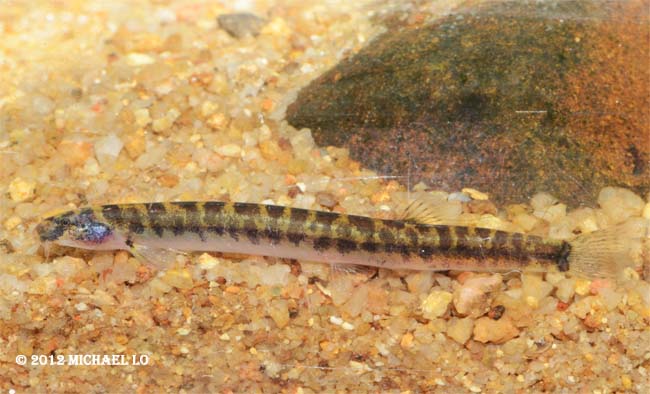
Pangio shelfordii
Popta, 1903
Max length80mm SL3.1in SLTank60 × 30cm24 × 12inTemp21–26°C70–79°FpH4.0–7.0Patterning is highly variable depending both within and between populations and the species may comprise an assemblage containing a number of taxa (Kottelat and Lim, 1993; Tan and Kottelat, 2009). For example, those from Singapore and Johor possessing intricate mottling on the dorsal surface while individuals from Terengganu have a series of saddle-like markings either alternating or connecting with the midlateral markings.
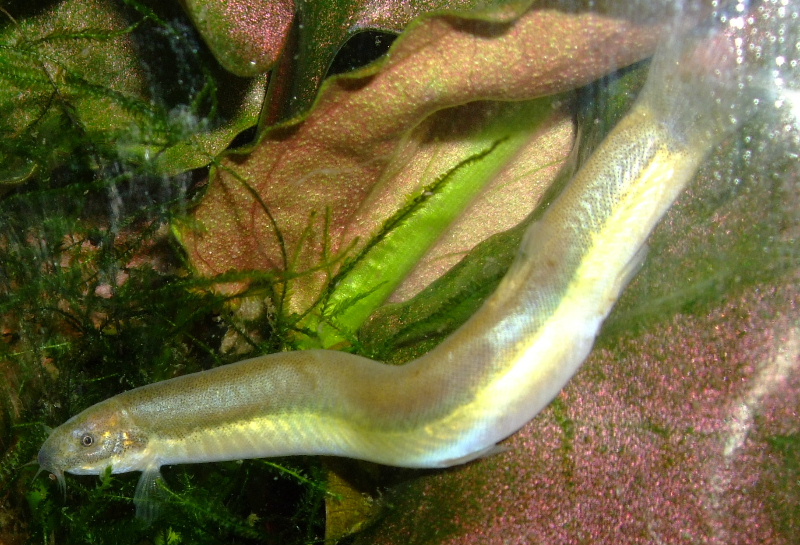
Pangio sp. 'PAN02'
authority not recorded
Max length50mm SL2.0in SLTank60 × 30cm24 × 12inTemp21–26°C70–79°FpH3.5–7.0The fish in our images don't correspond to any of the described members of the genus but can be assigned to the P. oblonga species group with a degree of certainty. It's apparently exported as a contaminant among shipments of a uniformly brown-coloured fish with unpublished genetic analyses suggesting the two might be variants of the same species (J. Bohlen, pers. comm.). Among congeners it may be related to P. alcoides Kottela...