Results for “species”
Type a name: scientific, common, or one a species used to go by. Or narrow the catalogue with the filters.
Filters
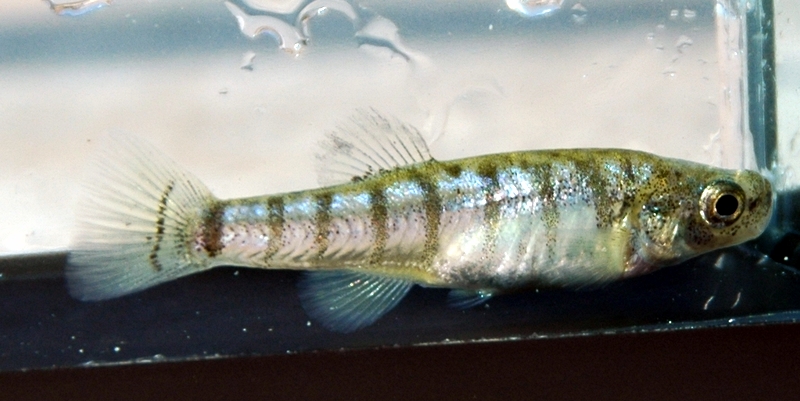
Anatolichthys saldaeSalda Toothcarp
Akşiray, 1955
Max length50mm SL2.0in SLTank120 × 30cm48 × 12inTemp6.5–22°C44–72°FpH8.0–10.0The elongated, slender body profile, angular lower jaw and reduced scalation exhibited by this little-known subspecies have seen it placed in the disused genera Anatolichthys and Kosswigichthys in the past and it's still inexplicably listed as a species of Lebias by some sources (for the record Lebias has long been considered a synonym of Cyprinodon by most authorities and an ICZN committee voted to suppress the name in favour of Aphanius as recently as 2003). You're unlikely to find i...
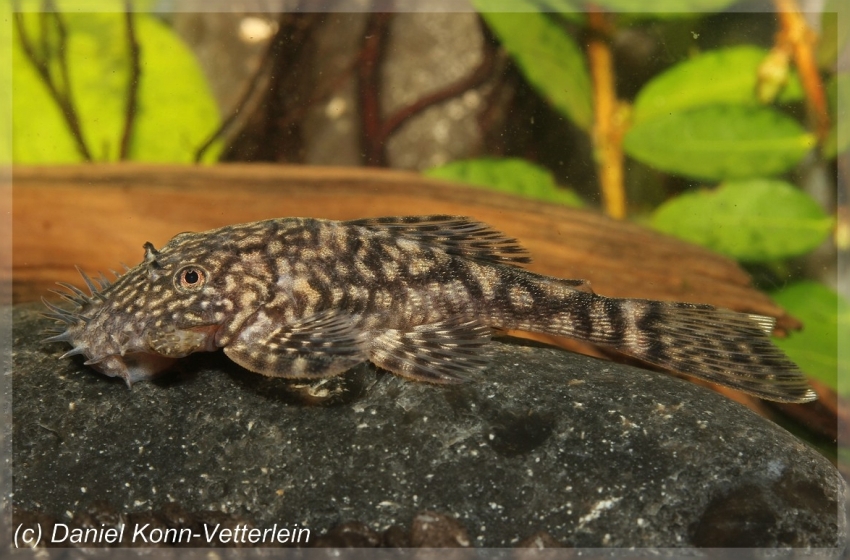
Ancistrus claroLDA 008
Knaack, 1999
Max length70mm SL2.8in SLTank60 × 30cm24 × 12inTemp23–28°C73–82°FpH6.0–7.5This species is sometimes confused with unidentified fishes such as A. sp. 'L352'. It can be told apart from closely-related congeners by possession of relatively long maxillary barbels which are free from the lower lip, and a colour pattern consisting of small spots on the head and vermiform lines on the body in males, and small spots all over the head and body in females.
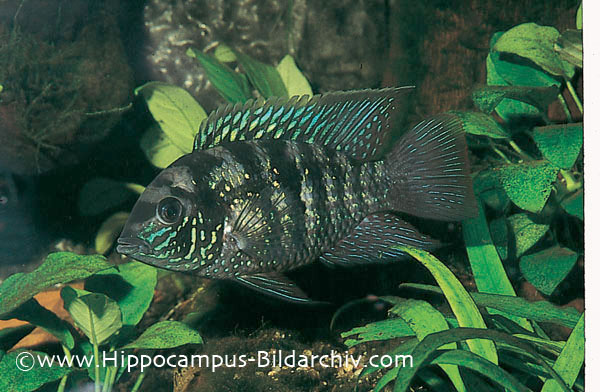
Andinoacara pulcherBlue Acara
Gill, 1858
Max length150mm SL6in SLTanknot recordedTemp22–28°C72–82°FpH6.5–8.0This species was previously known as 'Aequidens' pulcher but has been considered s member of the genus Andinoacara since 2009.
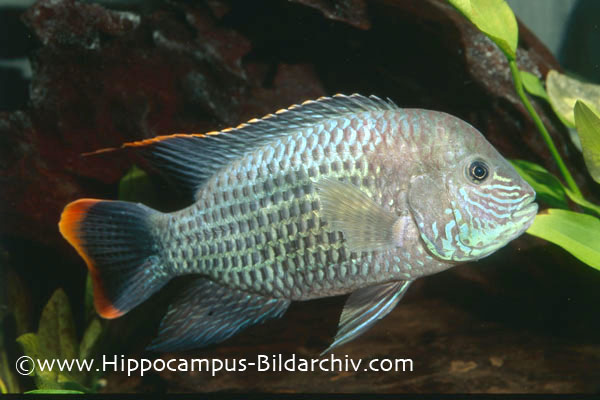
Andinoacara rivulatusGreen Terror Cichlid
Günther, 1860
Max length300mm SL12in SLTank150 × 45cm60 × 18inTemp20–24°C68–75°FpH6.5–8.0Native to extreme northern Peru and coastal drainages of western Ecuador as far north as the Río Esmereldas drainage and possibly beyond. The form from the Esmereldas and above may represent a different species (see 'notes').
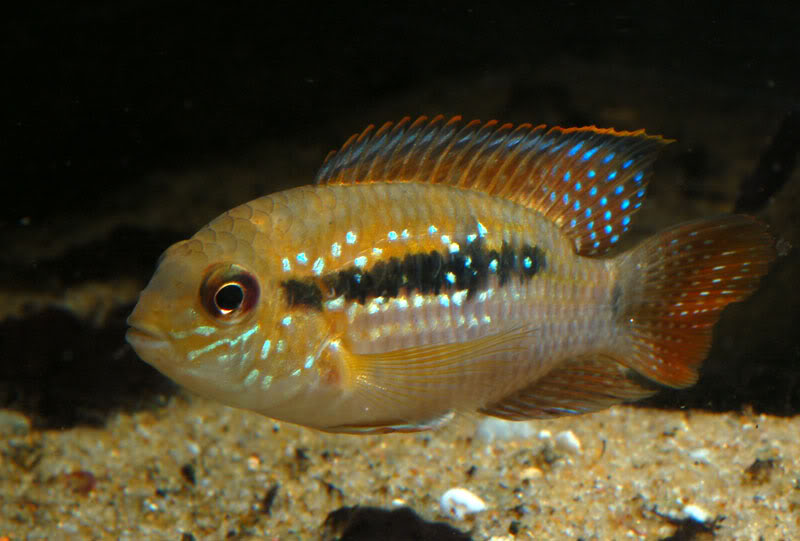
Andinoacara sp. 'Orinoco'
authority not recorded
Max length130mm SL5in SLTank120 × 30cm48 × 12inTemp24–28°C75–82°FpH5.5–7.5This apparently undescribed species was traded as 'Aequidens' sp. 'Orinoco' but following Musilová et al. (2009) appears to be a member of the genus Andinoacara.
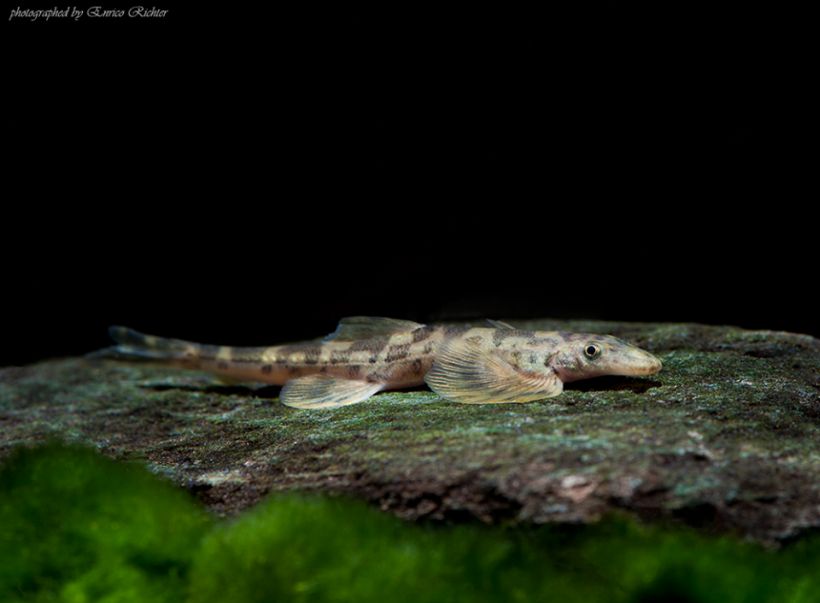
Annamia normaniVietnamese Giraffe Loach
Hora, 1931
Max length100mm SL3.9in SLTank120 × 30cm48 × 12inTemp16–22°C61–72°FpH6.0–7.5Traditionally considered to be a micropredator feeding on insect larvae and suchlike (Rainboth, 1996), but a study by Herder and Freyhof (2006) revealed adult A. normani inhabiting the Duc My River in central Vietnam to be specialised grazers of cyanobacteria. In rapids the latter form hard encrustations on rock surfaces from which adults are able to bite chunks.
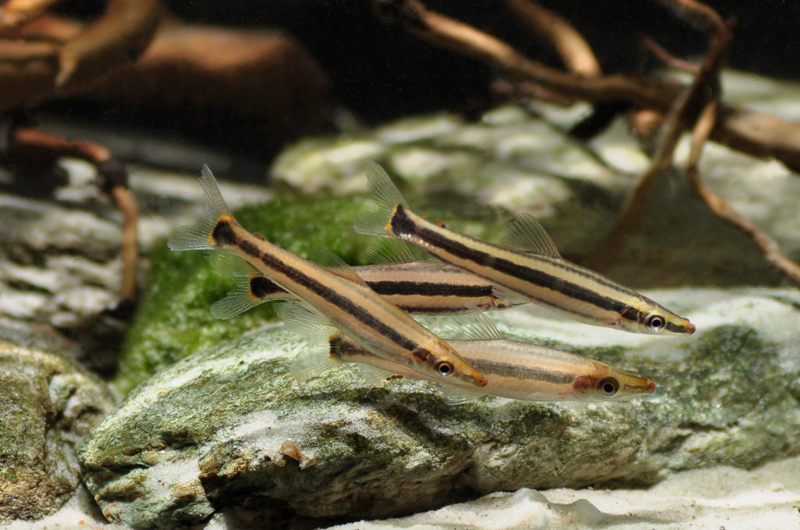
Anostomus ternetziGold-Striped Headstander
Fernández-Yépez, 1949
Max length125mm SL5in SLTank120 × 30cm48 × 12inTemp20–28°C68–82°FpH5.5–7.5This species is widely-distributed in the Río Orinoco system in Brazil, Colombia and Venezuela plus coastal drainages in Guyana, Suriname and French Guiana including the Essequibo and Mazaruni. Type locality is 'Palital, Estado Guárico, Venezuela' which appears to correspond to a wetland called Esteros de Palital in the Aguaro-Guariquito National Park of Guárico state, northern Venezuela.
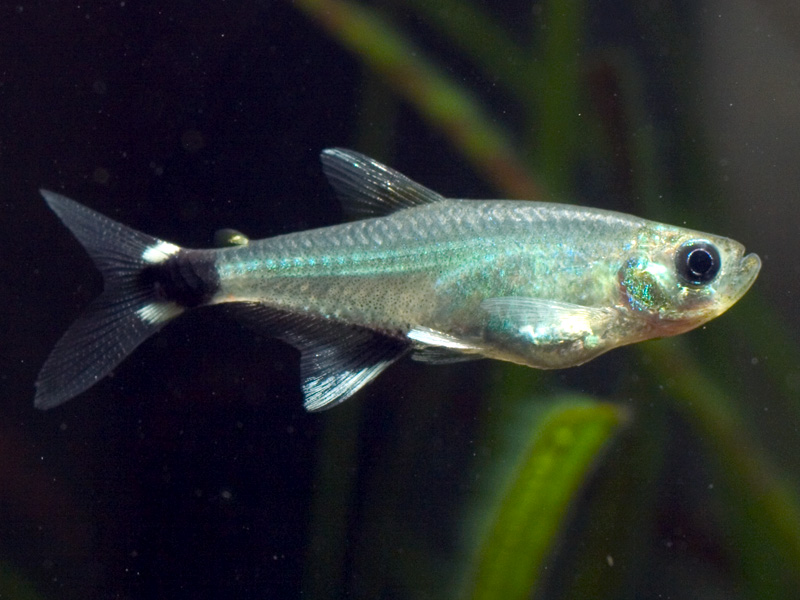
Aphyocharax nattereriDawn Tetra
Steindachner, 1882
Max length35mm SL1.4in SLTank60 × 30cm24 × 12inTemp22–27°C72–81°FpH5.5–7.5This species is normally referred to as A. paraguayensis, but that name has been considered a synonym of A. nattereri since 2003. Confusion remains however, as the type locality for the latter is 'Villa Bella', now known as Parintins, a settlement on the main Amazon river channel between Manaus and Santarém and many kilometres away from the majority of confirmed localities.
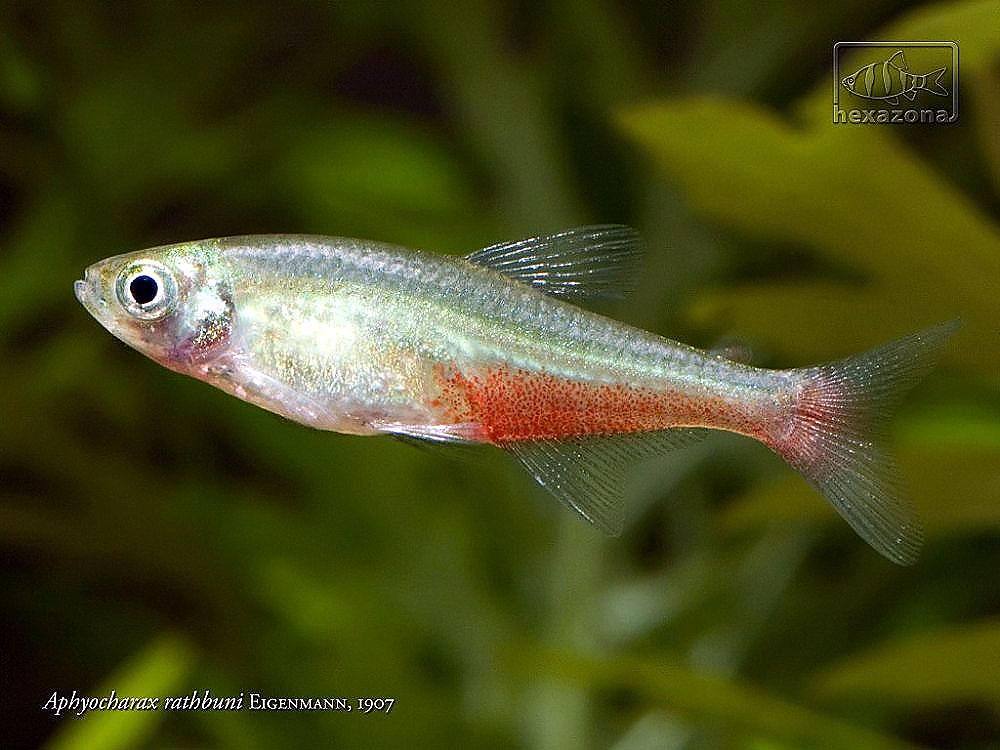
Aphyocharax rathbuniGreen Fire Tetra
Eigenmann, 1907
Max length45mm SL1.8in SLTank60 × 30cm24 × 12inTemp20–26°C68–79°FpH6.5–7.5Endemic to the Paraguay, Paraná and Uruguay river drainages in Brazil, Paraguay, Argentina and Uruguay. The smallest of the three Aphyocharax species seen in the hobby, the redflank is relatively uncommon in the hobby in the aquarium trade. It is also known as the Green Fire Tetra.
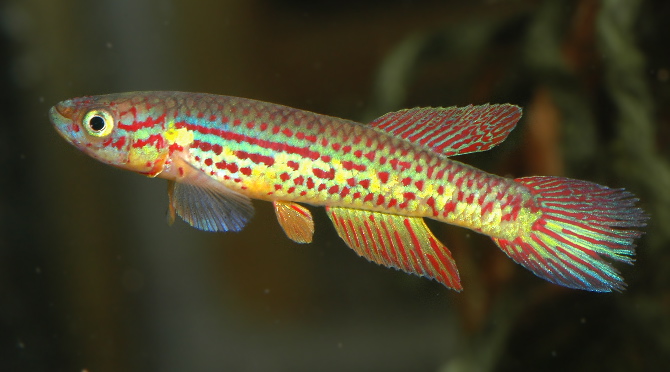
Aphyosemion bochtleriBochtler's Lyretail
Radda, 1975
Max length50mm SL2.0in SLTanknot recordedTemp18–22°C64–72°FpH6.0–7.0Described from a rainforest stream near the settlement of Mintoum, northern Gabon and has a wider distribution in the upper Ivindo River basin, a tributary of the larger Ogooué system. Thi species was considered synonymous with the congener A. herzogi Radda 1975 for a number of years but is currently recognised as distinct.
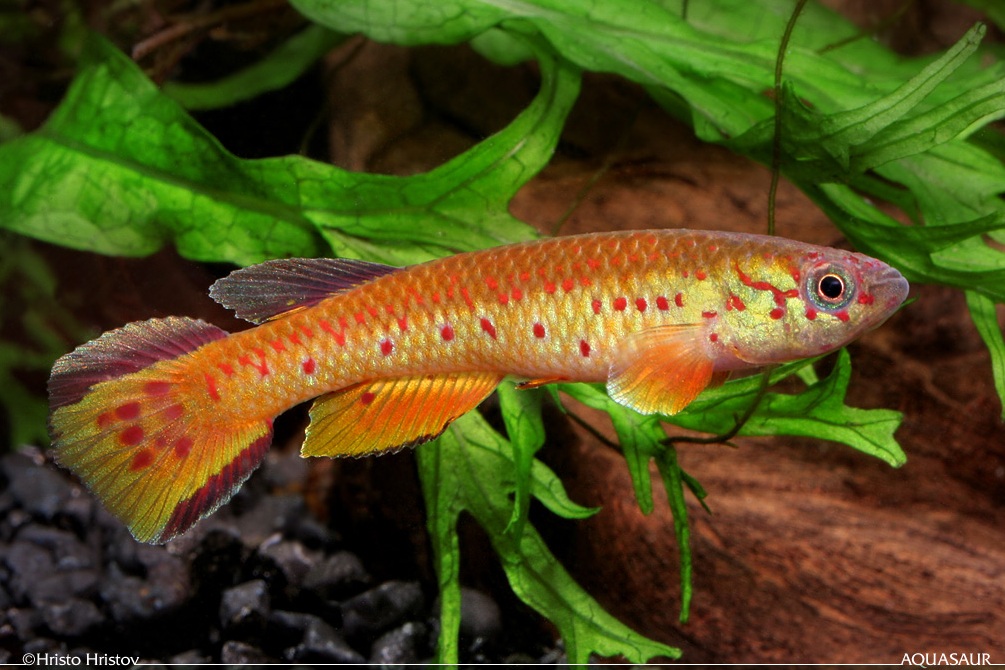
Aphyosemion congicumCongo Lyretail
Ahl, 1924
Max length45mm SL1.8in SLTanknot recordedTempnot recordedpHnot recordedThe type series was derived from a commercial shipment and this species' natural range remains unconfirmed. It may be restricted to the area between the Kwango and Gamba rivers, the latter a tributary of the former, in western Democratic Republic of Congo. The Kwango is itself a tributary of the Kasai, an affluent of the Congo.
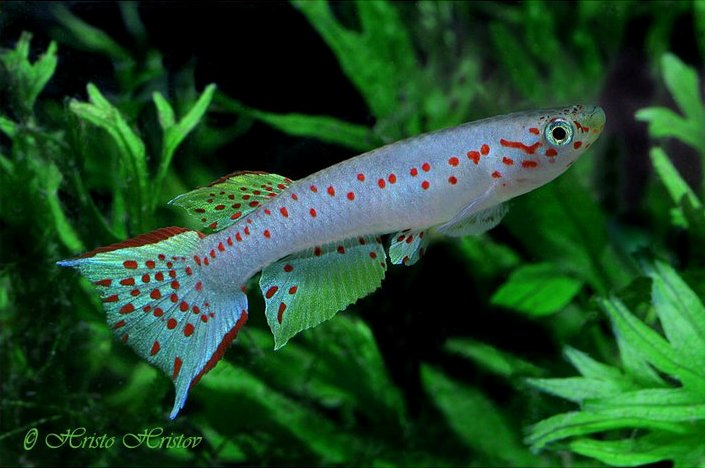
Aphyosemion decorseiDecorse's Lyretail
Pellegrin, 1904
Max length50mm SL2.0in SLTanknot recordedTempnot recordedpHnot recordedType locality is the settlement of Bessou, Lobaye prefecture, Central African Republic, which lies within the Ubangi (also spelled Oubangui) River basin. The Ubangi is a major tributary of the Congo River and this species appears restricted to its middle section and thus probably extends into northern Republic of Congo and Democratic Republic of Congo.
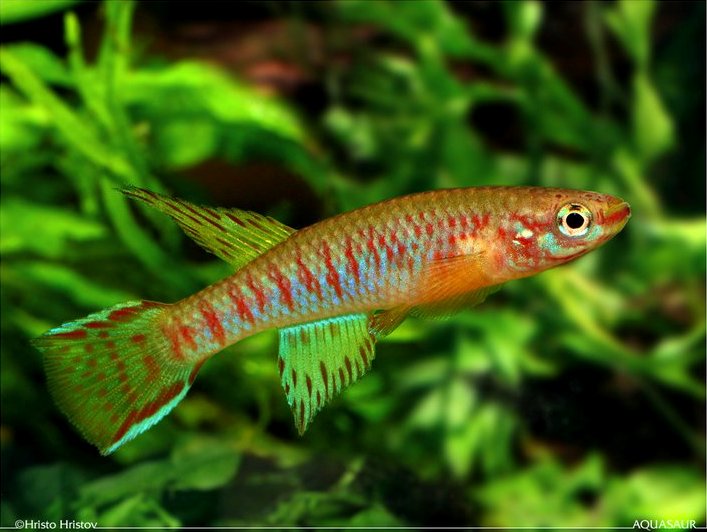
Aphyosemion elbertiRed-Barred Lyretail
Ahl, 1924
Max length40mm SL1.6in SLTanknot recordedTemp18–22°C64–72°FpH6.0–7.0This species' currently accepted range stretches from eastern Nigeria (Mbam River) across central Cameroon (via the Sanaga River system of which the Mbam is a tributary) and across the border into Central African Republic (upper Mambéré basin). It was described from 'Jade Plateau, Cameroon', this apparently corresponding to the Lebo River which lies in what is now the Central African Republic and presumably forms part of the Mambéré headwaters.
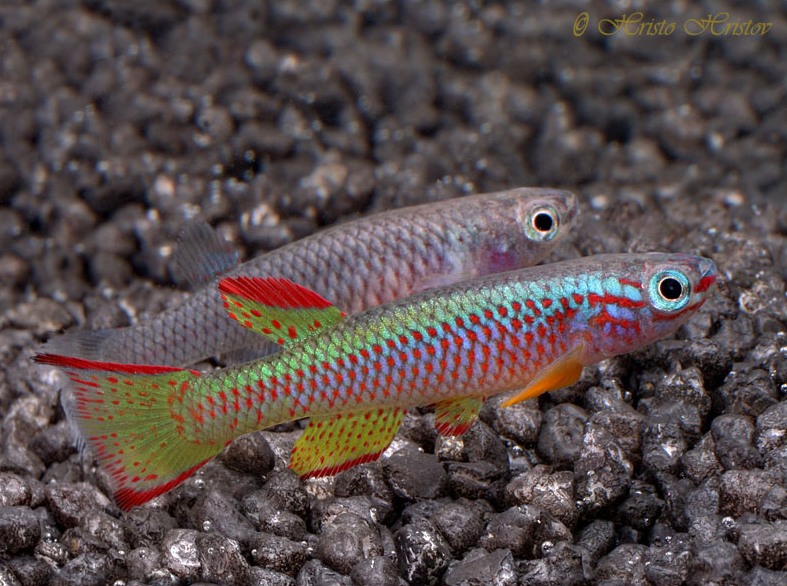
Aphyosemion gabunenseGabon Lyretail
Radda, 1975
Max length50mm SL2.0in SLTank45 × 25cm18 × 10inTemp22–28°C72–82°FpH6.5–7.2A. gabunense is a good beginner's killifish as it is not an annual species, being found in permanent bodies of water in nature. It exists in several geographical colour forms which are sometimes referred to the subspecies Aphyosemion gabunense gabunense, A. g. boehmi and A. g. marginatum. The latter two are slightly smaller with a maximum standard lenth around 45 mm, and all three can be told apart by differences in colour pattern.
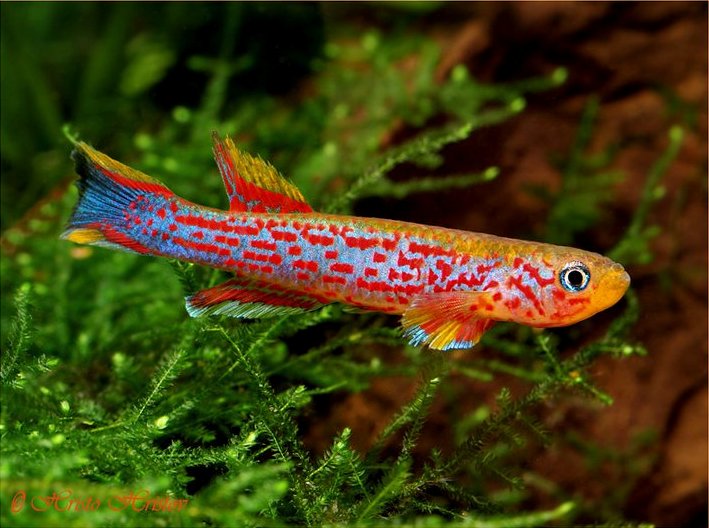
Aphyosemion hanneloreaeHannelore's Lyretail
Radda & Pürzl, 1985
Max length40mm SL1.6in SLTanknot recordedTempnot recordedpHnot recordedType locality is Malinga, located in the middle of the Du Chaillu mountain range in Ngounié province, southern Ghana. This lies very close to Republic of the Congo, and the species may also occur across the border.
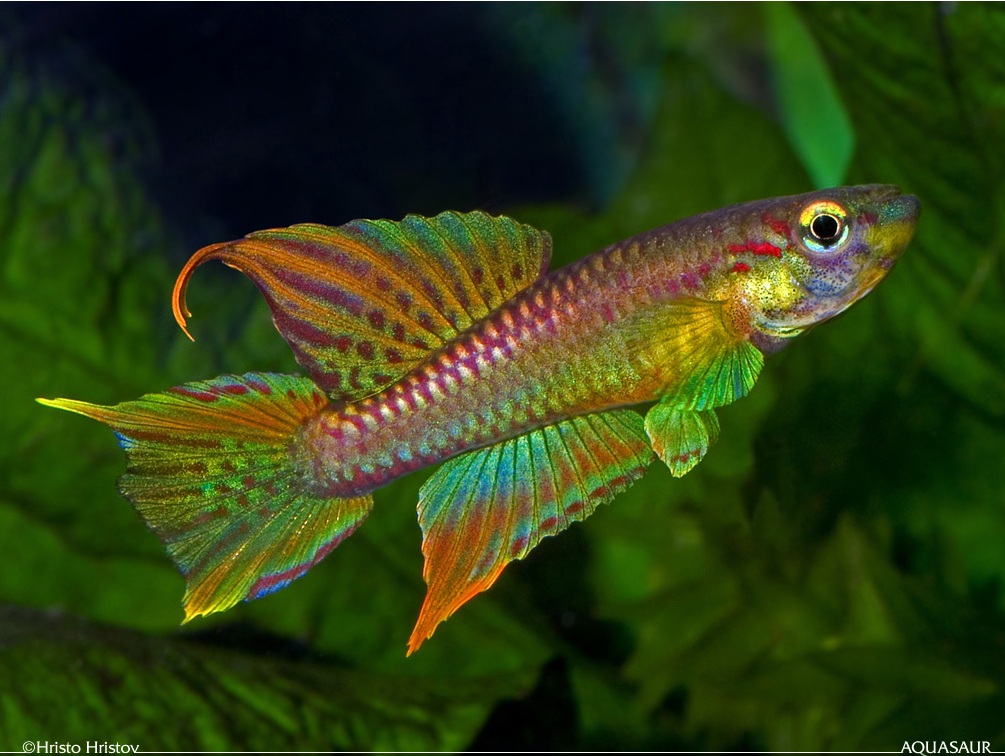
Aphyosemion splendopleureSplendid Lyretail
Brüning, 1929
Max length60mm SL2.4in SLTank45 × 25cm18 × 10inTemp22–26°C72–79°FpH6.0–7.2There exist several different colour forms of this species depending on collection locality, and these should not be kept together in order to prevent hybridisation and preserve bloodlines. It has been classified in the subgenus Chromaphyosemion by some authors who consider that nominal grouping to represent a monophyletic branch of a paraphyletic Aphyosemion.
Apistogramma alacrinaRedspot Dwarf Cichlid
Kullander, 2004
Max length♂ 55 · ♀ 37mm SL♂ 2.2 · ♀ 1.5in SLTank45 × 30cm18 × 12inTemp23–29°C73–84°FpH4.0–7.0This species differs from all other described members of the genus by the presence of dark blotches at the dorsal and ventral base of the pectoral fins. Three very similar-looking fishes have been assigned the codes A106, A107 and A108 under the DATZ system and are also known in the aquarium hobby as A. sp. 'rotpunkt' (this form has been in the hobby for decades with its precise origin unclear), A. sp. 'rotpunkt Orteguazas' (the paratype form of A. alacrina) and A. sp. 'rotpunkt Guayas', respectively. It remains to be seen whether they're conspecific with A. alacrina or not since they exhibit some differences in colour pattern and morphology.
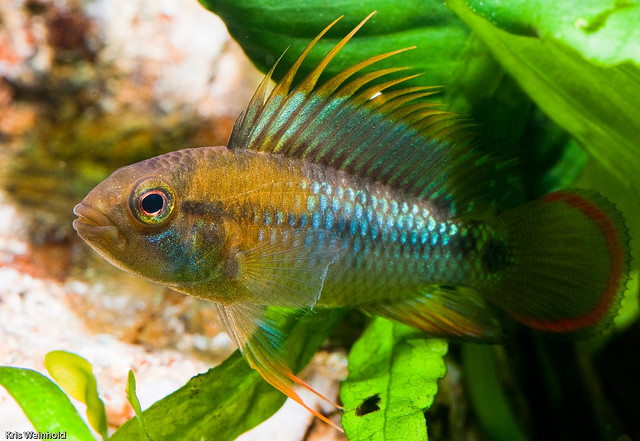
Apistogramma baenschiA188
Römer, Hahn, Römer, Soares & Wöhler, 2004
Max length♂ 55 · ♀ 40mm SL♂ 2.2 · ♀ 1.6in SLTank80 × 30cm31 × 12inTemp20–26°C68–79°FpH4.0–6.5This species is assigned the code A188 under the DATZ system and is also known by the trade names A. sp. 'Inca/Inka', A. sp. 'Inka 50', A. sp. 'highfin nijsseni', A. sp. 'Nijsseni 2', A. sp. 'red crescent' or A. baenschi 'Inca'. It's among those members of the genus produced on a commercial basis and is regularly available in the aquarium trade.
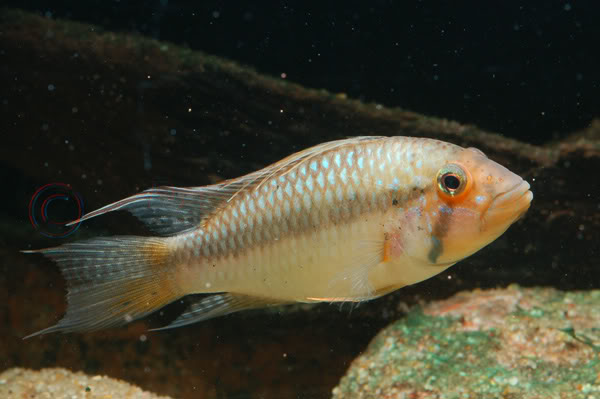
Apistogramma barlowiA174
Römer & Hahn, 2008
Max length♂ 65 · ♀ 40mm SL♂ 2.6 · ♀ 1.6in SLTank60 × 30cm24 × 12inTemp22–29°C72–84°FpH4.5–6.5This species has been assigned the code A174 under the DATZ system, and is also known by the trade names A. sp. 'Maulbrüter/mouthbrooder', A. sp. 'Glaser' (these referring to the 'red' colour form) and A. sp. 'Hauswell' (referring to the 'white' colour form). It can be told apart from other members of the genus most eas...
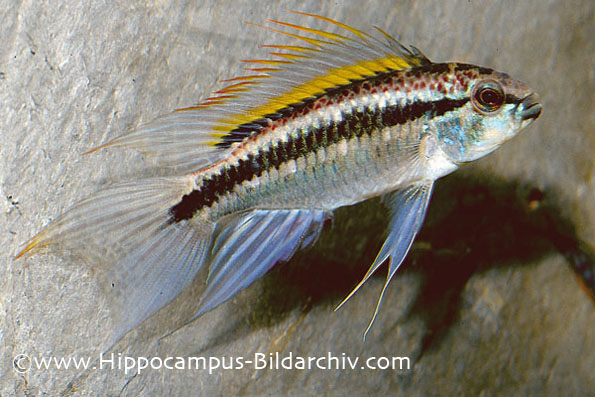
Apistogramma bitaeniataTwo-Striped Dwarf Cichlid
Pellegrin, 1936
Max length♂ 75 · ♀ 55mm SL♂ 3.0 · ♀ 2.2in SLTank60 × 30cm24 × 12inTemp22–29°C72–84°FpH4.5–7.0Localities known in the hobby include 'Pastaza', 'Putumayo', 'Requena', 'Río Nanay', 'Rio Napo', 'Maniti', 'Momón', 'Río Tigre', 'Río Ampiyacu', 'Shishita', 'Shushupi', 'Yavari', 'Tefé', 'Manaquiri', 'Lago do Januari', 'Mamori' (often misspelled 'Mamuri'), 'Careiro', 'Manacapuru', 'Juruá', 'Curuaí', and 'Purutu' though we've been unable to find anywhere matching the latter name within the species' known distribution, and in fact several of these names are applied incorrectly on a regular basis.