Results for “species”
Type a name: scientific, common, or one a species used to go by. Or narrow the catalogue with the filters.
Filters
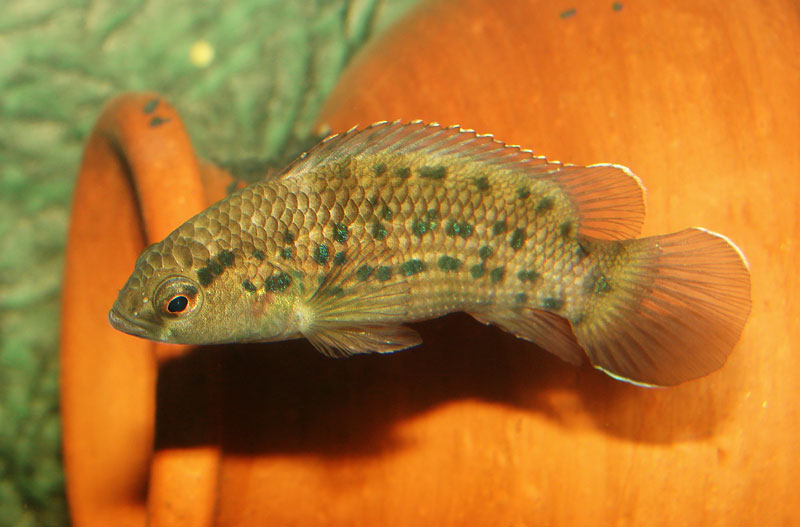
Badis assamensis
Ahl, 1937
Max length75mm SL3.0in SLTank75 × 30cm30 × 12inTemp15–25°C59–77°FpH6.0–7.5Like most badids this species is poorly documented and has yet to find significant popularity in the aquarium hobby. It is easily confused with B. blosyrus at first glance as the body patterning of the two is almost identical but can be distinguished by its slightly larger adult size, noticeably shorter jaw profile and some other, mostly internal, meristic characters. Prior to 2002 the family Badidae inc...
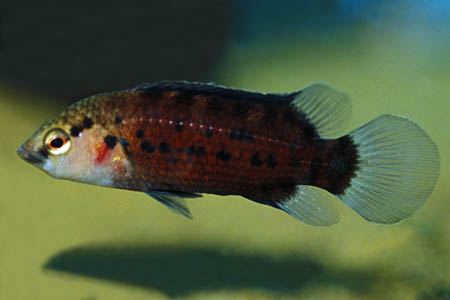
Badis blosyrus
Kullander & Britz, 2002
Max length70mm SL2.8in SLTank75 × 30cm30 × 12inTemp15–25°C59–77°FpH6.0–7.5Like most badids this species is poorly documented and has yet to find significant popularity in the aquarium hobby. It is easily confused with B. assamensis at first glance as the body patterning of the two is almost identical but can be distinguished by its slightly smaller adult size, noticeably elongated, more well-developed jaw profile and some other, mostly internal, meristic characters.
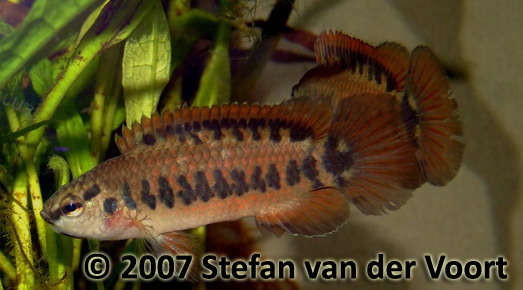
Badis ferrarisi
Kullander & Britz, 2002
Max length60mm SL2.4in SLTank60 × 30cm24 × 12inTemp15–25°C59–77°FpH6.5–7.5Like most badids this species is poorly documented and has yet to find significant popularity in the aquarium hobby. It is arguably the most attractive member of the genus and we hope to see it more widely available; the fish in our images representing what is thought to be the only batch exported from Myanmar to date. It is most closely related...
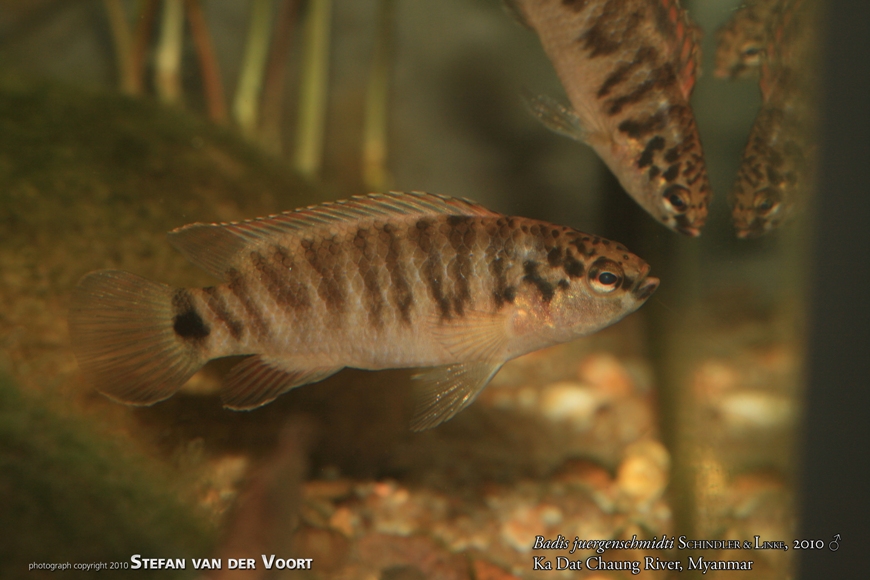
Badis juergenschmidti
Schindler & Linke, 2010
Max length50mm SL2.0in SLTank60 × 30cm24 × 12inTempnot recordedpH6.0–7.0This species is essentially unknown in the hobby at time of writing. It was discovered by German aquarist Horst Linke in early 2010 and before official description was known as B. sp. ‘East Myanmar’ (‘Ost Myanmar’ in Germany). It can be differentiated from other members of the genu...
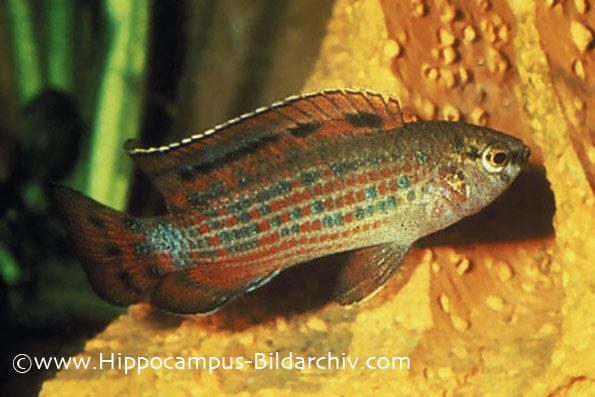
Badis ruberBurmese Badis
Schreitmüller, 1923
Max length50mm SL2.0in SLTank60 × 30cm24 × 12inTemp15–25°C59–77°FpH6.5–7.5B. ruber is among the better known Badis species in the aquarium hobby with trade names including 'Burmese badis' and 'red badis'. It was referred as Badis badis burmicanus for a number of years and will be seen labelled as such in older literature. Among congeners it is most easily confused with...
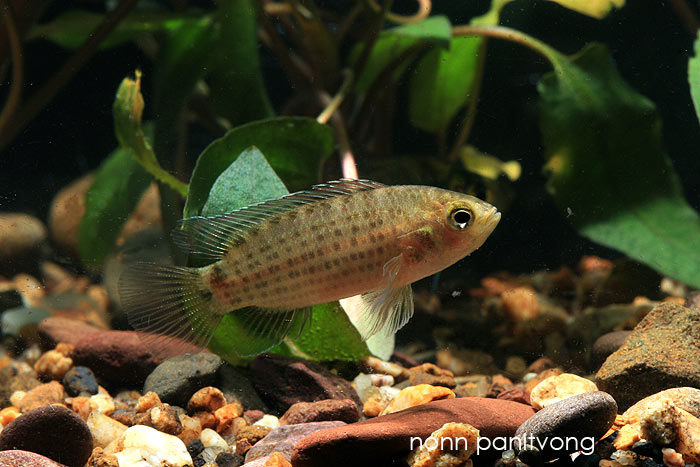
Badis siamensis
Klausewitz, 1957
Max length60mm SL2.4in SLTank60 × 30cm24 × 12inTemp22–26°C72–79°FpH6.5–7.5Like most badids this species is poorly documented and has yet to find significant popularity in the aquarium hobby; to date it has only been exported in very limited numbers. It was for a number of years known as Badis badis siamensis and will be seen labelled as such in older literature. Within the genus it is most easily confused with B. khwae and B. ruber but can be identified by the flank patterning which consists of rows of horizontally-arranged dark markings. In B. ruber these appear mor...
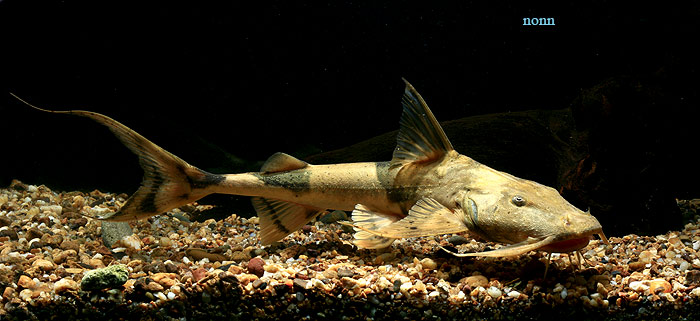
Bagarius bagarius
Hamilton, 1822
Max lengthnot recordedTanknot recordedTempnot recordedpHnot recordedThere is considerable confusion surrounding the identity of B. bagarius with its name having been widely applied to a relatively small species that is said to reach only 200 mm SL and considered to be common in northern India and much of Indochina.
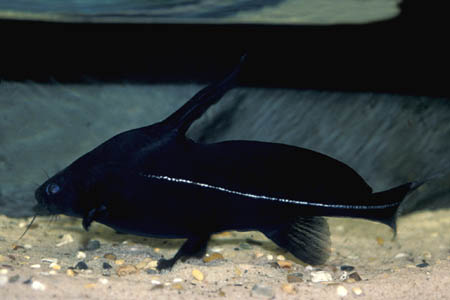
Bagrichthys macracanthusBlack Lancer
Bleeker, 1854
Max length230mm SL9in SLTank120 × 45cm48 × 18inTemp24–28°C75–82°FpH5.5–7.0The vernacular name 'lancer' is derived from the extended dorsal spine possessed by several members of the genus, which currently contains 7 species. Among them B. macracanthus is most similar to B. majusculus and B. vaillantii but can be told apart from the former by possession of shorter pectoral spines (13.3 - 16.2% SL vs. 15.8 - 20.7%), shorter adipose fin (46.0 - 58.0% SL vs. 38.8 - 45.8%), less deep caudal peduncle (7.1 - 7.5% SL vs. 5.6-7.0%) and larger adult size. From B. vaillantii it di...
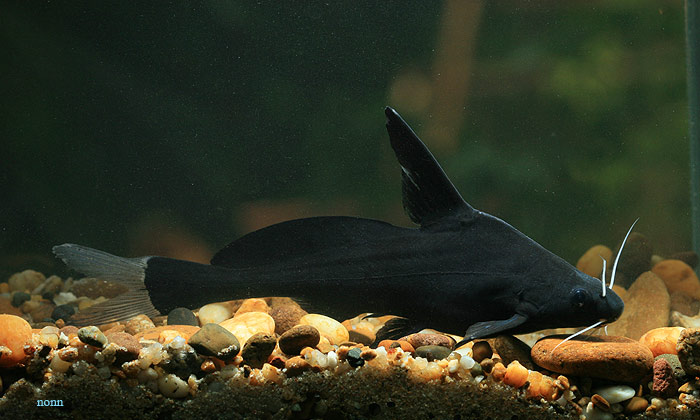
Bagrichthys majusculusWhite-Whisker Lancer
Ng, 2002
Max length177mm SL7in SLTank120 × 45cm48 × 18inTemp24–28°C75–82°FpH5.5–7.0The vernacular name 'lancer' is derived from the extended dorsal spine possessed by several members of the genus, which currently contains 7 species. Among them B. majusculus is most similar to B. macracanthus and B. vaillantii but can be told apart from both by possession of longer pectoral-fin spines (length 15.8 - 20.7 % SL vs. 11.5 - 16.2 %), from the former by possession of a larger adipose fi...
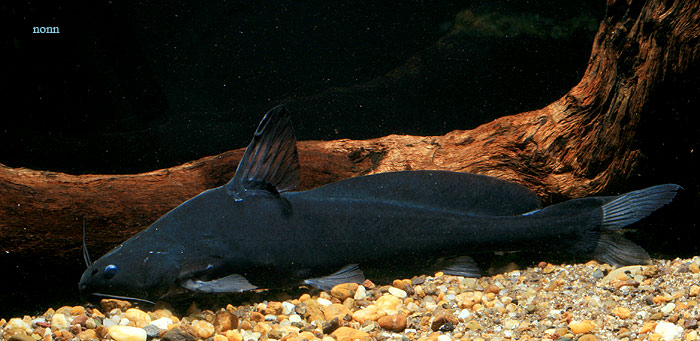
Bagrichthys obscurus
Ng, 1999
Max length249mm SL10in SLTank120 × 45cm48 × 18inTemp24–28°C75–82°FpH5.5–7.0The vernacular name 'lancer' is derived from the extended dorsal spine possessed by several members of the genus, which currently contains 7 species. B. obscurus is diagnosable from congerners by the following combination of characters: mouth opening relatively small and narrow; oral dentition significantly reduced; dorsal-fin spi...
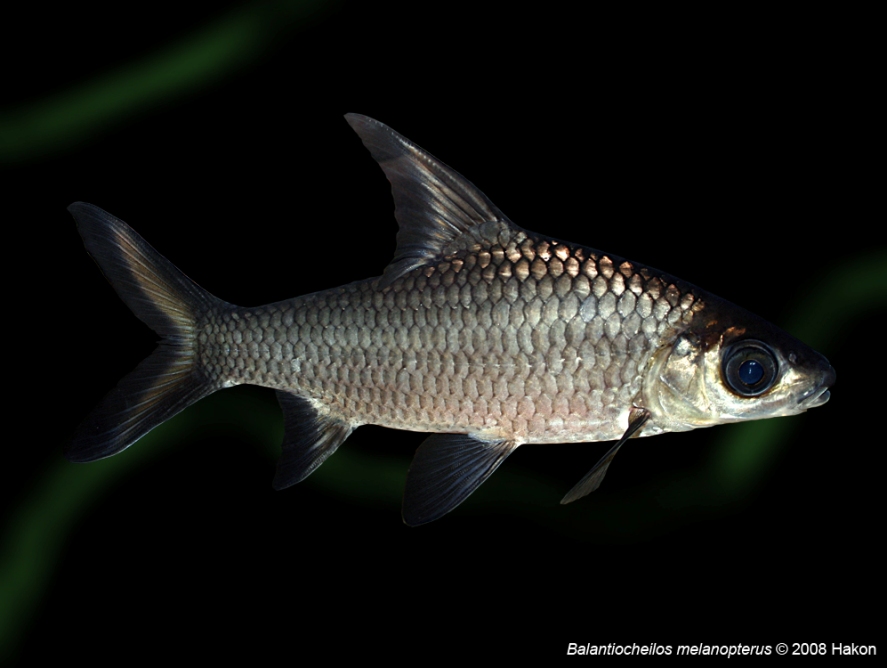
Balantiocheilos melanopterusSilver Shark
Bleeker, 1850
Max length350mm SL14in SLTank240 × 60cm96 × 24inTemp20–28°C68–82°FpH6.0–8.0May also be seen on sale under the trade names 'Bala shark' or 'tricolor shark minnow' and perhaps among the most commonly-encountered ornamental fish species. It is unfortunate that the vast majority of those traded are juveniles and tend to come supplied with little to no information provided regarding their potential size and requirements, a fairly ironic situation given the apparently precarious status of wild populations.
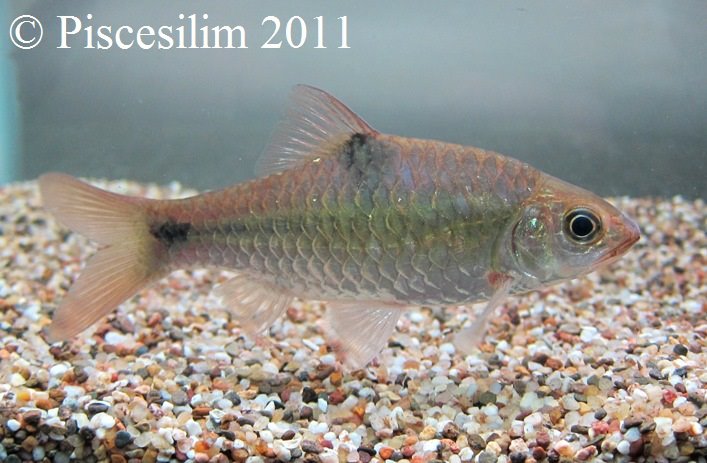
Barbodes binotatusSpotted Barb
Valenciennes, 1842
Max length200mm SL8in SLTank120 × 45cm48 × 18inTemp18–30°C64–86°FpH6.0–7.5This species is so ubiquitous across its natural range that it's often referred to simply as 'common barb'. Basic adult colour pattern consists of a small, dark spot at the base of the dorsal-fin origin and another on the caudal peduncle but overall appearance varies somewhat depending on origin, with the anterior dark spot enlarged ventrally forming a bar or posterior spot extending into the caudal-fin, for example. The spots may also appear darker or lighter in some individuals.
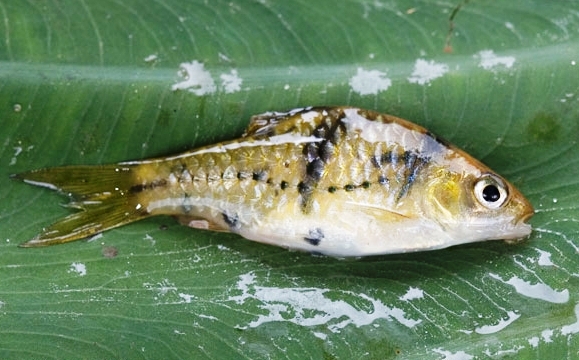
Barbodes kuchingensisFalse Spanner Barb
Herre, 1940
Max length120mm SL5in SLTank120 × 45cm48 × 18inTemp20–28°C68–82°FpH5.0–7.5This species is rarely-exported for the aquarium hobby but is available on occasion. The name 'P.' kuchingensis is frequently misapplied, however, with subadult forms of 'P.' everetti and some populations of the geographically-variable 'P.' lateristriga regularly traded as such, for example. Though closely-affiliated with and superficially very similar to...
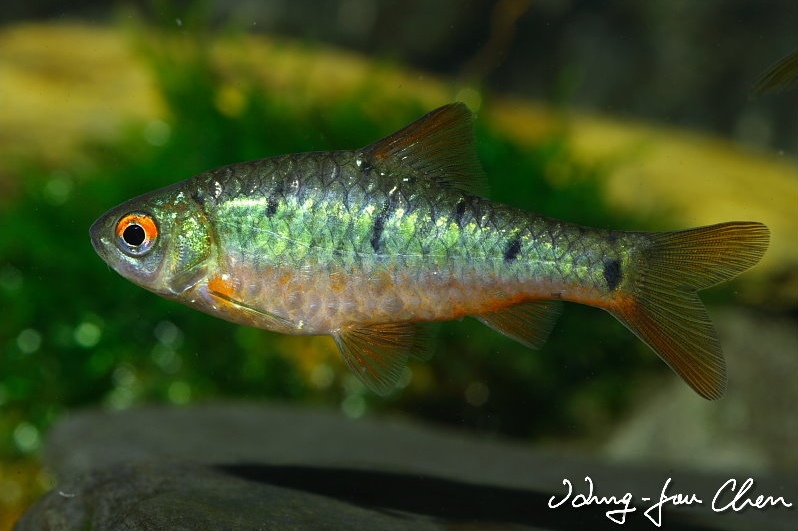
Barbodes semifasciolatusGolden Barb*
Günther, 1868
Max length75mm SL3.0in SLTank90 × 30cm36 × 12inTemp16–24°C61–75°FpH6.0–8.0This species is also known by the alternative names 'green' or 'Chinese' barb. The natural 'green' form is an infrequent find in the aquarium trade whereas the selectively-bred 'golden' variant is farmed in huge numbers and is among the most popular of freshwater aquarium fish. The latter was first produced in the 1960s and is now so ubiquitous that many hobbyists are initially unaware that it is not the natural form.
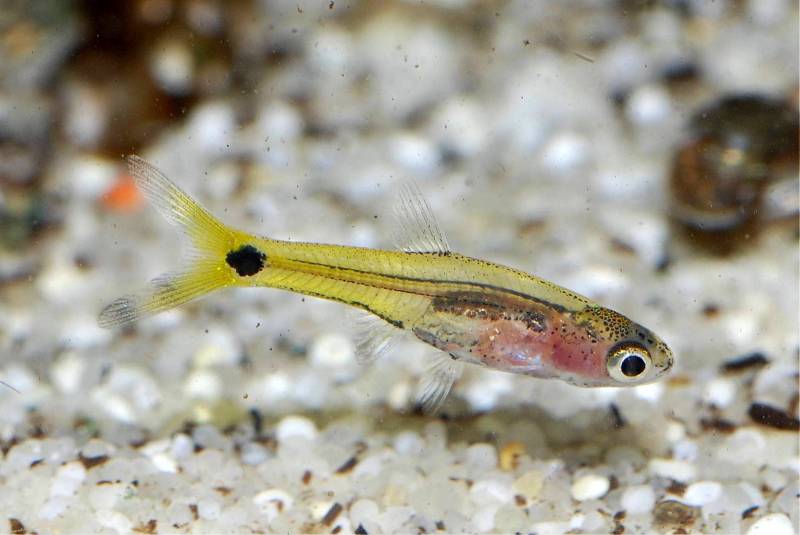
Barboides gracilis
Brüning, 1929
Max length18mm SL0.7in SLTank45 × 20cm18 × 8inTemp21–26°C70–79°FpH6.0–7.0This species is still very rare in the hobby although it has built up something of a following among enthusiasts of planted 'nano' aquaria and you may see it on sale under the trade names of 'dwarf amber/ember barb'. Its small adult size evolved via a process known as miniaturisation characterised by sexually mature adults with a significantly reduced size of less than 20mm SL. Among bony fishes cyprinids are one of the few groups in which this phenomenon occurs repeated...
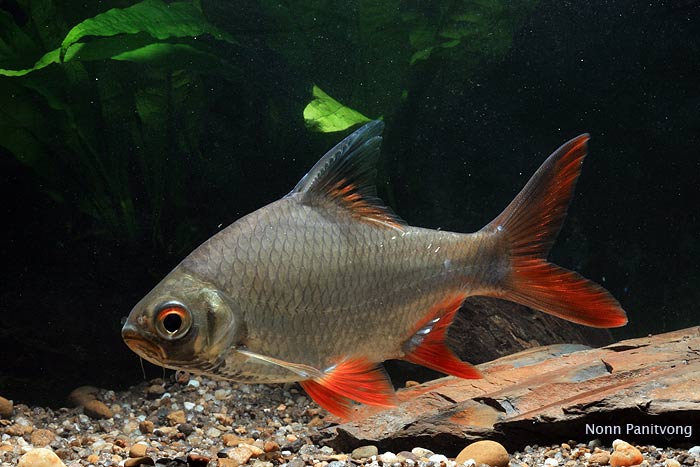
Barbonymus altusRed-tailed Tinfoil Barb
Günther, 1868
Max length210mm SL8in SLTank150 × 60cm60 × 24inTemp20–27°C68–81°FpH6.0–8.0This is one of two species sold with the common/trade name of "tinfoil barb", the other being the more widely-recognised B. schwanenfeldii. Despite this it appears that B. altus is just as widely available as B. schwanenfeldii and in many cases is seen on sale more regularly. Unfortunately both are usually offered at a small size (usually around 2 - 3"/5 - 7.5cm) with little to no information regarding the eventual size of the fish. Although B. altus is the ...
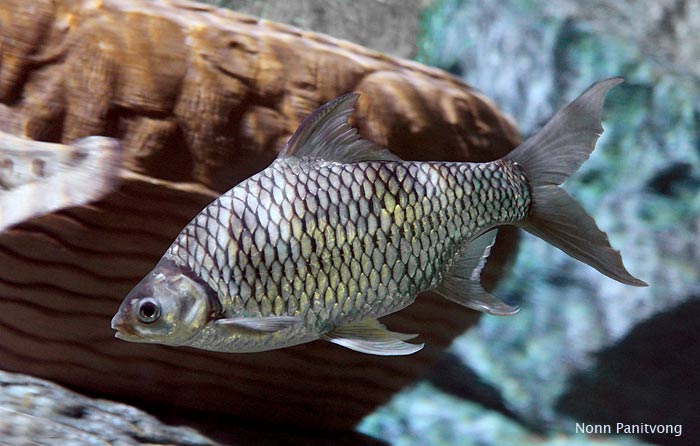
Barbonymus gonionotus
Bleeker, 1849
Max length300mm SL12in SLTank210 × 60cm84 × 24inTemp20–26°C68–79°FpH6.0–8.0The genus Barbonymus was erected by Kottelat in 1999 and contains former members of Barbodes from southeast Asia. The type species is B. schwanenfeldii and currently there exist only three other representatives; B. altus, B. collingwoodii and B. gonionotus. The latter two are rare in the hobby although an SF member has kept B. gonionotus in the past so they are worth looking out for if you harbour an...
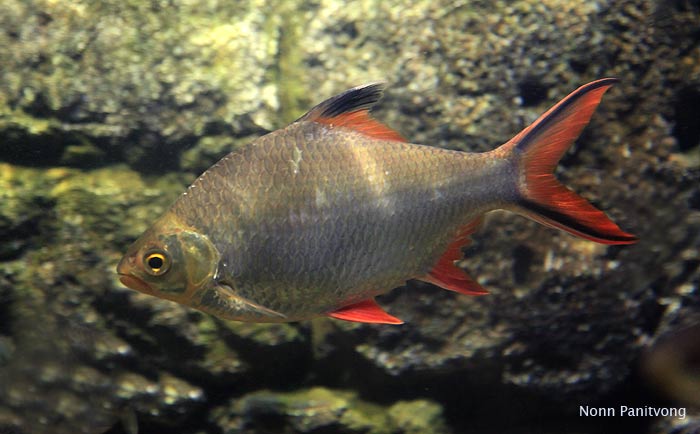
Barbonymus schwanefeldiiTinfoil barb
Bleeker, 1854
Max length355mm SL14in SLTank210 × 60cm84 × 24inTemp20–28°C68–82°FpH6.0–8.0This is one of two species traded under the vernacular name 'tinfoil barb', the other being the less well-known congener B. altus. Despite this it appears that B. altus is just as widely available as B. schwanefeldii and in many cases is seen on sale more regularly. Unfortunately both are usually offered at a small size (usually around 50 - 75 mm) with little to no information regarding the eventual size of the fish.
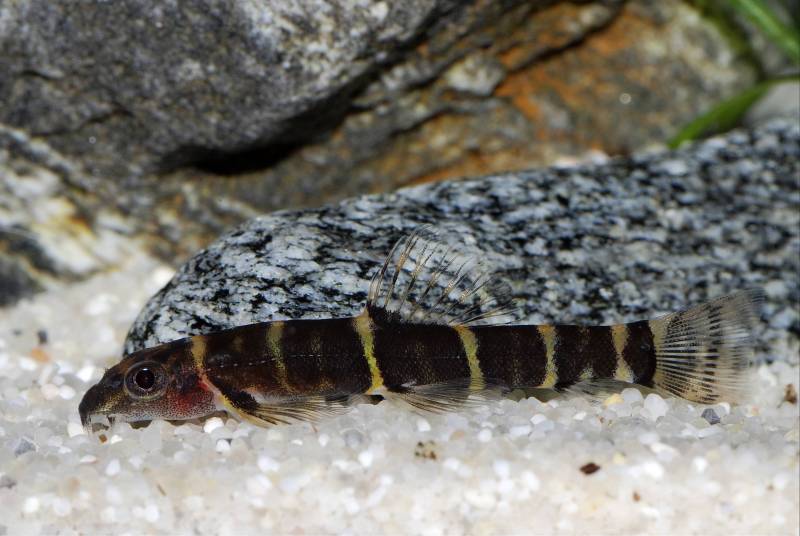
Barbucca diabolica
Roberts, 1989
Max length50mm SL2.0in SLTank60 × 30cm24 × 12inTemp20–25°C68–77°FpH5.5–7.5Barbucca spp. are uncommon in the aquarium trade but available periodically. There exist several undescribed species and it's possible that more than one has been exported, although to date only B. diabolica is officially recognised. Most of the fish we've seen possess red eyes (when viewed at certain angles), unique tuberculation and six dark body stripes as mentioned in Roberts' description although there are exceptio...
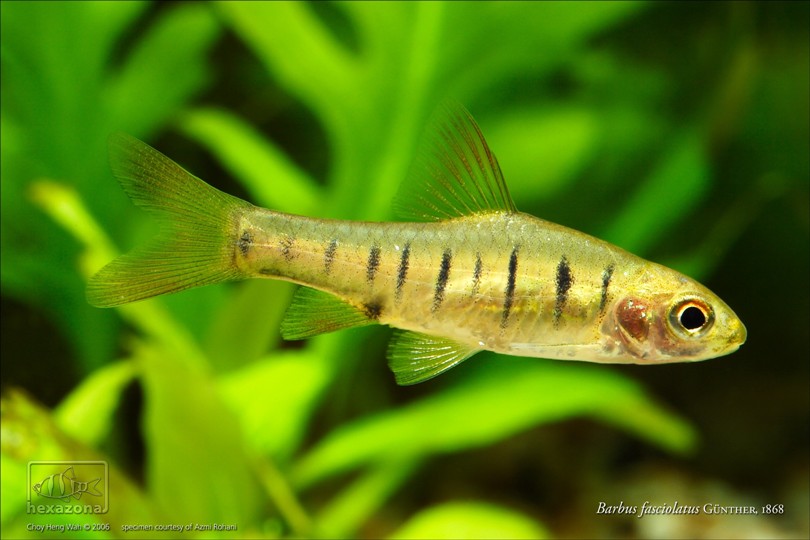
'Barbus' fasciolatusAfrican Banded Barb
Günther, 1868
Max length60mm SL2.4in SLTank75 × 30cm30 × 12inTemp20–26°C68–79°FpH5.0–6.5For many years this species was imported and sold as Barbus/Barbodes barilioides, now recognised as a junior synonym of 'B.' fasciolatus, and is sometimes called the Blue Banded or Angola Barb. It's an exceptionally attractive little fish when in good condition but like all African barbs is quite rare in the hobby due to sporadic exports from the countries in which it is found. Distinguishing features include 25-30 late...