Results for “substrate”
Type a name: scientific, common, or one a species used to go by. Or narrow the catalogue with the filters.
Filters
Orthochromis stormsi
authority not recorded
Max length120mm SL5in SLTank120 × 30cm48 × 12inTemp22–27°C72–81°FpH6.5–7.5O. stormsi was previously classified as Schwetzochromis stormsi and is still named as such by many sources. Its swimbladder is modified, being much reduced in size. This makes the fish less buoyant and therefore less likely to be swept away by the strong currents in its natural habitat. In the aquarium it spends most of its time on the substrate, where it swims in a characteristic 'hopping' fashion. Unfortunately, it is rather rare in the hobby....
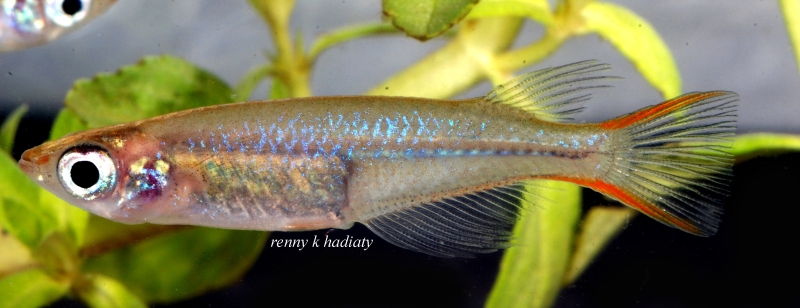
Oryzias asinuaAsinua Ricefish
Parenti, Hadiaty, Lumbantobing & Herder, 2013
Max length25mm SL1.0in SLTank45 × 30cm18 × 12inTempnot recordedpHnot recordedWhen the type series was collected the Sungai Asinua contained clear, slow to fast-moving water with a temperature of 26 °C. The substrate was composed of mud, sand an...
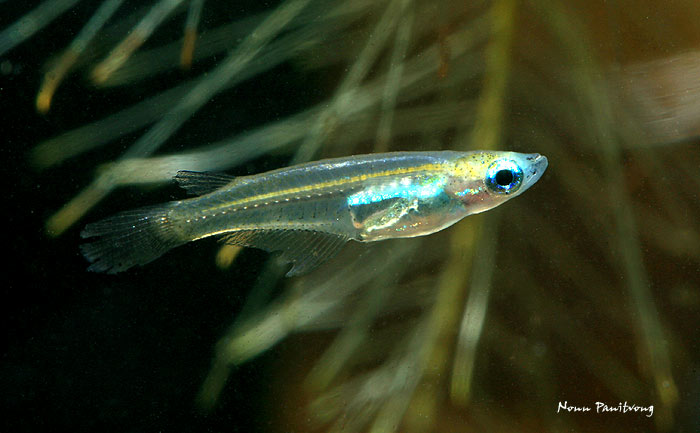
Oryzias minutillusDwarf Medaka
Smith, 1945
Max length17mm SL0.7in SLTank40 × 20cm16 × 8inTemp23–32°C73–90°FpH6.0–7.5Best maintained in a heavily planted set-up, ideally with a dark substrate, patches of dense vegetation, and some open areas. Other décor can consist of twisted roots and pieces of bogwood, while surface vegetation is also appreciated by the fish. When maintained under such conditions they're more likely to display their best colours, and planted aquaria also offer fry a more favourable chance of survival alongside the adults.
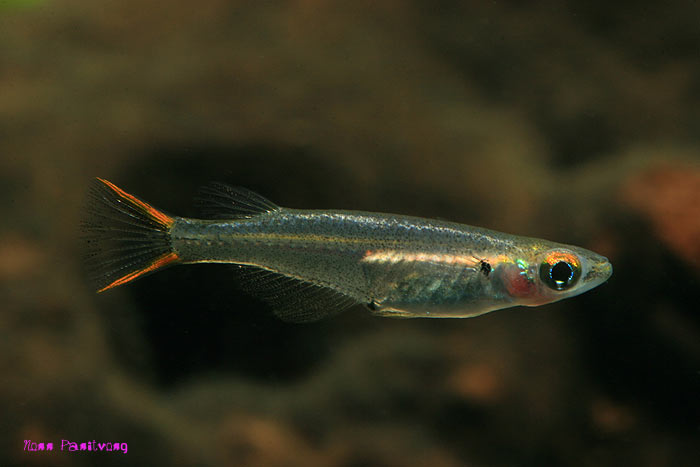
Oryzias songkhramensis
Magtoon, 2010
Max length20mm SL0.8in SLTank40 × 20cm16 × 8inTemp23–30°C73–86°FpH6.0–7.5An exclusive inhabitant of fresh, normally standing, waters including shallow pools, ditches, rice paddies and clear water swamps. The type locality is a small ditch measuring just 3 - 6 metres in width and 0.5 - 2 metres deep. The water was clear and the substrate composed of sand, detritus and mud with growths of the macrophytes Nymphaea lotus, Jussiaea repens and Hydrilla verticillata.
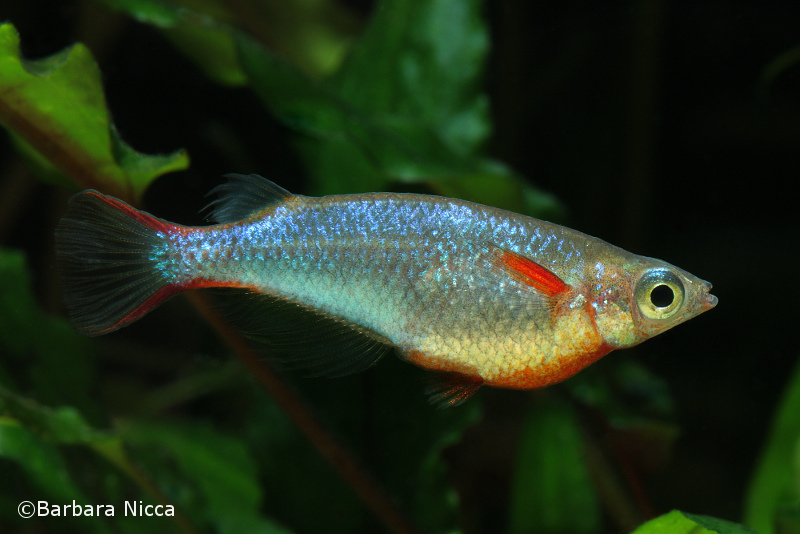
Oryzias woworaeDaisy's Ricefish
Parenti & Hadiaty, 2010
Max length30mm SL1.2in SLTank45 × 30cm18 × 12inTemp23–27°C73–81°FpH6.0–7.5The type locality is a karstic freshwater stream flowing under 80% forest cover with a mixed substrate of mud and sand plus patches of leaf litter. O. woworae was collected from a still pool around 3-4 m deep, opposite an affluent spring, where it was schooling with a species of Nomorhamphus which may turn out to be a form of N. ebrardtii but has subsequently appeared in the aquarium trad...
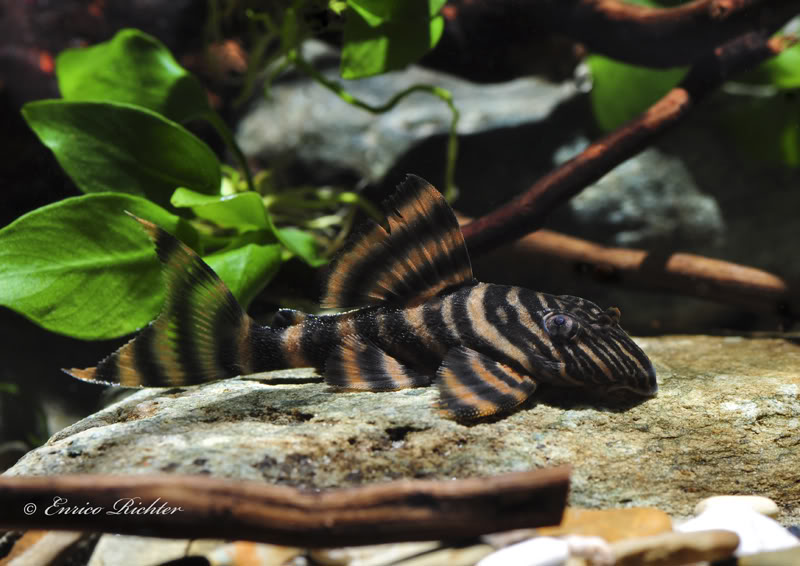
Panaqolus sp.L403
authority not recorded
Max length120mm SL5in SLTank120 × 30cm48 × 12inTemp24–30°C75–86°FpH6.0–7.0Not difficult to maintain under the correct conditions; we strongly recommend keeping it in a tank designed to simulate a flowing stream with a substrate of variably-sized rocks, sand, fine gravel, and some water-worn boulders. This can be further furnished with driftwood branches, terracotta pipes, plant pots, etc., arranged to form a network of nooks, crannies, and shaded spots, thus providing broken lines of sight.
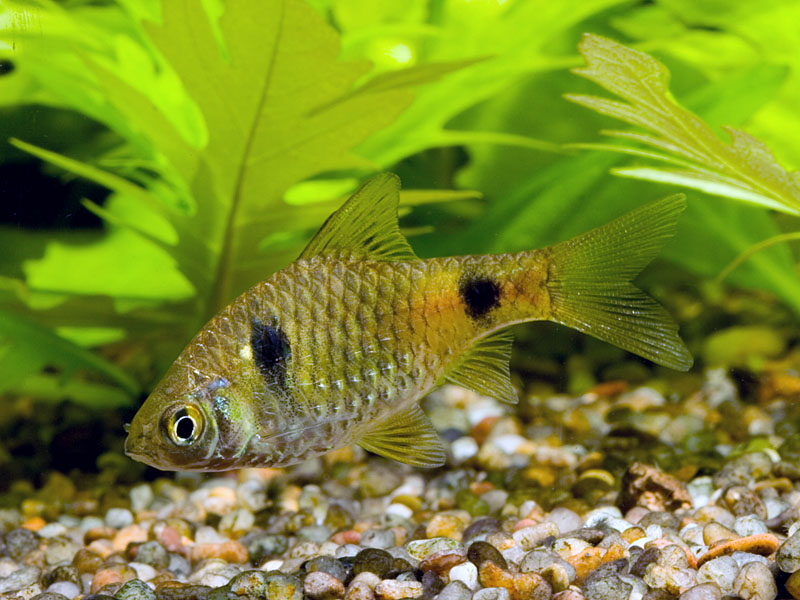
Pethia didi
Kullander & Fang, 2005
Max length41mm SL1.6in SLTank60 × 30cm24 × 12inTemp15–25°C59–77°FpH6.5–9.0The type locality is a stream with a mixed substrate of mud and stones which flows swiftly through an area of bamboo forest so is quite well-shaded. At time of collection the water was clear but slightly tannin-stained and sympatric species included Pethia thelys, Puntius sophore, Devario strigillifer, Rasbora daniconius, R. rasbora, Acanthocobitis botia, Notopterus notopterus, plus unidentified species of Oreichthys, Parambassis, Xenentodon, and Mastacembelus.
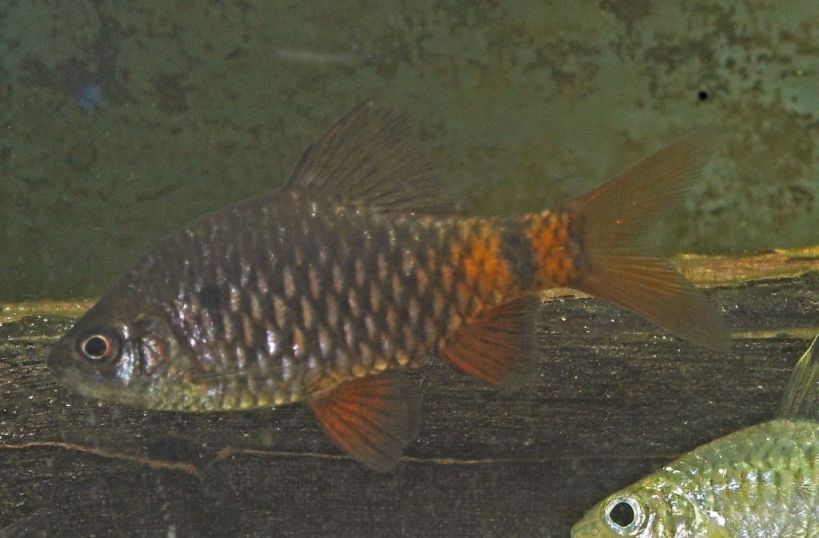
Pethia nigripinnis
Knight, Rema Devi, Indra & Arunachalam, 2012
Max length45mm SL1.8in SLTank90 × 30cm36 × 12inTemp16–21°C61–70°FpH5.5–7.5At one locality in the Kalindhi drainage the water was clear, 1 m at its deepest point and flowing either side of a small check dam, below which the flow was stronger though still not particularly fast. The substrate was composed of rocks and cobbles with a thick layer of fine silt and sand above the dam. There were no aquatic plants but marginal grasses and shrubs were growing to the margins with some submerged roots protruding into the water.
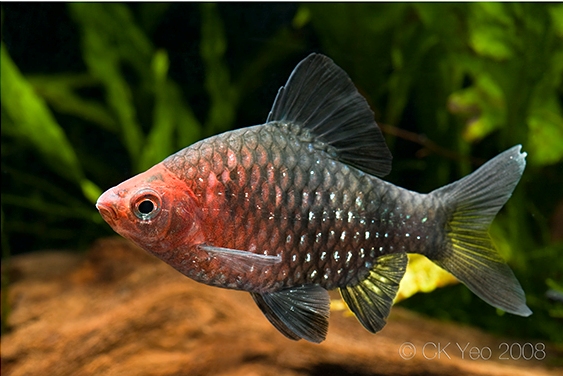
Pethia nigrofasciataBlack Ruby Barb
Günther, 1868
Max length55mm SL2.2in SLTank80 × 30cm31 × 12inTemp20–27°C68–81°FpH5.5–7.5Little sun is able to penetrate the forest floor so aquatic habitats are shaded and water temperature may be relatively cool, while conductivity and hardness are generally low and pH slightly acid. Macrophytes are uncommon though there may be dense, marginal vegetation, sometimes overhanging the full width of the stream, the roots of which may penetrate the banks underwater. Typical substrates are sandy but covered by a layer of leaf litter with fallen twigs and branches.
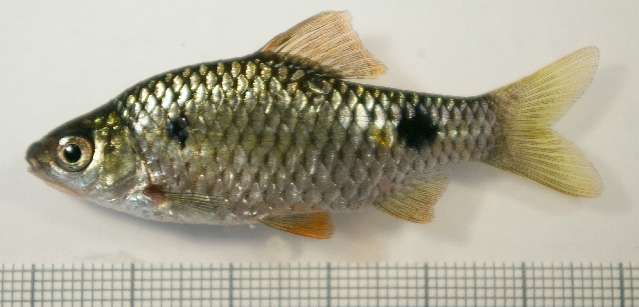
Pethia tictoTicto Barb
Hamilton, 1822
Max length65mm SL2.6in SLTank80 × 30cm31 × 12inTemp18–25°C64–77°FpH6.0–7.5Apparently most abundant in shallow streams and minor tributaries, sometimes at relatively high altitudes, and apparently shows a preference for substrates of mud or silt. Given the extent of its range it would seem sensible to assume that it inhabits various habitat-types which also vary in water depth, flow, and turbidity depending on the time of year.
Protomelas pleurotaenia
authority not recorded
Max length140mm SL6in SLTank120 × 45cm48 × 18inTemp24–28°C75–82°FpH7.6–8.8This species has an interesting method of feeding in nature. It 'blows' at the top layer of the substrate (usually sand) and feeds on any invertebrates or other morsels that are uncovered. It is rare in the hobby and little information regarding it's care is available....
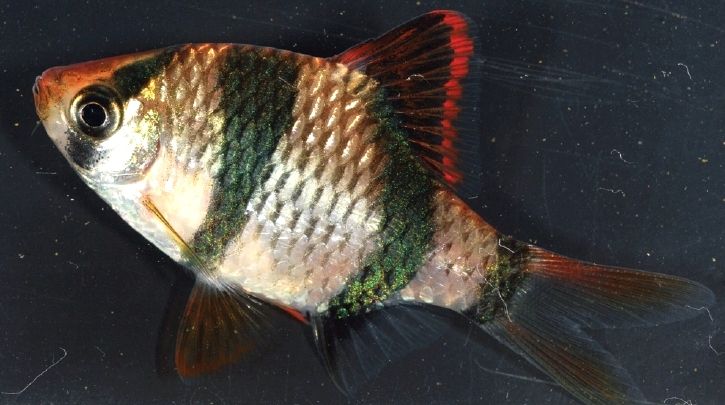
Puntigrus navjotsodhii
Tan, 2012
Max length48mm SL1.9in SLTanknot recordedTempnot recordedpHnot recordedThe type series was collected from a small clear-water stream with a pH of 6.0, forming a series of riffles and deeper pools, with a maximum width of 5 metres and depth ranging from 10 cm to 1 metre. The substrate was composed of sand gravel and rocks, with some leaf litter and overhanging marginal vegetation.
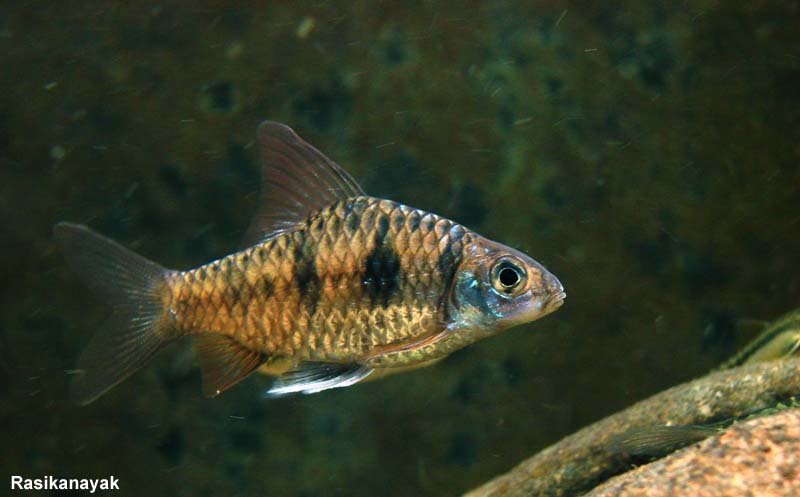
Puntius sahyadriensisMaharaja Barb
Silas, 1953
Max length65mm SL2.6in SLTank80 × 30cm31 × 12inTemp18–24°C64–75°FpH6.0–7.8The hill streams in which this fish can be found are generally shaded by the forest canopy and dense marginal vegetation. Substrates are typically composed of boulders, smaller stones, sand or gravel with submerged tree roots around the margins and quieter areas in which fallen branches and leaf litter collect. Other fish species occurring in the Tunga...
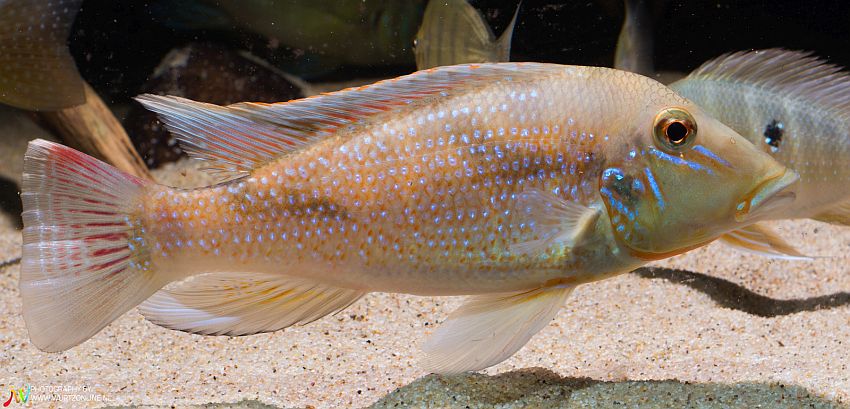
Retroculus lapidifer
Castelnau, 1855
Max length200mm SL8in SLTank210 × 60cm84 × 24inTemp26–32°C79–90°FpH6.0–8.0Retroculus spp. are unsuitable for the standard community aquarium, and should be maintained in a set-up designed to resemble a flowing river. The substrate should be composed of soft sand mixed with small pebbles if the aim is to breed the fish (see 'Reproduction'). Rocks, boulders, roots, branches, and aquatic plants can also be added, although the la...
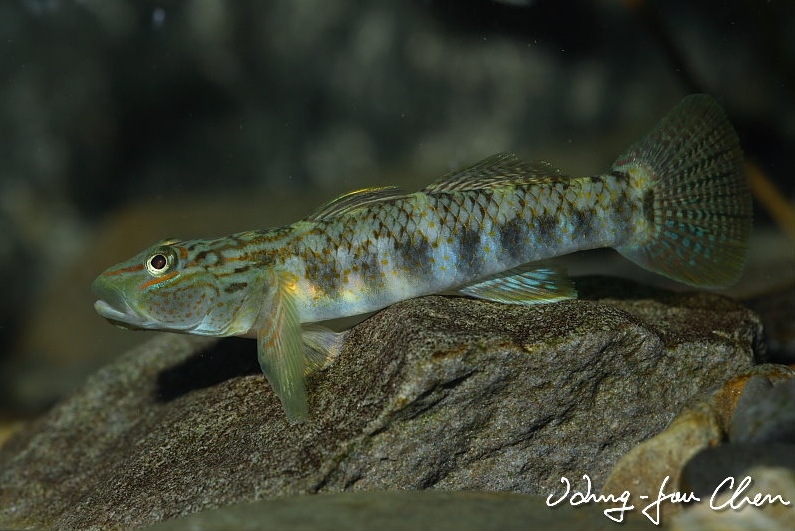
Rhinogobius lanyuensis
Chen, Miller & Fang, 1998
Max length67mm SL2.6in SLTank80 × 30cm31 × 12inTemp18–25°C64–77°FpH6.0–8.0Presumably inhabits small rivers, tributaries and streams with substrates of gravel, rocks, boulders, and exposed bedrock which undergo seasonal variations in water flow rate, depth and turbidity. Lanyu Island is volcanic, measures just 45 km² and has no major rivers or large settlements with a permanent human population of around 4000, although there is a large nuclear waste storage facility at its southern end.
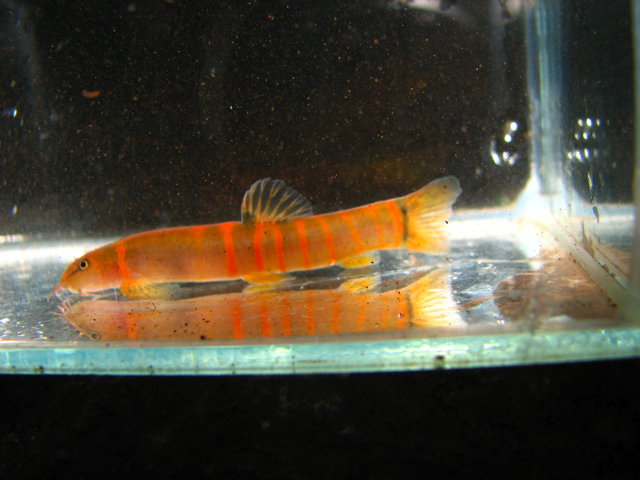
Schistura aurantiaca
Plongsesthee, Page & Beamish, 2011
Max length40mm SL1.6in SLTank75 × 30cm30 × 12inTemp20–26°C68–79°FpH6.5–8.0During collections of the type series stream width was found to vary seasonally but was never wider than 9.1 metres. Water depth was 10-40 cm, flow rate 20-70 cm/s−1, and substrates comprised small to medium-sized rocks. Water temperature was seasonally variable but always within the range 20-26°C/68-78.8°F, pH was 6.5-7.9, oxygen 7.4-8.5 mg/l−1, ammonia, nitrate and total iron were 0.01, < 0.03 and < 0.5 mg/l−1, respectively, and alkalinity was aro...
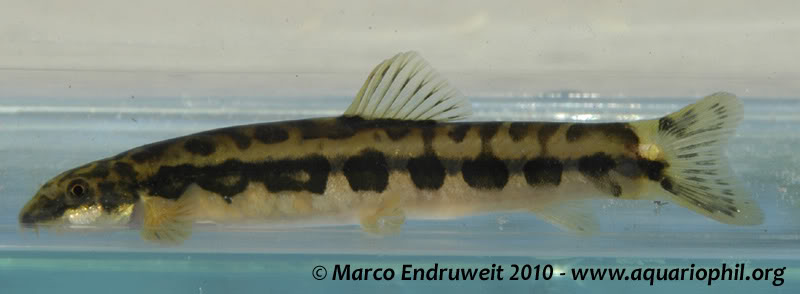
Schistura kloetzliae
Kottelat, 2000
Max length47mm SL1.9in SLTank75 × 30cm30 × 12inTemp18–22°C64–72°FpH7.0–8.5Appears restricted to highly-oxygenated, fast-flowing riffles of small-to-medium sized streams. These typically contain clear water with substrates of gravel, rocks, boulders, and bedrock with no aquatic plants.
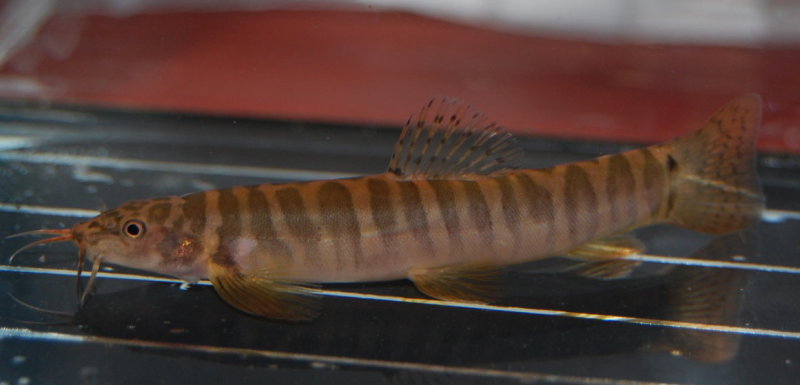
Schistura kohchangensisOrnate Tiger Sand Loach
Smith, 1933
Max length75mm SL3.0in SLTank90 × 30cm36 × 12inTemp20–26°C68–79°FpH6.0–7.5On Koh Chang one habitat consisted of a stream flowing from the waterfall Nam Tok Mai Yom which empties into the Gulf of Thailand after less than 1 km. The stream was dry in its lower reaches and had a substrate of boulders and pebbles. Sympatric fi...
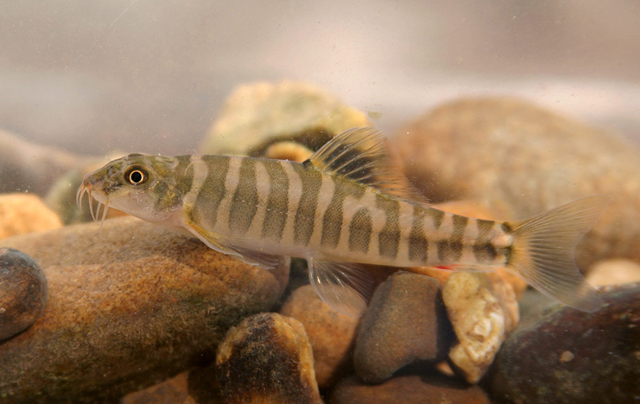
Schistura maepaiensis
Kottelat, 1990
Max length45mm SL1.8in SLTank80 × 30cm31 × 12inTemp20–26°C68–79°FpH6.0–7.5The type locality originally consisted of a shallow (0.5 - 1.5 m deep) stream with a substrate of rocks and boulders and flow varying from 'moderate to swift'. When the holotype was collected there in 1980 sympatric species included Acanthocobitis zonalternans, Puntius orphoides, Pethia ticto, Raiamas guttatus, Barilius barnoides, Mystacoleucus argenteus and Mastacembelus armatus plus unidentified members of Crossocheilus an...
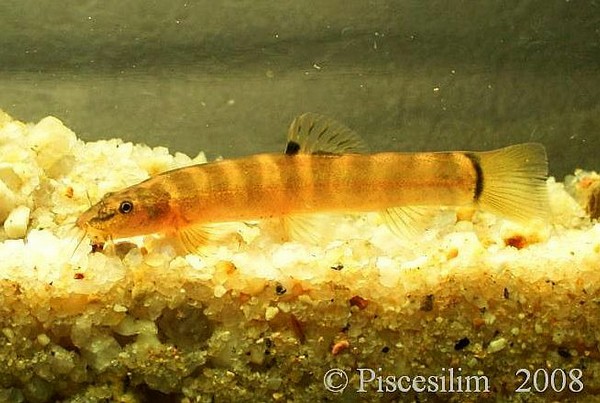
Schistura robertsi
Kottelat, 1990
Max length56mm SL2.2in SLTank80 × 30cm31 × 12inTemp18–30°C64–86°FpH6.0–8.0Should not prove difficult to maintain under the correct conditions. We strongly recommend keeping it in a tank designed to resemble a flowing stream or river with a substrate of variably-sized rocks, sand, fine gravel, and some water-worn boulders. This can be further furnished wit...