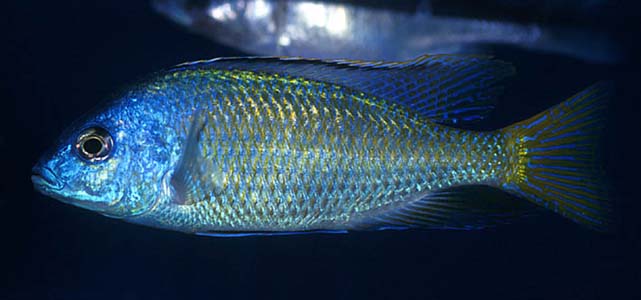
Protomelas pleurotaenia
On this page11 sections
Quick facts
Difficulty4 of 8 measures
More bars, more demanding. Hardiness is not averaged with the rest.
- Space
- large tank
- Water
- tap water
- Temp
- steady heat
- Diet
- unknown
- Temperament
- territorial
- Social
- unknown
- Compatibility
- unknown
Hardiness on its own can raise the rating, whatever the measures above say.
- Hardiness
- unknown
This species has an interesting method of feeding in nature. It 'blows' at the top layer of the substrate (usually sand) and feeds on any invertebrates or other morsels that are uncovered. It is rare in the hobby and little information regarding it's care is available....
Distribution
Habitat
It inhabits beds of vegetation between rocky and sandy areas.
Aquarium size
120 ∗ 45 ∗ 38 cm48 ∗ 18 ∗ 15 in - ~205 litres~54 US gal.
Maintenance
Much of the aquarium should contain piles of rocks arranged to form caves with small areas of open water between. A sandy substrate is best and some clumps of Vallisneria would simulate the natural habitat of the fish.
Water conditions
Temperature: 24 – 28 °C75 – 82 °F
pH: 7.6-8.8
Hardness: 10-25°H
These recommendations come from this profile’s own figures. They contain affiliate links, so we may earn a commission.
Diet
It will accept most foods offered but live and frozen varieties should form the bulk of the diet.
Behaviour and compatibility
A gentle species which is not suited to the boisterous mbuna community although it does become territorial when breeding. Suitable tankmates include Aulonocara, Copadichromis and other peaceful Malawi species. Males are very territorial and a very large tank would be required to keep more than one. It is also better to keep several females per male.
Sexual dimorphism
The male is larger and much more colourful than the female and has extended dorsal, anal and pelvic fins.
Reproduction
No information available regarding captive breeding. It is most likely a maternal mouthbrooder following a similar pattern to other species in the genus.
Notes
This species has an interesting method of feeding in nature. It 'blows' at the top layer of the substrate (usually sand) and feeds on any invertebrates or other morsels that are uncovered. It is rare in the hobby and little information regarding it's care is available.
Species images · 1
Used with the photographer’s permission. Not licensed for reuse.
Profile completeness17 of 24
71% complete
Also missing: a recorded distribution, taxonomic authority, a common name, etymology.
Community
Questions about Protomelas pleurotaenia?
Ask on Discord